Kirjojen hintavertailu. Mukana 11 342 296 kirjaa ja 12 kauppaa.

Kirjahaku

Etsi kirjoja tekijän nimen, kirjan nimen tai ISBN:n perusteella.

1000 tulosta hakusanalla Arthur J Butler

Three Months in the Southern States

Three Months in the Southern States

Arthur J. F. Fremantle

University of Nebraska Press
1991
pokkari
The American Civil War was at a turning point in 1863 when Lt. Col. Arthur J. L. Fremantle of the British Coldstream Guards toured the Confederacy. Mildly predisposed toward the Union side because of his dislike of slavery, he was soon awakened to the gallantry of Jefferson Davis, Robert E. Lee and his generals, ordinary Johnny Rebs, and the women left at home. From April to early July 1863—the critical period of campaigns at Vicksburg, Chancellorsville, and Gettysburg—Fremantle traveled from the Texas frontier to northern Virginia, recording in a diary his experience of the war. Three Months in the Southern States, published upon his return to England later in the year, has long been considered a classic of wartime writing, especially in its description of the Battle of Gettysburg. Filled with biographical vignettes of Lee, Davis, Stonewall Jackson, Sam Houston, and others, this book offers a kaleidoscopic view of the Confederacy at floodtide.

Empathy in Counseling and Psychotherapy

Empathy in Counseling and Psychotherapy

Arthur J. Clark

Routledge Member of the Taylor and Francis Group
2006
sidottu
The purpose of this text is to organize the voluminous material on empathy in a coherent and practical manner, filling a gap that exists in the current therapeutic literature. Empathy in Counseling and Psychotherapy: Perspectives and Practices comprehensively examines the function of empathy as it introduces students and practitioners to the potential effectiveness of utilizing empathic understanding in the treatment process.Employing empathy with full recognition of its strengths and limitations promotes sound strategies for enhancing client development. As an integral component of the therapeutic relationship, empathic understanding is indispensable for engaging clients from diverse backgrounds. This cogent work focuses on understanding empathy from a wide range of theoretical perspectives and developing interventions for effectively employing the construct across the course of treatment. The book also presents a new approach for integrating empathy through a Multiple Perspective Model in the therapeutic endeavor. Organized into three sections, the text addresses empathy in the following capacities:*historical and contemporary perspectives and practices in counseling and psychotherapy;*theoretical orientations in counseling and psychotherapy; and*a Multiple Perspective Model in counseling and psychotherapy.This widely appealing volumeis designed for use in courses in counseling and therapy techniques, theories of counseling and psychotherapy, and the counseling internship, and is a valuable resource for counselors, psychotherapists, psychologists, psychiatrists, social workers, and other related fields of inquiry in the human services.
Empathy in Counseling and Psychotherapy

Empathy in Counseling and Psychotherapy

Arthur J. Clark

Routledge Member of the Taylor and Francis Group
2006
nidottu
The purpose of this text is to organize the voluminous material on empathy in a coherent and practical manner, filling a gap that exists in the current therapeutic literature. Empathy in Counseling and Psychotherapy: Perspectives and Practices comprehensively examines the function of empathy as it introduces students and practitioners to the potential effectiveness of utilizing empathic understanding in the treatment process.Employing empathy with full recognition of its strengths and limitations promotes sound strategies for enhancing client development. As an integral component of the therapeutic relationship, empathic understanding is indispensable for engaging clients from diverse backgrounds. This cogent work focuses on understanding empathy from a wide range of theoretical perspectives and developing interventions for effectively employing the construct across the course of treatment. The book also presents a new approach for integrating empathy through a Multiple Perspective Model in the therapeutic endeavor. Organized into three sections, the text addresses empathy in the following capacities:*historical and contemporary perspectives and practices in counseling and psychotherapy;*theoretical orientations in counseling and psychotherapy; and*a Multiple Perspective Model in counseling and psychotherapy.This widely appealing volumeis designed for use in courses in counseling and therapy techniques, theories of counseling and psychotherapy, and the counseling internship, and is a valuable resource for counselors, psychotherapists, psychologists, psychiatrists, social workers, and other related fields of inquiry in the human services.
The New Middle Classes

The New Middle Classes

Arthur J. (EDT) Vidich

New York University Press
1994
sidottu
In America's much-touted classless society, the middle class--decried by some as a mythical construct and heralded by others as the embodiment of the American dream--has always occupied a central and controversial position. This book explores the origins of the new middle classes that emerged in the 20th century, revealing the relationship of these classes to capitalism, bureaucracy, and politics. The book is divided into four parts, addressing: the theoretical problems and historical changes brought on by the emergence of the new middle classes; status and the psychology of class; the middle class in America; and the lifestyles and political orientations of the middle classes in the United States.
The New Middle Classes

The New Middle Classes

Arthur J. (EDT) Vidich

New York University Press
1995
pokkari
In America's much-touted classless society, the middle class--decried by some as a mythical construct and heralded by others as the embodiment of the American dream--has always occupied a central and controversial position. This book explores the origins of the new middle classes that emerged in the 20th century, revealing the relationship of these classes to capitalism, bureaucracy, and politics. The book is divided into four parts, addressing: the theoretical problems and historical changes brought on by the emergence of the new middle classes; status and the psychology of class; the middle class in America; and the lifestyles and political orientations of the middle classes in the United States.
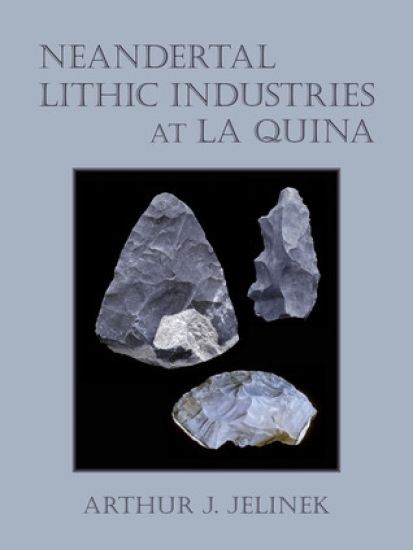
Neandertal Lithic Industries at La Quina

Neandertal Lithic Industries at La Quina

Arthur J. Jelinek

University of Arizona Press
2013
sidottu
Although Neandertals lived in Europe and western Asia for more than 200,000 years, we know surprisingly little about them or about their everyday lives. Evidence of their behavior is largely derived from the surviving pieces of chipped stone and animal bone that resulted from their activities. One of the largest concentrations of stone and bone artifacts left by Neandertals was at the famous archaeological site of La Quina in southwestern France. This study of the significance of changes through time revealed by an analysis of the chipped stone at La Quina reports on the excavations of the Cooperative American-French Excavation Project from 1985 to 1994. It moves beyond the largely descriptive and subjective approaches that have traditionally been applied to this kind of evidence and applies several important quantitative analytical techniques. These new approaches incorporate the history of previous excavations at the site, the results of the work of the Cooperative Project, and the most recent scientific understanding of relevant climatic changes. This is a major contribution to our understanding of Neandertal behavior and industry. It adds new dimensions and perspectives based on innovative techniques of analysis. The analytic methods applied to lithic artifacts that form the heart of the book are the product of considerations about how to best interpret a sequence of multiple contextual samples. The author concludes the book with an extraordinarily useful chapter that places his findings into the larger context of our contemporary knowledge of Neandertal life in the region. The book comes with a compact disc, which includes coded observations used in the analysis in as many as 47 data fields for the more than 11,500 artifacts that will allow professionals and students to further explore the collection of lithic artifacts.
Christians, Feminists, and The Culture of Pornography

Christians, Feminists, and The Culture of Pornography

Arthur J. Mielke

University Press of America
1995
sidottu
In this pioneering study in religion and culture, Mielke acknowledges the power that pornographic images continue to assert in a culture whose conscious intention is to deny their attraction. Mielke's unique analysis brings together a wide range of sources—contemporary as well as historical Christianity, sex therapy, secular feminism, contemporary psychoanalysis, and behavioral science research studies—in an attempt to explain the prevalence of pornographic themes and imagery in human sexual arousal and fulfillment.
Christians, Feminists, and The Culture of Pornography

Christians, Feminists, and The Culture of Pornography

Arthur J. Mielke

University Press of America
1994
nidottu
In this pioneering study in religion and culture, Mielke acknowledges the power that pornographic images continue to assert in a culture whose conscious intention is to deny their attraction. Despite efforts by Christians and feminists alike to radically alter the sexual agenda in the direction of a more tender and respectful eroticism, much of contemporary America continues its sexual odyssey with unrepentant enthusiasm—and with an increasing interest in overt sexual imagery. Mielke's unique analysis brings together a wide range of sources—contemporary as well as historical Christianity, sex therapy, secular feminism, contemporary psychoanalysis, and behavioral science research studies—in an attempt to explain the prevalence of pornographic themes and imagery in human sexual arousal and fulfillment. Contents: Preface; Acknowledgements; Introducton; The Problematic Place of Pornography in Culture; Sexual Liberalism in America; Feminists Confront Pornography; Christian Perspectives on Sex and Pornography; The Dynamics of Sexual Excitement: The Research of Robert J. Stroller, M.D.; Pornography's Challenge to Theology; Bibliography; Readings for Further Study; Index.
D. H. Lawrence in New Mexico

D. H. Lawrence in New Mexico

Arthur J. Bachrach

University of New Mexico Press
2006
nidottu
David Herbert Lawrence was born in Eastwood, England, in 1885. In 1914, he married Frieda Von Richtofen, a German national and distant cousin of the German war ace, 'The Red Baron' von Richthofen. While living on the Coast of Cornwall in 1917, they were harassed and accused of being spies for Germany. By 1921, the Lawrences were living in Italy and D. H. had won international acclaim for his writings. Mabel Dodge Sterne invited the pair to her home in Taos, New Mexico. Travelling by way of Ceylon, Australia, Tahiti, and, finally, San Francisco, the Lawrences set foot in New Mexico for the first time in 1922. Although he travelled all over the world, Lawrence was never as happy anywhere as he was in Taos. Arthur Bachrach has lived in Taos for over twenty years, and he has come to know people who freely recalled the Lawrences. They shared information about the circle of artists and friends who surrounded the Lawrences and their lifestyles. Bachrach provides information on Lawrence's writings and the influence living in the mountains of New Mexico had upon him. D. H. Lawrence died of tuberculosis while visiting France in 1930, and five years later, his ashes were placed in a memorial on his beloved Kiowa Ranch near Taos. Given to the University of New Mexico in the 1950s by D. H's widow, the ranch is known today as the D. H. Lawrence Ranch.
Lethal Decisions

Lethal Decisions

Arthur J. Ammann

Vanderbilt University Press
2017
sidottu
This first-person account by one of the pioneers of HIV/AIDS research chronicles the interaction among the pediatric HIV/AIDS community, regulatory bodies, governments, and activists over more than three decades. After the discovery of AIDS in a handful of infants in 1981, the next fifteen years showed remarkable scientific progress in prevention and treatment, although blood banks, drug companies, and bureaucrats were often slow to act. 1996 was a watershed year when scientific and clinical HIV experts called for treating all HIV-infected individuals with potent triple combinations of antiretroviral drugs that had been proven effective. Aggressive implementation of prevention and treatment in the United States led to marked declines in the number of HIV-related deaths, fewer new infections and hospital visits, and fewer than one hundred infants born infected each year.Inexplicably, the World Health Organization recommended withholding treatment for the majority of HIV-infected individuals in poor countries, and clinical researchers embarked on studies to evaluate inferior treatment approaches even while the pandemic continued to claim the lives of millions of women and children. Why did it take an additional twenty years for international health organizations to recommend the treatment and prevention measures that had had such a profound impact on the pandemic in wealthy countries? The surprising answers are likely to be debated by medical historians and ethicists.At last, in 2015, came a universal call for treating all HIV-infected individuals with triple-combination antiretroviral drugs. But this can only be accomplished if the mistakes of the past are rectified. The book ends with recommendations on how the pediatric HIV/AIDS epidemic can finally be brought to an end.
Lethal Decisions

Lethal Decisions

Arthur J. Ammann

Vanderbilt University Press
2017
nidottu
This first-person account by one of the pioneers of HIV/AIDS research chronicles the interaction among the pediatric HIV/AIDS community, regulatory bodies, governments, and activists over more than three decades. After the discovery of AIDS in a handful of infants in 1981, the next fifteen years showed remarkable scientific progress in prevention and treatment, although blood banks, drug companies, and bureaucrats were often slow to act. 1996 was a watershed year when scientific and clinical HIV experts called for treating all HIV-infected individuals with potent triple combinations of antiretroviral drugs that had been proven effective. Aggressive implementation of prevention and treatment in the United States led to marked declines in the number of HIV-related deaths, fewer new infections and hospital visits, and fewer than one hundred infants born infected each year.Inexplicably, the World Health Organization recommended withholding treatment for the majority of HIV-infected individuals in poor countries, and clinical researchers embarked on studies to evaluate inferior treatment approaches even while the pandemic continued to claim the lives of millions of women and children. Why did it take an additional twenty years for international health organizations to recommend the treatment and prevention measures that had had such a profound impact on the pandemic in wealthy countries? The surprising answers are likely to be debated by medical historians and ethicists.At last, in 2015, came a universal call for treating all HIV-infected individuals with triple-combination antiretroviral drugs. But this can only be accomplished if the mistakes of the past are rectified. The book ends with recommendations on how the pediatric HIV/AIDS epidemic can finally be brought to an end.
War Of Conquest

War Of Conquest

Arthur J. O. Anderson

University of Utah Press,U.S.
2002
nidottu
How is it possible that in 1521 five-hundred Spanish soldiers defeated the most powerful military force in Middle America? The answer lies not in western firearms, as we have been taught, but rather in the differences between the Aztec and Spanish cultures. Differing concepts of warfare and diplomacy, reinforced by tensions and stresses within the Aztec political system and its supporting religious beliefs, allowed CortÉs to systematically gain and hold the military and diplomatic advantages that gave the Spaniards the day, the war, and the continent.
More Ways Than One

More Ways Than One

Arthur J. Cropley

Praeger Publishers Inc
1992
sidottu
Current conceptualizations of children's thinking tend to be unneccesarily narrow, and to focus on what might be called convergent thinking. As a result, invention and innovation are often underemphasized in schools. This text aims to encourage a broad understanding of intellect, and attempts to help teachers to recognize and foster more varied forms of intellectual activity in their students. It offers a review of recent theory on creativity, conceptualizing this as a matter of getting ideas, trying the new, branching out and the like, rather than of producing artistic or scientific products. It discusses the factors in the classroom which block this more divergent kind of thinking and suggests practical ways through which teachers can promote bolder and more innovative intellectual activity in their students. This involves not merely cognitive factors (thinking, remembering, reasoning) but also motivation (courage and willingness), personality (openness to the new, self-confidence), and social factors (nonconformity, ability to communicate ideas). The text is applied in orientation, contains a large number of examples and case studies, and aims at providing practicing teachers with guidelines.
More Ways Than One

More Ways Than One

Arthur J. Cropley

Praeger Publishers Inc
1992
nidottu
Current conceptualizations of children's thinking tend to be unneccesarily narrow, and to focus on what might be called convergent thinking. As a result, invention and innovation are often underemphasized in schools. This text aims to encourage a broad understanding of intellect, and attempts to help teachers to recognize and foster more varied forms of intellectual activity in their students. It offers a review of recent theory on creativity, conceptualizing this as a matter of getting ideas, trying the new, branching out and the like, rather than of producing artistic or scientific products. It discusses the factors in the classroom which block this more divergent kind of thinking and suggests practical ways through which teachers can promote bolder and more innovative intellectual activity in their students. This involves not merely cognitive factors (thinking, remembering, reasoning) but also motivation (courage and willingness), personality (openness to the new, self-confidence), and social factors (nonconformity, ability to communicate ideas). The text is applied in orientation, contains a large number of examples and case studies, and aims at providing practicing teachers with guidelines.