Kirjojen hintavertailu. Mukana 11 462 528 kirjaa ja 12 kauppaa.

Kirjahaku

Etsi kirjoja tekijän nimen, kirjan nimen tai ISBN:n perusteella.

1000 tulosta hakusanalla Avi

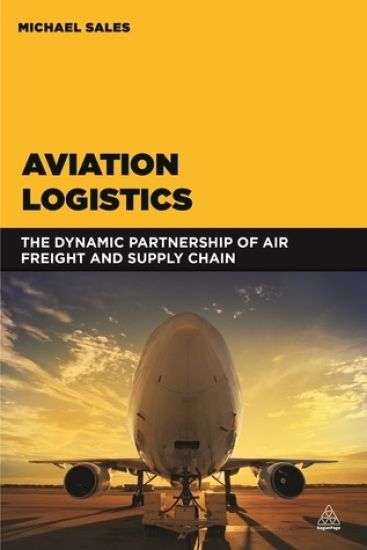
Aviation Logistics

Aviation Logistics

Michael Sales

Kogan Page Ltd
2016
nidottu
Aviation Logistics looks at the function of the air cargo business and its role in global supply chains and logistics. As global economies are constantly evolving, the supply chain business with its transport partners must be proactive for the future. Technology and its resulting efficiency and transparency are therefore a central part of this book. Aviation Logistics examines how carriers are coming up with new methods and technologies to improve ground handling and road transport, traceability systems and barcoding, security and screening, and safe delivery of perishable items (such as in the pharmaceutical and medical sectors). Endorsed by The International Air Cargo Association (TIACA), Aviation Logistics is supplemented with case studies and contributions from a team of experts including Oliver Evans and Stan Wraight, both industry experts. Online resources available: Air Cargo News' Freighter Directory.
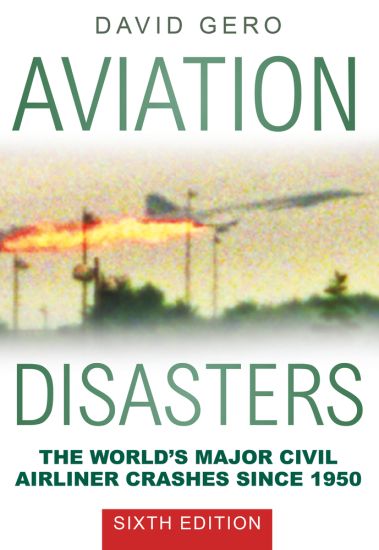
Aviation Disasters

Aviation Disasters

David Gero

The History Press Ltd
2017
nidottu
Flying as an airline passenger is, statistically, one of the safest forms of travel. Even so, the history of civil aviation is littered with high-profile disasters involving major loss of life. This new edition of the authoritative work on the subject brings the grim but important story of air disasters right up to date. David Gero assembles a list of major air disasters since the 1950s across continents. He investigates every type of calamity, including those caused by appalling weather, mechanical failure, pilot error, inhospitable terrain and hostile action. The first incident of sabotage involving a commercial jetliner is covered, as is the first, much-feared crash of the jumbo jet era. Examined alongside less well-known disasters are high-profile episodes such as that of Pan American Flight 103 at Lockerbie in 1988, the Twin Towers tragedy of 11 September 2001 and, more recently, the disappearance of Malaysia Airlines Flight 370 in 2014 – the greatest mystery of the commercial jet age.Aviation Disasters is the authoritative record of air disasters worldwide, fully illustrated with a fascinating selection of photographs.
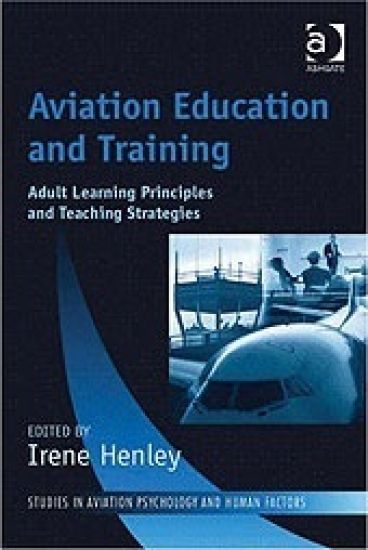
Aviation Education and Training

Aviation Education and Training

Ashgate Publishing Limited
2003
sidottu
The aviation teaching environment is fairly unique and combines both traditional and non-traditional teaching environments. There are presently few books that address adult learning principles and teaching strategies relevant to the aviation context. Furthermore, aviation education has not generally benefited from many of the developments made in the field of education. This timely book: - facilitates the development of knowledge and skills necessary to conduct effective instruction and training within the aviation context; - develops an awareness of critical issues that should be of concern to aviation educators and trainers; - provides aviation education and trainers with a variety of teaching strategies that can be effective in the development of essential skills in aviation professionals. The readership for this book includes university students who want to become instructors, as well as industry personnel who are involved in any of the various domains of aviation education, from junior flight instructors to the trainer of instructors, or from training captains, or traffic controllers to crew resource management and human factors facilitators.
Aviation Information Management

Aviation Information Management

Barbara G. Kanki

Ashgate Publishing Limited
2002
sidottu
Operational information management is at a crossroads as it sheds the remaining vestiges of its paper-based processes and moves through the uncharted domain of electronic data processes. The final outcome is not yet in full focus, but real progress has been made in the transition to electronic documents providing the aviation industry with a clear direction. This book looks at a combination of industry initiatives and airline successes that point to the next steps that operators can take as they transition to fully integrated information management systems. Although the route has not been fully identified, it is evident that a key to successful long-term efficient information management is industry-wide cooperation. The chapters are authored by a range of experts in operational information management, and collectively, they outline ways that operators can improve efficiency across flight, ground and maintenance operations. Considerations and recommendations are identified and presented addressing the following priorities: Safety-critical information and procedures Human factors Information security Operational information standardization. The readership includes: Airline flight operations managers and standards personnel, Airline operating documents and publication specialists, Airline information managers, Commercial pilots, Airline maintenance managers and personnel, Manufacturers and vendors of aviation products, Aviation regulators and policy makers, Aviation researchers and developers of information technologies, and Military technical publications specialists.
Aviation Psychology: Practice and Research
In the well-established aviation system, the importance of sound human factors practice, based on good aviation psychology research, is obvious from those incidents and accidents resulting from its neglect. This carefully structured book presents an up-to-date review of the main areas in the field of Aviation Psychology. It contains current thinking mainly from Europe, but with input from Australia and North America, from specialists involved in research, training and operational practice. Spanning six parts, the book covers: Human Engineering, Occupational Demands, Selection of Aviation Personnel, Human Factors Training, Clinical Psychology, Accident Investigation and Prevention. Looking at the six parts - in human engineering, the reader learns about human-centered automation as well as human factors issues in aircraft certification. Results derived by job analysis methods are presented in the next part and serve as basic information in the design of selection and training programs. In selection, computerized testing or behaviour-oriented assessments are challenging approaches for personnel recruitment. Cost-benefit analyses in selection reveal convincing results, enabling organizations to save huge amounts of inappropriate training investment by the application of proper selection tests. The NOTECHS method is described which helps to assess CRM capabilities in training and can also be used to measure training effects in systematic validation studies. Although operational personnel in aviation are usually able to cope with stress more efficiently than other occupational groups, individual problems might develop as reactions to traumatic influences. Either a psychological evaluation or a proper treatment or both is then required as described in the 'Clinical Psychology' part of the book. The readership includes: aviation psychologists and flight surgeons, training, selection and recruitment specialists, instructor pilots, CRM facilitators, personnel managers, accident investigators, safety pilots, air traffic controllers, aircraft engineers and those dealing with human-machine interfaces.
Aviation Mental Health

Aviation Mental Health

Ashgate Publishing Limited
2006
sidottu
This book provides an authoritative and practical guide to the assessment, management, treatment and care of pilots and other professional groups within aviation; covering a range of relevant topics, for health and human resources practitioners working in the airline industry. Pilot mental health has, hitherto, been regarded as a specialist topic in aviation medicine. Consequently, practitioners and researchers alike have been forced to consult specialist journals or seek out a relevant chapter on this topic in a general textbook to develop or update their understanding of the relevant issues. This book seeks to remedy this situation by gathering together all of the relevant insights into a single authoritative source gathered from the leading specialists in the field. It aims to cover all of the main relevant issues including the assessment, care, management and treatment of mental health problems, as well as the prevention of mental health problems among this occupational group.
Aviation and Tourism

Aviation and Tourism

Ashgate Publishing Limited
2008
sidottu
Transport is an essential element of tourism, providing the vital link between the tourist generating areas and destinations. Good accessibility, which is determined by the transport services provided, is a fundamental condition for the development of any tourist destination. Moreover the transport industry can be a major beneficiary of tourism because of the additional passenger demand that may be generated. Aviation is an increasingly important mode of transport for tourism markets. Whilst geography has meant that, in modern times, air travel has always been the dominant mode for long distance travel and much international tourism, moves towards deregulation, and in particular the emergence of the low cost carrier sector, have also increased aviation's significance for short and medium haul tourism trips. Thus developments in aviation can have very major implications for many leisure and business tourism markets. However the characteristics and needs of leisure travellers are generally so very different from business travellers that this necessitates a separate consideration of these markets if a detailed understanding of the relationship with aviation is to be gained. In spite of the obvious closeness between the aviation and tourism industries, there are very few specialist texts on this subject. Most tourism focused books consider aviation as just one component of the tourism industry which needs to be discussed, whereas aviation specialist texts rarely concentrate on just leisure travel. In addition there is very little literature that gives a detailed appreciation of the complexities and potential conflicts associated with the development of coherent and effective aviation and tourism policies. Therefore it is the aim of this book to fill this important gap which exists with a comprehensive, in-depth study of the relationship between aviation and leisure travel. The book deals exclusively with issues related to the relationship between aviation and leisure travel. It does this with an analysis of the theoretical concepts relevant to the subject area combined with a detailed investigation of current practice within the aviation and tourism industries. Each chapter is illustrated with case study material that will reinforce the understanding of the issues that are being examined.
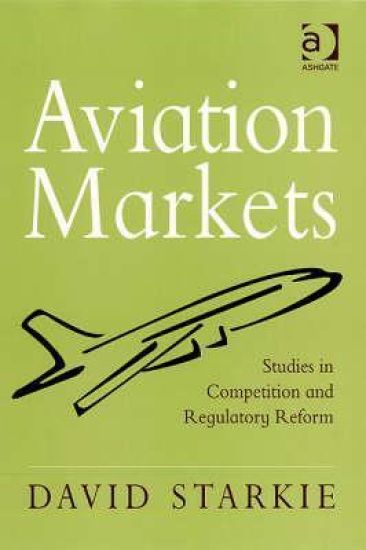
Aviation Markets

Aviation Markets

David Starkie

Ashgate Publishing Limited
2008
sidottu
Aviation Markets: Studies in Competition and Regulatory Reform is a collection of 17 papers selected from David Starkie's extensive writings over the last 25 years. Previously published material has been extensively edited and adapted, and combined with new material, published here for the first time. The book is divided into five sections, each featuring an original overview chapter, to better establish the background and also explain the papers' wider significance including, wherever appropriate, their relevance to current policy issues. These papers have been selected to illustrate a significant theme that has been relatively neglected thus far in both aviation and industrial economics: the role of the market and its interplay with the development of economic policy in the context of a dynamic but partly price regulated industry. The result provides a strong flavour of how market mechanisms, and particularly competition, can operate to successfully resolve policy issues. The book will be of interest to academics and those engaged in the formulation of aviation policy, such as public administrators and consultants, as well as those working in the aviation industry. It is also relevant to economic studies in a more general context, particularly to students and practitioners in industrial organisation economics, including those studying and researching the public utility industries.
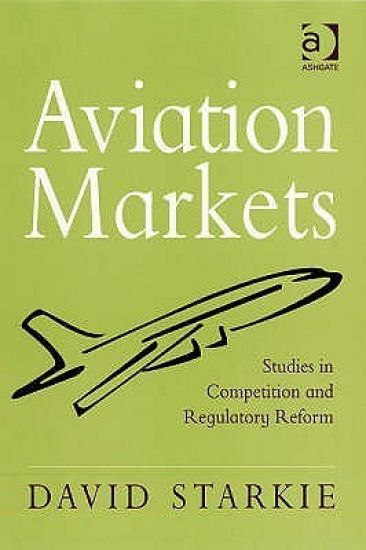
Aviation Markets

Aviation Markets

David Starkie

Ashgate Publishing Limited
2008
nidottu
Aviation Markets: Studies in Competition and Regulatory Reform is a collection of 17 papers selected from David Starkie's extensive writings over the last 25 years. Previously published material has been extensively edited and adapted, and combined with new material, published here for the first time. The book is divided into five sections, each featuring an original overview chapter, to better establish the background and also explain the papers' wider significance including, wherever appropriate, their relevance to current policy issues. These papers have been selected to illustrate a significant theme that has been relatively neglected thus far in both aviation and industrial economics: the role of the market and its interplay with the development of economic policy in the context of a dynamic but partly price regulated industry. The result provides a strong flavour of how market mechanisms, and particularly competition, can operate to successfully resolve policy issues. The book will be of interest to academics and those engaged in the formulation of aviation policy, such as public administrators and consultants, as well as those working in the aviation industry. It is also relevant to economic studies in a more general context, particularly to students and practitioners in industrial organisation economics, including those studying and researching the public utility industries.
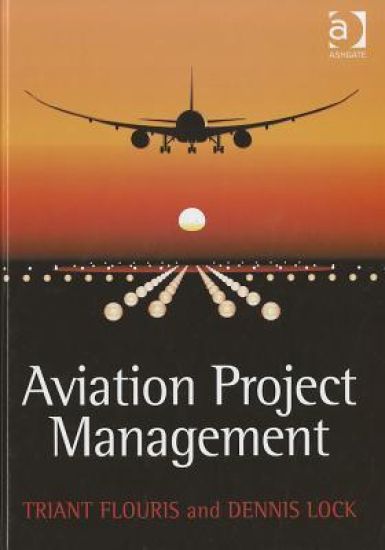
Aviation Project Management

Aviation Project Management

Triant G. Flouris; Dennis Lock

Ashgate Publishing Limited
2008
sidottu
Combining the considerable respective expertise of Triant Flouris and Dennis Lock, this unique book highlights the ways that successful businesses are managed in the aviation industry through the identification and application of proven project management methods. Theoretical concepts are defined, clarified and shown how they can be valuable to business managers and students of the aviation business sector. Aviation Project Management builds on the successful and popular work of Dennis Lock but is considerably enhanced by applications, examples, illustrations and case examples pertaining to projects exclusively from the aviation industry. Theory in the project management field is already well evolved, so the purpose of this book is not to review that theory but rather to demonstrate how the lessons of theory can be of practical use to aviation students and business managers. It provides a practical guide to those interested in how projects are managed and the common mistakes that aviation project managers should avoid.
Aviation Visual Perception

Aviation Visual Perception

Randy Gibb; Rob Gray; Lauren Scharff

Ashgate Publishing Limited
2010
sidottu
Vision is the dominant sense used by pilots and visual misperception has been identified as the primary contributing factor in numerous aviation mishaps, resulting in hundreds of fatalities and major resource loss. Despite physiological limitations for sensing and perceiving their aviation environment, pilots can often make the required visual judgments with a high degree of accuracy and precision. At the same time, however, visual illusions and misjudgments have been cited as the probable cause of numerous aviation accidents, and in spite of technological and instructional efforts to remedy some of the problems associated with visual perception in aviation, mishaps of this type continue to occur. Clearly, understanding the role of visual perception in aviation is key to improving pilot performance and reducing aviation mishaps. This book is the first dedicated to the role of visual perception in aviation, and it provides a comprehensive, single-source document encompassing all aspects of aviation visual perception. Thus, this book includes the foundations of visual and vestibular sensation and perception; how visual perceptual abilities are assessed in pilots; the pilot's perspective of visual flying; a summary of human factors research on the visual guidance of flying; examples of specific visual and vestibular illusions and misperceptions; mishap analyses from military, commercial and general aviation; and, finally, how this knowledge is being used to better understand visual perception in aviation's next generation. Aviation Visual Perception: Research, Misperception and Mishaps is intended to be used for instruction in academia, as a resource for human factors researchers, design engineers, and for instruction and training in the pilot community.
Avian Ecology and Conservation in an Urbanizing World
One of the most striking and persistent ways humans dominate Earth is by changing land-cover as we settle a region. Much of our ecological understanding about this process comes from studies of birds, yet the existing literature is scattered, mostly decades old, and rarely synthesized or standardized. The twenty-seven contributions authored by leaders in the fields of avian and urban ecology present a unique summary of current research on birds in settled environments ranging from wildlands to exurban, rural to urban. Ecologists, land managers, wildlife managers, evolutionary ecologists, urban planners, landscape architects, and conservation biologists will find our information useful because we address the conservation and evolutionary implications of urban life from an ecological and planning perspective. Graduate students in these fields also will find the volume to be a useful summary and synthesis of current research, extant literature, and prescriptions for future work. All interested in human-driven land-cover changes will benefit from a perusal of this book because we present high altitude photographs of each study area.
Avicenna's Metaphysics in Context

Avicenna's Metaphysics in Context

Robert Wisnovsky

Cornell University Press
2003
sidottu
The eleventh-century philosopher and physician Abu Ali ibn Sina (d. A.D. 1037) was known in the West by his Latinized name Avicenna. An analysis of the sources and evolution of Avicenna's metaphysics, this book focuses on the answers he and his predecessors gave to two fundamental pairs of questions: what is the soul and how does it cause the body; and what is God and how does He cause the world? To respond to these challenges, Avicenna invented new concepts and distinctions and reinterpreted old ones. The author concludes that Avicenna's innovations are a turning point in the history of metaphysics. Avicenna's metaphysics is the culmination of a period of synthesis during which philosophers fused together a Neoplatonic project (reconciling Plato with Aristotle) with a Peripatetic project (reconciling Aristotle with himself). Avicenna also stands at the beginning of a period during which philosophers sought to integrate the Arabic version of the earlier synthesis with Islamic doctrinal theology (kalam). Avicenna's metaphysics significantly influenced European scholastic thought, but it had an even more profound impact on Islamic intellectual history—the philosophical problems and opportunities associated with the Avicennian synthesis continued to be debated up to the end of the nineteenth century.
Avicenna

Avicenna

Lenn E. Goodman

Cornell University Press
2006
pokkari
In this updated edition of his classic work, Lenn E. Goodman provides a concise introduction to the life and thought of Abu Ali al-Husain ibn Abdallah ibn Sina, known as Avicenna, who was born in the year 980 C.E. near Bokhara in what is now Uzbekistan and died 1037 C.E. in Hamadan, now in Iran.
Aviation Automation

Aviation Automation

Charles E. Billings

CRC Press Inc
1996
sidottu
The advent of very compact, very powerful digital computers has made it possible to automate a great many processes that formerly required large, complex machinery. Digital computers have made possible revolutionary changes in industry, commerce, and transportation. This book, an expansion and revision of the author's earlier technical papers on this subject, describes the development of automation in aircraft and in the aviation system, its likely evolution in the future, and the effects that these technologies have had -- and will have -- on the human operators and managers of the system. It suggests concepts that may be able to enhance human-machine relationships in future systems. The author focuses on the ability of human operators to work cooperatively with the constellation of machines they command and control, because it is the interactions among these system elements that result in the system's success or failure, whether in aviation or elsewhere. Aviation automation has provided great social and technological benefits, but these benefits have not come without cost. In recent years, new problems in aircraft have emerged due to failures in the human-machine relationship. These incidents and accidents have motivated this inquiry into aviation automation. Similar problems in the air traffic management system are predicted as it becomes more fully automated. In particular, incidents and accidents have occurred which suggest that the principle problems with today's aviation automation are associated with its complexity, coupling, autonomy, and opacity. These problems are not unique to aviation; they exist in other highly dynamic domains as well. The author suggests that a different approach to automation -- called "human-centered automation" -- offers potential benefits for system performance by enabling a more cooperative human-machine relationship in the control and management of aircraft and air traffic.
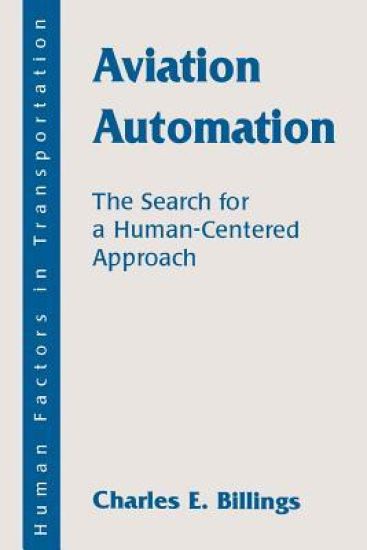
Aviation Automation

Aviation Automation

Charles E. Billings

CRC Press Inc
1996
nidottu
The advent of very compact, very powerful digital computers has made it possible to automate a great many processes that formerly required large, complex machinery. Digital computers have made possible revolutionary changes in industry, commerce, and transportation. This book, an expansion and revision of the author's earlier technical papers on this subject, describes the development of automation in aircraft and in the aviation system, its likely evolution in the future, and the effects that these technologies have had -- and will have -- on the human operators and managers of the system. It suggests concepts that may be able to enhance human-machine relationships in future systems. The author focuses on the ability of human operators to work cooperatively with the constellation of machines they command and control, because it is the interactions among these system elements that result in the system's success or failure, whether in aviation or elsewhere. Aviation automation has provided great social and technological benefits, but these benefits have not come without cost. In recent years, new problems in aircraft have emerged due to failures in the human-machine relationship. These incidents and accidents have motivated this inquiry into aviation automation. Similar problems in the air traffic management system are predicted as it becomes more fully automated. In particular, incidents and accidents have occurred which suggest that the principle problems with today's aviation automation are associated with its complexity, coupling, autonomy, and opacity. These problems are not unique to aviation; they exist in other highly dynamic domains as well. The author suggests that a different approach to automation -- called "human-centered automation" -- offers potential benefits for system performance by enabling a more cooperative human-machine relationship in the control and management of aircraft and air traffic.