Kirjojen hintavertailu. Mukana 11 699 587 kirjaa ja 12 kauppaa.

Kirjahaku

Etsi kirjoja tekijän nimen, kirjan nimen tai ISBN:n perusteella.

1000 tulosta hakusanalla B B Edwards

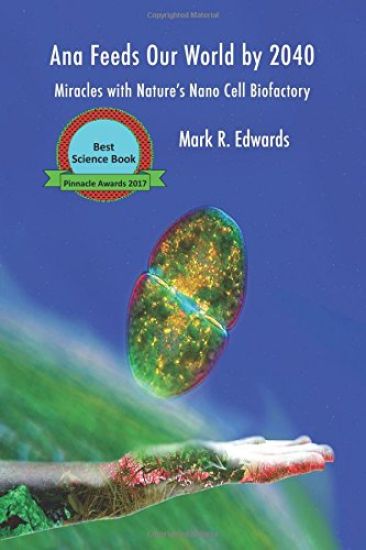
Ana Feeds our World by 2040: Miracles with Nature's Nano Cell Biofactory - B&W Interior

Ana Feeds our World by 2040: Miracles with Nature's Nano Cell Biofactory - B&W Interior

Mark R. Edwards

Createspace Independent Publishing Platform
2017
nidottu
The next food renaissance will engage green biotechnologies that produce healthier foods with minimal or no fossil resources. Freedom Foods liberate growers from fossil resource consumption and deliver superior nutrition and taste without pollution and waste. Nutrient cycling with single-celled organisms will replace "one-and-done" fossil agriculture with its constant extraction, consumption, and pollution. Freedom foods made from microcrops will redesign our food supply from the foundation of the food chain, made with both single and multicellular organisms. Freedom foods free consumers for smart food choices, free growers for eco-smart production, and free ecosystems of waste and pollution. Abundance growing methods free farmers from reliance on fossil resources because growers can recover and repurpose precious nutrients from waste streams to grow clean, healthy food. Farmers will embrace an efficient net-zero carbon food production system that preserves rather than consumes natural resources. Algae nano cells offer an array of advantages that are unavailable in land plants. Each tiny algae cell packages the essential nutrients for multi-cellular life - plants, animals and humans. All plants evolved from algae 500 million years ago. All the nutrition, colors and healthy compounds in modern crops and produce are also available in algae. Microcrop cell biofactories can produce excellent food, significantly faster, independent of weather or climate. Peace microfarms liberate growers from dependence on increasingly expensive cropland, fresh water, fossil fuels, chemical fertilizer and other non-renewable resources. Peace microfarms avoid conflict, and possibly war, over diminishing natural resources by using abundance methods that cycle nutrients to grow microcrops. Natural resource over-consumption and pollution cannot be addressed without engaging the agribusiness community. Microcrop cell biofactories will make the biggest impact to world food supplies by providing stronger nutrition for plant and animal production in existing industrial farms. Abundance growing methods reduce risk, costs and pain for modern industrial farmers. Algae biofertilizer improves yields while reducing farmers' dependence on chemical fertilizer. Algae biofertilizer ends hidden hunger by increasing field crop nutralence - nutrient quality, density, diversity and bioavailability. Algae biofertilizer also improves crop stress tolerance to weather and pests, while substantially reducing fertilizer and pesticide pollution. Abundance methods clean degraded and polluted ecosystems. In some cases, algae biofertilizers can bring abandoned cropland back to life by restoring fertility. Algae biofeeds deliver similar benefits for animal farmers. Biofeeds enhance animal growth and development, improve survivability, and reduce waste because the feeds deliver higher nutralence. Field tests have shown animal products and meat grown with algae biofeeds have superior color, texture and taste, while delivering more protein and other nutrients per bite and healthier fats. Peace microfarms produce 30 to 72 times more food per section of land every year than modern agriculture. Microfarms do not require cropland and scale to any size. Microfarmers may produce food practically anywhere, including cities. Microfarms will enable Beijing, New Delhi, Jakarta, Buenos Aries and Athens to grow 80% of their food in the city. Microfarmers recover low cost nutrients from sterilized waste streams and transform them into freedom foods and other valuable bioproducts. Growers use abundance methods to assure a sustainable food supply for many generations. Microcrop bioproducts can transform our food future from extractive to sustainable, but the transition will not be simple. If supplying Ana's world with abundant good food were easy, it would already have been done.
A Sermon, Preached, in the College of Philadelphia, at the Ordination of the Rev'd. Samuel Jones, A.B. By Morganedwards, A.M. Minister of the Baptist Church in the Said City. To Which are Annexed, a Narrative of the Ordination
The 18th century was a wealth of knowledge, exploration and rapidly growing technology and expanding record-keeping made possible by advances in the printing press. In its determination to preserve the century of revolution, Gale initiated a revolution of its own: digitization of epic proportions to preserve these invaluable works in the largest archive of its kind. Now for the first time these high-quality digital copies of original 18th century manuscripts are available in print, making them highly accessible to libraries, undergraduate students, and independent scholars.The Age of Enlightenment profoundly enriched religious and philosophical understanding and continues to influence present-day thinking. Works collected here include masterpieces by David Hume, Immanuel Kant, and Jean-Jacques Rousseau, as well as religious sermons and moral debates on the issues of the day, such as the slave trade. The Age of Reason saw conflict between Protestantism and Catholicism transformed into one between faith and logic -- a debate that continues in the twenty-first century.++++The below data was compiled from various identification fields in the bibliographic record of this title. This data is provided as an additional tool in helping to insure edition identification: ++++National Library of WalesW024055With an errata slip mounted on verso of title page.Philadelphia: Printed by Andrew Steuart, at the Bible-in-Heart, in Second-Street, M, DCC, LXIII. 1763]. 48p.; 8
The Ordeal of Mansart (The Oxford W. E. B. Du Bois)

The Ordeal of Mansart (The Oxford W. E. B. Du Bois)

W. E. B. Du Bois; Brent Hayes Edwards

Oxford University Press Inc
2014
nidottu
W. E. B. Du Bois was a public intellectual, sociologist, and activist on behalf of the African American community. He profoundly shaped black political culture in the United States through his founding role in the NAACP, as well as internationally through the Pan-African movement. Du Bois's sociological and historical research on African-American communities and culture broke ground in many areas, including the history of the post-Civil War Reconstruction period. Du Bois was also a prolific author of novels, autobiographical accounts, innumerable editorials and journalistic pieces, and several works of history. Du Bois called his epic Black Flame trilogy a fiction of interpretation. It acts as a representative biography of African American history by following one man, Manuel Mansart, from his birth in 1876 until his death. The Black Flame attempts to use this historical fiction of interpretation to recast and revisit the African American experience. Readers will appreciate The Black Flame trilogy as a clear articulation of Du Bois's perspective at the end of his life. The first book in this profound trilogy, The Ordeal of Mansart, chronicles Mansart's early life during the time of Reconstruction through his involvement in black education in Atlanta. Written with lyrical, vivid prose and with accurate historical context, The Ordeal of Mansart offers readers a peek into African American life and struggle through the lens of Mansart's humble life. With a series introduction by editor Henry Louis Gates, Jr., and an introduction by Brent Hayes Edwards, this edition is essential for anyone interested in African American literature.
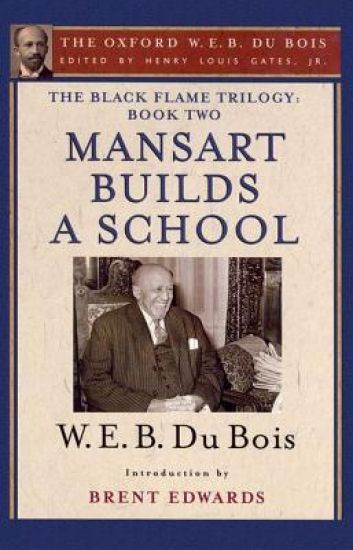
The Black Flame Trilogy: Book Two, Mansart Builds a School(The Oxford W. E. B. Du Bois)

The Black Flame Trilogy: Book Two, Mansart Builds a School(The Oxford W. E. B. Du Bois)

W. E. B. Du Bois; Brent Hayes Edwards

Oxford University Press Inc
2014
nidottu
W. E. B. Du Bois was a public intellectual, sociologist, and activist on behalf of the African American community. He profoundly shaped black political culture in the United States through his founding role in the NAACP, as well as internationally through the Pan-African movement. Du Bois's sociological and historical research on African-American communities and culture broke ground in many areas, including the history of the post-Civil War Reconstruction period. Du Bois was also a prolific author of novels, autobiographical accounts, innumerable editorials and journalistic pieces, and several works of history. Du Bois called his epic Black Flame trilogy a fiction of interpretation. It acts as a representative biography of African American history by following one man, Manuel Mansart, from his birth in 1876 until his death. The Black Flame attempts to use this historical fiction of interpretation to recast and revisit the African American experience. Readers will appreciate The Black Flame trilogy as a clear articulation of Du Bois's perspective at the end of his life. The second book in this profound trilogy, Mansart Builds a School, opens with Mansart's election to superintendent of Negro schools in Atlanta and follows him as he ascends to the position of president of Georgia State A&M College. The book provides a damning portrait of the state of education for African Americans in the south. Building upon the drama and intrigue of The Ordeal of Mansart in Du Bois's signature lyrical style, Mansart Builds a School delves into the realities of the ordinary southern black experience of the early twentieth century. With a series introduction by editor Henry Louis Gates, Jr., and an introduction by Brent Hayes Edwards, this edition is essential for anyone interested in African American literature.
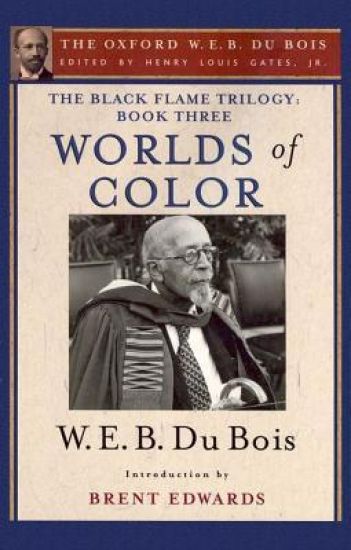
The Black Flame Trilogy: Book Three, Worlds of Color (The Oxford W. E. B. Du Bois)

The Black Flame Trilogy: Book Three, Worlds of Color (The Oxford W. E. B. Du Bois)

W. E. B. Du Bois; Brent Hayes Edwards

Oxford University Press Inc
2014
nidottu
W. E. B. Du Bois was a public intellectual, sociologist, and activist on behalf of the African American community. He profoundly shaped black political culture in the United States through his founding role in the NAACP, as well as internationally through the Pan-African movement. Du Bois's sociological and historical research on African-American communities and culture broke ground in many areas, including the history of the post-Civil War Reconstruction period. Du Bois was also a prolific author of novels, autobiographical accounts, innumerable editorials and journalistic pieces, and several works of history. Du Bois called his epic Black Flame trilogy a fiction of interpretation. It acts as a representative biography of African American history by following one man, Manuel Mansart, from his birth in 1876 until his death. The Black Flame attempts to use this historical fiction of interpretation to recast and revisit the African American experience. Readers will appreciate The Black Flame trilogy as a clear articulation of Du Bois's perspective at the end of his life. The last book in this profound trilogy, Worlds of Color, opens when Mansart is sixty and a successful and established college president. Packed with political intrigue, romance, and social commentary, the book provides a dark, cynical view of the world and its relationship to the "Black Flame," or the potential of black civilization. Building upon the drama of the previous two books, Worlds of Color delves into a more sinister, bleak, and doubtful future. With a series introduction by editor Henry Louis Gates, Jr., and an introduction by Brent Hayes Edwards, this edition is essential for anyone interested in African American literature.
Intersectional Analysis as a Method to Analyze Popular Culture

Intersectional Analysis as a Method to Analyze Popular Culture

Erica B. Edwards; Jennifer Esposito

Routledge
2019
sidottu
Intersectional Analysis as a Method to Analyze Popular Culture: Clarity in the Matrix explores how race, class, gender, sexuality, and other social categories are represented in, and constructed by, some of the most significant popular culture artifacts in contemporary Western culture. Through readings of racialized television sitcoms, LGBTQ+ representation in mainstream American music, the role of Black Panther in Western imperialist projects, and self-love narratives promoted by social media influencers, it demonstrates how novice and emerging researchers can use intersectional theory as an analysis method in the field of cultural studies. The case studies presented are contextualized through a brief history of intersectional theory, a methodological rationale for its use in relation to popular culture, and a review of the ethical considerations researchers should take before, during, and after they approach popular artifacts. Intended to be a textbook for novice and emerging researchers across a wide range of social science disciplines, this book serves as a practical guide to uncover the multiple and interlocking ways oppression is reified, resisted and/or negotiated through popular culture.2021 Winner of the AESA Critics’ Choice Book Award
Intersectional Analysis as a Method to Analyze Popular Culture

Intersectional Analysis as a Method to Analyze Popular Culture

Erica B. Edwards; Jennifer Esposito

Routledge
2019
nidottu
Intersectional Analysis as a Method to Analyze Popular Culture: Clarity in the Matrix explores how race, class, gender, sexuality, and other social categories are represented in, and constructed by, some of the most significant popular culture artifacts in contemporary Western culture. Through readings of racialized television sitcoms, LGBTQ+ representation in mainstream American music, the role of Black Panther in Western imperialist projects, and self-love narratives promoted by social media influencers, it demonstrates how novice and emerging researchers can use intersectional theory as an analysis method in the field of cultural studies. The case studies presented are contextualized through a brief history of intersectional theory, a methodological rationale for its use in relation to popular culture, and a review of the ethical considerations researchers should take before, during, and after they approach popular artifacts. Intended to be a textbook for novice and emerging researchers across a wide range of social science disciplines, this book serves as a practical guide to uncover the multiple and interlocking ways oppression is reified, resisted and/or negotiated through popular culture.2021 Winner of the AESA Critics’ Choice Book Award
Heroes of the Age

Heroes of the Age

David B. Edwards

University of California Press
1996
pokkari
Much of the political turmoil that has occurred in Afghanistan since the Marxist revolution of 1978 has been attributed to the dispute between Soviet-aligned Marxists and the religious extremists inspired by Egyptian and Pakistani brands of 'fundamentalist' Islam. In a significant departure from this view, David B. Edwards contends that - though Marxism and radical Islam have undoubtedly played a significant role in the conflict - Afghanistan's troubles derive less from foreign forces and the ideological divisions between groups than they do from the moral incoherence of Afghanistan itself. Seeking the historical and cultural roots of the conflict, Edwards examines the lives of three significant figures of the late nineteenth century - a tribal khan, a Muslim saint, and a prince who became king of the newly created state. He explores the ambiguities and contradictions of these lives and the stories that surround them, arguing that conflicting values within an artificially-created state are at the root of Afghanistan's current instability. Building on this foundation, Edwards examines conflicting narratives of a tribal uprising against the British Raj that broke out in the summer of 1897. Through an analysis of both colonial and native accounts, Edwards investigates the saint's role in this conflict, his relationship to the Afghan state and the tribal groups that followed him, and the larger issue of how Islam traditionally functions as an encompassing framework of political association in frontier society.
Before Taliban

Before Taliban

David B. Edwards

University of California Press
2002
pokkari
In this powerful book, David B. Edwards traces the lives of three recent Afghan leaders in Afghanistan's history--Nur Muhammad Taraki, Samiullah Safi, and Qazi Amin Waqad--to explain how the promise of progress and prosperity that animated Afghanistan in the 1960s crumbled and became the present tragedy of discord, destruction, and despair. Before Taliban builds on the foundation that Edwards laid in his previous book, Heroes of the Age, in which he examines the lives of three significant figures of the late nineteenth century--a tribal khan, a Muslim saint, and a prince who became king of the newly created state. In the mid twentieth century, Afghans believed their nation could be a model of economic and social development that would inspire the world. Instead, political conflict, foreign invasion, and civil war have left the country impoverished and politically dysfunctional. Each of the men Edwards profiles were engaged in the political struggles of the country's recent history. They hoped to see Afghanistan become a more just and democratic nation. But their visions for their country were radically different, and in the end, all three failed and were killed or exiled. Now, Afghanistan is associated with international terrorism, drug trafficking, and repression. Before Taliban tells these men's stories and provides a thorough analysis of why their dreams for a progressive nation lie in ruins while the Taliban has succeeded. In Edwards's able hands, this culturally informed biography provides a mesmerizing and revealing look into the social and cultural contexts of political change.
Caravan of Martyrs

Caravan of Martyrs

David B. Edwards

University of California Press
2019
pokkari
What compels a person to strap a vest loaded with explosives onto his body and blow himself up in a crowded street? Scholars have answered this question by focusing on the pathology of the “terrorist mind” or the “brainwashing” practices of terrorist organizations. In Caravan of Martyrs, David Edwards argues that we need to understand the rise of suicide bombing in relation to the cultural beliefs and ritual practices associated with sacrifice. Before the war in Afghanistan began, the sacrificial killing of a sheep demonstrated a tribe’s desire for peace. After the Soviet invasion of 1979, as thousands of people were killed, sacrifice took on new meanings. The dead were venerated as martyrs, but this informal conferral of status on the casualties of war soon became the foundation for a cult of martyrs exploited by political leaders for their own advantage. This first repurposing of the machinery of sacrifice set in motion a process of mutation that would lead nineteen Arabs who had received their training in Afghanistan to hijack airplanes on September 11 and that would in time transform what began as a cult of martyrs created by a small group of Afghan jihadis into the transnational scattering of suicide bombers that haunts our world today. Drawing on years of research in the region, Edwards traces the transformation of sacrifice using a wide range of sources, including the early poetry of jihad, illustrated martyr magazines, school primers and legal handbooks, martyr hagiographies, videos produced by suicide bombers, the manual of ritual instructions used by the 9/11 hijackers, and Facebook posts through which contemporary “Talifans” promote the virtues of self-destruction.
The Essentials of Formal Axiology

The Essentials of Formal Axiology

Rem B. Edwards

University Press of America
2010
nidottu
This book explains and advances formal axiology as originally developed by Robert S. Hartman. Formal axiology identifies the general patterns involved in (1) the meaning of "good" and other value concepts, in (2) what we value (value-objects), and in (3) how we value (valuations or evaluations). It explains the rational, practical, and affective aspects of evaluation and shows how to make value judgments more rationally and effectively. It distinguishes between intrinsic, extrinsic, and systemic values and evaluations, and discusses how and why they fall into a rational hierarchy of value. It demonstrates the intrinsic worth of unique conscious beings and develops an axiological ethics in the three value dimensions. It explores the search for a logical calculus of value and introduces applications of axiology in psychology, religion, aesthetics, and business. It is critical of Hartman's shortcomings but builds upon his strengths and extends his theory of values where incomplete.