Kirjahaku
Etsi kirjoja tekijän nimen, kirjan nimen tai ISBN:n perusteella.
1000 tulosta hakusanalla Barry R Beck
This book offers an antidote to the modern demise of virtue. While greatly admiring the contributions of Alasdair MacIntyre's "After" "Virtue, " Professor Arnold moves beyond his critique to the construction of a positive psychology of virtue. Rapprochement among moral philosophy, moral psychology, and theological ethics is Arnold's most innovative contribution toward the amelioration of the demise. Students and scholars of philosophy, theology, psychology, psychiatry, and the humanities will find this book particularly helpful and hopeful.
Einstein continues to captivate, not only for his revolutionary scientific insights but also for his complex personality and personal pursuits. In this unique contribution to the Einstein literature, physicist and acclaimed science writer Barry Parker draws on the great scientist's letters and personal papers to explore the intellectual and emotional passions that motivated both his work and his life. Parker focuses on five aspects of Einstein's emotional nature that had a profound influence on his life and career. First and foremost was his lifelong passion for learning, not only in the fields of physics but also in mathematics and philosophy. This was manifested early on when he excelled at algebra, and later when he became absorbed with philosophy. Of course in his thinking about time and the nature of light, it was this passion to understand that led to his monumental papers on relativity. Einstein's "second great love" was classical music, especially the music of Mozart. Parker shows that listening to and playing music (he was an accomplished violinist) were not only recreations for Einstein but also provided stimulation for his scientific creativity. His relationships with women also greatly influenced him. Parker examines his two marriages, his liaisons with other women, and his distant relationship with his two sons from his first marriage. Another lifelong passion was his strong antiwar feelings and advocacy for peace. Einstein considered world government the only means to achieve worldwide peace. A chapter is devoted to his efforts to promote the idea of world government. Finally, Parker considers Einstein's obsession with finding a unified theory of physics to explain all the forces of the universe, and his reluctance to accept the indeterminacy of quantum theory. In the opinion of some colleagues, this was a tragedy, for Einstein isolated himself from the rest of the scientific community during the latter part of his life to pursue a lone quest that remained unfulfilled at his death. This is an original, insightful look at one of the greatest geniuses of all time who did so much to shape our vision of the world.
Amusement park trains were nothing new when Walt opened Disneyland in 1955. But just as his magical playground ushered in a new concept of themed entertainment, so did his magnificent railroad. The grand station situated above the entrance to the park wasn't just another ride--it beckoned guests to embark on an exciting adventure, journeying back to another time and place. The golden age of regional theme parks quickly followed, and each featured a 19th century railroad. Almost all of them started out as steam-powered operations, many utilizing restored locomotives and equipment dating back to the early 1900s, others placing their orders with a small family-owned metal shop in the rolling hills of Western Pennsylvania. Over time the trouble and expense of running such complex attractions began derailing much of the fun. Some parks quit the game completely while others searched for ways to lower the burden, often switching to what's known as "steam outline" locomotives--essentially a truck engine and transmission hidden underneath a costume. Equipment was shuffled back and forth between owners over the years, some now rusting away in a backlot somewhere, others still running daily. This is their story--how they got started and where they are now. Grab your ticket to ride and hop on board
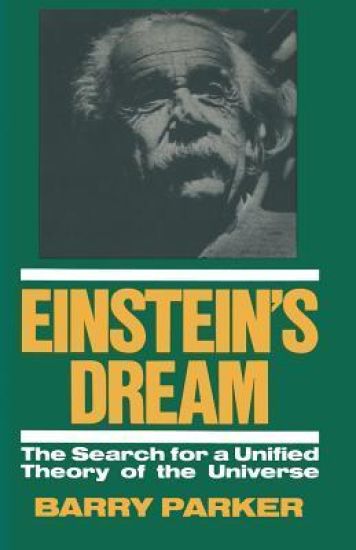
Thirty years ago Albert Einstein died, his dream of a theory that would unify the universe unfulfilled. He spent the last decades of his life searching for such a theory-a theory that would explain everything from elementary particles and their interac tions to the overall structure of the universe. But he failed, not because he didn't try hard enough, but because the attempt was ahead of its time. When Einstein worked on the problem liter ally nothing was known about black holes, white holes, sin gularities, the Big Bang explosion and the early universe, quarks, gauge invariance, and weak and strong nuclear forces. Today we know that all these things are important in relation to a unified theory, and that they must be incorporated in and explained by such a theory. Thus, in a sense, our problem is much more complex today than it was in Einstein's day. But scientists have persevered and as a result we are now tan talizingly close to achieving this long-sought goal. Important breakthroughs have been made. In this book we will look at these breakthroughs and at recent unified theories-theories that go by the names supergravity, superstrings, GUTs, and twistor theory. In order to understand the problem, however, we must begin at the beginning.
I remember sitting spellbound, watching the movie When Worlds Collide. Two planets hurled through space toward Earth while scientists and engineers frantically raced to complete a rocket ship that would take them to safety. In the final moments the spaceship lifted off as the occupants watched the Earth bulge, crack, then literally explode as one of the planets struck it. As I left the theater I wondered if it was really possible for another world to collide with Earth. Later I learned that while many catastrophic collisions no doubt occurred early in the his tory of the solar system, today they are exceedingly rare. I was relieved, but in another sense I was disappointed (not that I hoped a collision of this type would actually occur). A collision of two objects in space, say, two stars, I was sure would be a spectacular event. It is quite unlikely, however, that we will ever witness the collision of two stars. The event is just too rare. But collisions of systems of stars-galaxies-oddly enough, are relatively com mon. In fact, we see evidence of several in the sky right now.
'he year was 1889. The French physicist-mathematician Henry T Poincare could not believe his eyes. He had worked for months on one of the most famous problems in science-the problem of three bodies moving around one another under mutual gravita tional attraction-and what he was seeing dismayed and trou bled him. Since Newton's time it had been assumed that the problem was solvable. All that was needed was a little ingenuity and considerable perseverance, but Poincare saw that this was not the case. Strange, unexplainable things happened when he delved into the problem; it was not solvable after all. Poincare was shocked and dismayed by the result-so disheartened he left the problem and went on to other things. What Poincare was seeing was the first glimpse of a phe nomenon we now call chaos. With his discovery the area lay dormant for almost 90 years. Not a single book was written about the phenomenon, and only a trickle of papers appeared. Then, about 1980 a resurgence of interest began, and thousands of papers appeared along with dozens of books. The new science of chaos was born and has attracted as much attention in recent years as breakthroughs in superconductivity and superstring theory.
Barry R. Posen explores how military doctrine takes shape and the role it plays in grand strategy-that collection of military, economic, and political means and ends with which a state attempts to achieve security. Posen isolates three crucial elements of a given strategic doctrine: its offensive, defensive, or deterrent characteristics, its integration of military resources with political aims, and the degree of military or operational innovation it contains. He then examines these components of doctrine from the perspectives of organization theory and balance of power theory, taking into account the influence of technology and geography.Looking at interwar France, Britain, and Germany, Posen challenges each theory to explain the German Blitzkrieg, the British air defense system, and the French Army's defensive doctrine often associated with the Maginot Line. This rigorous comparative study, in which the balance of power theory emerges as the more useful, not only allows us to discover important implications for the study of national strategy today, but also serves to sharpen our understanding of the origins of World War II.
In this sobering book Barry R. Posen demonstrates how the interplay between conventional military operations and nuclear forces could, in conflicts among states armed with both conventional and nuclear weaponry, inadvertently produce pressures for nuclear escalation. Knowledge of these hidden pressures, he believes, may help some future decision maker avoid catastrophe.
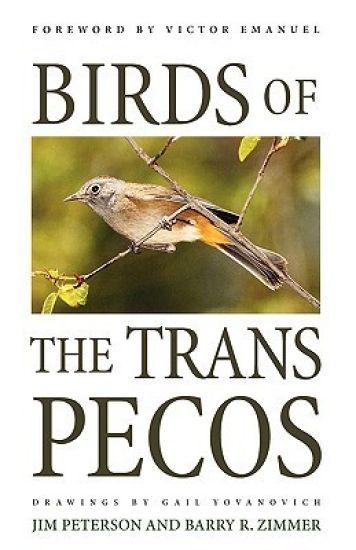
The Trans-Pecos, that huge region of Texas west of the Pecos River, is richer in recorded bird species than all but three of the United States. Hundreds of birders come here each year in search of species such as the Colima Warbler which are rarely if ever spotted in other parts of the country. Yet, until now, there was no comprehensive birding guide devoted to the entire region.Designed for intermediate to advanced birders, Birds of the Trans-Pecos provides an annotated checklist of all 482 species found in the region. The species accounts include seasonal distribution, documentation of nesting, most likely habitat, and the bird's status as a "Texas Review Species." The authors also describe the geography and bird habitats of the Trans-Pecos; federal and state parklands in the area (including Big Bend and Guadalupe Mountains), with the species that occur in each; and the mountain-breeding birds and species of special interest.
Korean Political and Economic Development
Jongryn Mo; Barry R. Weingast
Harvard University, Asia Center
2013
sidottu
How do poor nations become rich, industrialized, and democratic? And what role does democracy play in this transition? To address these questions, Jongryn Mo and Barry R. Weingast study South Korea’s remarkable transformation since 1960. The authors concentrate on three critical turning points: Park Chung Hee’s creation of the development state beginning in the early 1960s, democratization in 1987, and the genesis of and reaction to the 1997 economic crisis. At each turning point, Korea took a significant step toward creating an open access social order.The dynamics of this transition hinge on the inclusion of a wide array of citizens, rather than just a narrow elite, in economic and political activities and organizations. The political economy systems that followed each of the first two turning points lacked balance in the degree of political and economic openness and did not last. The Korean experience, therefore, suggests that a society lacking balance cannot sustain development. Korean Political and Economic Development offers a new view of how Korea was able to maintain a pro-development state with sustained growth by resolving repeated crises in favor of rebalancing and greater political and economic openness.
Radical Responses to Radical Regimes: Evaluating Preemptive Counter-Proliferation: Institute for National Strategic Studies McNair Paper 41
National Defense University; Barry R. Schneider
Createspace Independent Publishing Platform
2012
nidottu
Newspaper Competition in the Millennium
Janet A Bridges; Barry R Litman; Lamar W Bridges
Nova Biomedical
2005
sidottu
Technology in the 21st century has redesigned most editorial jobs and extended the potential reach of any publication, no matter how small . In effect, not only the individual business models but also the overall industry competitive model has changed. No longer confined to serving a physically defined environment, individual newspapers can set their own goals, both for news distribution and for advertising reach, without concern for physical restrictions. And the continual sales of newspaper properties result in mergers, increased clustering and other types of group alliances. The newspaper industry is also affected competitively by employee recruitment and retention, the non-daily market, other news-related media and non-news carriers of advertising. The industry-related technology has in effect exploded, reaching every news medium in some way. Within the framework of the exploding technological environment, the country's economy and changing demographics have created increased challenges for an industry so dependent on advertising revenue and reader reach. This volume explores the competitive issues as they relate to the industry at this time.
Foundations of Migration Economics
George J. Borjas; Barry R. Chiswick
Oxford University Press
2019
sidottu
This book presents a series of research articles written over the past four decades by leading economists George J. Borjas and Barry R. Chiswick. Borjas and Chiswick are leading experts on the adjustment of immigrants in their destination country and their impact on the economy. Although they worked separately throughout their careers, and did not always agree, their intellectual interaction has greatly increased understanding of the economic consequences of international migration and immigration policy across developed immigrant receiving countries. This volume brings together their contributions for the first time to demonstrate how public policy issues on immigration have evolved over time. An in-depth analysis of the key issues relating to international migration Foundations of Migration Economics explores the assimilation of immigrants, focusing on the earning changes of immigrants with a longer duration in the host economy; how immigrant networks and ethnic enclaves influence the labor market and linguistic adjustment of immigrants; determinants of language proficiency and to what extent pre-migration skills are effectively employed by the destination; and the effect of immigration on the earnings of earlier waves of immigrants and native-born workers.
Addiction and Pregnancy
Laura M. Sanders; Barry R. Sherman; Chau Trinh
Praeger Publishers Inc
1998
sidottu
Pioneering evidence is presented in this book to support the effectiveness of peer counseling for substance abuse treatment of pregnant women and their families. The introduction by Barry R. Sherman describes his personal experience as a behavioral scientist doing work in a culture other than his own. A comprehensive overview of the crack epidemic and its impact on women is followed by an up-to-date account of acupuncture in addiction treatment. The authors use the theory and principles of social learning to justify the peer counselor model known as SISTERS. Chapters include discussions of conducting culturally competent research, development and validation of the Abstinence Self-Efficacy Scale (ASES) and the Traumatic Life Events (TLE) Inventory, as well as the social support systems of drug-dependent women. Both quantitative and qualitative methods are used to evaluate program impact. A urine toxicology index of sobriety as well as empirical measures of psychosocial functioning and client satisfaction demonstrate sufficient success and cost-effectiveness of the program to warrant serious support by health care providers and insurance companies.
Strategic Management
Herbert Sherman; Daniel James Rowley; Barry R. Armandi
University Press of America
2005
nidottu
Strategic Management: An Organization Change Approach examines the art and science of strategic management in businesses and other organizations. Working from an established theoretical base, this new work discusses practical applications of various strategic management philosophies while focusing on strategy as organizational change. Sherman, Rowley, and Armandi outline specific strategies and tactics that managers can use to maximize not only productivity, but also satisfaction in their "human organizations." In an interactive and approachable manner, Strategic Management analyzes the importance of an organization's internal and external environment; explains how to develop an organizational mission, vision, values, and goals; identifies human-level vs. corporate-level strategy choices; and offers advice on how managers can effectively implement their plans. The authors also consider variables that might affect the proposed strategic management approaches, such as international environments, and non-profit, government, and small businesses.
Advances in Transportation and Geoenvironmental Systems Using Geosynthetics
Jorge G. (EDT) Zornberg; Barry R. (EDT) Christopher
Amer Society of Civil Engineers
2000
pokkari
Sound Geotechnical Research to Practice
Armin W. Stuedlein; Barry R. Christopher
Amer Society of Civil Engineers
2013
pokkari
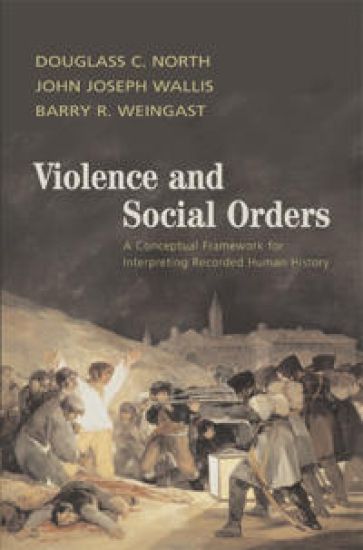
Violence and Social Orders
North Douglass C.; Wallis John Joseph; Weingast Barry R.
Cambridge University Press
2012
pokkari
All societies must deal with the possibility of violence, and they do so in different ways. This book integrates the problem of violence into a larger social science and historical framework, showing how economic and political behavior are closely linked. Most societies, which we call natural states, limit violence by political manipulation of the economy to create privileged interests. These privileges limit the use of violence by powerful individuals, but doing so hinders both economic and political development. In contrast, modern societies create open access to economic and political organizations, fostering political and economic competition. The book provides a framework for understanding the two types of social orders, why open access societies are both politically and economically more developed, and how some 25 countries have made the transition between the two types.
In recent years, the growth of the federal government and its failure to resolve many major problems have ignited a serious new debate. Some scholars and policymakers suggest that reinvigorating American federalism—returing a variety of regulatory and police powers back to the states—may better solve many of these problems. Others claim that it will gut policies or cripple national regulation. This book confronts these issues as it investigates the central question of the new American federalism: Will it yield better government, in doing so it poses the provocative question, Can the states be trusted? Proponents of greater federalism argue that it creates competition and fosters the "laboratory of the states." Opponents claim that decentralizing power to the states will lead to a "race to the bottom." The contributors to the volume examine the current state of knowledge and evidence about both sides of the argument and offer •A historical and constitutional perspective that raises important questions for the contemporary debate •The main lessons of modern economics applicable to the new federalism •Evidence on interstate competition in three important policy domains: welfare, the environment, and corporate law •An outline of the relative merits of a statutory versus a constitutional basis for the new federalism The authors of the The New Federalism: Can the State be Trusted? conclude that the answer is a qualified yes. The studies in this volume find little evidence for a race to the bottom in three major policy domains. his book should be an invaluable resource to federal and state policymakers alike.
Violence and Social Orders
Douglass C. North; John Joseph Wallis; Barry R. Weingast
Cambridge University Press
2009
sidottu
All societies must deal with the possibility of violence, and they do so in different ways. This book integrates the problem of violence into a larger social science and historical framework, showing how economic and political behavior are closely linked. Most societies, which we call natural states, limit violence by political manipulation of the economy to create privileged interests. These privileges limit the use of violence by powerful individuals, but doing so hinders both economic and political development. In contrast, modern societies create open access to economic and political organizations, fostering political and economic competition. The book provides a framework for understanding the two types of social orders, why open access societies are both politically and economically more developed, and how some 25 countries have made the transition between the two types.