English summary: Bishop WM Morris was born in Brisbane in 1943, and was ordained a priest in 1969. From 1979 to 1985 he was Secretary to Archbishop Francis Rush. He was Bishop of Toowoomba from 1992 to... German description:
Inspired by the religious life of St. Benedict, richly illustrated, and drawing upon his work with students, MacDonald adapts eight spiritual disciplines for emerging young adults. Written for those who work with emerging adults--college and university chaplains, campus ministers, student leaders, pastors, para-church professionals, and spiritual directors, this practical guide provides a new framework and gives concrete examples of how spiritual disciplines can be incorporated into different ministry settings.The book includes these spiritual disciplines: Communal Prayer Lectio Divina Contemplative Prayer Service Spiritual Direction Pilgrimage Intentional Community Hospitality
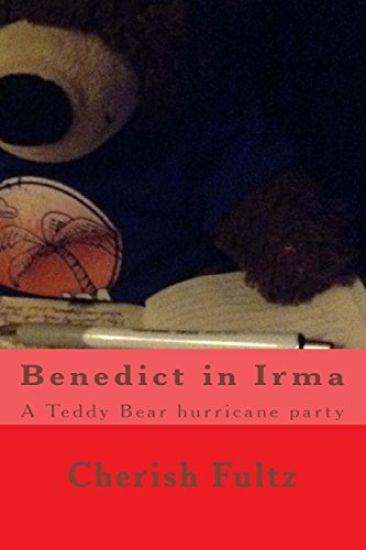
In June 2017, Benedict's family takes a surprise vacation for Mom's birthday. Here is your virtual ticket to travel alongside Benedict as a teddy bear of the trip. You will have teddy bear vision with the best views of the fun bits and a sleep through the boring bits. Enjoy.
Smarter in sixty minutes. Get smarter in just 60 minutes with in60Learning. Concise and elegantly written non-fiction books and audiobooks help you learn the core subject matter in 20% of the time that it takes to read a typical book. Life is short, so explore a multitude of fascinating historical, biographical, scientific, political, and financial topics in only an hour each. "Don't be a Benedict Arnold " In North America, this very name is synonymous with traitor, backstabber, conspirator. Yet before he defected to the British Army, Arnold's contemporaries praised him for his heroism. What caused this man to turn on his peers and sully his name for all time? This fascinating look into Arnold's life unravels the bias surrounding the man, shedding light on the intent behind his infamous act.
*Includes pictures *Includes contemporary accounts *Includes online resources and a bibliography for further reading The story of Ethan Allen and his Green Mountain Boys is one of those delightful tales that American schoolchildren hear about in school, but it is also one that is much more interesting to read about in older age. Unlike revered Founding Fathers such as George Washington and Thomas Jefferson, who came from Virginian plantations, Allen was a rough and tumble frontiersman more likely to fight than talk. And yet, he was in no way a dullard, but instead as well-read as many of his contemporaries and more so than the average man of his day. His family story reads almost like a cheap novel, from his heretic father to his hotheaded brothers and his shrewish first wife. By the time he was 30 years old, Allen had run up a significant list of skirmishes with law, something most of his fellow Revolutionary War heroes managed to avoid. Unlike Washington, who received his military training as a soldier in the famous British Army, Allen learned to fight in the backwoods of what is now Vermont, struggling alongside others for independence years before Jefferson wrote the Declaration of Independence. While Ethan Allen's potential treachery is still a subject for debate, that is certainly not the case for American history's most infamous traitor. On October 7, 1777, Benedict Arnold rode out against orders and led an American assault against British forces led by General John Burgoyne in one of the climactic battles and ultimate turning point of the war at Saratoga. Near the end of the most important American victory of the Revolution, Arnold's leg was shattered by a volley that also hit his horse, which fell on the leg as well. Arnold would later remark that he wish the shot had hit him in the chest. If it had, he would be remembered as one of America's greatest war heroes, and probably second only to George Washington among the generals of the Revolution. In fact, when Arnold was injured at the height of his success in October 1777, he had been the most successful leader of American forces during the war to date. Arnold had been instrumental in the seizure of Fort Ticonderoga in 1775, he constructed the first makeshift American navy to defend Lake Champlain and delay British campaigning in 1776, and he was the principal leader at Saratoga in 1777. Even his unsuccessful campaign to Quebec in the winter of 1775 is remembered primarily for the amazing logistical feats undertaken by Arnold and his men to even reach the target. History has accorded Arnold his fair share of credit for the fighting he participated in from 1775-1777. The problem is his contemporaries did not. Arnold was better on the field than any other American general in those years, but his mercurial personality rubbed some the wrong way, and other self-promoting generals, from Ethan Allen to Horatio Gates, credited themselves with success at Arnold's expense. Meanwhile, the Second Continental Congress frequently if inadvertently slighted Arnold, failing to duly promote him in a timely fashion and failing to pay him four years of back pay even as he spent his own private fortune training, equipping, and feeding his army and navy. Historian William Sterne Randall estimates Congress shorted Arnold out of the equivalent of $275,000. Today, of course, all of that has been overshadowed by Arnold's treacherous plot to turn over West Point to the British in 1780. As every American knows, Arnold's plot was uncovered, and he barely escaped to the British side, where he was just as distrusted and nearly as despised. Though he would serve as a brigadier-general for the British through the end of the war, his personal fortune and reputation were permanently tarnished. The man who could have been one of his country's greatest heroes became its most despised traitor.
*Includes pictures *Includes contemporary accounts *Includes online resources and a bibliography for further reading The story of Ethan Allen and his Green Mountain Boys is one of those delightful tales that American schoolchildren hear about in school, but it is also one that is much more interesting to read about in older age. Unlike revered Founding Fathers such as George Washington and Thomas Jefferson, who came from Virginian plantations, Allen was a rough and tumble frontiersman more likely to fight than talk. And yet, he was in no way a dullard, but instead as well-read as many of his contemporaries and more so than the average man of his day. His family story reads almost like a cheap novel, from his heretic father to his hotheaded brothers and his shrewish first wife. By the time he was 30 years old, Allen had run up a significant list of skirmishes with law, something most of his fellow Revolutionary War heroes managed to avoid. Unlike Washington, who received his military training as a soldier in the famous British Army, Allen learned to fight in the backwoods of what is now Vermont, struggling alongside others for independence years before Jefferson wrote the Declaration of Independence. While Ethan Allen's potential treachery is still a subject for debate, that is certainly not the case for American history's most infamous traitor. On October 7, 1777, Benedict Arnold rode out against orders and led an American assault against British forces led by General John Burgoyne in one of the climactic battles and ultimate turning point of the war at Saratoga. Near the end of the most important American victory of the Revolution, Arnold's leg was shattered by a volley that also hit his horse, which fell on the leg as well. Arnold would later remark that he wish the shot had hit him in the chest. If it had, he would be remembered as one of America's greatest war heroes, and probably second only to George Washington among the generals of the Revolution. In fact, when Arnold was injured at the height of his success in October 1777, he had been the most successful leader of American forces during the war to date. Arnold had been instrumental in the seizure of Fort Ticonderoga in 1775, he constructed the first makeshift American navy to defend Lake Champlain and delay British campaigning in 1776, and he was the principal leader at Saratoga in 1777. Even his unsuccessful campaign to Quebec in the winter of 1775 is remembered primarily for the amazing logistical feats undertaken by Arnold and his men to even reach the target. History has accorded Arnold his fair share of credit for the fighting he participated in from 1775-1777. The problem is his contemporaries did not. Arnold was better on the field than any other American general in those years, but his mercurial personality rubbed some the wrong way, and other self-promoting generals, from Ethan Allen to Horatio Gates, credited themselves with success at Arnold's expense. Meanwhile, the Second Continental Congress frequently if inadvertently slighted Arnold, failing to duly promote him in a timely fashion and failing to pay him four years of back pay even as he spent his own private fortune training, equipping, and feeding his army and navy. Historian William Sterne Randall estimates Congress shorted Arnold out of the equivalent of $275,000. Today, of course, all of that has been overshadowed by Arnold's treacherous plot to turn over West Point to the British in 1780. As every American knows, Arnold's plot was uncovered, and he barely escaped to the British side, where he was just as distrusted and nearly as despised. Though he would serve as a brigadier-general for the British through the end of the war, his personal fortune and reputation were permanently tarnished. The man who could have been one of his country's greatest heroes became its most despised traitor.
Peches dans l'Amerique du Nord, par Benedict-Henry Revoil. Nouvelle edition illustree par Yan' DargentDate de l'edition originale: 1886Ce livre est la reproduction fidele d'une oeuvre publiee avant 1920 et fait partie d'une collection de livres reimprimes a la demande editee par Hachette Livre, dans le cadre d'un partenariat avec la Bibliotheque nationale de France, offrant l'opportunite d'acceder a des ouvrages anciens et souvent rares issus des fonds patrimoniaux de la BnF.Les oeuvres faisant partie de cette collection ont ete numerisees par la BnF et sont presentes sur Gallica, sa bibliotheque numerique.En entreprenant de redonner vie a ces ouvrages au travers d'une collection de livres reimprimes a la demande, nous leur donnons la possibilite de rencontrer un public elargi et participons a la transmission de connaissances et de savoirs parfois difficilement accessibles.Nous avons cherche a concilier la reproduction fidele d'un livre ancien a partir de sa version numerisee avec le souci d'un confort de lecture optimal. Nous esperons que les ouvrages de cette nouvelle collection vous apporteront entiere satisfaction.Pour plus d'informations, rendez-vous sur www.hachettebnf.fr
Benedict's Wanderings - In Ireland, Scotland, Italy and Sicily is an unchanged, high-quality reprint of the original edition of 1873. Hansebooks is editor of the literature on different topic areas such as research and science, travel and expeditions, cooking and nutrition, medicine, and other genres. As a publisher we focus on the preservation of historical literature. Many works of historical writers and scientists are available today as antiques only. Hansebooks newly publishes these books and contributes to the preservation of literature which has become rare and historical knowledge for the future.
Benedict's Treatise - Containing a summary of the jurisdiction, powers and duties of justices of the peace in the State of New York adapted to the code of procedure in civil cases. Vol. 1 is an unchanged, high-quality reprint of the original edition of 1878. Hansebooks is editor of the literature on different topic areas such as research and science, travel and expeditions, cooking and nutrition, medicine, and other genres. As a publisher we focus on the preservation of historical literature. Many works of historical writers and scientists are available today as antiques only. Hansebooks newly publishes these books and contributes to the preservation of literature which has become rare and historical knowledge for the future.