Kirjojen hintavertailu. Mukana 11 342 418 kirjaa ja 12 kauppaa.

Kirjahaku

Etsi kirjoja tekijän nimen, kirjan nimen tai ISBN:n perusteella.

1000 tulosta hakusanalla Benjamin C Howard

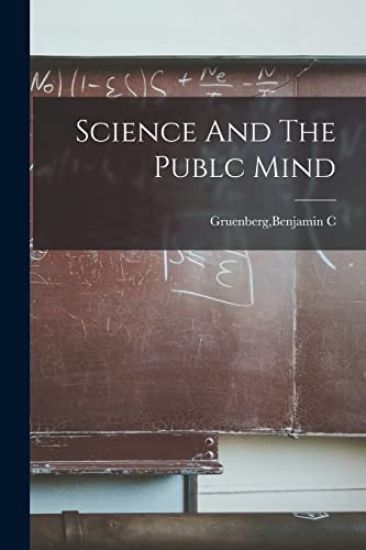
Science And The Publc Mind

Science And The Publc Mind

Benjamin C. Gruenberg

Hassell Street Press
2021
sidottu
This work has been selected by scholars as being culturally important and is part of the knowledge base of civilization as we know it.This work is in the public domain in the United States of America, and possibly other nations. Within the United States, you may freely copy and distribute this work, as no entity (individual or corporate) has a copyright on the body of the work.Scholars believe, and we concur, that this work is important enough to be preserved, reproduced, and made generally available to the public. To ensure a quality reading experience, this work has been proofread and republished using a format that seamlessly blends the original graphical elements with text in an easy-to-read typeface.We appreciate your support of the preservation process, and thank you for being an important part of keeping this knowledge alive and relevant.
Science And The Publc Mind

Science And The Publc Mind

Benjamin C. Gruenberg

Hassell Street Press
2021
nidottu
This work has been selected by scholars as being culturally important and is part of the knowledge base of civilization as we know it.This work is in the public domain in the United States of America, and possibly other nations. Within the United States, you may freely copy and distribute this work, as no entity (individual or corporate) has a copyright on the body of the work.Scholars believe, and we concur, that this work is important enough to be preserved, reproduced, and made generally available to the public. To ensure a quality reading experience, this work has been proofread and republished using a format that seamlessly blends the original graphical elements with text in an easy-to-read typeface.We appreciate your support of the preservation process, and thank you for being an important part of keeping this knowledge alive and relevant.
The Knowledge Cafe

The Knowledge Cafe

Benjamin C Anyacho

Readhowyouwant
2021
pokkari
Knowledge Caf (c) is a process for sharing information, whether face to face or virtual. This popular and practical knowledge management tool supports a culture where projects and innovation thrive. The Knowledge Caf (c) is a mindset and environment for engaging, discussing, and exchanging knowledge within a group either face to face or virtually. At the caf (c), participants can discuss hard-to-solve project issues or resolve a family or community crisis. This metaphorical town square supports knowledge circulation and rejuvenation and increases its velocity-making it a breeding ground for innovation. The aha moments at one Knowledge Caf (c) can match the benefits of multiple conferences, workshops, and training put together. When knowledge management (KM) is part of an organization's culture, performance improves, collaboration increases, and the competitive advantage accelerates. No one can force knowledge transfer. We must create the right environment where knowledge is freely shared, rewarded, and fun. This book demonstrates why the Knowledge Caf (c) is such an effective KM tool and shows how to design optimal caf (c) experiences and increase learning agility. The premium on knowledge and agility has never been greater. This book offers a technique for managing knowledge toward the greater good. Tips; templates; practical and relatable experiences; case studies; and examples of knowledge brokers, creators, and sharers across cultures are sprinkled throughout the book to show how the caf (c) interfaces with other KM techniques and in different work and project spaces.
Introduction to Affordable Housing in a Rich Black Nation: A Book Written for Low, Medium and High Income Earners ...
This book is a first of its kind ever written in this part of the country because hardly has it been practiced. It is not only a source of education but helps in creating an informed decision or opinion on building an affordable house that is not just comfortable but stands the test of time.In this book, you will learn and understand, you don't just need a house you need a comfortable shelter. Why do developed countries consider this type of construction as a way of developmental growth, with improved standard of living, but developing and underdeveloped countries don't? Learn and find out the misconceptions.You will also learn how to build with what you have; know what it takes to build a lightweight house; learn about the much-elaborated treatment of wood and unimagined safety techniques never applied before anywhere in the world. Build and move in; Completely finished to your taste in not more than two (2) weeks.
An Introduction to Design Arguments

An Introduction to Design Arguments

Benjamin C. Jantzen

Cambridge University Press
2014
sidottu
The history of design arguments stretches back to before Aquinas, who claimed that things which lack intelligence nevertheless act for an end to achieve the best result. Although science has advanced to discredit this claim, it remains true that many biological systems display remarkable adaptations of means to ends. Versions of design arguments have persisted over the centuries and have culminated in theories that propose an intelligent designer of the universe. This volume is the only comprehensive survey of 2,000 years of debate, drawing on both historical and modern literature to identify, clarify and assess critically the many forms of design argument for the existence of God. It provides a neutral, informative account of the topic from antiquity to Darwin, and includes concise primers on probability and cosmology. It will be of great value to upper-level undergraduates and graduates in philosophy of religion, theology, and philosophy of science.
Taming the Bear: Countering Russian Energy Dominance in Europe
European energy supplies are not secure. While individual nations have varying levels of energy security, too many European Union (EU) members, particularly those in Central and Eastern Europe, rely almost completely upon Russian state-owned monopolies for their energy supply. These monopolies act at the behest of the Kremlin and political motivations often outweigh financial incentives. The Putin administration has proved time and again in Ukraine, Czech Republic, Belarus, Poland, the Baltics, Georgia and others nations that it is willing and able to wield its energy dominance as a weapon of foreign policy. This paper's thesis is to determine how the United States and EU can limit this Russian influence over Europe. The paper begins with an analysis of the current key issues in the European-Russian energy relationship, including pipelines and infrastructure, Russian politics in the energy industry, and a history of past energy disputes while building an argument on why action is required. It then examines potential methods of countering Russian influence through increasing pipeline, supplier, and energy source diversity; enforcing current laws; and reforming the EU energy market. Critical analysis shows that gas market reform and diversifying suppliers are the best methods. This work has been selected by scholars as being culturally important, and is part of the knowledge base of civilization as we know it. This work was reproduced from the original artifact, and remains as true to the original work as possible. Therefore, you will see the original copyright references, library stamps (as most of these works have been housed in our most important libraries around the world), and other notations in the work. This work is in the public domain in the United States of America, and possibly other nations. Within the United States, you may freely copy and distribute this work, as no entity (individual or corporate) has a copyright on the body of the work. As a reproduction of a historical artifact, this work may contain missing or blurred pages, poor pictures, errant marks, etc. Scholars believe, and we concur, that this work is important enough to be preserved, reproduced, and made generally available to the public. We appreciate your support of the preservation process, and thank you for being an important part of keeping this knowledge alive and relevant.
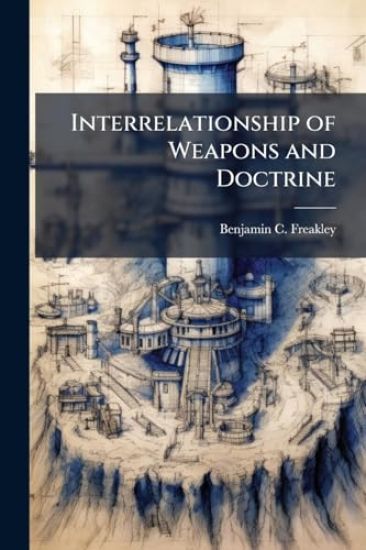
Interrelationship of Weapons and Doctrine: The Case of the Bradley Infantry Fighting Vehicle
This monograph discusses how well U. S. Army doctrine exploits the development of weapons. With the rapid ongoing modernization of our forces, it is imperative that the army make the most out of new technology. The premise is that current U. S. Army doctrine and tactical writings fail to make the maximum use of the weapons that have been developed. The methodology used to defend this premise begins with an introduction to the problem. Disclosing that the struggle between weapons and doctrine is not new, the introduction continues by arguing that it is critical to strike a balance between weapons and doctrine. Next, the terms, doctrine, tactics and technology are defined and their relationship to weapons is discussed. The monograph examines three historical cases to illustrate the problem and to reach some conclusions on how doctrine might have better exploited the weapons being discussed. These examples are the Spencer repeating rifle in the Civil War, chemical weapons in World War I and the Sheridan armored reconnaissance assault vehicle that was developed in the 1960s. Following the historical analysis, the problem is updated by using the Bradley Infantry Fighting Vehicle as a case study. The first step is a look at the technological development of the vehicle. The genesis of the Bradley is reviewed from the half-track to the future BIFV. A discussion of the impact of doctrine on Bradley growth and current employment follows the technological review. The monograph ends with an analysis of what effect the lack of doctrine has had on the Bradley and recommends a method to ensure that doctrine and weapons complement each other. On the next high or mid-intensity battlefield, technology guarantees intense and highly destructive combat. For the protection of U. S. army soldiers and the survival of our nation, it is imperative that doctrine exploits new weapons. This work has been selected by scholars as being culturally important, and is part of the knowledge base of civilization as we know it. This work was reproduced from the original artifact, and remains as true to the original work as possible. Therefore, you will see the original copyright references, library stamps (as most of these works have been housed in our most important libraries around the world), and other notations in the work. This work is in the public domain in the United States of America, and possibly other nations. Within the United States, you may freely copy and distribute this work, as no entity (individual or corporate) has a copyright on the body of the work. As a reproduction of a historical artifact, this work may contain missing or blurred pages, poor pictures, errant marks, etc. Scholars believe, and we concur, that this work is important enough to be preserved, reproduced, and made generally available to the public. We appreciate your support of the preservation process, and thank you for being an important part of keeping this knowledge alive and relevant.

Biology and Human Life

Biology and Human Life

Benjamin C 1875-1965 Gruenberg

Palala Press
2018
pokkari
This work has been selected by scholars as being culturally important, and is part of the knowledge base of civilization as we know it. This work was reproduced from the original artifact, and remains as true to the original work as possible. Therefore, you will see the original copyright references, library stamps (as most of these works have been housed in our most important libraries around the world), and other notations in the work.This work is in the public domain in the United States of America, and possibly other nations. Within the United States, you may freely copy and distribute this work, as no entity (individual or corporate) has a copyright on the body of the work.As a reproduction of a historical artifact, this work may contain missing or blurred pages, poor pictures, errant marks, etc. Scholars believe, and we concur, that this work is important enough to be preserved, reproduced, and made generally available to the public. We appreciate your support of the preservation process, and thank you for being an important part of keeping this knowledge alive and relevant.

Introduction to Privacy-Preserving Data Publishing

Introduction to Privacy-Preserving Data Publishing

Benjamin C.M. Fung; Ke Wang; Ada Wai-Chee Fu; Philip S. Yu

Chapman Hall/CRC
2010
sidottu
Gaining access to high-quality data is a vital necessity in knowledge-based decision making. But data in its raw form often contains sensitive information about individuals. Providing solutions to this problem, the methods and tools of privacy-preserving data publishing enable the publication of useful information while protecting data privacy. Introduction to Privacy-Preserving Data Publishing: Concepts and Techniques presents state-of-the-art information sharing and data integration methods that take into account privacy and data mining requirements. The first part of the book discusses the fundamentals of the field. In the second part, the authors present anonymization methods for preserving information utility for specific data mining tasks. The third part examines the privacy issues, privacy models, and anonymization methods for realistic and challenging data publishing scenarios. While the first three parts focus on anonymizing relational data, the last part studies the privacy threats, privacy models, and anonymization methods for complex data, including transaction, trajectory, social network, and textual data.This book not only explores privacy and information utility issues but also efficiency and scalability challenges. In many chapters, the authors highlight efficient and scalable methods and provide an analytical discussion to compare the strengths and weaknesses of different solutions.