

Kirjahaku
Etsi kirjoja tekijän nimen, kirjan nimen tai ISBN:n perusteella.
1000 tulosta hakusanalla Benjamin Labatut

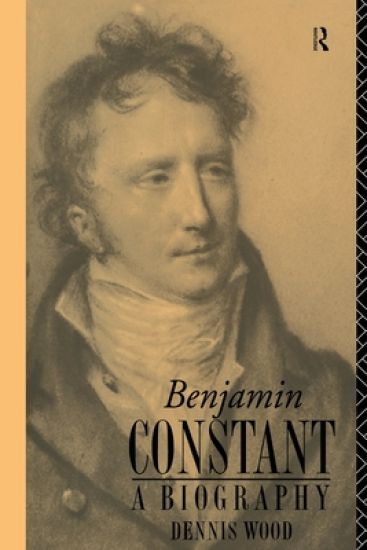
`For forty years I have defended the same principle: freedom in everything, in religion, in philosophy, in literature, in industry, in politics - and by freedom I mean the triumph of the individual.' Constant thus summarized his beliefs at the end of his life. A political theorist and a passionate defender of individual liberty, he was also the author of one of the greatest French novels of psychological insight, Adolphe. In a major new biography Dennis Wood traces the development of Constant as a writer centrally preoccupied with the problematics of freedom, not only in the fields of politics and religious belief but also in his own troubled relationship with several women.

Known for his influential role in the debates that established the founding documents of the United States, Benjamin Franklin was not only an astute politician, but also an Atlantic citizen whose commitment to the American cause was informed by years spent in England and France. The life of this iconic founder provides an ideal opportunity for students to take a closer look at eighteenth century colonial society and the contested formation of the early American nation.In this carefully contextualized account, Nathan R. Kozuskanich considers the many facets of Franklin’s private and public lives, and shows how Franklin grappled with issues that still concern us today: the right to bear arms, the legacy of slavery, and the nature of American democracy. In a concise narrative bolstered by supporting primary documents, Benjamin Franklin: American Founder, Atlantic Citizen introduces students to the world of the burgeoning United States and enables them to understand the journey from imperial colonies to an independent nation dedicated to the premise that all men are created equal.

Known for his influential role in the debates that established the founding documents of the United States, Benjamin Franklin was not only an astute politician, but also an Atlantic citizen whose commitment to the American cause was informed by years spent in England and France. The life of this iconic founder provides an ideal opportunity for students to take a closer look at eighteenth century colonial society and the contested formation of the early American nation.In this carefully contextualized account, Nathan R. Kozuskanich considers the many facets of Franklin’s private and public lives, and shows how Franklin grappled with issues that still concern us today: the right to bear arms, the legacy of slavery, and the nature of American democracy. In a concise narrative bolstered by supporting primary documents, Benjamin Franklin: American Founder, Atlantic Citizen introduces students to the world of the burgeoning United States and enables them to understand the journey from imperial colonies to an independent nation dedicated to the premise that all men are created equal.

Walter Benjamin has become a decisive reference point for a whole range of critical disciplines, as he constructed a unique and provocative synthesis of aesthetics, politics and philosophy. Examining Benjamin’s contributions to cultural criticism in relation to the works of Max Ernst, Adolf Loos, Le Corbusier and Sigfried Giedion, this book also situates Benjamin’s work within more recent developments in architecture and urbanism. This is a concise, coherent account of the relevance of Walter Benjamin’s writings to architects, locating Benjamin’s critical work within the context of contemporary architecture and urbanism.

Walter Benjamin has become a decisive reference point for a whole range of critical disciplines, as he constructed a unique and provocative synthesis of aesthetics, politics and philosophy. Examining Benjamin’s contributions to cultural criticism in relation to the works of Max Ernst, Adolf Loos, Le Corbusier and Sigfried Giedion, this book also situates Benjamin’s work within more recent developments in architecture and urbanism. This is a concise, coherent account of the relevance of Walter Benjamin’s writings to architects, locating Benjamin’s critical work within the context of contemporary architecture and urbanism.
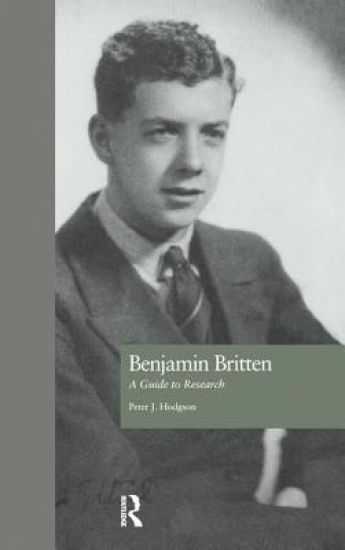
This work constitutes the largest and most comprehensive research guide ever published about Benjamin Britten. Entries survey the most significant published materials relating to the composer, including bibliographies, catalogs, letters and documents, conference reports, biographies, and studies of Britten's music.
A richly crafted novel, here is a tale that is at once the adventure-filled story of an unusual father and son and a front-row view of the momentous events that shaped the 20th century.

At the age of 71, Jean Pierre Michel Chernovsky has everything a tycoon in 1929 America could possibly want - except a son. Enter Benjamin, a startlingly beautiful orphan of the Depression, with a wonderful but potentially destructive gift.

Advance praise from Kweisi Mfume, President and CEO, NAACP "Herein breathes the universal genius Benjamin Banneker mathematician, astronomer, diarist, and sage. Biographer Charles Cerami mines the available data, eschews the apocryphal, and renders his subject human. Captured completely is the flowering genius of a largely home-schooled boy wonder, exhibiting mathematical wizardry while devouring the Bible, Plato, Epictetus, and virtually every other extant tome. The fabled memory that could have reproduced L’Enfant’s plan for the entire District of Columbia becomes palpable and real. We understand how the pragmatic farmer who was imbued with Quaker ideology endured decades of ignominious racism with overt equanimity while haunted by incessant night terrors. We comprehend the heroism of the man whose very existence refuted Thomas Jefferson’s notorious public denial of black intellect in Notes on Virginia when, speaking truth to power, Banneker launched an anti-slavery epistle at the ambivalent and duplicitous Jefferson. We are enraged at the account of arsonists setting fire on the day of Banneker’s funeral to the small, rustic log cabin where the genius had labored in solitude among his instruments, papers, and books. We are grateful to Charles Cerami, who has resurrected the spirit of a neglected giant and gifted us with a biography nearly two centuries overdue." "Like Benjamin Banneker, Charles Cerami presents the product of his research in a modest yet compelling manner. Cerami engagingly writes about both Banneker the genius and Banneker the man–a thought-provoking read." Raymond G. Dobard, Ph.D., Professor of Art, Howard University, and coauthor of Hidden in Plain View: A Secret story of Quilts and the Underground Railroad
One of the most popular works of American literature, this charming self-portrait has been translated into nearly every language. It covers Franklin's life up to his prewar stay in London as representative of the Pennsylvania Assembly, including his boyhood years, work as a printer, experiments with electricity, political career, much more.

In this engaging study of the much-loved statesman and polymath, Robert Middlekauff uncovers a little-known aspect of Benjamin Franklin's personality--his passionate anger. He reveals a fully human Franklin who led a remarkable life but nonetheless had his share of hostile relationships--political adversaries like the Penns, John Adams, and Arthur Lee--and great disappointments--the most significant being his son, William, who sided with the British. Utilizing an abundance of archival sources, Middlekauff weaves episodes in Franklin's emotional life into key moments in colonial and Revolutionary history. The result is a highly readable narrative that illuminates how historical passions can torment even the most rational and benevolent of men.
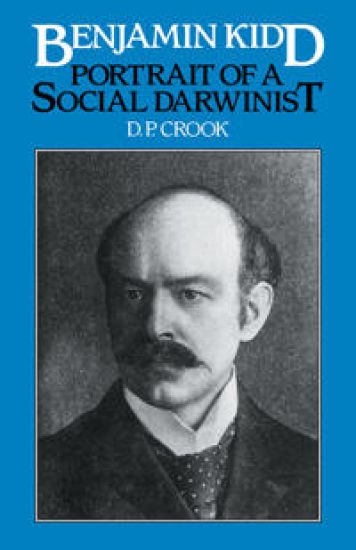
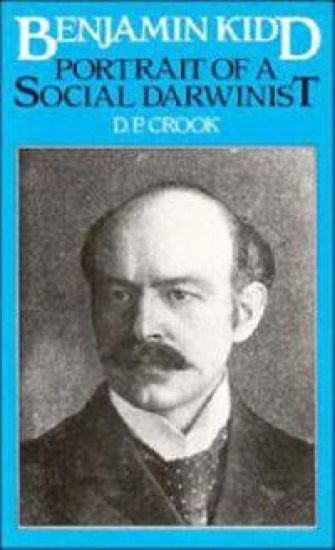
This is an intellectual biography of Benjamin Kidd, a leading Social Darwinist in the years before World War I, and a social prophet in the tradition of Comte and Spencer. His first book Social Evolution, published in 1894, was an immediate and enormous success around the world. In it, Kidd developed a collectivist form of Social Darwinism in tune with the values of Progressivism in America and the 'new liberalism' in Britain. By many it was regarded as the basis for a properly scientific sociology, and the combination of its claims to scientific methodology, with an emphasis on non-rational forces as the agents of progress accurately caught the temper of its times. Launched on his career as a writer, Kidd's subsequent books and journalism continued to exercise extraordinary influence. His 'social imperialism', linking a bio-political defence of empire with a programme of social reform, won currency in the Anglo-American world at a time of expansionary fervour.
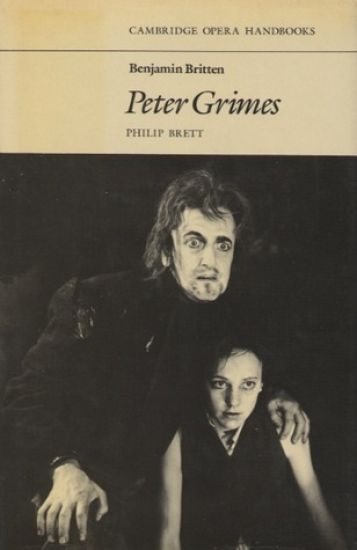
Benjamin Britten's Peter Grimes is one of the few operas of the last half-century to have gained a secure place in the repertory.

Benjamin Britten: The Turn of the Screw
Cambridge University Press
1985
sidottu
This book is designed to introduce the non-specialist music lover to Britten's opera, The Turn of the Screw.

Benjamin Britten: Death in Venice
Cambridge University Press
1987
sidottu
This book is a source of first-hand information on Britten's final operatic achievement.

Benjamin Britten: The Turn of the Screw
Cambridge University Press
1985
pokkari
This book is designed to introduce the non-specialist music lover to Britten's opera, The Turn of the Screw. The opening chapters by Vivien Jones and Patricia Howard deal with the literary source of the opera Oames's novella), the structure of the libretto, and the technique by which a short story was transformed into an opera. The central chapter, on the musical style and structures of the opera, includes an account of the composition process deduced from early sketches of the work by John Evans, an analysis of the unique form of the opera with a more detailed examination of the last scene by Patricia Howard, and an account of the significance and effect of the orchestration by Christopher Palmer. Finally, Patricia Howard traces the stage history of the work, from its initial reception in Venice in 1954, through some seminal reinterpretations in the 1960s to its present established position in the repertoire. The book is generously illustrated and there is also a bibliography and discography.
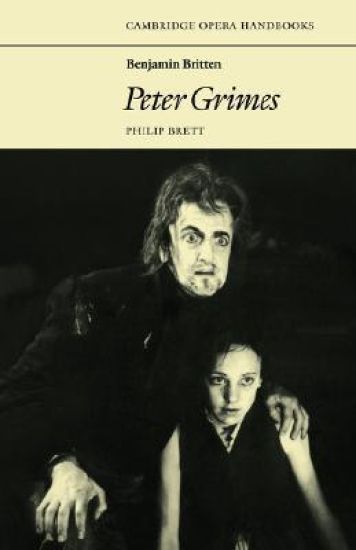
Benjamin Britten's Peter Grimes is one of the few operas of the last half-century to have gained a secure place in the repertory. Its appearance in 1945 shortly after the end of the war in Europe was a milestone in operatic history as well as in British music. But the origins of the work lie in the United States, where Britten and his friend Peter Pears (the first Grimes) spent the years 1939–42. In 1941 they read an evocative essay by the novelist E. M. Forster on the Suffolk poet George Crabbe (1754–1832); this precipitated Britten's decision to return to his native country, and sent them both to Crabbe's poem, The Borough, which gave them the idea for the plot they drafted together. This book opens with Forster's original essay and his later one on Crabbe and Peter Grimes. From there the reader can trace the history of the opera: in Donald Mitchell's annotated interview with the wife of the librettist, Montagu Slater; in Philip Brett's detailed study of the fascinating documents preserved in the Britten–Pears Library at Aldeburgh; and in his history of the work's stage presentation and critical reception. Hans Keller's remarkable synopsis, first printed in 1952, is complemented by a fine new analytical study by David Matthews of Act II scene 1, the crux of the opera.