

Kirjahaku
Etsi kirjoja tekijän nimen, kirjan nimen tai ISBN:n perusteella.
1000 tulosta hakusanalla Benjamin Wall


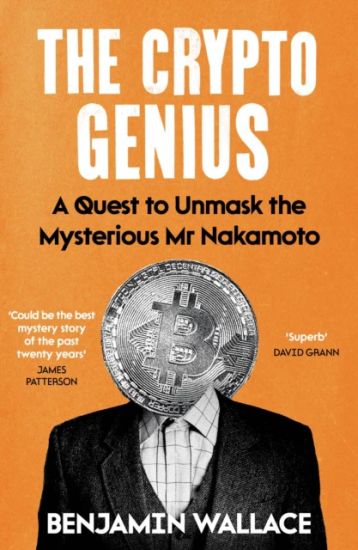
A thrilling investigation into the mysterious identity of Bitcoin's creator and a deep dive into crypto's utopian origin story from a New York Times bestselling author




The Defense Lawyer: The Barry Slotnick Story
James Patterson; Benjamin Wallace
Little Brown and Company
2021
nidottu
From a master of true crime comes the story of the criminal lawyer who represented everybody from Manuel Noriega to John Gotti to Bernie Goetz--and won every single case. Known for his sharp mind, sharp suits, and bold courtroom strategies, Bronx-native Barry Slotnick is known as the best criminal lawyer in the US. He calls himself "Liberty's Last Champion." Slotnick mediates Bette Midler's bathhouse contract and represents John Gotti, "The Dapper Don." He defends "Subway Shooter" Bernie Goetz and negotiates future First Lady Melania Trump's pre-nup. His unparalleled legal brilliance defines a profession, a city--and an era.
Hypnosis And Imagination
Robert Kunzendorf; Nicholas Spanos; Benjamin Wallace
Routledge
2018
nidottu
The book's first three chapters-by Sheehan and Robertson; Wagstaff; Council, Kirsch, and Grant - conclude that three different factors turn imagination into hypnosis. The next three chapters-by Lynn, Neufeld, Green, Rhue, and Sandberg; Rader, Kunzendorf, and Carrabino; and Barrett-explore the hypnotic and the clinical significance of absorption in imagination. Three subsequent chapters-by Coe; Gwynn and Spanos; and Gorassini-examine the role of compliance and imagination in various hypnotic phenomena. Pursuing the possibility that some hypnotic hallucinations are experienced differently from normal images, the following two chapters-by Perlini, Spanos, and Jones; and Kunzendorf and Boisvert-focus on negative hallucinating, which reportedly "blocks out" perceptual reality. The remaining three chapters-by Wallace and Turosky; Crawford; and Persinger-pursue other physiological differences, and possible physiological connections, between hypnosis and imagination.

Hypnosis and Imagination
Robert Kunzendorf; Nicholas Spanos; Benjamin Wallace
Baywood Publishing Company Inc
1996
sidottu
The book's first three chapters-by Sheehan and Robertson; Wagstaff; Council, Kirsch, and Grant - conclude that three different factors turn imagination into hypnosis. The next three chapters-by Lynn, Neufeld, Green, Rhue, and Sandberg; Rader, Kunzendorf, and Carrabino; and Barrett-explore the hypnotic and the clinical significance of absorption in imagination. Three subsequent chapters-by Coe; Gwynn and Spanos; and Gorassini-examine the role of compliance and imagination in various hypnotic phenomena. Pursuing the possibility that some hypnotic hallucinations are experienced differently from normal images, the following two chapters-by Perlini, Spanos, and Jones; and Kunzendorf and Boisvert-focus on negative hallucinating, which reportedly "blocks out" perceptual reality. The remaining three chapters-by Wallace and Turosky; Crawford; and Persinger-pursue other physiological differences, and possible physiological connections, between hypnosis and imagination.


Benjamin Graham on Value Investing: Lessons from the Dean of Wall Street
Janet Lowe
Penguin Publishing Group
1996
nidottu
"No intelligent investor should fail to read and understand the works of Benjamin Graham. This fine book provides a bird's-eye view of his investment perspectives; it is also a compelling biography of his remarkable life."--John Bogle, chairman and founder, Vanguard Group An accesssible guide to the philosphy and ideas of "the father of value investing", Benjamin Grahm. The late Benjamin Graham built a fortune following his own advice: Invest in low-priced, solidly run companies with good dividends. Diversify with a wide variety of stocks and bonds. Defend your shareholders' rights. Be patient and think for yourself. In an era when manipulators controlled the market, Graham taught himself and others the value of reliable information about a company's past and present performance. Times and the market have changed but his advice still holds true for today's investors. In Benjamin Graham on Value Investing, Janet Lowe provides an incisive introduction to Graham's investment ideas, as well as captivating portrait of the man himself. All types of investors will learn the insights of a financial genius, almost as though Graham himself were alive and preaching his gospel.


The Wall Paintings of India, Central Asia and Ceylon
Benjamin Rowland Jr; F. Bailey Vanderhoef Jr; A. Townshend Johnson
Literary Licensing, LLC
2011
sidottu

The Wall Paintings of India, Central Asia and Ceylon
Benjamin Rowland Jr; F. Bailey Vanderhoef Jr; A. Townshend Johnson
Literary Licensing, LLC
2011
nidottu
John Wallis (1616-1703), was one of the foremost British mathematicians of the seventeenth century, and is also remembered for his important writings on grammar and logic. An interest in music theory led him to produce translations into Latin of three ancient Greek texts - those of Ptolemy, Porphyry and Bryennius - and involved him in discussions with Henry Oldenburg, the Secretary of the Royal Society, Thomas Salmon and other individuals as his ideas developed. The texts presented in this volume cover the relationship of ancient and modern tuning theory, the building of organs, the phenomena of resonance, and other musical topics.
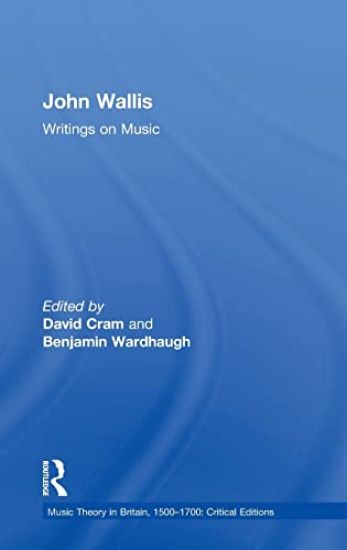
John Wallis (1616-1703), was one of the foremost British mathematicians of the seventeenth century, and is also remembered for his important writings on grammar and logic. An interest in music theory led him to produce translations into Latin of three ancient Greek texts - those of Ptolemy, Porphyry and Bryennius - and involved him in discussions with Henry Oldenburg, the Secretary of the Royal Society, Thomas Salmon and other individuals as his ideas developed. The texts presented in this volume cover the relationship of ancient and modern tuning theory, the building of organs, the phenomena of resonance, and other musical topics.
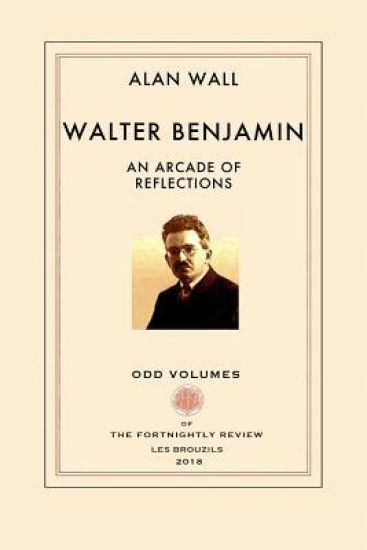
Walter Benjamin (1892-1940) was a German philosopher, essayist and critic whose work has grown in relevance and importance in the 75 years since his death by suicide on the French-Spanish border as Nazi invaders drew near. In his possession: a mysterious suitcase, now lost. The University of Chester's Alan Wall examines many of the recent contexts for discussions of Benjamin and offers detailed explanations for the overdue resurgence of interest in this important writer. Alan Wall studied at Oxford and teaches at the University of Chester. For the past several years, he has been writing about Benjamin for The Fortnightly Review. The aim of this collection of essays is to use some of the key concepts of Walter Benjamin in order to describe aspects of contemporary culture and politics. The chapters in this volume: - Part One: Uneven and Combined Development - Part Two: Texting: Ancient and Modern - Part Three: Bad Reading Habits -Part Four: Spadefuls of Meaning -Part Five: Walter Benjamin and Aby Warburg -- Photographs of Heaven, Photographs of Hell - Part Six: The 'Canonicity' of Kafka - Part Seven: Baudelaire, Allegory and the Aura - Part Eight: Benjamin's Angel and His 'Theses' - Part Nine: Benjamin and Surrealism - Part Ten: Benjamin and the City fortnightlyreview.co.uk/odd-volumes/

On Every Wall: Reproduction and the Future of Art
Benjamin A. Goldman
Createspace Independent Publishing Platform
2017
nidottu