

Kirjahaku
Etsi kirjoja tekijän nimen, kirjan nimen tai ISBN:n perusteella.
1000 tulosta hakusanalla Blake Jonathan


Known for his prophetic and imaginative works of poetry, painting, and printmaking, William Blake was also a prolific reader and annotator of other writers' works. This is the first work of criticism to consider Blake's annotations in their entirety, and it covers such topics as art, poetry, theology, madness and philosophy, as well as the authors Lavater, Swedenborg, Bacon, Spurzheim, Berkeley, and Wordsworth, among others.

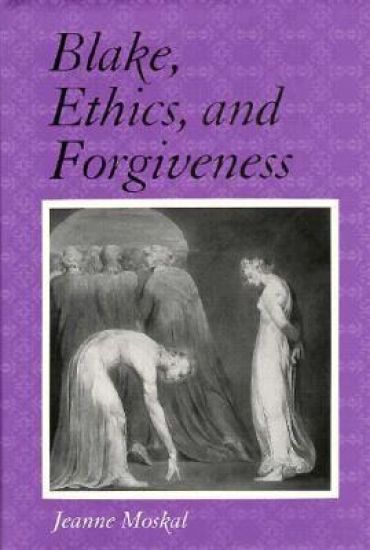
For the last two decades, scholars who specialise in the poetry and art of William Blake have stressed the formal and historical dimensions of his aesthetic theories and practices. Such an emphasis neglects the ethical commitments that inform his work. Primary among these ethical commitments is Blake's passionate advocacy of forgiveness between human beings as a means to solve the problems of human evil, an advocacy that seems to contradict Blake's assertions that ethical laws create the illusion of human evil and employ the concept of ""forgiveness"" solely to reinforce the terms of the original oppression. ""Blake, Ethics and Forgiveness"" focuses on an important and pervasive issue found in the work of the English Romantic visionary poet, engraver and mystic William Blake. It treats the moral and literary problem of representing, as distinct from the divine forgiveness of human beings.
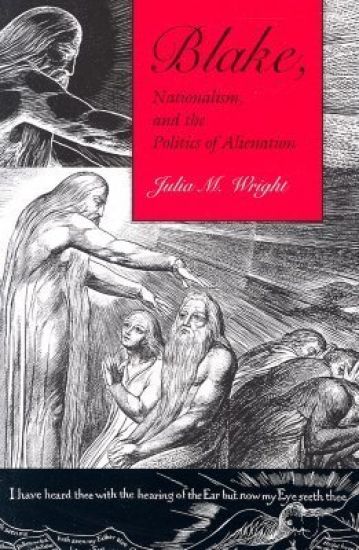
Blake, Nationalism, and the Politics of Alienation
Julia M. Wright
Ohio University Press
2004
sidottu
William Blake's reputation as a staunch individualist is based in large measure on his repeated attacks on institutions and belief systems that constrain the individual's imagination. Blake, however, rarely represents isolation positively, suggesting that the individual's absolute freedom from communal pressures is not the ideal. Instead, as Julia Wright argues in her award-winning study Blake, Nationalism, and the Politics of Alienation, Blake's concern lies with the kind of community that is being established. Moreover, writing at the moment of the emergence of modern nationalism, Blake reveals a concern with the national community in particular. Beginning with a discussion of the priority of national narrative in late-eighteenth-century art theory and antiquarianism, Blake, Nationalism, and the Politics of Alienation traces its relevance in Blake's printed works, from The Poetical Sketches and the Lambeth Prophecies to The Laocoön. Professor Wright then turns to Europe, America, and Visions of the Daughters of Albion, focusing on Blake's portrayals of particular characters' alienation from the groups and ideologies represented in the texts. The book closes by arguing that Blake's major printed works, Milton and Jerusalem, are explicit and extensive engagements with the question of nation—and empire. Although nationalism existed in various forms during the Romantic period, Blake's contemporaries generally assumed that nations should progress continuously, producing a clear narrative line from an auspicious origin to the perfect fulfillment of that promise. Wright argues that these mutually determining constructs of national character and national narrative inform Blake's handling of the problem of the individual-within-a-community.

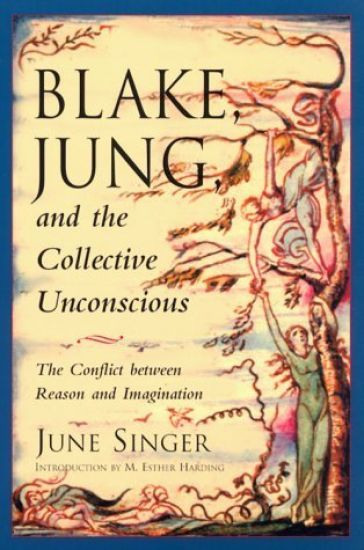
More than ever, the time is ripe for June Singer's penetrating commentary on William Blake's work, The Marriage of Heaven and Hell. For even the most devout literary scholars and art historians, much of Blake's mystical visions and writings are perplexing. With his pen and brush, he gave birth to mythological figures and fantastic metaphors. Singer shows us that Blake was actually tapping into the collective unconscious and giving form and voice to primordial psychological energies, or archetypes, that he experienced in his inner and outer world. Blake's writing and art was his personal dialogue between God and his own inner self -- a reconciliation of duality -- in which we can find clues to contemporary issues. In the 18th century, Blake was a pioneer in finding, nurturing, and celebrating his personal connection with the divine, a search that still appeals to people who are coming to terms with the contemporary struggle between science and spirituality -- the conflict between reason and imagination. With clarity and wisdom, Singer examines the images and words in each plate of Blake's work, applying in her analysis the concepts that C. G. Jung advanced in his psychological theories. There is no more perfect lens with which to look at Blake's work than that of Jung's concepts of the archetypes, the process of individuation, and the mysterium coniunctionis, in which consciousness and the unconscious are united.

From 2005 until his death in 2009, Blake Snyder wrote his 3 best-selling Save the Cat (R) books along with 209 blogs on the Save the Cat (R) website. The 112 blog posts in this book have been carefully curated and edited from Blake's originals. We have selected posts that we believe are timeless, resonating as powerfully today as on the day Blake wrote them. In addition, we've created 10 chapters in which we've bundled posts according to categories, to simplify your search for the information, encouragement and enthusiasm that were Blake's hallmarks: - Ideas and Concepts- Themes- Titles and Loglines- Genres- Heroes- Structure- Dialogue- The Pitch- Going Pro- Inspiration. Enjoy these meaningful and helpful lessons in screenwriting... and life.Also included are photos that have never been published.
This work has been selected by scholars as being culturally important and is part of the knowledge base of civilization as we know it.This work is in the public domain in the United States of America, and possibly other nations. Within the United States, you may freely copy and distribute this work, as no entity (individual or corporate) has a copyright on the body of the work.Scholars believe, and we concur, that this work is important enough to be preserved, reproduced, and made generally available to the public. To ensure a quality reading experience, this work has been proofread and republished using a format that seamlessly blends the original graphical elements with text in an easy-to-read typeface.We appreciate your support of the preservation process, and thank you for being an important part of keeping this knowledge alive and relevant.
This work has been selected by scholars as being culturally important and is part of the knowledge base of civilization as we know it.This work is in the public domain in the United States of America, and possibly other nations. Within the United States, you may freely copy and distribute this work, as no entity (individual or corporate) has a copyright on the body of the work.Scholars believe, and we concur, that this work is important enough to be preserved, reproduced, and made generally available to the public. To ensure a quality reading experience, this work has been proofread and republished using a format that seamlessly blends the original graphical elements with text in an easy-to-read typeface.We appreciate your support of the preservation process, and thank you for being an important part of keeping this knowledge alive and relevant.
This work has been selected by scholars as being culturally important and is part of the knowledge base of civilization as we know it.This work is in the public domain in the United States of America, and possibly other nations. Within the United States, you may freely copy and distribute this work, as no entity (individual or corporate) has a copyright on the body of the work.Scholars believe, and we concur, that this work is important enough to be preserved, reproduced, and made generally available to the public. To ensure a quality reading experience, this work has been proofread and republished using a format that seamlessly blends the original graphical elements with text in an easy-to-read typeface.We appreciate your support of the preservation process, and thank you for being an important part of keeping this knowledge alive and relevant.
This work has been selected by scholars as being culturally important and is part of the knowledge base of civilization as we know it.This work is in the public domain in the United States of America, and possibly other nations. Within the United States, you may freely copy and distribute this work, as no entity (individual or corporate) has a copyright on the body of the work.Scholars believe, and we concur, that this work is important enough to be preserved, reproduced, and made generally available to the public. To ensure a quality reading experience, this work has been proofread and republished using a format that seamlessly blends the original graphical elements with text in an easy-to-read typeface.We appreciate your support of the preservation process, and thank you for being an important part of keeping this knowledge alive and relevant.

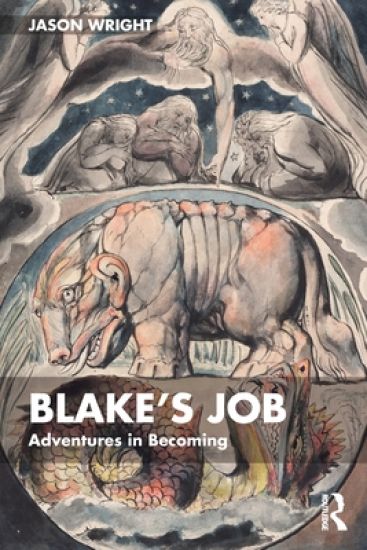
In this unique book, Jason Wright analyses William Blake’s Illustrations of the Book of Job and shows their relevance in clinical psychoanalysis and psychotherapy with groups and individuals, especially while working with patients who have experienced trauma and addiction.Drawing on decades of work in the field, this book sees Wright offer sensitive guidance to practitioners dealing with client experiences of change through the lens of addiction and offers useful insight to the lay reader. Throughout the chapters, Wright studies each illustration in depth and shows how they chart the breakdown of Job’s life into a state of despair. Twinning a clinical vignette with each plate, Wright shows how these depictions can be directly applied to issues faced in contemporary analysis, therapy and addiction recovery. From Job’s dissolution to his eventual salvation, Wright insightfully maps the process of change from a place of destitution to one of redemption and hope set in the context of the group. He expertly brings Blakean theory into the 21st century by looking at contemporary experience such as the impact of the 2005 London bombings, as well as looking at the importance of community, collective experience and self-identity when seeking recovery. Throughout, Wright draws inspiration from eminent analysts such as Bion, Winnicott and Hillman, while also looking to Jung, Bohm and Whitehead to support his theories on the new way of being he proposes: a collective dynamic shift from a consciousness of exploitation to a consciousness of resonance. This book will be of great interest to psychoanalysts, psychotherapists and mental health professionals working in addiction recovery, as well as those interested in the work of Blake and its continued importance in the present day.
In this unique book, Jason Wright analyses William Blake’s Illustrations of the Book of Job and shows their relevance in clinical psychoanalysis and psychotherapy with groups and individuals, especially while working with patients who have experienced trauma and addiction.Drawing on decades of work in the field, this book sees Wright offer sensitive guidance to practitioners dealing with client experiences of change through the lens of addiction and offers useful insight to the lay reader. Throughout the chapters, Wright studies each illustration in depth and shows how they chart the breakdown of Job’s life into a state of despair. Twinning a clinical vignette with each plate, Wright shows how these depictions can be directly applied to issues faced in contemporary analysis, therapy and addiction recovery. From Job’s dissolution to his eventual salvation, Wright insightfully maps the process of change from a place of destitution to one of redemption and hope set in the context of the group. He expertly brings Blakean theory into the 21st century by looking at contemporary experience such as the impact of the 2005 London bombings, as well as looking at the importance of community, collective experience and self-identity when seeking recovery. Throughout, Wright draws inspiration from eminent analysts such as Bion, Winnicott and Hillman, while also looking to Jung, Bohm and Whitehead to support his theories on the new way of being he proposes: a collective dynamic shift from a consciousness of exploitation to a consciousness of resonance. This book will be of great interest to psychoanalysts, psychotherapists and mental health professionals working in addiction recovery, as well as those interested in the work of Blake and its continued importance in the present day.

In the shadowy world of wealth, power, and betrayal, no one is safe...Sienna Blake, a wealthy socialite, has always lived a life of privilege-until a murder at an exclusive event shatters her world. As she digs deeper, Sienna uncovers dark secrets hidden beneath the surface of her carefully curated life. What she finds is a conspiracy that hits far too close to home, and the deeper she goes, the more dangerous the path becomes.Enter Megan Turner, a by-the-book RCMP officer with a military background. New in town, Megan quickly realizes that this murder is more complex than it first appears. But when she crosses paths with Sienna, their clashing personalities and vastly different methods ignite tension, creating an uneasy alliance.As the stakes rise and the body count grows, Sienna and Megan must set aside their differences to untangle the web of lies threatening both their lives. In this high-stakes game of survival, loyalty, and deception, they'll need each other more than they realize-but can they trust each other enough to survive their final showdown?In a world where no one is what they seem, trust is the deadliest game of all.

Blake's Little Black Book: The Perfect Dating Companion for a Handsome Man Named Blake. A secret place for names, phone numbers, and addresses.
Wingman Publishing
Independently Published
2019
nidottu
Keep a record of all the girls that catch your eye