Kirjojen hintavertailu. Mukana 12 390 323 kirjaa ja 12 kauppaa.

Kirjahaku

Etsi kirjoja tekijän nimen, kirjan nimen tai ISBN:n perusteella.

1000 tulosta hakusanalla Brian Barr

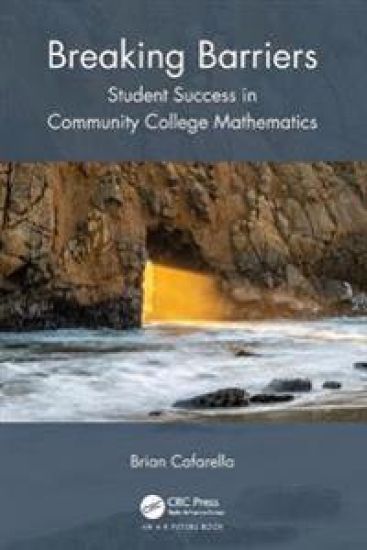
Breaking Barriers

Breaking Barriers

Brian Cafarella

Taylor Francis Ltd
2021
nidottu
The fact college students often struggle in mathematics is not new. They exhibit a great deal of anxiety, dislike, and overall disinterest. Quantitative data displaying abysmal student success rates are widely available and shared. This book explores the complexity surrounding the issue of student difficulties in community college math. Though much quantitative research focuses on the faculty experiences and perspectives regarding methods and practices, the author puts the focus on students’ experiences. The book presents the results of a study focused on students who struggled in mathematics. Though their experiences varied, they all entered community college with a great deal of disgust and anxiety toward mathematics courses and requirements. These impressions and attitudes create barriers to success. However, all the students eventually succeeded in fulfilling their college-level mathematics requirement. The author presents these students’ experiences prior to entering community college, what led to both success and failure in their math courses, and the common themes leading to success and failure. Through these student responses, the author assists readers in gaining a better understanding of the community college student who struggles in math and how to break students’ community college math barriers to success. TABLE OF CONTENTSPreface1. Math is a Four-Letter Word 2. The Framework for Developmental and Introductory College-Level Math3.The Study, Settings, and the Participants4. Prior Experiences in Math5. Attempting Math and Community College6. Navigating the First Developmental Math Course7. Math Pathways and Completing Developmental Math 8. The End of the Rainbow9 I Need More Math…Now What?10. Lessons Learned in the AftermathAppendix A: Analyzing the Results and Ensuring AccuracyAppendix B: Pre-Algebra and Introduction to Algebra Course ContentAppendix C: Stand-Alone Quantway 1 and Statway 1 Course ContentAppendix D: Elementary Algebra (all half semester) ContentAppendix E: Intermediate Algebra ContentAppendix F: Lead Questions for Student ParticipantsAppendix G: Lead Questions for the Lester Community College FacultyIndexBIOGRAPHYWith 21 years of experience in mathematics education and 17 years as a community college math professor, the author has instructed courses from developmental math through calculus. He has served as Chair of the Developmental Math Department and Assistant Chair of the Mathematics Department at Sinclair College, Dayton, Ohio. He received the Jon and Suanne Roueche Award for Teaching Excellence and the Ohio Magazine Excellence in Education Award. His published research focuses on faculty viewpoints regarding pedagogical practices as well as conceptual research concentrating on developmental math. His article, "Acceleration and Compression in Developmental Math: Faculty Viewpoints," was awarded Article of the Year by the Journal of Developmental Education.
Breaking Barriers

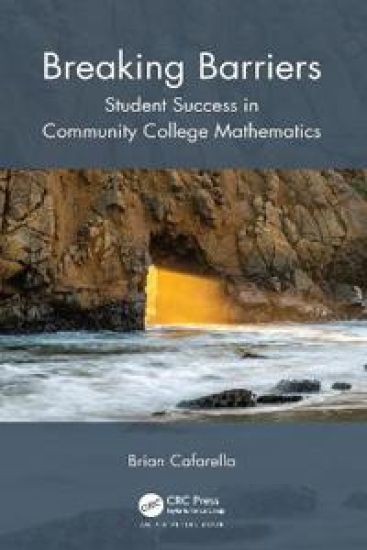
Breaking Barriers

Brian Cafarella

Taylor Francis Ltd
2021
sidottu
The fact college students often struggle in mathematics is not new. They exhibit a great deal of anxiety, dislike, and overall disinterest. Quantitative data displaying abysmal student success rates are widely available and shared. This book explores the complexity surrounding the issue of student difficulties in community college math. Though much quantitative research focuses on the faculty experiences and perspectives regarding methods and practices, the author puts the focus on students’ experiences. The book presents the results of a study focused on students who struggled in mathematics. Though their experiences varied, they all entered community college with a great deal of disgust and anxiety toward mathematics courses and requirements. These impressions and attitudes create barriers to success. However, all the students eventually succeeded in fulfilling their college-level mathematics requirement. The author presents these students’ experiences prior to entering community college, what led to both success and failure in their math courses, and the common themes leading to success and failure. Through these student responses, the author assists readers in gaining a better understanding of the community college student who struggles in math and how to break students’ community college math barriers to success. TABLE OF CONTENTSPreface1. Math is a Four-Letter Word 2. The Framework for Developmental and Introductory College-Level Math3.The Study, Settings, and the Participants4. Prior Experiences in Math5. Attempting Math and Community College6. Navigating the First Developmental Math Course7. Math Pathways and Completing Developmental Math 8. The End of the Rainbow9 I Need More Math…Now What?10. Lessons Learned in the AftermathAppendix A: Analyzing the Results and Ensuring AccuracyAppendix B: Pre-Algebra and Introduction to Algebra Course ContentAppendix C: Stand-Alone Quantway 1 and Statway 1 Course ContentAppendix D: Elementary Algebra (all half semester) ContentAppendix E: Intermediate Algebra ContentAppendix F: Lead Questions for Student ParticipantsAppendix G: Lead Questions for the Lester Community College FacultyIndexBIOGRAPHYWith 21 years of experience in mathematics education and 17 years as a community college math professor, the author has instructed courses from developmental math through calculus. He has served as Chair of the Developmental Math Department and Assistant Chair of the Mathematics Department at Sinclair College, Dayton, Ohio. He received the Jon and Suanne Roueche Award for Teaching Excellence and the Ohio Magazine Excellence in Education Award. His published research focuses on faculty viewpoints regarding pedagogical practices as well as conceptual research concentrating on developmental math. His article, "Acceleration and Compression in Developmental Math: Faculty Viewpoints," was awarded Article of the Year by the Journal of Developmental Education.
Wilkes-Barre

Wilkes-Barre

Brian W Kelly

Xlibris Us
2022
pokkari
Wilkes-Barre PA is a dying city. It is time to pick ourselves up by the bootstraps and begin our return to glory. In the middle of the last century, Wilkes-Barre's population was approaching 90,000. Today it is 43,000. This did not happen overnight. Over the years, many of the city's kind benefactors, such as the Kirby family, helped keep the city vibrant. Whenever it needed a boost, they were there to rejuvenate. Having had half the population move out of town, Wilkes-Barre no longer could count on a local family to be there at the right time with the right answer. Wilkes-Barre saw its population declining with the mines no longer sustaining the City. We noticed stores, even the best of the best shutting down or moving out from necessity. We all noticed that other businesses that once provided hundreds of jobs not being able to continue. Mark Twain once said that "The reports of my death have been greatly exaggerated." Wilkes-Barre officials and residents over the years have heard the death knell for the City and instead of contesting it fiercely, allowed it to happen. Like Twain, our demise has been greatly exaggerated. Those times are in the past. Wilkes-Barre can and must find its way out of the mire and return to glory. May good leadership help Wilkes-Barre find a way to reclaim its future. Those who grew up in this City, as well as those who love our Diamond City, will enjoy this book. Few books are a must-read but Brian Kelly's Wilkes-Barre, PA: Return to Glory will melt your heart as your author recounts some great stories from the past and points out how to stop the decline and move this city back to Glory. This book needs to be at the top of your reading list, especially for those who have lived or now live in Wilkes-Barre.
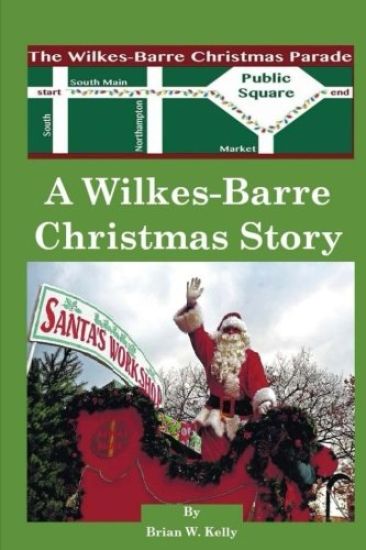
A Wilkes-Barre Christmas Story: A wonderful town makes Christmas all the better
"A wonderful town makes Christmas all the better."Wilkes-Barre, PA may not be Bedford Falls but it is a great place to lead a wonderful life. It may not be Mayberry, but it is my hometown.Wilkes-Barre is the setting of this light-hearted story of a young Wilkes-Barre boy with a 26" bike. The boy had a burning desire to have a train set to go around the family Christmas tree each year. This story is true and it really did happen in Wilkes-Barre, PA., a real city. It takes the reader on a journey using a 26" 1950's style homemade bicycle starting from when the boy was five years old and it ends when he is nine. Either a miracle happens or the Christmas Spirit or Santa or all three bring forth one of the happiest and most amazing moments that any child can experience in a lifetime.Not all stories - even Christmas stories end well. This incredible story will not disappoint any reader once you mount the 26" bike right next to the young boy as he goes through the preparations and the work efforts and adventures within this story. The ending is outstanding. If it were not true, it would still make a great Christmas story. Since it is true, it makes it even more special, especially for me. I am the boy in the story. Thank you for reading it... It could only happen in a great town such as Wilkes-Barre, PA
Overcoming the Barricades of Life

Overcoming the Barricades of Life

Brian D'Alo

WestBow Press
2019
pokkari
We each have a lifetime of experiences behind and ahead of us. Some of them have caused or will cause virtual battlefields in our lives. How many of these have caused us to build fortifications and barricades between us and those around us? What about between us and God? We can learn from the prophets of the Bible, Jonah in particular, about these barricades. They can come down if you want them to and if you trust that God can work in you. Join me as we find out how to do it.
All Along the Barrow

All Along the Barrow

Brian Grehan

New Generation Publishing
2020
nidottu
Mired in a mid-life crisis, Nancy Hackett returns to her home in Bagenalstown, County Carlow, and soon becomes immersed in a tale of romance, family, murder, mystery, and suspense that turns and twists, like the nearby river Barrow, snaking its eternal journey to the sea.
The Big Toxic School: Wilkes-Barre Area's Tale of Corruption, Deception, Taxation & Tyranny
The Big Toxic School This is Wilkes-Barre Area's tale of corruption, deception, taxation & tyranny. It is a struggle for safe, enduring neighborhood schools. We can't wait until there are no Wilkes-Barre high schools and the tax burden is unsustainable. In this book, you will learn about the actions taken by a democratically elected board of directors whose job is to manage the affairs of the Wilkes-Barre Area School District. Unfortunately, in this book and through other sources, you will also learn that though this board was duly elected by the people, they lied about their intentions. In fact, they misrepresented themselves by agreeing, if elected, to represent the people and provide for the needs of the people above all else. We will cite quotations from citizens subject to the board's dictates. You will see that this board has chosen to follow a corrupt course of action rather than follow the known wishes of the people of the area which they serve. The essence of the issue in dispute is whether perfectly maintainable and well-built and historically relevant neighborhood school structures in the City of Wilkes-Barre should be abandoned, discarded, and torn down so that the board can build its idea of a Taj Mahal School on top of a toxic mine dump, in a community outside the city expected to give up its high schools for this folly. The three WB City High Schools currently meet the needs of the students and the taxpayers of the City of Wilkes-Barre. Coughlin, GAR, and Meyers.
The North Carolina Shore and Its Barrier Islands

The North Carolina Shore and Its Barrier Islands

Orrin H. Pilkey; William J. Neal; Stanley R. Riggs; Craig A. Webb; David M. Bush; Deborah F. Pilkey; Jane Bullock; Brian A. Cowan

Duke University Press
1998
sidottu
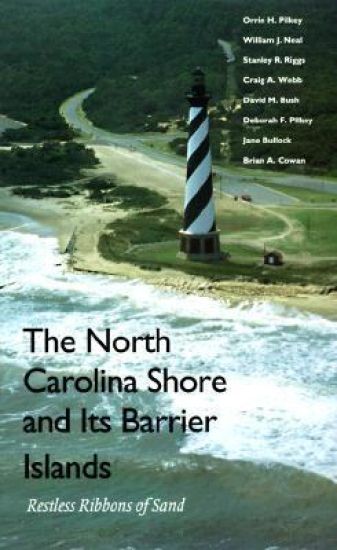
Devastation wrought by Hurricane Fran is a reminder of the fragility of the North Carolina coast. Arguing for a policy of intelligent development this text includes practical information on hazards of many kinds - storms, tides, floods, erosion, island migration and earthquakes.
The North Carolina Shore and Its Barrier Islands

The North Carolina Shore and Its Barrier Islands

Orrin H. Pilkey; William J. Neal; Stanley R. Riggs; Craig A. Webb; David M. Bush; Deborah F. Pilkey; Jane Bullock; Brian A. Cowan

Duke University Press
1998
pokkari
The North Carolina Shore and Its Barrier Islands is the latest volume in the series, Living with the Shore. Replacing an earlier volume, this thoroughly new book provides a diverse guide to one of America’s most popular shorelines. As is true for all books in the series, it is based on the premise that understanding the changing nature of beaches and barrier islands is essential if we are to preserve them for future generations.Evidence that the North Carolina shore is changing is never hard to find, but recently the devastation wrought by Hurricane Fran and the perilous situation of the historic lighthouse at Cape Hatteras have reminded all concerned of the fragility of this coast. Arguing for a policy of intelligent development, one in which residential and commercial structures meet rather than confront the changing nature of the shore, the authors have included practical information on hazards of many kinds-storms, tides, floods, erosion, island migration, and earthquakes. Diagrams and photographs clearly illustrate coastal processes and aid in understanding the impact of hurricanes and northeasters, wave and current dynamics, as well as pollution and other environmental destruction due to overdevelopment. A chapter on estuaries provides related information on the shores of back barrier areas that are growing in popularity for recreational residences. Risk maps focus on the natural hazards of each island and together with construction guidelines provide a basis for informed island management. Lastly, the dynamics of coastal politics and management are reviewed through an analysis of the controversies over the decision to move the Cape Hatteras lighthouse and a proposed effort to stabilize Oregon Inlet. From the natural and historic perspective of the opening chapters to the regional discussions of individual barrier islands, this book is both a primer on coastal processes for the first time visitor as well as a guide to hazard identification for property owners.
How Judges Judge

How Judges Judge

Brian M. Barry

CRC Press
2020
sidottu
A judge’s role is to make decisions. This book is about how judges undertake this task. It is about forces on the judicial role and their consequences, about empirical research from a variety of academic disciplines that observes and verifies how factors can affect how judges judge.On the one hand, judges decide by interpreting and applying the law, but much more affects judicial decision-making: psychological effects, group dynamics, numerical reasoning, biases, court processes, influences from political and other institutions, and technological advancement. All can have a bearing on judicial outcomes. In How Judges Judge: Empirical Insights into Judicial Decision-Making, Brian M. Barry explores how these factors, beyond the law, affect judges in their role. Case examples, judicial rulings, judges’ own self-reflections on their role and accounts from legal history complement this analysis to contextualise the research, make it more accessible and enrich the reader’s understanding and appreciation of judicial decision-making.Offering research-based insights into how judges make the decisions that can impact daily life and societies around the globe, this book will be of interest to practising and training judges, litigation lawyers and those studying law and related disciplines.