Kirjojen hintavertailu. Mukana 11 342 296 kirjaa ja 12 kauppaa.

Kirjahaku

Etsi kirjoja tekijän nimen, kirjan nimen tai ISBN:n perusteella.

1000 tulosta hakusanalla Brian P. Simpson

Enemy Objectives Unit in World War II: Selecting Targets for Aerial Bombardment That Support the Political Purpose of War
In June of 1942, Eighth Air Force deployed to Great Britain and began preparation for a bombing campaign. However, during the initial planning efforts it became apparent the staff lacked the expertise needed to analyze and recommend bombing targets. Colonel Richard Hughes, the Chief Planner for American Air Forces in Europe, recognized this deficiency and requested a team to assist with target selection. The Enemy Objectives Unit (EOU), a team of civilian economists, began arriving in London in September 1942 to support the Eighth Air Force. While formally assigned to the United States Embassy in London, for practical purposes the team worked for Colonel Hughes. Using their economic expertise, EOU members studied the German industrial complex to identify vulnerabilities and then recommend to planners and senior leaders those industries the United States Strategic Air Forces in Europe should target. Taking an effects-based approach, the team sought to maximize the efficiency and effectiveness of United States' airpower to produce the greatest effects on Germany's war economy. The EOU's target selection methodology required intelligence data on enemy targets, an awareness of United States Army Air Forces bombing capabilities, and most importantly an understanding of military and political aims. To ensure selected targets aligned with military and political aims, the EOU regularly collaborated with air planning staffs and senior leaders. Three case studies highlight the interaction and collaboration that occurred between the EOU and Army Air Forces planners and leaders: prioritizing targets for Operation POINTBLANK, development of an Oil Plan following "Big Week" in February 1944, and the recommendation to strike bridges versus marshaling yards prior to Operation OVERLORD. Each of these case studies demonstrates that the integration and cooperation between the EOU and air force leaders and planning staffs ensured that targets selected for aerial bombardment supported This work has been selected by scholars as being culturally important, and is part of the knowledge base of civilization as we know it. This work was reproduced from the original artifact, and remains as true to the original work as possible. Therefore, you will see the original copyright references, library stamps (as most of these works have been housed in our most important libraries around the world), and other notations in the work. This work is in the public domain in the United States of America, and possibly other nations. Within the United States, you may freely copy and distribute this work, as no entity (individual or corporate) has a copyright on the body of the work. As a reproduction of a historical artifact, this work may contain missing or blurred pages, poor pictures, errant marks, etc. Scholars believe, and we concur, that this work is important enough to be preserved, reproduced, and made generally available to the public. We appreciate your support of the preservation process, and thank you for being an important part of keeping this knowledge alive and relevant.
Four Forces Airpower Theory

Four Forces Airpower Theory

Brian P. O'Neill

BiblioScholar
2012
nidottu
This monograph suggests an airpower theory that helps explain why airpower does not result in quick, clean, economical, "ideal" war. The genesis of this study comes from the observation that airpower advocates, from early personalities such as William Mitchell and Giulio Douhet, to present day U.S. Air Force leadership, forecast how newer and better airpower technology will almost certainly result in quick, decisive wars, but tend to underestimate the factors that work against airpower. The earliest notions of ideal war came from a desire to avoid a repeat of the trench carnage during World War I. Airpower advocates seem to profess that the right airpower technology could almost bloodlessly force enemies to capitulate. Looking only at American wars since the advent of military airpower, it is clear that airpower has changed the character of war, but airpower does not and probably will not drive war to the point of "ideal." The novelty of this theory stems from the graphic analogy of the four forces that act upon an aircraft in flight. The theory suggests that technology is the "thrust" that propels airpower towards ideal war by generating the "lift" of improved effects. The "drag" of resource constraints and "weight" or "gravity" of enemy technology and counter-tactics work in opposition and drag airpower from ideal towards real war. A review of three major airpower advocates, William Mitchell, Giulio Douhet, and John Warden, sets a foundation for how airpower advocates have developed ideas, concepts, and theory about airpower's future capabilities. Three case studies, the B-17, free-fall nuclear bomb, and F-22A fighter, trace how airpower advocacy led to technology that would enable ideal war. In each case, application of the Four Forces theory demonstrates that while resource constraints and enemy technology and counter-tactics prevent ideal war, airpower technology improves the character of war as a whole. This work has been selected by scholars as being culturally important, and is part of the knowledge base of civilization as we know it. This work was reproduced from the original artifact, and remains as true to the original work as possible. Therefore, you will see the original copyright references, library stamps (as most of these works have been housed in our most important libraries around the world), and other notations in the work. This work is in the public domain in the United States of America, and possibly other nations. Within the United States, you may freely copy and distribute this work, as no entity (individual or corporate) has a copyright on the body of the work. As a reproduction of a historical artifact, this work may contain missing or blurred pages, poor pictures, errant marks, etc. Scholars believe, and we concur, that this work is important enough to be preserved, reproduced, and made generally available to the public. We appreciate your support of the preservation process, and thank you for being an important part of keeping this knowledge alive and relevant.
Early Warning and Prediction of Internet Attacks and Exploits
A safe, secure and functional information network is vital in today's Air Force net centric environment. Information is more critical today than it has ever been. As more operational functions are placed in cyber space and greater computing power becomes available to everyone, keeping these networks safe and secure is an almost unattainable task. Network security entails Intrusion Detection Security, but another form of security or "insecurity" is quickly gaining attention. Honeypots allow the black hat community to attack and penetrate non-production systems. By monitoring and studying these attacks, network defenders can develop better Information Assurance tactics and procedures to defend their networks. The ability to quickly analyze only those data packets predicted to be an exploit and disregard the remaining packets is crucial in today's overworked environment. Using an accredited Honeypot, an Exploit Prediction System (EPS) is developed using a decision-tree matrix. The EPS provides an excellent tool in choosing only those data packets needing further analysis. The EPS employs as few criterion needed for successful prediction. The log data coming into the honeypot is not filtered and all incoming log data is captured, interpreted and categorized. This work has been selected by scholars as being culturally important, and is part of the knowledge base of civilization as we know it. This work was reproduced from the original artifact, and remains as true to the original work as possible. Therefore, you will see the original copyright references, library stamps (as most of these works have been housed in our most important libraries around the world), and other notations in the work. This work is in the public domain in the United States of America, and possibly other nations. Within the United States, you may freely copy and distribute this work, as no entity (individual or corporate) has a copyright on the body of the work. As a reproduction of a historical artifact, this work may contain missing or blurred pages, poor pictures, errant marks, etc. Scholars believe, and we concur, that this work is important enough to be preserved, reproduced, and made generally available to the public. We appreciate your support of the preservation process, and thank you for being an important part of keeping this knowledge alive and relevant.

The 12 Week Year Bundle

The 12 Week Year Bundle

Brian P. Moran; Michael Lennington

JOHN WILEY SONS INC
2024
sidottu
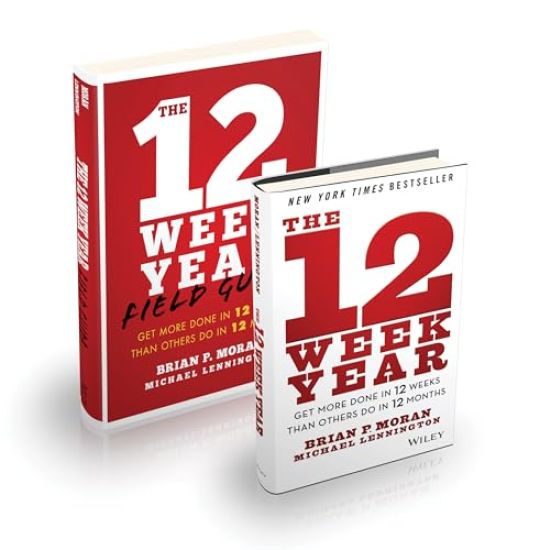
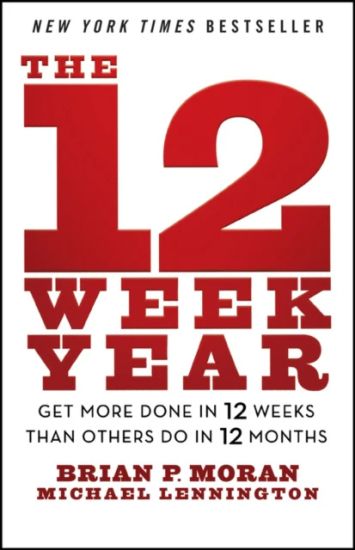
Stop procrastinating and start getting things done now with this impactful, all-in-one resource This 12 Week Year bundle contains the innovative and powerful The 12 Week Year and The 12 Week Year Study Guide, a resource that makes it easy to apply the revolutionary concepts from the book. In the bundle, strategy and execution experts Brian Moran and Michael Lennington explain how to get more done in three months than most people get done in an entire year. You’ll learn to break free from the annualized thinking that generates mistakes and saps productivity. You’ll also discover how to focus on what matters most, create sharper clarity, and develop a sense of urgency, so that “now” is always the right time to act. Readers will also find: Strategies for crafting your personal and business visions with step-by-step tipsTools and templates to help you apply the 12 Week system in your own life and companyThe “Game Plan” paper system that will supercharge your productivity over the next three months The 12 Week Year bundle will show you how to take back your life, improve your thinking, and advance your business or career. You’ll learn to execute on what you already know and apply the lessons from this popular book with the field-tested content, exercises and templates contained in the Study Guide. It’s perfect for professionals and entrepreneurs everywhere.
The 12 Week Year

The 12 Week Year

Brian P. Moran; Michael Lennington

JOHN WILEY SONS INC
2025
nidottu
The guide to shortening your execution cycle down from one year to twelve weeks Most organizations and individuals work in the context of annual goals and plans; a twelve-month execution cycle. Instead, The 12 Week Year avoids the pitfalls and low productivity of annualized thinking. This book redefines your "year" to be 12 weeks long. In 12 weeks, there just isn't enough time to get complacent, and urgency increases and intensifies. The 12 Week Year creates focus and clarity on what matters most and a sense of urgency to do it now. In the end more of the important stuff gets done and the impact on results is profound. Explains how to leverage the power of a 12 week year to drive improved results in any area of your lifeOffers a how-to book for both individuals and organizations seeking to improve their execution effectivenessAuthors are leading experts on execution and implementation Turn your organization's idea of a year on its head, and speed your journey to success.
Local Government in Early America

Local Government in Early America

Brian P. Janiskee

Rowman Littlefield
2010
sidottu
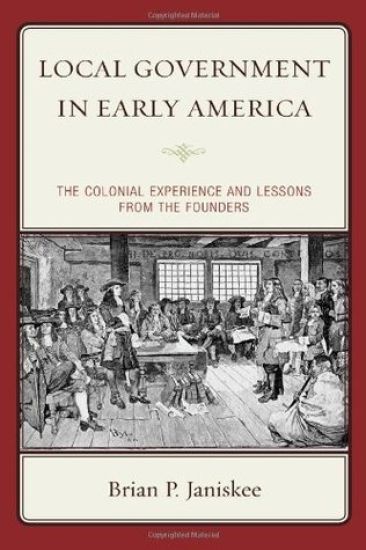
Local Government in Early America is a concise and thought-provoking exploration of the American desire for political participation, most notably in the "town hall meeting." A product of early New England democracy, this form of direct local participation remains one of the most celebrated, yet feared, institutions in our political life. Depending upon one's political perspective on the issue at hand, a lively town hall meeting can be the glorious epitome of grassroots activism or the wretched embodiment of reactionary zeal. For all of the media attention devoted to the conservative revolt against health care reform at town hall meetings across the country, the political right is late to game on local activism. From resolutions opposed to the Patriot Act or the declaration of nuclear free zones in cities, the political left has used the rhetorical power of the local political pulpit to great effect for many years. All of this is possible because of the manner in which local governments were constructed during the colonial period. Author Brian Janiskee details the origins of our local system by examining key characteristics of local colonial political life, including what key founders like John Adams and Thomas Jefferson had to say about the role of our villages, towns, and cities in our complex system of government. Through this timely analysis of our political heritage, Janiskee may cause observers to reevaluate the phrase "all politics is local." Indeed it may be the case that "all local politics is national."
Democracy in California

Democracy in California

Brian P. Janiskee; Masugi Ken

Rowman Littlefield
2015
sidottu
Democracy in California: Politics and Government in the Golden State is a readable and thought-provoking textbook, which clearly explains the politics and character of California's governmental institutions and the dynamics affecting the lives of Californians. In addition to thorough coverage of California's constitution and development, this book also examines each branch of government as well as local systems. As Janiskee and Masugi explore the nature of public opinion, parties, and campaigns, they show the effects that the state's diverse population has on all levels of politics and government. The fourth edition is updated throughout and includes analysis of the 2012 and 2014 elections and discussion of recent events such as •immigration reform, •Jerry Brown’s second term, •the new primary election system, •revised term limits, •and the revision of the “three strikes” law. New case studies in each chapter bring ideas to life and challenge students to become active participants in California politics. Perfect for courses in American government and state and local politics, Democracy in California is a succinct guide to the governmental intricacies of our nation's most populous state.
Democracy in California

Democracy in California

Brian P. Janiskee; Masugi Ken

Rowman Littlefield
2015
nidottu
Democracy in California: Politics and Government in the Golden State is a readable and thought-provoking textbook, which clearly explains the politics and character of California's governmental institutions and the dynamics affecting the lives of Californians. In addition to thorough coverage of California's constitution and development, this book also examines each branch of government as well as local systems. As Janiskee and Masugi explore the nature of public opinion, parties, and campaigns, they show the effects that the state's diverse population has on all levels of politics and government. The fourth edition is updated throughout and includes analysis of the 2012 and 2014 elections and discussion of recent events such as •immigration reform, •Jerry Brown’s second term, •the new primary election system, •revised term limits, •and the revision of the “three strikes” law. New case studies in each chapter bring ideas to life and challenge students to become active participants in California politics. Perfect for courses in American government and state and local politics, Democracy in California is a succinct guide to the governmental intricacies of our nation's most populous state.
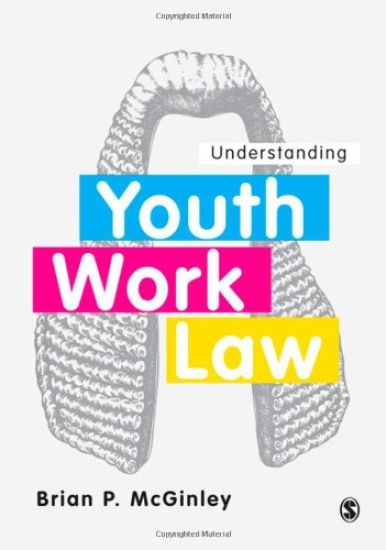
Understanding Youth Work Law

Understanding Youth Work Law

Brian P. McGinley

SAGE Publications Ltd
2014
sidottu
Understanding the law is now a more important part of youth work practice than ever before, and all successful youth work professionals need to understand the way that law and policy supports good ethical practice. This book provides a coherent overview of the legal processes and requirements encountered by today’s youth work professionals, helping readers learn how to make informed ethical judgements and offer appropriate advice to young people. It offers an insight into how laws are made, explains major legal requirements for safe youth work practice and details a range of guidance on the current frameworks and legislation students and practitioners need to be aware of. Using real world scenarios, case studies, and reflective questions, it helps the reader to engage critically with the current legal context of youth work, and develop their thinking, skills and practice. This is essential reading for all students working towards professional recognition in work with young people.
Understanding Youth Work Law

Understanding Youth Work Law

Brian P. McGinley

SAGE Publications Ltd
2014
nidottu
Understanding the law is now a more important part of youth work practice than ever before, and all successful youth work professionals need to understand the way that law and policy supports good ethical practice. This book provides a coherent overview of the legal processes and requirements encountered by today’s youth work professionals, helping readers learn how to make informed ethical judgements and offer appropriate advice to young people. It offers an insight into how laws are made, explains major legal requirements for safe youth work practice and details a range of guidance on the current frameworks and legislation students and practitioners need to be aware of. Using real world scenarios, case studies, and reflective questions, it helps the reader to engage critically with the current legal context of youth work, and develop their thinking, skills and practice. This is essential reading for all students working towards professional recognition in work with young people.
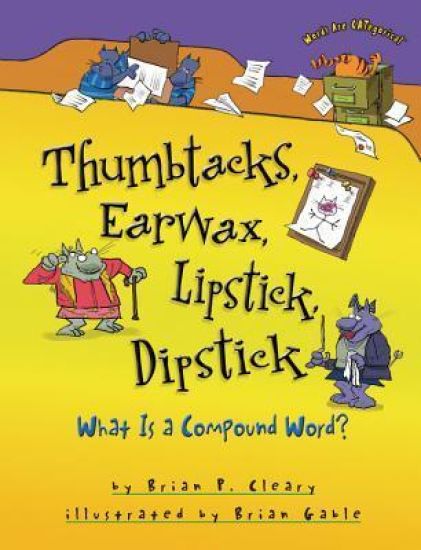
Thumbtacks, Earwax, Lipstick, Dipstick: What Is a Compound Word?
What is a compound word? You'll find the answer inside this book--it's a stockpile of compound words Brian P. Cleary's upbeat rhymes and Brian Gable's sidesplitting illustrations bring compound words to life. We've highlighted the compound words with colored type to make them easy to identify. Thumbtacks, Earwax, Lipstick, Dipstick: What Is a Compound Word? overturns traditional grammar lessons. Read this book aloud with everyone you know and share in the delight of the sense--and nonsense--of words.
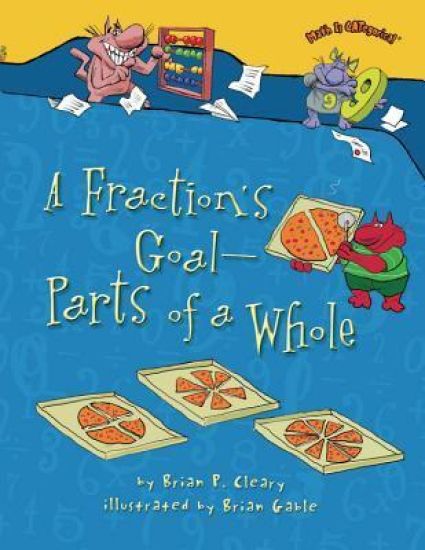
A Fraction's Goal -- Parts of a Whole

A Fraction's Goal -- Parts of a Whole

Brian P. Cleary

Millbrook Press (Tm)
2013
nidottu
In this fun-filled look at fractions, Brian P. Cleary and Brian Gable demonstrate how fractions work by splitting whole objects into parts. The comical cats of the wildly popular Words Are CATegorical(R) series divide everything from pieces of pizza to groups of people into halves, thirds, tenths, and more. Peppy rhymes, goofy illustrations, and kid-friendly examples take the fear out of fractions.From the author and illustrator duo of the best-selling Words Are CATegorical(R) series, Math Is CATegorical(R) introduces basic math concepts for young readers and reveals that sometimes math is easier to show than explain Pairing clever rhyming verse with comical cartoon cats, Brian P. Cleary and Brian Gable help children add up just how fun math can be
A Second, a Minute, a Week with Days in It: A Book about Time
The zany CATegorical cats introduce the measurement of time, from seconds, minutes, and hours up to decades. Brian P. Cleary and Brian Gable bring their winning teamwork to this playful, fun look at learning about time.From the author and illustrator duo of the best-selling Words Are CATegorical(R) series, Math Is CATegorical(R) introduces basic math concepts for young readers and reveals that sometimes math is easier to show than explain Pairing clever rhyming verse with comical cartoon cats, Brian P. Cleary and Brian Gable help children add up just how fun math can be