Kirjojen hintavertailu. Mukana 11 437 640 kirjaa ja 12 kauppaa.

Kirjahaku

Etsi kirjoja tekijän nimen, kirjan nimen tai ISBN:n perusteella.

1000 tulosta hakusanalla Byron Perry

Byron's Letters and Journals

Byron's Letters and Journals

George Gordon Byron

Belknap Press
1974
sidottu
George Gordon Byron was a superb letter-writer: almost all his letters, whatever the subject or whoever the recipient, are enlivened by his wit, his irony, his honesty, and the sharpness of his observation of people. They provide a vivid self-portrait of the man who, of all his contemporaries, seems to express attitudes and feelings most in tune with the twentieth century. In addition, they offer a mirror of his own time. This first collected edition of all Byron's known letters supersedes Prothero's incomplete edition at the turn of the century. It includes a considerable number of hitherto unpublished letters and the complete text of many that were bowdlerized by former editors for a variety of reasons. Prothero's edition included 1,198 letters. This edition has more than 3,000, over 80 percent of them transcribed entirely from the original manuscripts. The third volume starts with Byron at the first crest of his fame following the publication of Childe Harold. It includes his literary letters to Tom Moore, frank and intimate ones to Hobhouse, pungent ones to Hanson and Murray, and his lively and amusing missives to Lady Melbourne, his confidante through all his love affairs. To her he describes the backwash of his tempestuous affair with Caroline Lamb, his emotional crises with Lady Oxford, the beginning of his liaison with his half-sister, Augusta Leigh, and his flirtation with Lady Frances Webster. The volume contains the letters of 1813 and the journal of 1813-1814, the first of his five incomparable journals. The letters display, as Martin Fagg puts it, a "bewitching amalgam of the picturesque and the earthy, of arrogance and modesty, of vituperation and tenderness, of soulfulness and sheer irresistible high spirits." They confirm Max Beerbohm's opinion, "Byron's letters are, I think, the best ever written--the fullest and most spontaneous."
Byron's Letters and Journals

Byron's Letters and Journals

George Gordon Byron

Belknap Press
1975
sidottu
George Gordon Byron was a superb letter-writer: almost all his letters, whatever the subject or whoever the recipient, are enlivened by his wit, his irony, his honesty, and the sharpness of his observation of people. They provide a vivid self-portrait of the man who, of all his contemporaries, seems to express attitudes and feelings most in tune with the twentieth century. In addition, they offer a mirror of his own time. This first collected edition of all Byron's known letters supersedes Prothero's incomplete edition at the turn of the century. It includes a considerable number of hitherto unpublished letters and the complete text of many that were bowdlerized by former editors for a variety of reasons. Prothero's edition included 1,198 letters. This edition has more than 3,000, over 80 percent of them transcribed entirely from the original manuscripts. In this volume, Byron corresponds with writers such as Thomas Moore, Coleridge, Leigh Hunt, and "Monk" Lewis; with John Murray about the publication of The Corsair, Lara, and The Hebrew Melodies; and with many personal friends. A new interest is his association with the Drury Lane Theater. The crucial events of his private life at this time are his engagement to Anabella Milbanke and their marriage early in 1815--a marriage that was to last little more than a year. Especially revelatory are his letters to his fianc e and those to his long-time confidante, Lady Melbourne. Volume IV includes all the letters from the beginning of 1814 to the end of 1815.
Byron's Letters and Journals

Byron's Letters and Journals

George Gordon Byron

Belknap Press
1976
sidottu
George Gordon Byron was a superb letter-writer: almost all his letters, whatever the subject or whoever the recipient, are enlivened by his wit, his irony, his honesty, and the sharpness of his observation of people. They provide a vivid self-portrait of the man who, of all his contemporaries, seems to express attitudes and feelings most in tune with the twentieth century. In addition, they offer a mirror of his own time. This first collected edition of all Byron's known letters supersedes Prothero's incomplete edition at the turn of the century. It includes a considerable number of hitherto unpublished letters and the complete text of many that were bowdlerized by former editors for a variety of reasons. Prothero's edition included 1,198 letters. This edition has more than 3,000, over 80 percent of them transcribed entirely from the original manuscripts. In the fifth installment of this marvelous serial story, we read about Byron's separation from his wife. Besides his pleading letters to Annabella asking her to reconsider, there are level-headed letters to Murray and Hobhouse and Hunt and Rogers--all written during the tempestuous time before his final departure from England. The accounts written during the ensuing summer, of Waterloo and the Rhine and Switzerland, reveal new depths of Byron's maturing mind. But the very best letters here are the ones from Italy: freed from the inhibitions of English society, Byron's spirit seems to expand and his letters reflect the joie de vivre that, despite his melancholy, was an inherent part of his character.
Byron's Letters and Journals

Byron's Letters and Journals

George Gordon Byron

Belknap Press
1976
sidottu
George Gordon Byron was a superb letter-writer: almost all his letters, whatever the subject or whoever the recipient, are enlivened by his wit, his irony, his honesty, and the sharpness of his observation of people. They provide a vivid self-portrait of the man who, of all his contemporaries, seems to express attitudes and feelings most in tune with the twentieth century. In addition, they offer a mirror of his own time. This first collected edition of all Byron's known letters supersedes Prothero's incomplete edition at the turn of the century. It includes a considerable number of hitherto unpublished letters and the complete text of many that were bowdlerized by former editors for a variety of reasons. Prothero's edition included 1,198 letters. This edition has more than 3,000, over 80 percent of them transcribed entirely from the original manuscripts. Byron's epistolary saga continues con brio in this volume. At the start of 1818 he sends off the last canto of Childe Harold and abandons himself to the debaucheries of the Carnival in Venice. At the close of 1819 he resolves to return to England but instead follows Teresa Guiccioli to Ravenna. In the meantime he writes three long poems and two cantos of Don Juan, whose bowdlerization he violently protests; he breaks off with Marianna Segati, copes with his amorous "tigress" Margarita Cogni, then falls passionately in love with the young Countess Guiccioli; he thinks seriously of emigrating to South America; he takes custody of his little daughter Allegra and becomes increasingly fond of the child. The Shelleys visit him, as does Thomas Moore, to whom he entrusts his memoirs (burned after his death). The letters to friends are a marvelous outpouring of funny anecdotes, practical talk, discussions of his poems, statements of his beliefs. The love letters are in a class by themselves.
Byron's Letters and Journals

Byron's Letters and Journals

George Gordon Byron

Belknap Press
1978
sidottu
Byron's letters provide a vivid self-portrait of the man who, of all his contemporaries, seems to express attitudes and feelings most in tune with the twentieth century. Readers and reviewers have responded with great enthusiasm to Leslie Marchand's new unexpurgated edition.
Byron's Letters and Journals

Byron's Letters and Journals

George Gordon Byron

Belknap Press
1978
sidottu
George Gordon Byron was a superb letter-writer: almost all his letters, whatever the subject or whoever the recipient, are enlivened by his wit, his irony, his honesty, and the sharpness of his observation of people. They provide a vivid self-portrait of the man who, of all his contemporaries, seems to express attitudes and feelings most in tune with the twentieth century. In addition, they offer a mirror of his own time. This first collected edition of all Byron's known letters supersedes Prothero's incomplete edition at the turn of the century. It includes a considerable number of hitherto unpublished letters and the complete text of many that were bowdlerized by former editors for a variety of reasons. Prothero's edition included 1,198 letters. This edition has more than 3,000, over 80 percent of them transcribed entirely from the original manuscripts. Born for Opposition opens with Byron in Ravenna, in 1821. His passion for the Countess Guiccioli is subsiding into playful fondness, and he confesses to his sister Augusta that he is not "so furiously in love as at first." Italy, meanwhile, is afire with the revolutionary activities of the Carbonari, which Byron sees as "the very poetry of politics." His journal, written while the insurrection grew, is a remarkable record of his reading and reflections while awaiting the sounds of gunfire. In spite of the turmoil, Byron stuck fast to his work. By the end of this volume, in October 1821, he is established in Pisa, having written Sardanapalus, Cain, and The Vision of Judgement.
Byron's Letters and Journals

Byron's Letters and Journals

George Gordon Byron

Belknap Press
1980
sidottu
George Gordon Byron was a superb letter-writer: almost all his letters, whatever the subject or whoever the recipient, are enlivened by his wit, his irony, his honesty, and the sharpness of his observation of people. They provide a vivid self-portrait of the man who, of all his contemporaries, seems to express attitudes and feelings most in tune with the twentieth century. In addition, they offer a mirror of his own time. This first collected edition of all Byron's known letters supersedes Prothero's incomplete edition at the turn of the century. It includes a considerable number of hitherto unpublished letters and the complete text of many that were bowdlerized by former editors for a variety of reasons. Prothero's edition included 1,198 letters. This edition has more than 3,000, over 80 percent of them transcribed entirely from the original manuscripts. Byron's brilliant epistolary saga approaches its end in this last full volume of his letters, from early October 1822 to his fateful departure for Greece in July 1823. During these months he was living in Genoa, with Teresa and her father and brother occupying an apartment in his house. Mary Shelley was staying with the Hunts in a house some distance away. Byron enlarged his circle of English acquaintances, but his liveliest correspondence was still with John Murray, Kinnaird, Hobhouse, and Moore. Of special interest are his frank letters, half flirtatious, to Lady Hardy, those to Trelawny and Mary Shelley, and a growing number to Leigh Hunt and his brother John (publisher of The Liberal and of Byron's poems after his break with Murray), discussing inter alia his thoughts about the continuation of Don Juan. There is irony in Byron's advice for a reconciliation between Webster and his wife Frances, whose matrimonial virtue Byron was proud to have spared in England. And there is pathos in his letters to his half-sister urging her and her children to join him in Italy, unaware that his missives to Augusta and her replies were scrutinized by Lady Byron. From April on, the letters are full of concern for support of the Greek forces and preparations for his departure.
Byron's Letters and Journals

Byron's Letters and Journals

George Gordon Byron

Belknap Press
1981
sidottu
George Gordon Byron was a superb letter-writer: almost all his letters, whatever the subject or whoever the recipient, are enlivened by his wit, his irony, his honesty, and the sharpness of his observation of people. They provide a vivid self-portrait of the man who, of all his contemporaries, seems to express attitudes and feelings most in tune with the twentieth century. In addition, they offer a mirror of his own time. This first collected edition of all Byron's known letters supersedes Prothero's incomplete edition at the turn of the century. It includes a considerable number of hitherto unpublished letters and the complete text of many that were bowdlerized by former editors for a variety of reasons. Prothero's edition included 1,198 letters. This edition has more than 3,000, over 80 percent of them transcribed entirely from the original manuscripts. An enchanting epistolary saga ends with the publication of this volume. Volume XI: 'For freedom's battle' contains the letters Byron wrote from Greece between August 1823 and April 9, 1824, ten days before his death. Also included are over fifty letters dating from 1807 to 1820 that have come to light since Leslie A. Marchand began this project ten years ago. In the letters from Greece a new set of correspondents appears, and a new tone is apparent. Although occasionally playful, Byron is preoccupied with the revolution and his efforts to unite the Greeks in a common cause despite their discord. His chief correspondents are his business agents in the islands and his banker friend in Genoa, Charles Barry, to whom he writes frank accounts of daily affairs. His letters to Hobhouse and to John Bowring attempt to give a realistic picture of the Greek struggle. To Teresa Guiccioli he writes only short, dutiful postscripts in English to the longer letters addressed to her brother. Among the additional letters that became available too late to take their chronological place in the earlier volumes are those discovered in 1976, locked in a trunk at Barclays Bank; all but one of these fourteen letters were written to Scrope Davies, Byron's witty friend and drinking companion.
Byron's Letters and Journals

Byron's Letters and Journals

George Gordon Byron

Belknap Press
1982
sidottu
George Gordon Byron was a superb letter-writer: almost all his letters, whatever the subject or whoever the recipient, are enlivened by his wit, his irony, his honesty, and the sharpness of his observation of people. They provide a vivid self-portrait of the man who, of all his contemporaries, seems to express attitudes and feelings most in tune with the twentieth century. In addition, they offer a mirror of his own time. This first collected edition of all Byron's known letters supersedes Prothero's incomplete edition at the turn of the century. It includes a considerable number of hitherto unpublished letters and the complete text of many that were bowdlerized by former editors for a variety of reasons. Prothero's edition included 1,198 letters. This edition has more than 3,000, over 80 percent of them transcribed entirely from the original manuscripts. The final volume of this splendid edition contains a comprehensive index to the contents of the preceding volumes--the several thousand letters, the journals, the notes and biographical sketches. The index is prefaced by a generous selection of Byron's aphorisms, bons mots, and memorable statements, culled by Leslie Marchand from the letters and journals and arranged under subject headings.
Byron: Poems: Edited by Peter Washington

Byron: Poems: Edited by Peter Washington

G. Gordon Byron

Everyman's Library
1994
sidottu
This gorgeous hardcover volume collects the most essential poems of George Gordon, Lord Byron, and demonstrates the enduring significance of his verse. AN EVERYMAN'S LIBRARY POCKET POET.To the nineteenth-century reader, George Gordon, Lord Byron (1788-1824), was the archetype of the Romantic literary hero, a figure admired and emulated as much for the revolutionary panache with which he lived his life as the brio and allure of his verse. Our century has seen him more clearly as a poet whose intellectual toughness, satiric gifts, and utter inability to be boring have made him one of the great comic spirits in our literature. Everyman's Library pursues the highest production standards, printing on acid-free cream-colored paper, with full-cloth cases with two-color foil stamping, decorative endpapers, silk ribbon markers, European-style half-round spines, and a jewel-toned jacket.
Byron’s Poetic Experimentation

Byron’s Poetic Experimentation

Alan Rawes

Ashgate Publishing Limited
2000
sidottu
In this study, the author examines the evolution of Byron's poetry from Childe Harold I and II through to the composition of Beppo. Beginning with a close reading of the sustained poetic experimentation that constitutes Childe Harold I and II, he charts the progress of that experimentation in the Tales where Byron's poetry gets entrenched in a tragic idiom. The author then describes Byron's prolonged struggle to break clear of the imaginative limitations imposed by that tragic idiom and to break into a sustainable comic mode: a struggle that drives Childe Harold III, The Prisoner of Chillon, and The Dream only to culminate in success in Childe Harold IV. It is here, as Rawes demonstrates, that the path forward into the comic mode of Beppo and Don Juan is discovered. Byron's Poetic Experimentation also offers a substantial reconsideration of Byron's shifting attitude towards Wordsworthian idealism and a detailed analysis of the structured eclecticism of Manfred.
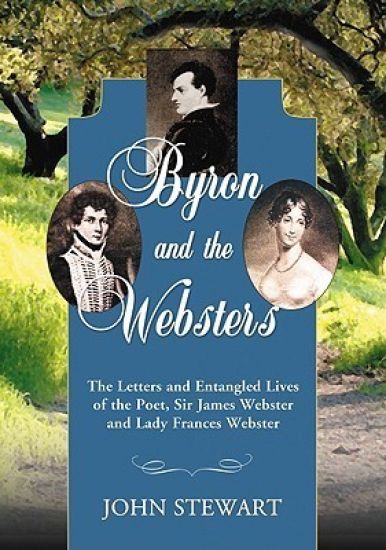
Byron and the Websters

Byron and the Websters

John Stewart

McFarland Co Inc
2008
pokkari
Arguably the most offensive, despised, and ridiculed dandy of the Regency period, Sir James Webster-Wedderburn would likely be forgotten were it not for an affair between his wife and his close friend, the poet Lord Byron. This unique work lays out the details and provides commentary on rare private letters between Webster's wife, Lady Frances Caroline Annesley, and the famous poet. Also included are analyses and transcriptions of Lady Frances' letters to other suitors, including the Duke of Wellington and another Regency dandy, Scrope Davies.
Byron and the Bible

Byron and the Bible

Travis Looper

Scarecrow Press
1978
sidottu
Investigates Byron's literary references to the Bible, using Paul E. More's 1905 edition of the works of Byron. The author alphabetizes Byron's works and catalogs in sequence all biblical references from those works. Each reference is given its own number, with the corresponding biblical equivalent succeeding it. Except for extremely long passages, each reference quotes the pertinent material from both the Bible and Byron. With cross index, author's preface, statistical analysis, and bibliography.
Byron and the Jews

Byron and the Jews

Wayne State University Press
2010
sidottu
Investigates why, of all the British Romantic poets, Byron is the most frequently translated into Hebrew and Yiddish and how Jews used translations of Byron's works to help construct a new Jewish identity. Scholars of Byron, Jewish identity, and those interested in translation and reception studies will appreciate this insightful volume.
Byron Cummings

Byron Cummings

Todd W. Bostwick

University of Arizona Press
2006
sidottu
Byron Cummings, known to students and colleagues as The Dean, had a profound influence on the archaeology of Arizona and Utah during its early development. An explorer, archaeologist, anthropologist, teacher, museum director, university administrator, and state parks commissioner, Cummings was involved in many important discoveries in the American Southwest over the first half of the twentieth century and was a pioneer in the education of generations of archaeologists and anthropologists. This book presents the first comprehensive examination of Cummings life, offering readers a greater understanding of his trailblazing work. Todd Bostwick elucidates Cummings? many intellectual and cultural contributions, investigates the controversies in which he was embroiled, and describes his battles to wrest control of Arizona archaeology from eastern institutions that had long dominated Southwest archaeology. Cummings saw the Southwest as an American wilderness where the story of cultural development revealed by the archaeologist and anthropologist was as important as it was in Europe. Bostwick's meticulous account of his life reflects his great reverence for the region and pays tribute to a man whose dedication, mentoring, and friendship have forever sealed his place as The Dean.