

Kirjahaku
Etsi kirjoja tekijän nimen, kirjan nimen tai ISBN:n perusteella.
1000 tulosta hakusanalla C G Addison


Robert Burns songs for C/G Anglo Concertina: 20 Button
Ondrej Sarek
Createspace Independent Publishing Platform
2013
nidottu
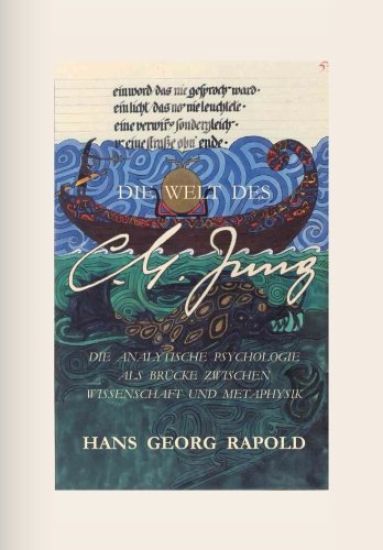
Die Welt des C.G.Jung: Die analytische Psychologie als Brücke zwischen Wissenschaft und Metaphysik
Hans Georg Rapold
Createspace Independent Publishing Platform
2016
nidottu
CARL GUSTAV JUNG (1875-1961) hat nicht nur Freud's Psychoanalyse erweitert, sondern ein Weltbild hinterlassen, das heute modern, ganzheitlich und aktueller erscheint denn je. Seine analytische Psychologie ist keine Lehre, sondern empirische Erforschung der menschlichen Psyche, die es erlaubt rationale Br cken zu schlagen zur Metaphysik. Die Schwelle, die uns den Eintritt in Jung's faszinierende Welt erschwert, besteht im Umfang seines Werks und der Tatsache, dass er es ablehnte ein strukturiertes Lehrbuch zu verfassen. In der vorliegenden Darstellung werden die gro en Themen der analytischen Psychologie bersichtlich und unverf lscht zusammengefasst, oft in Jung's eigener Formulierung. Die grundlegenden Konzepte des kollektiven Unbewussten, des Archetypus, der Individuation oder der Synchronizit t entsprechen weder religionsfeindlicher Spekulation noch banalen Lebens-Rezepten. Vielmehr handelt es sich um die psychischen Grundlagen menschlichen Geistes, vererbt und unverzichtbar, die sich nicht nur individuell in unsern Tr umen, Phantasien und Psychosen u ern, sondern bereinstimmend in intellektuellen und kulturellen Leistungen der Menschheit - ob Naturphilosophie, Monotheismus, antike Mythologie, Christentum, Buddhismus, Taoismus oder mittelalterliche Alchemie, ja bis hin zur modernen Quantenphysik. Zur Macht des Irrationalen geh rt allerdings nicht nur dessen Licht und sch pferische Kraft, sondern auch Finsternis und zerst rerische Gewalt. Die gr te Gefahr f r den Menschen sieht Jung deshalb nicht in elementaren Ereignissen physikalischer oder biologischer Natur, sondern in psychischen Katastrophen pers nlicher, vor allem aber kollektiver Art. Nichts belegt den Einbruch eines gegebenenfalls verheerenden Unbewussten in die individuelle Vernunft und Moral besser als die Geschichte des Menschen und die Gr ueltaten, die im Namen kollektiver Wahnideen in der zivilisierten Welt unserer Tage noch immer ver bt werden.
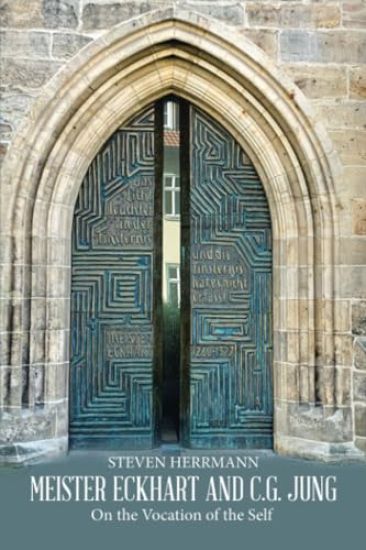
Most Christian readers today have been taught by Church theologians of many different creeds that one must have faith in Christ above everything else. Meister Eckhart and C.G. Jung taught us to have trust in ourselves, in our own inner images of God, or the Self first. Eckhart was a man of the earth who came after Christ. By birth of the Holy Spirit in humanity, Herrmann means in this book the birth of the Self in Eckhart and Jung and also in you, the reader. We are all after Christs and are therefore incarnating the Holy Spirit through our callings to individuate from the Imprinter, which is beyond God, not the traditional God of theology. One of the good things that comes with being a postmodern Jungian analyst, and not a member of the Catholic Church as an institution, is the freedom and liberty granted to spiritually democratic people who can speak their own truths from conscience. Herrmann's book adds something new and significant to the gendered language in theology: God is beyond gender. The book remains true to what Eckhart said about God and Sophia, or Wisdom; for as everyone knows today who has made a deep reading of the Master's works, he was in essence talking about men and women, about all people. God could be a she or an it in postmodernity. In fact, for Eckhart and Jung, the origin of God is the feminine Godhead, or primal Ground of all metaphysical and empirical being. Both theologically and psychologically speaking, the Self, or Holy Spirit is essentially trans-dual, above all duality of male or female. For Eckhart and Jung, the vocation of the Self includes the archetypal feminine, the soul or anima and animus, above all categories of thought, transcendent of time and above gender.
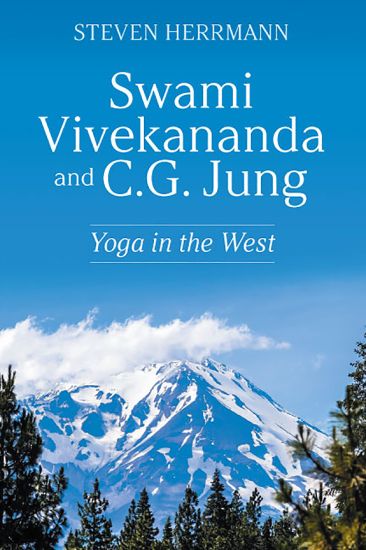
Yoga in the West, as taught by Swami Vivekananda and C.G. Jung, is a spiritual path of vocation, practiced with an attitude of non-attachment to the ego. At the same time, the Self shines through in all of one's works, and one lives in the joy and peace of the higher man or woman within.The vocation of Yoga in the West urges forward the spiritualization of world culture. Each person has a special calling, which he or she must follow, and through which we each may find our own path to freedom.Man-making or woman-making, as Swami Vivekananda called it, means embracing one's Self-path, not serving a Master greater than what one's body and soul yearn for. Ultimately, it means listening to and living a meaningful, symbolic life while being true to one's dreams, visions, and directives from the inner Yogi - the Rishi Within."We look forward to a collaboration with the Indian mind, knowing that the mystery of the psyche can be understood only when approached from opposite sides." - C.G. Jung (1875-1961)"California is the place where Vedanta will grow." - Swami Vivekananda (1863-1902)Says the author, "The year I began writing this manuscript marked the 150th anniversary of Swami Vivekananda's birth. Vivekananda taught tirelessly that the world's religions are One. This Self-centric teaching of Oneness is why I'm remembering him in this book."(About the Author)Steven Herrmann is a certified Jungian analyst, an analyst member of the C.G. Jung Institute of San Francisco, and a member of the International Association for Analytical Psychology (IAAP). A practitioner of Western Yoga with a private practice in Oakland, California, the author has published six well-received books, including William James and C.G. Jung: Doorways to the Self.
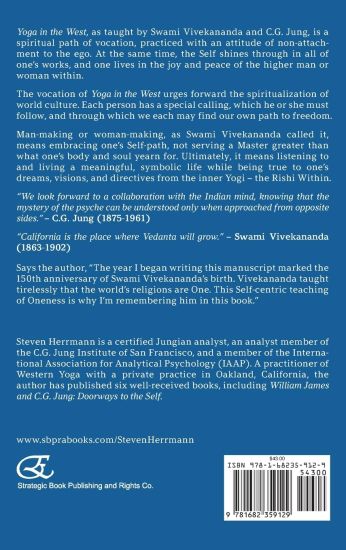
Yoga in the West, as taught by Swami Vivekananda and C.G. Jung, is a spiritual path of vocation, practiced with an attitude of non-attachment to the ego. At the same time, the Self shines through in all of one's works, and one lives in the joy and peace of the higher man or woman within.The vocation of Yoga in the West urges forward the spiritualization of world culture. Each person has a special calling, which he or she must follow, and through which we each may find our own path to freedom.Man-making or woman-making, as Swami Vivekananda called it, means embracing one's Self-path, not serving a Master greater than what one's body and soul yearn for. Ultimately, it means listening to and living a meaningful, symbolic life while being true to one's dreams, visions, and directives from the inner Yogi - the Rishi Within."We look forward to a collaboration with the Indian mind, knowing that the mystery of the psyche can be understood only when approached from opposite sides." - C.G. Jung (1875-1961)"California is the place where Vedanta will grow." - Swami Vivekananda (1863-1902)Says the author, "The year I began writing this manuscript marked the 150th anniversary of Swami Vivekananda's birth. Vivekananda taught tirelessly that the world's religions are One. This Self-centric teaching of Oneness is why I'm remembering him in this book."(About the Author)Steven Herrmann is a certified Jungian analyst, an analyst member of the C.G. Jung Institute of San Francisco, and a member of the International Association for Analytical Psychology (IAAP). A practitioner of Western Yoga with a private practice in Oakland, California, the author has published six well-received books, including William James and C.G. Jung: Doorways to the Self.
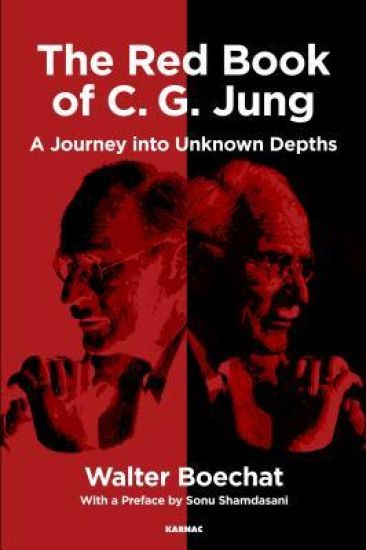
This book focuses on some of the main aspects and importance of The Red Book for the understanding of the work of C.G. Jung. It sheds light on the great mysteries of human nature and the new dimension uncovered by Jung and Freud: the universe of the unconscious and the possible ways to approach it.
Die Archetypentheorie von C.G. Jung
Heinrich H. Balmer
Springer-Verlag Berlin and Heidelberg GmbH Co. K
1972
nidottu
Es rallt bei der Lekttire immer wieder auf, daB die Arche- typen von vielen Autoren - beileibe nicht nur von JUN- sozusagen dogmatisch abgehandelt werden. Ich habe mich nun der Miihsal unterzogen, JUNGS ganzes Werk durchzu- arbeiten, urn seine Archetypen-Theorie im Systemzusam- menhang darstellen zu konnen. Aus dieser Arbeit entsprang fiir mich einerseits eine Kritik an JUNG, wie sie in ahnlicher Form meines Wissens noch nicht vorgebracht worden ist. Andererseits gewahrte ich plOtzlich Zusammenhange zwischen JUNGS Werk und seinem Leben, die auch fUr mich selbst iiberraschend waren. Meine Arbeit wurde durch Diskussionen mit den Herren Prof. HANS KUNZ, Prof. HANSJORG A. SALMONY und Dr. med. HEINRICH ZWEIFEL sehr gefOrdert. Zu Dank ver- pflichtet bin ich auch Herrn HEUBERGER von der Universi- tatsbibliothek Basel, der mich bei der Beschaffung des Schrifttums unterstiitzte. Fraulein KARIN SCHWARZ und meine Frau haben mich bei der Herstellung der Manu- skripte von allen Schreibarbeiten entlastet, wofUr ihnen besonderer Dank gebiihrt. Reinach, 1. Dezember 1971 HEINRICH H. BALMER v Inhaltsverzeichnis Einfiihrung . . . . . .
Studienarbeit aus dem Jahr 1995 im Fachbereich Psychologie - Pers nlichkeitspsychologie, Note: 1, Leopold-Franzens-Universit t Innsbruck (Institut f r Psychologie), Veranstaltung: VO: Entwicklung des Selbstkonzepts, 10 Quellen im Literaturverzeichnis, Sprache: Deutsch, Abstract: Obgleich C.G. JUNGs Theorie ber das kollektive Unbewu te haupts chlich f r den erwachsenen Menschen konzipiert war, konnte besonders unter seinen Sch lern die Bedeutung seiner Annahmen auch f r das sich entwickelnde Kind herausgearbeitet werden. Die von JUNG eingef hrten Begriffe bzw Prozesse wie Archetypus, Individuation etc. pr gen demgem bereits die Entwicklung des Kindes praktisch von Geburt an und werden im berblick dargestellt. Schlagworte: Selbstverwirklichung - Individuation - 'Ich' und 'Selbst' - Mandala - Archetypen - Integrierung - Deintegrierung - Reintegrierung - allm chtiges Selbstgef hl - primitive Identit t. ...]
Die Psychologie C.G. Jungs und das systemtheoretische Paradigma der Selbstorganisation
Karin Barve
Grin Publishing
2014
pokkari

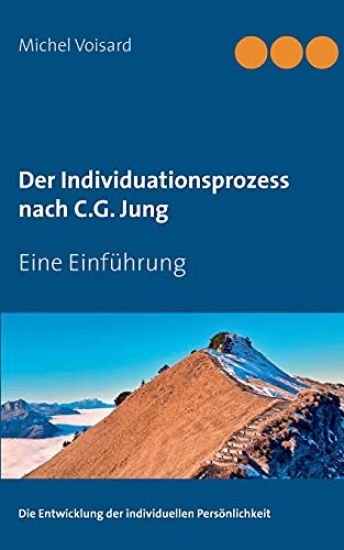
Dieses Buch f hrt anhand vieler Originalzitate in das von C. G. Jung entwickelte Konzept des Individuationsprozesses ein. Dabei geht der Autor auch auf weitere grundlegende theoretische Begriffe von C. G. Jung ein, schliesslich steht der Individuationsprozess im Zentrum des Gesamtwerks von C.G. Jung. Begriffe wie Persona, Schatten, Komplexe, Animus, Anima, pers nliches und kollektives Unterbewusstsein werden in Bezug zur Individuation gestellt. Der Leserin/dem Leser er ffnet sich so ein ganzheitliches Bild ber den Individuationsprozess. ber dieses Buch (Verena Kast, 2007): "Das ist eine sehr, sehr sch ne Einf hrung, (...), eine Arbeit von der ich begeistert bin."

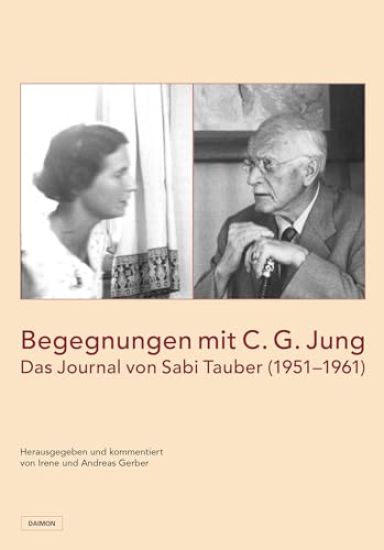
Begegnungen mit C.G. Jung
Daimon
2025
sidottu
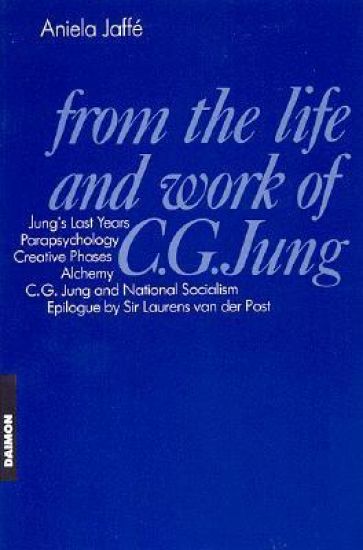
Aniela Jaffe was given permission to quote from Jung's highly personal 'Red Book', and she does so in her essay on Jung's creative phases. Shortly before her death, the author also updated and expanded her long-famous article addressing the National Socialism accusations levelled against Jung. Sir Laurens van der Post provides a sharp echo in his Epilogue, written especially for this edition.
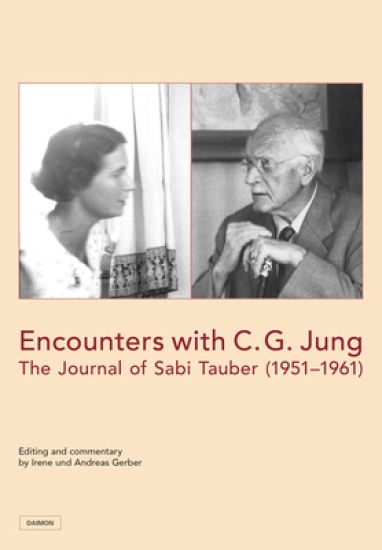
Encounters with C.G. Jung
Daimon Verlag
2021
sidottu
This is Volume II of twelve in the Analytical Psychology Series. Originally published in 1925, this is volume one of two on the psychology of C.G. Jung which seeks to clarify and illuminate (though without going into a detailed history of their development) three basic concepts of Jung's vast intellectual edifice concepts that have given rise to numerous misunderstandings.
The Red Book: Reflections on C.G. Jung's Liber Novus
Routledge
2013
sidottu
In 2009, WW Norton published ‘The Red Book’, a book written by Jung in 1913-1914 but not previously published. Snippets of information about the likely contents of the Red Book had been in circulation for years, and there was much debate and eager anticipation of its publication within the Jungian field and the larger reading public. In 2010, a conference was held at the San Francisco Jungian Institute which brought together an international group of distinguished scholars in analytical psychology to explore and address critical contextual aspects of ‘The Red Book’ and to debate its importance for current and future Jungian theory and practice. The Red Book: Reflections on C.G. Jung’s Liber Novus is based on that conference, the individual papers have been thoroughly revised and updated for this book and address some of the important questions and issues that were raised at that conference in response to the presentation of these papers.As yet there has been very little published about ‘The Red Book’. The Red Book: Reflections on C.G. Jung’s Liber Novus will contribute to setting the agenda for further research, both scholarly and clinical, in response to Jung’s account of his experiences between 1913-1914, when arguably, the future course of his entire project was set in motion. This book will be essential reading for any Jungian interested in the importance of The Red Book, analytical psychologists, trainee analysts, those with an interest in the history of ideas and historians.