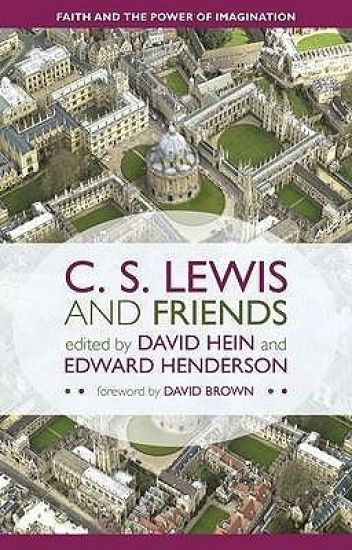
C. S. Lewis is one of the best loved and most engaging Christian writers and he continues to be a powerful defender of the faith. It is in his imaginative fiction that his genius finds its fullest expression and makes its most lasting theological contribution. Famously, Lewis had friends - smart, creative people, who, like him, employed powerful imaginations to explore the profundities of Christian faith and their struggles with their faith. This book of illuminating essays has been written by an international team of Lewis scholars.
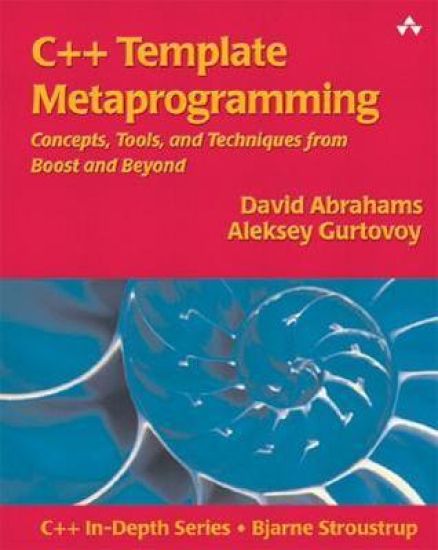
Abrahams and Gurtovoy have written something close to a classic… marvelous fun to read… Read the complete book review by Jack J. Woehr, Dr. Dobbs Journal, June 03, 2005 "If you're like me, you're excited by what people do with template metaprogramming (TMP) but are frustrated at the lack of clear guidance and powerful tools. Well, this is the book we've been waiting for. With help from the excellent Boost Metaprogramming Library, David and Aleksey take TMP from the laboratory to the workplace with readable prose and practical examples, showing that "compile-time STL" is as able as its runtime counterpart. Serving as a tutorial as well as a handbook for experts, this is the book on C++ template metaprogramming."—Chuck Allison, Editor, The C++ Source C++ Template Metaprogramming sheds light on the most powerful idioms of today's C++, at long last delivering practical metaprogramming tools and techniques into the hands of the everyday programmer. A metaprogram is a program that generates or manipulates program code. Ever since generic programming was introduced to C++, programmers have discovered myriad "template tricks" for manipulating programs as they are compiled, effectively eliminating the barrier between program and metaprogram. While excitement among C++ experts about these capabilities has reached the community at large, their practical application remains out of reach for most programmers. This book explains what metaprogramming is and how it is best used. It provides the foundation you'll need to use the template metaprogramming effectively in your own work. This book is aimed at any programmer who is comfortable with idioms of the Standard Template Library (STL). C++ power-users will gain a new insight into their existing work and a new fluency in the domain of metaprogramming. Intermediate-level programmers who have learned a few advanced template techniques will see where these tricks fit in the big picture and will gain the conceptual foundation to use them with discipline. Programmers who have caught the scent of metaprogramming, but for whom it is still mysterious, will finally gain a clear understanding of how, when, and why it works. All readers will leave with a new tool of unprecedented power at their disposal—the Boost Metaprogramming Library. The companion CD-ROM contains all Boost C++ libraries, including the Boost Metaprogramming Library and its reference documentation, along with all of the book's sample code and extensive supplementary material.
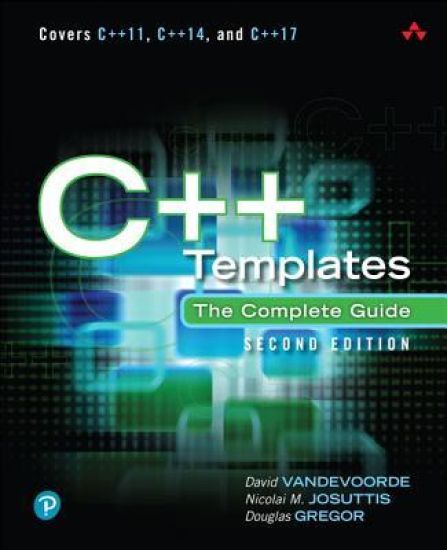
Templates are among the most powerful features of C++, but they remain misunderstood and underutilized, even as the C++ language and development community have advanced. In C++ Templates, Second Edition, three pioneering C++ experts show why, when, and how to use modern templates to build software that’s cleaner, faster, more efficient, and easier to maintain. Now extensively updated for the C++11, C++14, and C++17 standards, this new edition presents state-of-the-art techniques for a wider spectrum of applications. The authors provide authoritative explanations of all new language features that either improve templates or interact with them, including variadic templates, generic lambdas, class template argument deduction, compile-time if, forwarding references, and user-defined literals. They also deeply delve into fundamental language concepts (like value categories) and fully cover all standard type traits. The book starts with an insightful tutorial on basic concepts and relevant language features. The remainder of the book serves as a comprehensive reference, focusing first on language details and then on coding techniques, advanced applications, and sophisticated idioms. Throughout, examples clearly illustrate abstract concepts and demonstrate best practices for exploiting all that C++ templates can do. Understand exactly how templates behave, and avoid common pitfallsUse templates to write more efficient, flexible, and maintainable softwareMaster today’s most effective idioms and techniquesReuse source code without compromising performance or safetyBenefit from utilities for generic programming in the C++ Standard LibraryPreview the upcoming concepts feature The companion website, tmplbook.com, contains sample code and additional updates.
1 The Purpose of This Text This text has been written in response to two trends that have gained considerable momentum over the past few years. The first is the decision by many undergraduate engineering and science departments to abandon the traditional programming course based on the aging Fortran 77 standard. This decision is not surprising, considering the more modem features found in languages such as Pascal and C. However, Pascal never developed a strong following in scientific computing, and its use is in decline. The new Fortran 90 standard defines a powerful, modem language, but this long-overdue redesign of Fortran has come too late to prevent many colleges and universities from switching to C. The acceptance of C by scientists and engineers is based perhaps as. much on their perceptions of C as an important language, which it certainly is, and on C programming experience as a highly marketable skill, as it is on the suitability of C for scientific computation. For whatever reason, C or its derivative C++ is now widely taught as the first and often only programming language for undergraduates in science and engineering. The second trend is the evolving nature of the undergraduate engineering curriculum. At a growing number of institutions, the traditional approach of stressing theory and mathematics fundamentals in the early undergraduate years, and postponing real engineering applications until later in the curriculum, has been turned upside down.
The story of C-lager: Stalag Luft IV & the 86-Day Hunger March is an account of the service history of Sergeant Donald D. Dorfmeier and the air war in Europe during WWII; his subsequent capture, participation in the longest forced march of any group of Allied POWs in Germany during the winter of 1945, and later escape during the closing weeks of the war. The story also chronicles the heroism and spirit of airmen in his lager who exhibited the courage and inspiration to survive a long and difficult march in spite of great hardships and much suffering that would "haunt them for many years to come."
The Lockheed C-130 Hercules has been in continuous production for over six decades, longer than any other military aircraft in the world, and no end of production is yet in sight. The Hercules has been a part of US combat operations since Vietnam, and the airframe, which began life as a simple transport, has been adapted to a variety of roles, including gunship, electronic warfare, refueling, and rescue. This book chronicles the development and use of the Hercules from concept to combat. Through dozens of archival photos, many never before published, as well as detailed photographs of some of the finest existent examples, these iconic aircraft are explored, and their history explained.
A concise illustrated guide to the famous "Gooney Bird," one of the most beloved American aircraft of the Second World War The Douglas C-47 Skytrain and its near twin, the C-53 Skytrooper, formed the backbone of American airborne transport during WWII. In addition to hauling cargo, these aircraft also delivered paratroopers to the front, including for the Normandy invasion. Derived from the Douglas DC-3, the C-47 saw service with US and Allied militaries in Korea and even Vietnam, including notably the heavily armed AC-47D gunship. This volume explores the development and use of the aircraft, as well as details of its construction. The Skytrain was indispensable to the American war effort; more than 10,000 were built and many are still flying today. The planes are also on display at museums on every continent aside from Antarctica, making the plan very relatable and accessible for readers all over the world. Readers will enjoy nearly 300 images of the C-47 and its variants, including the C-53 and AC-47D.
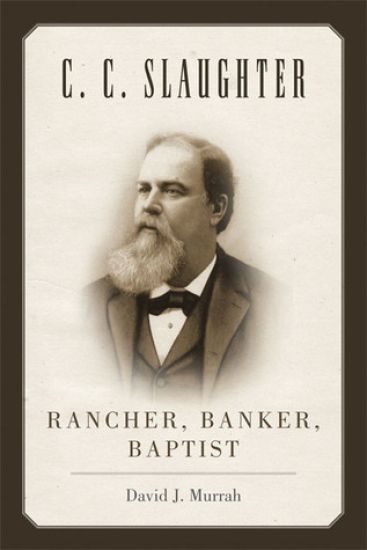
Born during the infant years of the Texas Republic, C. C. Slaughter (1837-1919) participated in the development of the southwestern cattle industry from its pioneer stages to the modern era. Trail driver, Texas Ranger, banker, philanthropist, and cattleman, he was one of America's most famous ranchers. David J. Murrah's biography of Slaughter, now available in paperback, still stands as the definitive account of this well-known figure in Southwest history.A pioneer in West Texas ranching, Slaughter increased his holdings from 1877 to 1905 to include more than half a million acres of land and 40,000 head of cattle. At one time ""Slaughter country"" stretched from a few miles north of Big Spring, Texas, northwestward two hundred miles to the New Mexico border west of Lubbock. His father, brothers, and sons rode the crest of his popularity, and the Slaughter name became a household word in the Southwest. In 1873 - almost ten years before the ""beef bonanza"" on the open range made many Texas cattlemen rich - C. C. Slaughter was heralded by a Dallas newspaper as the ""Cattle King of Texas."" Among the first of the West Texas cattlemen to make extensive use of barbed wire and windmills, Slaughter introduced new and improved cattle breeds to West Texas.In his later years, greatly influenced by Baptist minister George W. Truett of Dallas, Slaughter became a major contributor to the work of the Baptist church in Texas. He substantially supported Baylor University and was a cofounder of the Baptist Education Commission and Dallas's Baylor Hospital.Slaughter also cofounded the Texas Cattle Raisers' Association (1877) and the American National Bank of Dallas (1884), which through subsequent mergers became the First National Bank. His banking career made him one of Dallas's leading citizens, and at times he owned vast holdings of downtown Dallas property.
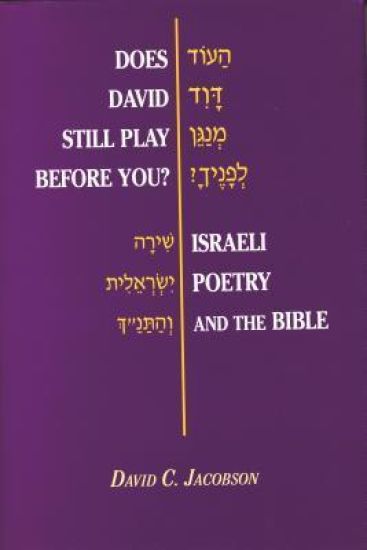
Exploring the ways that contemporary Israeli poets have made use of images from the Bible in their poetry, this work features close readings of 50 poems from poets such as Amir Gilboa, T. Carmi and Nathan Yonathan. They are presented in their original Hebrew and in English translation.
C of Red - The beginning of the Calgary Flames is the history of professional hockey in Calgary, Alberta, Canada. This books covers the history of early hockey in Calgary and the arrival of the Calgary Flames NHL franchise in the 1980s. Also covered is the first season of the Flames in the city.
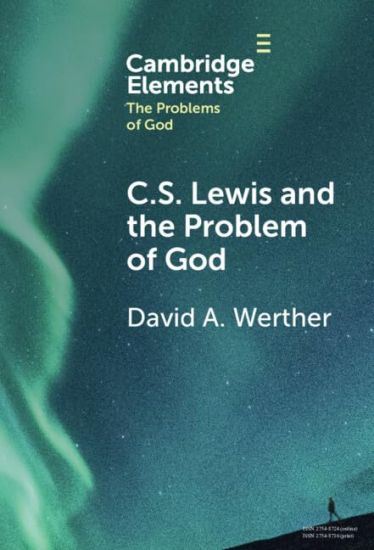
Understanding C.S. Lewis's vocation is essential for reading his works well, as is knowing how he came to it: his long and winding philosophical journey and reoccurring experiences of 'Joy.' Lewis discounted 'proofs' in philosophical theology but offered key arguments in support of theism per se, and Christianity in particular. His account of “mere Christianity” shows the centrality of self-determination, an emphasis on Christ's human nature, and a relativizing of atonement theories. Finally, Lewis's understanding of faith, his attempts to make sense of petitionary and imprecatory prayers, and his emphasis on theosis/deification, are considered.
Understanding C.S. Lewis's vocation is essential for reading his works well, as is knowing how he came to it: his long and winding philosophical journey and reoccurring experiences of 'Joy.' Lewis discounted 'proofs' in philosophical theology but offered key arguments in support of theism per se, and Christianity in particular. His account of “mere Christianity” shows the centrality of self-determination, an emphasis on Christ's human nature, and a relativizing of atonement theories. Finally, Lewis's understanding of faith, his attempts to make sense of petitionary and imprecatory prayers, and his emphasis on theosis/deification, are considered.