Kirjojen hintavertailu. Mukana 11 504 812 kirjaa ja 12 kauppaa.

Kirjahaku

Etsi kirjoja tekijän nimen, kirjan nimen tai ISBN:n perusteella.

1000 tulosta hakusanalla Catherine Carson

Catherine the Great

Catherine the Great

Henri Troyat

Plume Books
1994
nidottu
By delving into the life of Catherine the Great, this acclaimed biographer reveals the rich tapestry of Russia's past, giving insight into the paradoxical character of its people and their stunning evolution from feudalism to communism to their present-day struggle for a free-market democracy. This is history as it is rarely written today--elegant, witty, dramatic, and with an intimate knowledge of its characters. And what better subject for a biography than one of history's most powerful women, the German-born Russian empress whose adopted language and culture were French, and whose most loyal correspondents were Voltaire and Diderot? Troyat details the various lives of Catherine II: the ambitious child, the acquiescent yet firm grand duchess, the forceful politician and patron of the arts, the belligerent war maker, and the doting grandparent. "A remarkable woman . . . A riveting book."--Mary Renault "Brilliantly captures one of the most colorful figures of all time."--Doubleday Book Club News
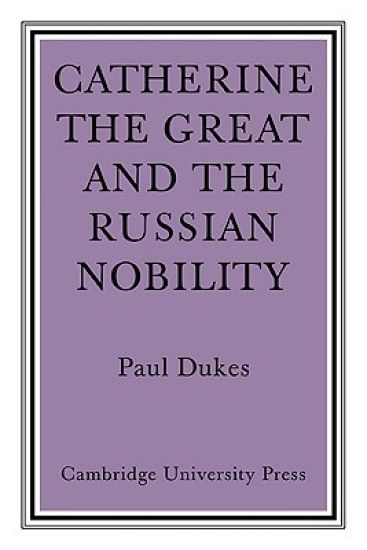
Catherine the Great and the Russian Nobilty

Catherine the Great and the Russian Nobilty

Paul Dukes

Cambridge University Press
2008
pokkari
Russian Society in the eighteenth century was dominated by the nobility. This class made large contribution to secular culture and played a role of vital importance in the government, the armed forces and the economic life of Russia. Dr Dukes has based his study on the materials of Catherine the Great's Legislative Commission of 1767. Despite the existence it print since the late nineteenth century of a vast amount of source material in the form of records of this Commission, it has been little explored by western historians. The author begins with a description of noble society before the Commission and of the general situation in Russia before the beginning of Catherine's reign. He constructs a clear, analytical picture of the attitude of the nobility to the chief questions of the day.
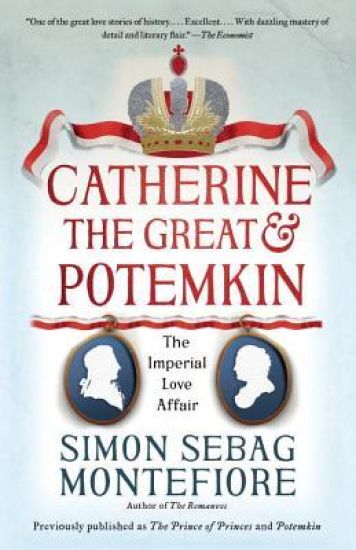
Catherine the Great & Potemkin: The Imperial Love Affair
A widely acclaimed biography from thebestselling author of The Romanovs: "One of the great love stories of history" (The Economist) between Catherine the Great and the wildly flamboyant and talented Prince Potemkin. - "Captures the genius of two extraordinary Enlightenment figures--and of the age as well." --The Wall Street Journal Catherine the Great was a woman of notorious passion and imperial ambition. Prince Potemkin was the love of her life and her co-ruler. Together they seized Ukraine and Crimea, territories that define the Russian sphere of influence to this day. Their affair was so tumultuous that they negotiated an arrangement to share power, leaving each of them free to take younger lovers. But these "twin souls" never stopped loving each other. Drawing on the pair's intimate letters and on vast research, Simon Sebag Montefiore restores these imperial partners to their rightful place as titans of their age. "Biography in the grand tradition...Riveting...The author is] a gifted storyteller." --The Washington Post
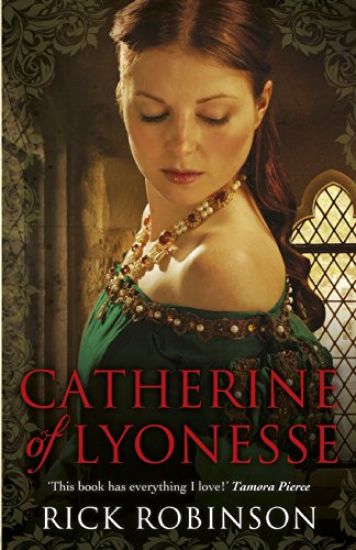
Catherine of Lyonesse

Catherine of Lyonesse

Rick Robinson

Penguin Random House Children's UK
2014
pokkari
When the crown prince of Lyonesse is assassinated, his fiery daughter, Catherine, is taken to Aquitaine, where she is raised at the royal court and given two ladies-in-waiting to protect her from all who conspire against her. Now that the time has come for Catherine to return to Lyonesse, she finds herself surrounded by enemies.
Catherine of Aragon

Catherine of Aragon

Giles Tremlett

Faber Faber
2011
pokkari
The image of Catherine of Aragon has always suffered in comparison to the heir-providing Jane Seymour or the vivacious eroticism of Anne Boleyn. But when Henry VIII married Catherine, she was an auburn-haired beauty in her twenties with a passion she had inherited from her parents, Isabella and Ferdinand, the joint-rulers of Spain who had driven the Moors from their country.This daughter of conquistadors showed the same steel and sense of command when organising the defeat of the Scots at the Battle of Flodden and Henry was to learn, to his cost, that he had not met a tougher opponent on or off the battlefield when he tried to divorce her.Henry VIII introduced four remarkable women into the tumultuous flow of England's history: Catherine of Aragon and her daughter 'Bloody' Queen Mary; and Anne Boleyn and her daughter, the Virgin Queen Elizabeth. 'From this contest, between two mothers and two daughters, was born the religious passion and violence that inflamed England for centuries,' says David Starkey. Reformation, revolution and Tudor history would all have been vastly different without Catherine of Aragon.Giles Tremlett's new biography is the first in more than four decades to be dedicated entirely and uniquely to the tenacious woman whose marriage lasted twice as long as those of Henry's five other wives put together. It draws on fresh material from Spain to trace the dramatic events of her life through Catherine of Aragon's own eyes. 'Enthralling biography . . . this lively and richly detailed book . . . describing the queen's fierce battle to retain her crown, Tremlett brilliantly breathes life into the shadowy figure of a stubborn and finally heroic woman.' Daily Telegraph
Catherine de'Medici

Catherine de'Medici

R J Knecht

Longman
1997
nidottu
Catherine de' Medici (1519-89) was the wife of one king of France and the mother of three more - the last, sorry representatives of the Valois, who had ruled France since 1328. She herself is of preeminent importance to French history, and one of the most controversial of all historical figures. Despised until she was powerful enough to be hated, she was, in her own lifetime and since, the subject of a "Black Legend" that has made her a favourite subject of historical novelists (most notably Alexandre Dumas, whose Reine Margot has recently had new currency on film). Yet there is no recent biography of her in English. This new study, by a leading scholar of Renaissance France, is a major event.Catherine, a neglected and insignificant member of the Florentine Medici, entered French history in 1533 when she married the son of Francis I for short-lived political reasons: her uncle was pope Clement VII, who died the following year. Now of no diplomatic value, Catherine was treated with contempt at the French court even after her husband's accession as Henry II in 1547. Even so, she gave him ten children before he was killed in a tournament in 1559. She was left with three young boys, who succeeded to the throne as Francis II (1559-60), Charles IX (1560-74) and Henry III (1574-89). As regent and queen-mother, a woman and with no natural power-base of her own, she faced impossible odds. France was accelerating into chaos, with political faction at court and religious conflict throughout the land. As the country disintegrated, Catherine's overriding concern was for the interests of her children. She was tireless in her efforts to protect her sons' inheritance, and to settle her daughters in advantageous marriages. But France needed more. Catherine herself was both peace-loving and, in an age of frenzied religious hatred, unbigoted. She tried to use the Huguenots to counterbalance the growing power of the ultra-Catholic Guises but extremism on all sides frustrated her. She was drawn into the violence. Her name is ineradicably associated with its culmination, the Massacre of St Bartholomew (24 August 1572), when thousands of Huguenots were slaughtered in Paris and elsewhere. To this day no-one knows for certain whether Catherine instigated the massacre or not, but here Robert Knecht explores the probabilities in a notably level-headed fashion.His book is a gripping narrative in its own right. It offers both a lucid exposition of immensely complex events (with their profound imact on the future of France), and also a convincing portrait of its enigmatic central character. In going behind the familiar Black Legend, Professor Knecht does not make the mistake of whitewashing Catherine; but he shows how intractable was her world, and how shifty or intransigent the people with whom she had to deal. For all her flaws, she emerges as a more sympathetic - and, in her pragmatism, more modern - figure than most of her leading contemporaries.
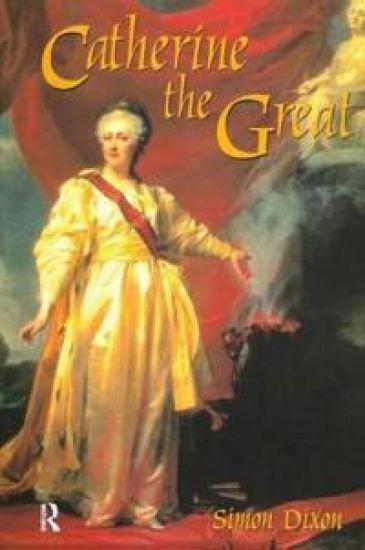
Catherine the Great

Catherine the Great

Simon Dixon

Routledge
2001
nidottu
Neither a comprehensive 'life and times' nor a conventional biography, this is an engaging and accessible exploration of rulership and monarchial authority in eighteenth century Russia. Its purpose is to see how Catherine II of Russia conceived of her power and how it was represented to her subjects. Simon Dixon asks essential questions about Catherin'es life and reign, and offers new and stimulating arguments about the Englightenment, the power of the monarch in early modern Europe, and the much-debated role of the "great individual" in history.
Catherine of Monmouth County, New Jersey

Catherine of Monmouth County, New Jersey

Bonnie L Schermer

iUniverse
2004
pokkari
Catherine Throckmorton has accepted her role as a wealthy, proper spinster in colonial New Jersey. Forced to marry a Quaker, she is caught between her husband's pacifism and her own family's violent patriotism. The American Revolution sweeps her into the Battle of Monmouth, and leaves her struggling to preserve her family in the volatile aftermath.This story, although fictionalized, contains detailed, factual information about the Battle of Monmouth and the history of Monmouth County, New Jersey. All of the main characters are historic figures. Underlying the tale is a continuation of the Throckmorton Family genealogy begun in "Rebecca of Providence, Rhode Island. Because Catherine married Richard Norris, her story becomes the first of three books comprising a Norris family saga.
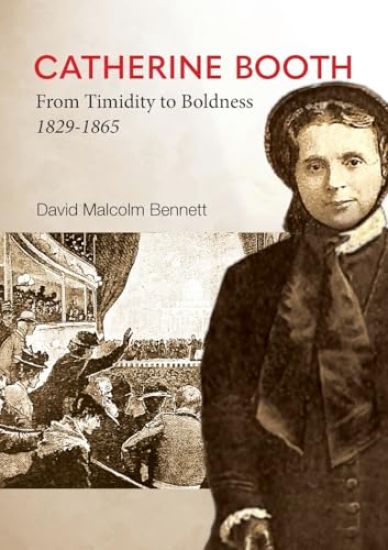
Catherine Booth

Catherine Booth

David Malcolm Bennett

ACORN PRESS
2024
pokkari
Catherine Booth: From Timidity to Boldness 1829-1865 narrates the compelling story of Catherine Booth's early life, detailing her transformation from a shy young woman in a troubled home to a powerful preacher, advocate for women's rights, and co-founder of The Salvation Army alongside her husband. Author David Malcolm Bennett delves deeply into Catherine's personal writings, utilizing the letters exchanged between Catherine and her husband, her correspondence with her parents, and her diary and reminiscences. This biography stands out as the first to employ the complete transcribed editions of these documents, providing a rich and nuanced portrayal of Catherine's thoughts and experiences.Catherine Booth's journey is one of remarkable personal growth and unwavering faith. Emerging from a household marred by alcohol-related issues, she overcame her initial timidity to become a dynamic and influential figure. Her evolution is traced through her own words, which Bennett skilfully brings to the forefront. This approach allows Catherine to articulate her beliefs, struggles, and triumphs in her own voice, lending authenticity and depth to the narrative.The biography reveals Catherine Booth as a multifaceted individual-dynamic, insightful, deeply spiritual, and at times, controversial. Her writings reflect her fervent commitment to her faith and her passionate advocacy for social justice, particularly regarding the rights of women. As a preacher, she broke conventional barriers, gaining popularity and respect in an era when women's roles were severely restricted. Her partnership with her husband in founding The Salvation Army further underscores her significant contributions to social reform and religious outreach.Bennett's meticulous research and thoughtful presentation make Catherine Booth: From Timidity to Boldness a definitive biography. It not only chronicles her life but also provides valuable insights into her character and legacy. Catherine Booth's story is an inspiring testament to the power of faith and determination, showcasing how one woman's courage and conviction can lead to profound social impact. This biography is an essential read for those interested in the history of The Salvation Army, women's rights, and the transformative potential of individual resilience and dedication.