Since the Chinese Communists took control of Inner Mongolia, very little has been written about the region. This book is an attempt to redress the balance. It is a study of the effect of decades of social engineering on a Minority Nationality in China. David Sneath charts the recent history of the pastoral Mongolians of Inner Mongolia since they became the subjects of the Chinese Communist state, and examines the society that has emerged since the abolition of the Communes in the 1980s. He explores the history of local economic and political forms to illuminate the transformations and continuities of life in pastoral Mongolian society, and offers an account that includes both the swings of national and regional government policy and the experiences of individuals subject to those changes. By taking a historical perspective his study reveals underlying modes of symbolism, and notions of domestic organization and paternalistic authority, that have remained fundamental to pastoralism in Inner Mongolia. It suggests an indigenous mechanism for economic inequality and dependency in pastoral society, one that has helped to shape the pastoral nomadic sociopolitical order of the past.
This book is about how languages change. It is also a devastating critique of a widespread linguistic orthodoxy. April McMahon argues that to provide a convincing explanation of linguistic change the roles of history and contingency must be accommodated in linguistic theory. She also shows that theoretical work in related disciplines can be used to assess the value of such theories. Optimality Theory, or OT as it is usually called, dominates contemporary phonology, especially in the USA, and is becoming increasingly influential in syntax and language acquisition. Having set out its basis principles, Professor McMahon assesses their explanatory power in analysing language change and its residues in current phonological systems. Using cross-linguistic data, and drawing comparisons with other theories inside and outside linguistics, she shows that OT is incapable of accounting for language change, without the addition of rules and an appreciation of chance and historical contingency that would then undermine its theoretical underpinnings. OT relies on innateness and needs to discuss the origins of allegedly genetically-specified features. The author considers the nature and evolution of the human language capacity, and demonstrates a profound mismatch between the predictions of evolutionary biology and the claims for innateness made in OT.
This book is about how languages change. It is also a devastating critique of a widespread linguistic orthodoxy. April McMahon argues that to provide a convincing explanation of linguistic change the roles of history and contingency must be accommodated in linguistic theory. She also shows that theoretical work in related disciplines can be used to assess the value of such theories. Optimality Theory, or OT as it is usually called, dominates contemporary phonology, especially in the USA, and is becoming increasingly influential in syntax and language acquisition. Having set out its basis principles, Professor McMahon assesses their explanatory power in analysing language change and its residues in current phonological systems. Using cross-linguistic data, and drawing comparisons with other theories inside and outside linguistics, she shows that OT is incapable of accounting for language change, without the addition of rules and an appreciation of chance and historical contingency that would then undermine its theoretical underpinnings. OT relies on innateness and needs to discuss the origins of allegedly genetically-specified features. The author considers the nature and evolution of the human language capacity, and demonstrates a profound mismatch between the predictions of evolutionary biology and the claims for innateness made in OT.
It is a trite fact that changes do occur, yet is it logically contradictory to deny that they do? If Zeno and McTaggart were right, then there is no logical contradiction in such a denial, although this is incompatible with the way in which we normally think of the world. Supporters of the `block view' of the universe believe that there is a sense in which all events may be said to be contemporaneous, like episodes in a book, so that there is no `objective' past or future. The aim of this book is not to demolish belief in the existence of objective change, but to elucidate the conditions under which it makes sense to suppose that changes occur. The book pays particular attention to the existence of selves as one such condition, and concludes that the naturalistic account of change is defective and leaves the sceptic victorious.
Time allocation, whether considered at the level of the individual or of the society, is a major focus of public concern. Are our lives more congested with work than they used to be? Is society polarizing into groups which, on one side, have too much work and too little leisure time to spend their money in, and on the other have no paid work, and hence no money to pay for the goods and services they might wish to use during their leisure? Has the recent convergence in men's and women's labour market roles led to an unfair distribution of the totals of paid plus unpaid work? These issues, and others similar, once the preserve of a few specialist sociologists and economists, now appear daily and prominently across the news and entertainment media. Yet there is surprisingly little substantive evidence of how individuals and societies spend their time, and of how this has changed in the developed world over the recent past. This book brings together, for the first time, data gathered in some forty national scale 'time-diary' studies, from twenty countries, and covering the last third of the twentieth century. It examines the newly emerging political economy of time, in the light of new estimates of how time is actually spent, and of how this has changed, in the developed world.
Major changes have happened in households and people's lives in most countries in the developed world. Marriage rates have fallen, divorce has risen, women are having fewer children and later in life, and there has been a rise in childbearing outside marriage. One in four families is headed by a lone parent. We are all getting older. These changes have significance that goes beyond the individual families - with implications for housing demand, social security benefits, labour force participation, health, and social services. Changing Britain provides a comprehensive portrait of British families and households at the end of the 20th century. The book examines more generally the nature of economic and labour market change, Britain's place in Europe, and changing attitudes towards family life. Specifically, the book also deals with issues such as; older people's lives; non-heterosexual families; one-person households; young mothers and single parents; and divorce.
This volume is based closely on the lectures delivered by The Hon. Justice W. M. C. Gummow at Oxford University in 1999 as part of the Clarendon law lectures series, sponsored by Oxford University Press. These lectures take up themes of continuity and change in the law, particularly as they appear in the great common law jurisdictions. The tension between continuity and change appears from a consideration of the interaction between statute and the case law which interprets it, of the interaction between equity and statute, and finally of the operation of that constitutional arrangement known as federalism. Statute speaks to the state of affairs at the time of enactment. That state of affairs is dynamic; the statute, at least in form, is static. Conversely, in its development the common law may be informed by changes effected by statute. The extent to which the common law may or should respond in this way is a matter of controversy. Further, the accommodation of an apparently rigid statutory structure to individual circumstances has, for centuries, been assisted by the leavening effect of equitable doctrines and remedies. Finally, in federal systems with a division of governmental power and authority by a written supreme law, tensions between continuity, perceived in terms of original intent, and changed circumstances which were unforeseen, may become acute. Is Britain in the process of becoming a federal state or, indeed, a component of a European federal state? In all these situations, the doctrines developed by the courts assist the passage of society from the past, through the present and into the future. This invites an inquiry, considered in these lectures, as to the requirements of legal scholarship in a court of ultimate appeal in a common law system.
Change, Choice and Inference develops logical theories that are necessary both for the understanding of adaptable human reasoning and for the design of intelligent systems. The book shows that reasoning processes - the drawing on inferences and changing one's beliefs - can be viewed as belonging to the realm of practical reason by embedding logical theories into the broader context of the theory of rational choice. The book unifies lively and significant strands of research in logic, philosophy, economics and artificial intelligence. It elaborates on the relevant theories and provides a mathematically precise foundation for the thesis that large parts of theoretical reason can be subsumed under practical reason.
This book brings together scholars from different disciplines to examine the evolving patterns of economic organisation across Northeast and Southeast Asia against the backdrop of market liberalisation, political changes and periodic economic crises since the 1990s. More specifically, it provides an interdisciplinary account of variations, continuities and changes in the institutional structures that shape business systems and practices and govern innovation patterns, together with analyses of their impact on established systems of economic coordination and control. In line with this analytical focus, the project has three different yet interrelated objectives. In the first place, building on the comparative business systems framework, it elucidates the nature and properties of business system changes and continuities in Asia since the 1990s. Second, it develops novel theoretical propositions concerning the primary causes of these changes and continuities, representing a collective effort to theorise the changing varieties of Asian economic organisation. Finally, it explores the causal pathways through which the changing institutional structures governing business systems have shaped and reshaped innovation strategies and trajectories across the national, sectoral and firm levels of analysis.
Celebrating the 50th Anniversary of the Oxford Centre for Criminology, this edited collection of essays seeks to explore the changing contours of criminal justice over the past half century and to consider possible shifts over the next few decades. The question of how social science disciplines develop and change does not invite any easy answer, with the task made all the more difficult given the highly politicised nature of some subjects and the volatile, evolving status of its institutions and practices. A case in point is criminal justice: at once fairly parochial, much criminal justice scholarship is now global in its reach and subject areas that are now accepted as central to its study - victims, restorative justice, security, privatization, terrorism, citizenship and migration (to name just a few) - were topics unknown to the discipline half a century ago. Indeed, most criminologists would have once stoutly denied that they had anything to do with it. Likewise, some central topics of past criminological attention, like probation, have largely receded from academic attention and some central criminal justice institutions, like Borstal and corporal punishment, have, at least in Europe, been abolished. Although the rapidity and radical nature of this change make it quite impossible to predict what criminal justice will look like in fifty years' time, reflection on such developments may assist in understanding how it arrived at its current form and hint at what the future holds. The contributors to this volume have been invited to reflect on the impact Oxford criminology has had on the discipline, providing a unique and critical discussion about the current state of criminal justice around the world and the origins and future implications of contemporary practice. All are leading internationally-renowned criminologists whose work has defined and often re-defined our understanding of criminal justice policy and literature.
There has been a remarkable upsurge of debate about increasing inequalities and their societal implications, reinforced by the economic crisis but bubbling to the surface before it. This has been seen in popular discourse, media coverage, political debate, and research in the social sciences. The central questions addressed by this book, and the major research project GINI on which it is based, are: - Have inequalities in income, wealth and education increased over the past 30 years or so across the rich countries, and if so why? - What are the social, cultural and political impacts of increasing inequalities in income, wealth and education? - What are the implications for policy and for the future development of welfare states? In seeking to answer these questions, this book adopts an interdisciplinary approach that draws on economics, sociology, and political science, and applies this approach to learning from the experiences over the last three decades of European countries together with the USA, Japan, Canada, Australia, and South Korea. It combines comparative research with lessons from specific country experiences, and highlights the challenges in seeking to adequately assess the factors underpinning increasing inequalities and to identify the channels through which these may impact on key social and political outcomes, as well as the importance of framing inequality trends and impacts in the institutional and policy context of the country in question.
There has been a remarkable upsurge of debate about increasing inequalities and their societal implications, reinforced by the economic crisis but bubbling to the surface before it. This has been seen in popular discourse, media coverage, political debate, and research in the social sciences. The central questions addressed by this book, and the major research project GINI on which it is based, are: - Have inequalities in income, wealth and education increased over the past 30 years or so across the rich countries, and if so why? - What are the social, cultural and political impacts of increasing inequalities in income, wealth and education? - What are the implications for policy and for the future development of welfare states? In seeking to answer these questions, this book adopts an interdisciplinary approach that draws on economics, sociology, and political science, and applies a common analytical framework to the experience of 30 advanced countries, namely all the EU member states except Cyprus and Malta, together with the USA, Japan, Canada, Australia and South Korea. It presents a description and analysis of the experience of each of these countries over the past three decades, together with an introduction, an overview of inequality trends, and a concluding chapter highlighting key findings and implications. These case-studies bring out the variety of country experiences and the importance of framing inequality trends in the institutional and policy context of each country if one is to adequately capture and understand the evolution of inequality and its impacts.
By tracing the evolution of South Korean state-led capitalism and comparing it with other economies, this book critiques prevalent theories including neoliberalism, the developmental state, and institutionalism, and proposes a theoretical alternative focusing on endogenous changes through elites' competition within and outside the state. Unlike the arguments of neoliberals, this volume asserts that the state can still play an active role in reconstituting the national economy through globalization. The Korean state successfully fosters economic growth by nurturing industrial commons through globalization, rather than by adopting a neoliberal free-market system. This volume exerts that the Korean economy has successfully grown over the past 50 years because it has moved toward a new version of state-led developmentalism. In order to better account for the evolution of state-led developmentalism, this book proposes changes by competition within, as well as outside, the state, in order to bring about changes in developmentalism and the ability to adjust to new contexts. Unlike prevalent accounts of developmental state theory, Changes by Competition argues that the state is neither unitary nor cohesive, but a locus of competition.
An increasing number of studies in the last decade or so have emphasized the viability and persistence of distinctive systems of economic coordination and control in developed market economies. Over more or less the same period, the revival of institutional economics and evolutionary approaches to understanding the firm has focused attention on how firms create distinctive capabilities through establishing routines that coordinate complementary activities and skills for particular strategic purposes. For much of the 1990s these two strands of research remained distinct. Those focusing on the institutional frameworks of market economies were primarily concerned with identifying complementarities between institutional arrangements that explained coherence and continuity. On the other hand, those focusing on the dynamics of firm behaviour studied how firms develop new capacities and are able to learn new ways of doing things. This book aims to bring together these approaches. It consists of a set of theoretically motivated and empirically informed chapters from a range of internationally known contributors to these debates. In their chapters, the authors show how institutions and firms evolve. Ideas of path dependency and complementarity of institutions are subjected to critical scrutiny both by reference to their own internal logic and to empirical examples. Varieties of institutional integration, the surprising maintenance of 'deviant' or alternative traditions and processes, and the existence of unpredictable yet consequential policy options that can lead to breaks in path dependency are scrutinized with particular reference to how national and international firms may relate to institutions at various levels as a diverse arena of potential resources rather than as a singular and determinant constraining force. The book provides a set of theoretical and empirical challenges for researchers concerned with the relationship between national institutional contexts and firm dynamics. For those involved in teaching or studying at doctoral, Masters and higher level undergraduate courses, the book provides a structured entry into the debates about how institutions and firms are changing in the contemporary era.
Most information about the incomes of people in Britain today, such as provided by official statistics, tells us how much inequality there is or how many poor people there are in a given year and compares those numbers with the corresponding statistics from the previous year. Missing from snapshot pictures like these is information about whether the people who were poor one year are the same people who are poor the following year; and the circumstances of those with middle-income or top-income origins are not tracked over time. This book fills in the missing information. The author likens Britain's income distribution to a multi-story apartment building with the numbers of residents on the different floors corresponding to the concentration of people at different income levels in any particular year. The poorest are in the basement, the richest are in the penthouse, and the majority somewhere in between. This book assesses how much movement there is between floors, the frequency of moves, whether the distance travelled has been changing over the last two decades, and whether basement dwellers ever reach the penthouse. Using the British Household Panel Survey, which has followed and interviewed the same people annually since 1991, it documents the patterns of income mobility and poverty dynamics in Britain, shows how they have changed over the last two decades, and explores the reasons why. It draws attention to the relationships between changes in income and changes in other aspects of people's lives - not only in their jobs, earnings, benefits, and credits, but also in the households within which they live (people marry and divorce; children are born). Trends over time are also related to changes in Britain's labour market and the reforms to the tax-benefit system introduced by the Labour government in the late-1990s.
This book examines patterns of economic governance in three specific, contrasting, contexts: machinery-producing districts; declining steel cities; and clusters of high-technology activities. Building on the work of their previous book (Local Production Systems in Europe: Rise or Demise? OUP 2001), which charted the recent development of local clusters of specialized manufacturing among small and medium-sized enterprises (SMEs) in France, Germany, Italy, and the United Kingdom, the authors find patterns of economic governance far more complex and dynamic than usually described in a literature which insists on identifying simple national approaches. The machinery industries were often identified in the literature of the 1980s as prominent cases of industrial district formation, which were then considerably weakened by the crises of the mid-1990s. Did clustering help these industries and their associated districts to respond to challenge, or only weaken them further? The case studies focus on the Bologna and Modena area of Emilia-Romagna, Stuttgart in Baden-Württemberg, Birmingham and Coventry in the English west midlands, but generally in France where there are very few local concentrations. Even while some thought local production systems were in crisis, national governments and the European Commission continued to recommend their approach to areas experiencing economic decline. This was particularly the case for cities that had been dependent on a small number of large corporations in industries that would no longer be major employers. Political and business leaders in these areas were encouraged to diversify, in particular through SMEs. Could this be done in response to external pressure, given that successful local production systems depend on endogenous vitality? The authors ask these questions of former steel-producing cities St. Etienne, Duisburg, Piombino, and Sheffield. The idea that local production systems had had their day was challenged by clear evidence of clustering among SMEs in a number of flourishing high-tech industries in parts of the USA and western Europe. Why do scientists, other specialists and firms actively embedded in global networks, bother with geographical proximity? This question is addressed by examining the software firms at Grenoble, the mass media cluster in Cologne, the information technology sector around Pisa, and the Oxfordshire biotechnology region.
There is little substantive evidence of how individuals and societies spend their time, and of how this has changed in the developed world. This text brings together data gathered in 40 national scale "time-diary" studies, from 20 countries, and covering the last third of the 20th century.
An increasing number of studies in the last decade or so have emphasized the viability and persistence of distinctive systems of economic coordination and control in developed market economies. Over more or less the same period, the revival of institutional economics and evolutionary approaches to understanding the firm has focused attention on how firms create distinctive capabilities through establishing routines that coordinate complementary activities and skills for particular strategic purposes. For much of the 1990s these two strands of research remained distinct. Those focusing on the institutional frameworks of market economies were primarily concerned with identifying complementarities between institutional arrangements that explained coherence and continuity. On the other hand, those focusing on the dynamics of firm behaviour studied how firms develop new capacities and are able to learn new ways of doing things. This book aims to bring together these approaches. It consists of a set of theoretically motivated and empirically informed chapters from a range of internationally known contributors to these debates. In their chapters, the authors show how institutions and firms evolve. Ideas of path dependency and complementarity of institutions are subjected to critical scrutiny both by reference to their own internal logic and to empirical examples. Varieties of institutional integration, the surprising maintenance of 'deviant' or alternative traditions and processes, and the existence of unpredictable yet consequential policy options that can lead to breaks in path dependency are scrutinized with particular reference to how national and international firms may relate to institutions at various levels as a diverse arena of potential resources rather than as a singular and determinant constraining force. The book provides a set of theoretical and empirical challenges for researchers concerned with the relationship between national institutional contexts and firm dynamics. For those involved in teaching or studying at doctoral, Masters and higher level undergraduate courses, the book provides a structured entry into the debates about how institutions and firms are changing in the contemporary era.
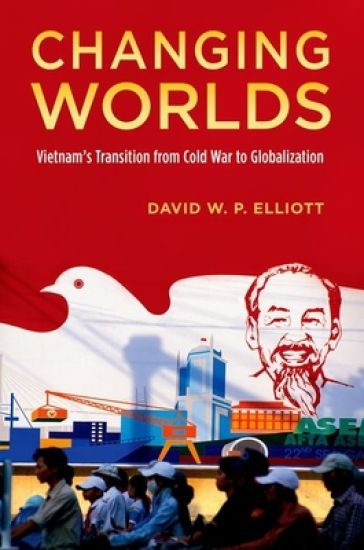
Throughout the entire Cold War era, Vietnam served as a grim symbol of the ideological polarity that permeated international politics. But when the Cold War ended in 1989, Vietnam faced the difficult task of adjusting to a new world without the benefactors it had come to rely on. In Changing Worlds, David W. P. Elliott, who has spent the past half century studying modern Vietnam, chronicles the evolution of the Vietnamese state from the end of the Cold War to the present. When the communist regimes of Eastern Europe collapsed, so did Vietnam's model for analyzing and engaging with the outside world. Fearing that committing fully to globalization would lead to the collapse of its own system, the Vietnamese political elite at first resisted extensive engagement with the larger international community. Over the next decade, though, China's rapid economic growth and the success of the Asian "tiger economies," along with a complex realignment of regional and global international relations reshaped Vietnamese leaders' views. In 1995 Vietnam joined the Association of Southeast Asian Nations (ASEAN), its former adversary, and completed the normalization of relations with the United States. By 2000, Vietnam had "taken the plunge " and opted for greater participation in the global economic system. Vietnam finally joined the World Trade Organization in 2006. Elliott contends that Vietnam's political elite ultimately concluded that if the conservatives who opposed opening up to the outside world had triumphed, Vietnam would have been condemned to a permanent state of underdevelopment. Partial reform starting in the mid-1980s produced some success, but eventually the reformers' argument that Vietnam's economic potential could not be fully exploited in a highly competitive world unless it opted for deep integration into the rapidly globalizing world economy prevailed. Remarkably, deep integration occurred without Vietnam losing its unique political identity. It remains an authoritarian state, but offers far more breathing space to its citizens than in the pre-reform era. Far from being absorbed into a Western-inspired development model, globalization has reinforced Vietnam's distinctive identity rather than eradicating it. The market economy led to a revival of localism and familism which has challenged the capacity of the state to impose its preferences and maintain the wartime narrative of monolithic unity. Although it would be premature to talk of a genuine civil society, today's Vietnam is an increasingly pluralistic community. Drawing from a vast body of Vietnamese language sources, Changing Worlds is the definitive account of how this highly vulnerable Communist state remade itself amidst the challenges of the post-Cold War era.
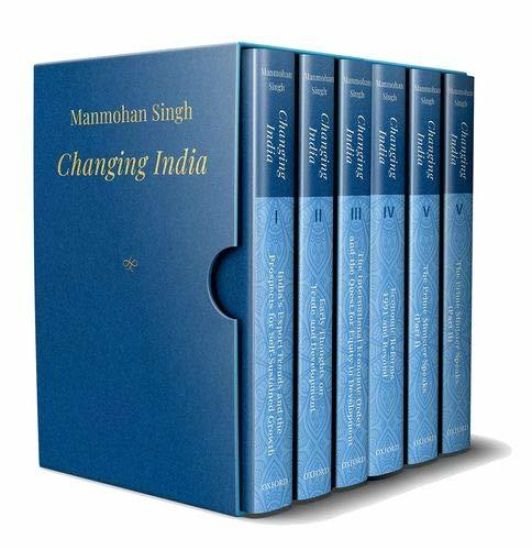
This set of five volumes documents the life and work of Manmohan Singh, an academic, a policymaker, and a politician who has had a deep impact on India and its economy. The volumes offer his selected speeches, articles, and interviews, starting from the 1950s, when he was in the academia, through the 1980s and 1990s, when he was India's finance minister, to 2004-14, when he was the prime minister of India. Manmohan Singh's writings reflect on the reforms that transformed the Indian economy and lay the foundations for a stronger medium-term growth story than the kind that India had witnessed in the preceding 44 years since Independence. The five volumes bring together Singh's essays and speeches on various subjects- economic reforms, India's export trends and the prospects for self-sustained growth, trade and development, and international economic order and equity in development.