Kirjojen hintavertailu. Mukana 12 459 402 kirjaa ja 12 kauppaa.

Kirjahaku

Etsi kirjoja tekijän nimen, kirjan nimen tai ISBN:n perusteella.

1000 tulosta hakusanalla Charles Knowles

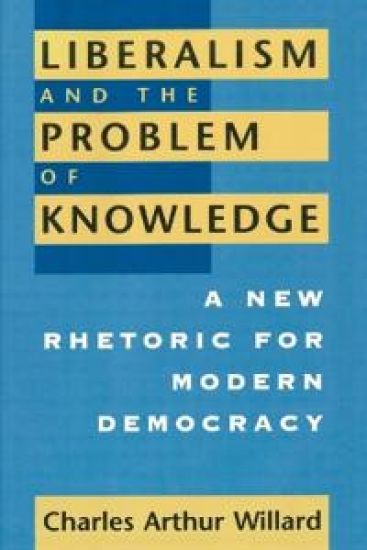
Liberalism and the Problem of Knowledge

Liberalism and the Problem of Knowledge

Charles Arthur Willard

University of Chicago Press
1996
nidottu
In this study of democracy and its critics, the author debunks liberalism, arguing that its exaggerated ideals of authenticity, unity and community have deflected attention from the pervasive incompetence of "the rule of experts". He proposes a ground of communication that emphasizes common interests rather than narrow disputes. The problem of "unity" and the public sphere has driven a wedge between libertarians and communitarians. To mediate this conflict, Willard advocates a shift from the discourse of liberalism to that of epistemics. As a means of organizing the ebb and flow of consensus, epistemics regards democracy as a family of knowledge problems - as ways of managing discourse across differences and protecting multiple views. Building a bridge between warring peoples and warring paradigms, the book also reminds those who presume to instruct government that they are obliged to enlighten it, and that to do so requires an enlightened public discourse.
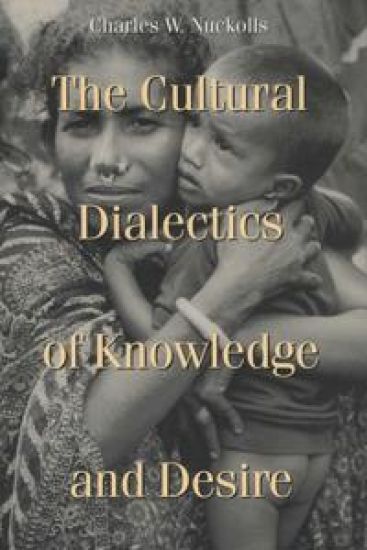
The Cultural Dialectics of Knowledge and Desire

The Cultural Dialectics of Knowledge and Desire

Charles W. Nuckolls; Stephen A. Tyler

University of Wisconsin Press
1996
nidottu
Offering a cognitive and psychoanalytic approach, this work asks why culture is a problem that can never be solved. It develops a theory of cultural dialectics based on the concept of paradox, in which it shows how ambivalence and conflicts are at the heart of all cultural knowledge systems.
A History of Knowledge

A History of Knowledge

Charles Lincoln Van Doren

Ballantine Books Inc.
1992
nidottu
A one-voume reference to the history of ideas that is a compendium of everything that humankind has thought, invented, created, considered, and perfected from the beginning of civilization into the twenty-first century. Massive in its scope, and yet totally accessible, A HISTORY OF KNOWLEDGE covers not only all the great theories and discoveries of the human race, but also explores the social conditions, political climates, and individual men and women of genius that brought ideas to fruition throughout history."Crystal clear and concise...Explains how humankind got to know what it knows."Clifton FadimanSelected by the Book-of-the-Month Club and the History Book Club
Social Choice with Partial Knowledge of Treatment Response

Social Choice with Partial Knowledge of Treatment Response

Charles F. Manski

Princeton University Press
2005
sidottu
Economists have long sought to learn the effect of a "treatment" on some outcome of interest, just as doctors do with their patients. A central practical objective of research on treatment response is to provide decision makers with information useful in choosing treatments. Often the decision maker is a social planner who must choose treatments for a heterogeneous population--for example, a physician choosing medical treatments for diverse patients or a judge choosing sentences for convicted offenders. But research on treatment response rarely provides all the information that planners would like to have. How then should planners use the available evidence to choose treatments? This book addresses key aspects of this broad question, exploring and partially resolving pervasive problems of identification and statistical inference that arise when studying treatment response and making treatment choices. Charles Manski addresses the treatment-choice problem directly using Abraham Wald's statistical decision theory, taking into account the ambiguity that arises from identification problems under weak but justifiable assumptions. The book unifies and further develops the influential line of research the author began in the late 1990s. It will be a valuable resource to researchers and upper-level graduate students in economics as well as other social sciences, statistics, epidemiology and related areas of public health, and operations research.
Heidegger and the Problem of Knowledge

Heidegger and the Problem of Knowledge

Charles Guignon

Hackett Publishing Co, Inc
1983
sidottu
"The best book-length treatment of Heidegger with which I am familiar. . . . What Guignon does, very skillfully, is to use the problem of knowledge as a focus for organizing a discussion of Heidegger’s thought in its entirety. . . . Places him squarely within the philosophical tradition he struggled to overcome and provides an account of his development from Being and Time to the last writings, which make the changes in his thought continuous and intelligible." --Harrison Hall, Inquiry
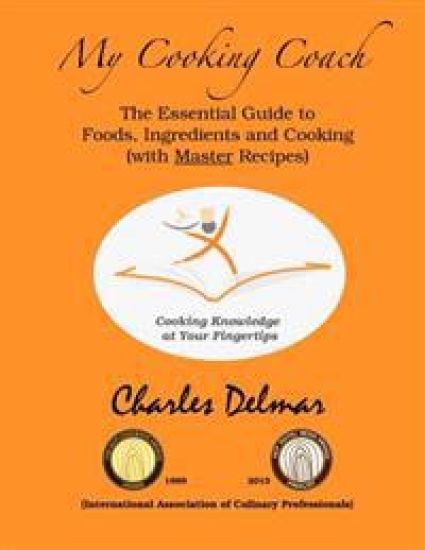
My Cooking Coach: Cooking Knowledge at Your Fingertips

My Cooking Coach: Cooking Knowledge at Your Fingertips

Charles Delmar

Cooking Coach Corp. LLC
2013
nidottu
It has been said that, "If you can read a recipe, you can cook." The sad truth is that many cooks today do not know enough of the basics of foods and cooking to translate recipes to cook with confidence or success, let alone creatively. My Cooking Coach is a 500 page cornucopia of cooking knowledge that provides, as its slogan states, "Cooking Knowledge at Your Fingertips " All of this cooking knowledge comes from a revised version of The Essential Cook, by Charles Delmar, winner of the prestigious "Writings" award from the International Assn. of Culinary Professionals (IACP). This new edition has been re-named and re-formatted in "bite-sized" pieces so it can be read as a quick reference from its Glossary/Index of more than 1,100 cooking terms - an important consideration for today's cooks who don't seem to have the time or the patience to read a textbook. Of course, it can also be read "Top-Down" as a book that one reviewer described as "A really good, and informative, read. Another reviewer, award-winning restaurateur and author, Bill Neal said of the first edition, "The Essential Cook", "This is the book people who buy "Joy of Cooking" think they are going to be getting ... but they don't ""From Part One, First You Steal a Chicken: How to Plan, Select, Store, Prepare, Cook, Flavor and Serve most foods, through Part Three: How to Set a Dining Table and Other Facts of Life, with How Good Cooks Do It: Basic Cooking Methods and Techniques in between, My Cooking Coach uses clear, direct language and more than 400 informative illustrations, along with "Master Recipes," to explain the basic How-Tos and Whys of foods, ingredients and cooking. There are no conventional recipes in My Cooking Coach. Rather, the author uses what he calls "Master Recipes" that provide step-by-step instructions for cooking almost any food you can think of by any of the basic cooking methods usually used to cook that food: Dry Heat, Liquids, and Frying. "Master recipes are the themes, of which recipes are but individual variations," says author Delmar. Now, using abundant page number cross-references and more than 5,000 Bookmark/Hyperlinks, readers have the cornucopia of cooking knowledge in The Essential Cook literally "at their fingertips".
The Western Devaluation of Knowledge

The Western Devaluation of Knowledge

Charles B. Osburn

Rowman Littlefield
2013
sidottu
The Western Devaluation of Knowledge is an exploration of the causes and effects of Western cultural changes that have evolved during the past half millennium of industrialization to diminish the value of knowledge as process. Western culture has developed a conceptualization and valuation of knowledge that reverses the traditional knowledge continuum that connects data (information) to understanding. As a result, we displace the subjective and human features of knowledge with automated systems that conforms with information and devalues the knowledge process. This book explains this change as a result of the industrial influences that began to gain strength in the 15th century and continued on that path through today’s economic and cultural globalization. The author shows that science and technology, while bringing good on many fronts have also: ·Weakened or replaced traditional sources of cultural authority, ·Advanced a materialistic outlook; ·Hastened the broad spread of capitalist values, principles, and strategies; ·Fostered a pervasive dependence on technological innovation; and ·Nurtured an extreme rationality. Osburn shows that while any one of the above cultural currently would have been sufficient to cause deep and generalized change, their confluence was the deciding inspiration for a different epistemology, one that has altered the generally accepted meaning and valuation of knowledge.