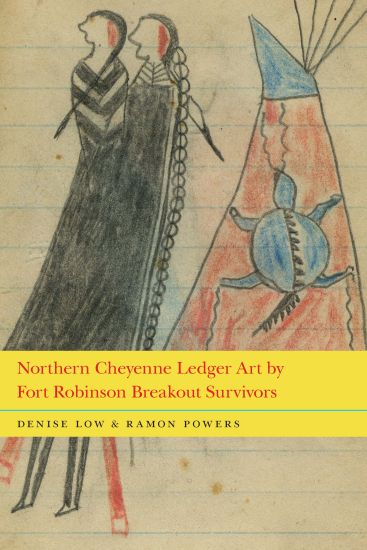
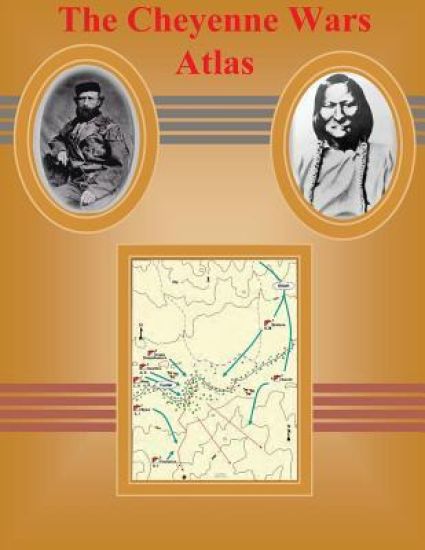
Named a 2021 Kansas Notable Book Northern Cheyenne Ledger Art by Fort Robinson Breakout Survivors presents the images of Native warriors-Wild Hog, Porcupine, and Left Hand, as well as possibly Noisy Walker (or Old Man), Old Crow, Blacksmith, and Tangled Hair-as they awaited probable execution in the Dodge City jail in 1879. When Sheriff Bat Masterson provided drawing materials, the men created war books that were coded to avoid confrontation with white authorities and to narrate survival from a Northern Cheyenne point of view. The prisoners used the ledger-art notebooks to maintain their cultural practices during incarceration and as gifts and for barter with whites in the prison where they struggled to survive. The ledger-art notebooks present evidence of spiritual practice and include images of contemporaneous animals of the region, hunting, courtship, dance, social groupings, and a few war-related scenes. Denise Low and Ramon Powers include biographical materials from the imprisonment and subsequent release, which extend the historical arc of Northern Cheyenne heroes of the Plains Indian Wars into reservation times. Sources include selected ledger drawings, army reports, letters, newspapers, and interviews with some of the Northern Cheyenne men and their descendants. Accounts from a firsthand witness of the drawings and composition of the ledgers themselves give further information about Native perspectives on the conflicted history of the North American West in the nineteenth century and beyond. This group of artists jailed after the tragedy of the Fort Robinson Breakout have left a legacy of courage and powerful art.
When Cam MacLeod is attacked by a half-starved exotic beauty defending her son on the high Wyoming plains, he's understandably intrigued. And the more he learns about Tess, the more he begins to hope that he's found his chance at a ready-made family. He even manages to talk her into marrying him. As the weeks turn to months, and he realizes how well they fit together, he knows that he's secured his Happily Ever After... Except for one small detail: Tess refuses to give him her love. If he can convince her that they were made for each other before the end of November, he'll be truly thankful.
Virginia Bellamy is an ambitious, well-to-do socialite who aspires to marry into Boston's most elite social circles. But when she fails to attract a proposal that meets her high standards, she agrees to become the mail order bride to a wealthy Cheyenne businessman. He promises her a life of luxury and status. It appeals to her to be one of the most important families in the city - even if that city is Cheyenne. Lewis Carlyle has worked tirelessly for fifteen years to amass a fortune. It was really all a means to an end - a foundation for the remarkable wife and happy family he hoped to have. But in the weeks before Virginia's arrival, Lewis is besieged with the worst onslaught of bad fortune; Virginia arrives to find herself betrothed to a pauper. It is a catastrophe of unimaginable magnitude on both sides. What can Lewis do to make amends for the unforgivable situation he has put Virginia in? Is the social hierarchy in Cheyenne as rigid and unforgiving as that of Boston? And most importantly, will it ever be possible for this determined social climber to love a man who has nothing to offer but his heart?
In 1867, at the spot where the Union Pacific Railroad crossed Crow Creek, the city of Cheyenne was born. Since then, the Magic City of the Plains has had a long history of hauntings. Drop into the Shadows Pub and Grill, and you may find yourself sharing a drink with a spectral patron from another era. Spend a night at the Historic Plains Hotel, and you may run into one of the many ghostly guests who refuse to check out. Even the Wrangler store seems to be home to a phantom cowboy. From the ghosts of the historic Depot and Rail Yard to the spirits that still linger in some of the city's private homes, this frontier town is filled with spooky happenings and chilling sightings. Join writer and guide Jill Pope on a tour of the stories behind this city's most chilling spots.
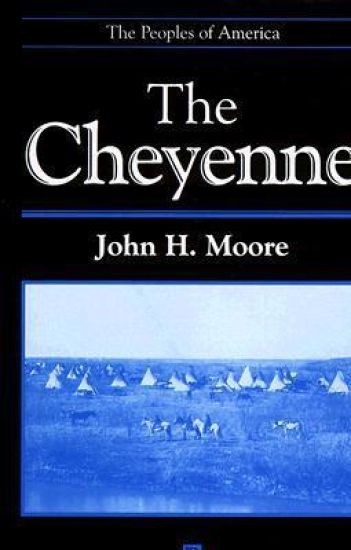
This book provides a history and ethnography of the Cheyenne people from their prehistoric origins north of the Great Lakes to their present life in the reservations in Oklahoma. It is based on archaeological material, historical and linguistic evidence and draws vividly on the oral traditions of the Cheyenne themselves.
In Leaving Cheyenne (1963), which anticipates Lonesome Dove more than any other early novel, the stark realities of the American West play out in a mesmerizing love triangle. Stubborn rancher Gideon Fry, resilient Molly Taylor, and awkward ranch hand Johnny McCloud struggle with love and jealousy as the years pass.
Vivendo nel sud della California, Cheyenne era abituata a vedere dei militari affascinanti ogni giorno, sbrigando le sue faccende. Un incontro anonimo al supermercato cementer la sua passione per un uomo di questo tipo. Un uomo grande, muscoloso e dallo sguardo incredibilmente affascinante; ma chiss se lui avrebbe mai notato lei.Sempre in controllo di qualunque situazione, Faulkner "Dude" Cooper un esperto di esplosivi. Come artificiere esperto, ha dovuto superare molte situazioni ad alto rischio. Sfigurato da una bomba durante una missione, abituato a essere guardato con compassione. Quando viene chiamato dalla polizia per fornire assistenza presso un supermercato locale, l'ultima cosa che si aspetta di trovare un atto generoso di bont da parte di una donna bella e meravigliosa. Incantato dal suo altruismo di fronte al pericolo, intrigato dalle sue azioni per salvare dei cittadini che non conosceva, Dude preso dall'interesse.Dude stato in grado di salvare Cheyenne dal gruppo di malviventi che cercavano di ucciderla, ma quando il passato torna a tormentarli entrambi, conoscenze e desiderio non basteranno a sconfiggere il conto alla rovescia del tempo.**Proteggere Cheyenne il sesto libro della serie "Armi e Amori". Il libro autoconclusivo, ma vi consigliamo di leggere i volumi in ordine per godervi al meglio la serie.
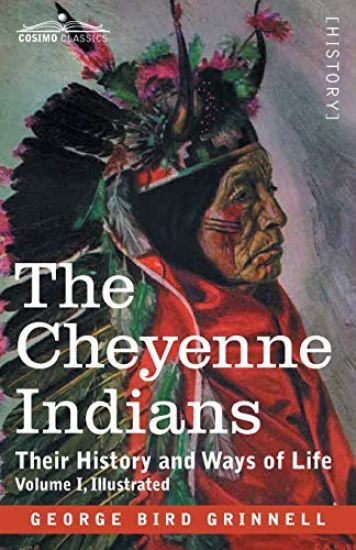
"A half-century spent in rubbing shoulders with the Cheyennes... forbids me to think of them except as acquaintances, comrades, and friends. While their culture differs from ours in some respects, fundamentally they are like ourselves, except in so far as their environment has obliged them to adopt a mode of life and of reasoning that is not quite our own, and which, without experience, we do not readily understand." --George Bird Grinnell, Preface to The Cheyenne IndiansThe Cheyenne Indians: Their History and Ways of Life--Vol. I (1923) by George Bird Grinnell, describes the life and culture of the Cheyennes, a Native American people originally from what is now Minnesota. Volume I of this two-volume set looks at the tribe's history, its customs, the role of the woman, hunting, games, and amusements.
"A half-century spent in rubbing shoulders with the Cheyennes... forbids me to think of them except as acquaintances, comrades, and friends. While their culture differs from ours in some respects, fundamentally they are like ourselves, except in so far as their environment has obliged them to adopt a mode of life and of reasoning that is not quite our own, and which, without experience, we do not readily understand." --George Bird Grinnell, Preface to The Cheyenne IndiansThe Cheyenne Indians: Their History and Ways of Life--Vol. II (1923) by George Bird Grinnell, describes the life and culture of the Cheyennes, a Native American people originally from what is now Minnesota. Volume II of this two-volume set looks at the Cheyennes' practice of waging wars, their religious beliefs, and healing practices.
This Northern Cheyenne book series contains 28 census years and is transcribed from National Archives Film Record Group M-595. It contains, in most cases, the previous census number, present census number, Indian name, if given, but in rare cases, English name, relationship to head of household, date of birth or year, and sex. There's a brief history of Northern Cheyenne struggles along with illustrations within each volume, in many cases of ancestors either past or within the census itself. Also there is a listing of resources used for the history along with a complete full name index.