Paranormal Britain is the most systematic study available of the nature and scope of paranormal beliefs, experiences, and subcultures in contemporary Britain. Using original survey data from British citizens regarding their beliefs and experiences with UFOs, ghosts, psychics and other paranormal phenomena, this open access book details the prevalence and patterns of paranormalism in the U.K. In addition to presenting original findings based on novel data, the authors also engaged in extensive ethnographic fieldwork with different paranormal subcultures. Among other adventures, readers get to ride along as they spend the night with the ‘most violent poltergeist in history,’ participate in the high ritual of a UFO cult, search for Nessie and werewolves, visit crop circles, learn to read Tarot, talk with alien abductees, and go on shamanic vision quests. Authoritative and systematic, yet readable and entertaining, Paranormal Britain will be of interest to scholars researching the sociology of religion, science, and belief in late modernity. The ebook editions of this book are available open access under a CC BY-NC-ND 4.0 licence on bloomsburycollections.com. Open access was funded by Chapman University.
Paranormal Britain is the most systematic study available of the nature and scope of paranormal beliefs, experiences, and subcultures in contemporary Britain. Using original survey data from British citizens regarding their beliefs and experiences with UFOs, ghosts, psychics and other paranormal phenomena, this open access book details the prevalence and patterns of paranormalism in the U.K. In addition to presenting original findings based on novel data, the authors also engaged in extensive ethnographic fieldwork with different paranormal subcultures. Among other adventures, readers get to ride along as they spend the night with the ‘most violent poltergeist in history,’ participate in the high ritual of a UFO cult, search for Nessie and werewolves, visit crop circles, learn to read Tarot, talk with alien abductees, and go on shamanic vision quests. Authoritative and systematic, yet readable and entertaining, Paranormal Britain will be of interest to scholars researching the sociology of religion, science, and belief in late modernity. The ebook editions of this book are available open access under a CC BY-NC-ND 4.0 licence on bloomsburycollections.com. Open access was funded by Chapman University.
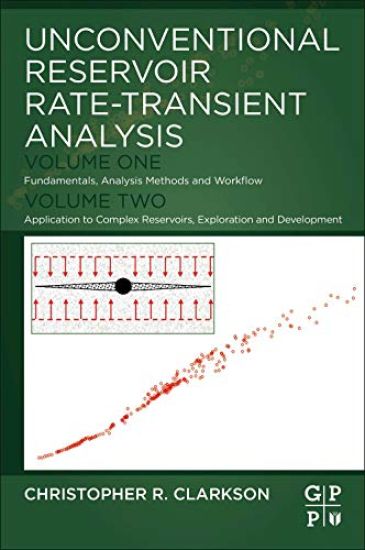
Unconventional Reservoir Rate-Transient Analysis provides petroleum engineers and geoscientists with the first comprehensive review of rate-transient analysis (RTA) methods as applied to unconventional reservoirs. Volume One—Fundamentals, Analysis Methods, and Workflow is comprised of five chapters which address key concepts and analysis methods used in RTA. This volume overviews the fundamentals of RTA, as applied to low-permeability oil and gas reservoirs exhibiting simple reservoir and fluid characteristics.Volume Two—Application to Complex Reservoirs, Exploration and Development is comprised of four chapters that demonstrate how RTA can be applied to coalbed methane reservoirs, shale gas reservoirs, and low-permeability/shale reservoirs exhibiting complex behavior such as multiphase flow. Use of RTA to assist exploration and development programs in unconventional reservoirs is also demonstrated. This book will serve as a critical guide for students, academics, and industry professionals interested in applying RTA methods to unconventional reservoirs.
Harnessing the potential of old and new technology, state and nonstate actors alike dedicate significant effort to developing and employing information power. This examination of the evolution of allied and adversary activities in and through the information environment and comparative analysis of capability areas in which these others excel can guide future U.S. Army force planning.
Harnessing the power of old and new technology, state and nonstate actors alike dedicate significant effort to developing and employing information power. Twelve detailed case studies examine the information-related activities and strategic goals of a range of allies, adversaries, and potential adversaries, highlighting insights for U.S. Army planning.
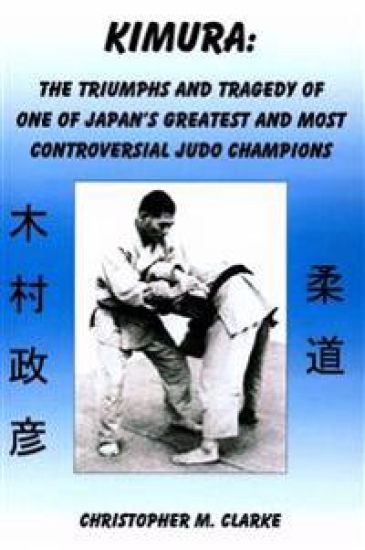
Everyone who has watched a Mixed Martial Arts (MMA) match or tournament has heard of "the kimura," a specialized arm lock that many people try to use, but few are successful in applying. Few, even among jujutsu and MMA aficionados, however, know what the lock called a "kimura" was derived from an early link to karate as well as judo and jujutsu. The story is at once fascinating, inspiring, and tragic. The "kimura" is named after perhaps the best judo competitor who ever lived, Kimura Masahiko (1917-1993). In an age before weight lifting became an integral part of judo practice, Kimura was an avid weight lifter and body builder. He was, and remained, one of the strongest judo competitors throughout the 1930s and 1940s-strongest in both its senses. A judo prodigy in high school, he reportedly lost only four formal judo matches in his entire career, all during his freshman year in college. In 1935, shortly after entering college, he defeated eight fourth-dan opponents in a row, losing only to the ninth man he faced. For this performance he became the youngest fifth dan in Japan.Through the late 1930s and early 1940s, Kimura dominated the judo competition circuit, repeatedly winning the All-Japan championship; he resumed his winning ways after judo was reinstated in 1947. Financially stretched trying to pay for his wife's medical care on a teacher's salary, in 1951, Kimura accepted an invitation to travel to Brazil to teach and compete with the increasingly famous Helio Gracie in Brazilian-rules competition. His bout became legendary: after exhausting minutes of scuffling for position and successful throws, Kimura finally downed Gracie and followed up with an attempt to smother him into submission. He saw the opportunity to apply his favorite ude-garami ("kimura") lock. Refusing to surrender, Gracie suffered a broken arm, and Kimura was declared the winner. Paradoxically, the loss made Gracie even more famous. Kimura's return to Japan was not greeted with acclaim and plaudits, however. Because he had awarded judo promotions without the permission of the Kodokan Headquarters, his promotions were frozen, and he watched as his juniors and inferiors surpassed his 7th dan for the next 40 years. Sadder yet, Kimura entered the shadow world of professional wrestling, largely to make money, where he was betrayed and humiliated. Despite these setbacks, Kimura's spirit never wavered. He taught judo at his alma mater, Takushoku University, from 1960 until his death in 1993, training Olympic bronze and silver medalists and an All-Japan Champion. Although his rank was frozen at 7th dan from the age of 30 until his death at 75 by the petty vindictiveness of the Kodokan authorities, Kimura never lost his spirit. A life-long smoker, Kimura was diagnosed with lung cancer. Hospitalized after surgery, and in his 70s, Kimura started doing push-ups in his room. He died on April 18, 1993 at the age of 75, arguably the best judo competitor ever-and one of the most important judo figures ever to be mistreated by the leaders of his art.
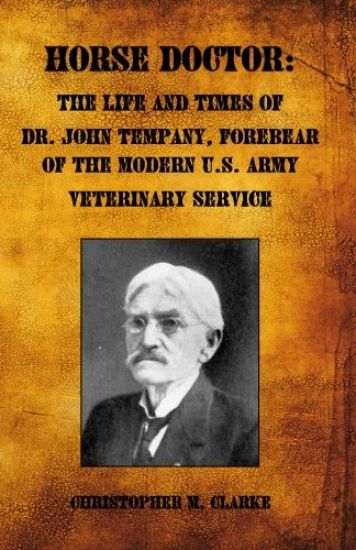
The life of "Dr." John Tempany spanned some of the most exciting and momentous decades of American history. Born in New York City in 1838, he became a "dragoon" (mounted soldier) and pioneer in the newly opened Pacific Northwest, helping build and settle Walla Walla, Washington. He went on to serve as an aide-de-camp to several of the most important Union generals of the Civil War and to participate in some of the greatest battles of that epic conflict. After a brief hiatus in military service, he returned to the U.S. Army as the first veterinarian assigned to full-time care of horses for the cavalry. Tempany-who earned the honorary title, doctor, though he never had any professional education as a veterinarian-served in the South during Reconstruction, then transferred with Custer's 7th Cavalry to the Southwest where he was involved in the lengthy wars against the Comanche, Apache, and other hostile Indians. He took charge of the massive wagon train and herd of animals on the famous 1874 Black Hills expedition and participated in the U.S.-Canadian Boundary survey. He likely avoided death with Custer at Little Big Horn only because he left the Army for several years to try civilian life in Minnesota. Tempany returned to his first love-the U.S. Cavalry-in 1879, serving for more than two decades with the famed all-black "Buffalo Soldiers" of the 9th Cavalry all across the West, witnessing the end of Indian hostilities and the coming of the "modern" pre-World War I cavalry. By the time of the Spanish-American War in 1898, Tempany was the Army's senior veterinary surgeon and was sent to Tampa, Florida to inspect and oversee the shipment of all the "equine soldiers" being sent off to that conflict in Cuba. During his long career, he visited dozens, perhaps hundreds, of military installations, examined and purchased thousands of horses and mules, and cared for thousands more. He was a pioneer in the nascent field of veterinary medicine in the U.S. Despite his decades of service, due to quirks in the law, Tempany (like all Army veterinarians) was neither accorded the status nor the perquisites of a commissioned officer. Veterinarians occupied an anomalous position as semi-civilians with no retirement program, disability insurance, promotions, or pay raises. In fact, his pay did not change from 1879 until 1899. Beginning in the 1890s, Tempany began to press for changes in the status of veterinarians, seeking a "private bill" in Congress that would allow him to retire with a pension. Some two decades went by before his continued efforts were finally rewarded with a 1911 rider to the Army's appropriation legislation that provided for an honorable retirement with benefit. By that time, Tempany was 73 years of age and had five decades of government service. He would not live to see the 1916 legislation that finally regularized the status of veterinarians as commissioned officers with a career path, promotion and pay raise opportunities, and retirement benefits, but the content of the law owed much to his decades of effort. A husband, father of nine children (of whom five survived to adulthood), noted raconteur, member of a number of social organizations, frequent official at various sporting events, and highly respected professional, Dr. Tempany should be well known. But like so many important and fascinating characters in American history, he has receded into the shadows of time. This volume attempts to recreate his life and times, and accord him the honor he is due as a soldier, pioneer, and forbear of the modern military veterinary service.
It is difficult to achieve command and control and situational awareness of the information environment (IE) because it is not a physical place. Although every military activity has informational aspects, the IE is often not effectively integrated into operational planning, doctrine, or processes. Addressing gaps and shortfalls will require a stronger understanding of the IE, associated concepts and capabilities, and roles and responsibilities.
A collection of the 30 most recent resolved insurgencies, covering the period 1978 to 2008, along with a bank of 76 factors that helped or hindered the COIN force in each case and in each phase of each case, supplements an analysis of historical and contemporary insurgencies, providing valuable lessons for U.S. engagement in and support for COIN operations.