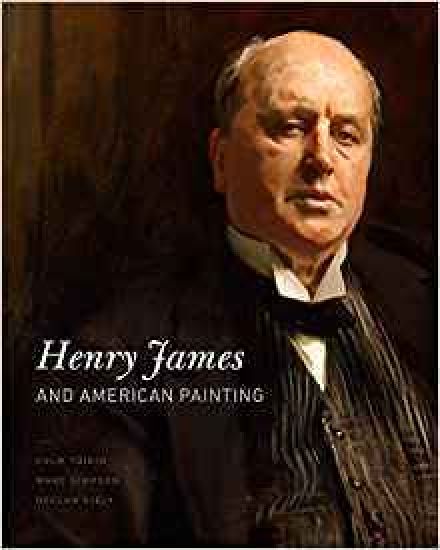
Depicting characters like the eponymous young sculptor in Roderick Hudson and spaces like the crowded galleries in The Wings of the Dove, Henry James’s iconic novels reflect the significance of the visual culture of his society. In this book, novelist and critic Colm Tóibín joins art historian Marc Simpson and Declan Kiely of The Morgan Library & Museum to reveal how essential the language and imagery of the arts—and friendships with artists—were to James’s writing.The authors consider the paintings, photographs, drawings, and sculpture produced by artists in James’s circle, assess how his pictorial aesthetic developed, and discuss why he destroyed so many personal documents and what became of those that survived. In examining works by figures such as John La Farge, Hendrik Andersen, and John Singer Sargent alongside selections from James’s novels, personal letters, and travel writings, Tóibín, Simpson, and Kiely explore the novelist’s artistic and social milieu. They show him to be a writer with a painterly eye for colors and textures, shapes and tastes, and for the blending of physical and psychological impressions. In many cases, the characters populating James’s fiction are ciphers for his artist friends, whose demeanors and experiences inspired James to immortalize them on the page. He also wrote critically about art, most notably about the work of his friend Sargent.A refreshing new perspective on a master novelist who was greatly nourished by his friendships with artists, Henry James and American Painting reveals a James whose literary imagination, in Tóibín’s words, “seemed most at ease with the image” and the work of creating fully realized portraits of his characters.
"One of our most beloved contemporary poets", is how former Ireland Professor of Poetry Paula Meehan describes Philip Casey (1950-2018). Cherished by many for his tenderness, fortitude, hope and tenacity, Philip was an award-winning novelist, admired poet and vital presence on the Irish literary scene for four decades. Philip battled repeated health challenges, stood up for causes he believed in, and relished making mischief. He was, in the words of the poet Theo Dorgan, "some man for one man". Philip believed in the idea of a community of writers, and his open-mindedness drew others towards him - whether to his Dublin home, or to his grassroots support base in his earlier home of Hollyfort, Co Wexford. His booming laugh and powerful handshake were legendary. The many contributors, including Sebastian Barry, Eilean Ni Chuilleanain, Dermot Bolger, Moya Cannon and Thomas Lynch, praise Philip Casey's gifts as a writer of poetry and fiction, as well as highlighting their admiration for him as a man.
A shattering tale of oppression and resistance during Franco’s dictatorship, by a beloved Spanish novelist “Passion in ordinary lives, sobriety and melancholy are the flavors of Delibes’s writing . . . with a profound empathy for nature and the poor. . . . The Holy Innocents [is] a ferocious story.”—The Guardian Named One of the Best 100 Spanish-Language Novels of the Twentieth Century (El Mundo) • Adapted into an Award-Winning Film by Mario Camus In the arid province of Extremadura in 1960s Spain, life on a country estate carries on as it has for centuries: wealthy landowners live in luxury while workers endure lives of poverty and humiliation. Amid this exploitation and injustice live Régula, an estate’s gatekeeper, and her husband, Paco, the hunting attendant of the contemptuous Señorito Iván. Régula’s brother Azarías toils as a farmhand, but he prefers chasing tawny owls at night, training his pet jackdaw, and caring for his young niece, who is bedridden. When Paco is injured, the nature-loving Azarías is forced to take over as hunting attendant. But after Señorito Iván commits an act of enormous cruelty following an unsuccessful hunt, it is only a matter of time before the simmering tensions between the aristocracy and the workers explode. A perennial Spanish classic, translated into twelve languages but never before into English, The Holy Innocents is a searing tale of human cruelty and alienation, in which resistance and liberation are not just necessary but possible.
In this gathering Anne Boyd Rioux has chosen fiction over the course of Constance Fenimore Woolson’s life. Woolson’s stories travel from the rural Midwest to the deep South and then across the Atlantic to Italy and Britain.
Every Christmas, the Morgan Library & Museum in Manhattan displays one of the crown jewels of its extraordinary collection: the original manuscript of Charles Dickens’ A Christmas Carol with its detailed emendations, deletions and insertions in Dickens’ hand. Here, for the first time in a beautiful trade edition, is a facsimile of that invaluable manuscript, along with a typeset version of the story, a fascinating introduction by the Morgan’s chief literary curator on the history of the story and a new foreword by Colm Tóibín celebrating its timeless appeal.
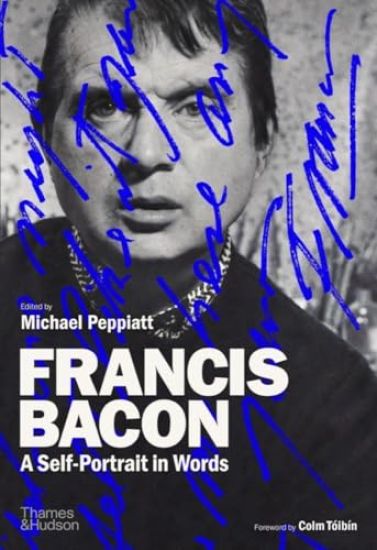
A new selection of letters, statements and interviews reveal the preoccupations, thoughts and ideas of Francis Bacon, one of the 20th century’s most influential and important artists. The documents selected for Francis Bacon: A Self-Portrait in Words illustrate Bacon’s sharp wit and ability to express complex ideas in highly personal, memorable language. Included here are not only letters to friends, patrons and fellow artists, but also intriguing notes and lists of paintings. They often come with a sketch as an aide-mémoire or an injunction to himself as he worked in the studio, and many have only come to light since his death. Bacon’s letters mirror and reveal his dominant preoccupations at different points throughout his long career. Most of Bacon’s letters have never been published and include several that he wrote to the author. Particularly intriguing is the record of a dream that he jotted down, outlining impossibly beautiful paintings he had conjured up in his sleep. Together with photographs, archive material and works by the artist are numerous reproductions of Bacon’s characteristic handwriting, from the briefest jottings and notes to more extensive letters and statements. Bacon frequently came up with memorable epithets and definitions. He delighted in doing with words what he set out to do in painting: 'I like phrases that cut me.' Michael Peppiatt explores the personal legacy of one of the 20th century’s most important painters and presents a compelling verbal self-portrait that reveals both man and artist.
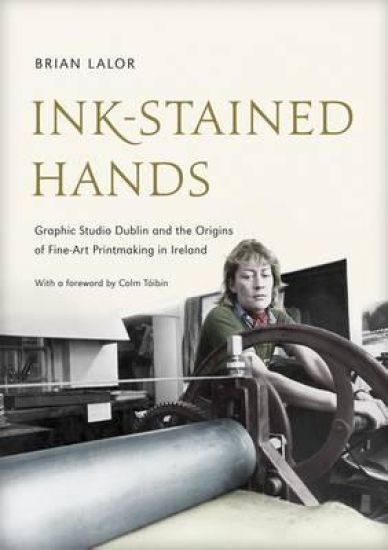
Ink-Stained Hands fulfils a considerable gap in Irish visual arts publications as the first book to present the activities of printmakers in Ireland from the end of the nineteenth century to the present. The central narrative of this profusely illustrated and documented book is the foundation of Graphic Studio Dublin in 1960, an event which revolutionized the graphic arts in Ireland and made the European tradition of printmaking available to Irish artists.
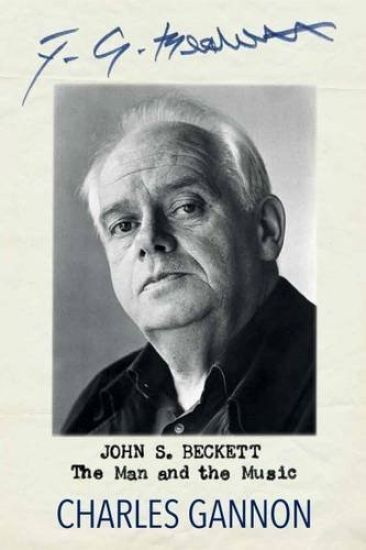
Remembered in his native Ireland primarily as a harpsichordist and interpreter of Bach’s music, and in the UK as a conductor of the ground-shaking early music group Musica Reservata, John Beckett also composed avant-garde incidental music, performed on several instruments and was an authoritative, if controversial, conductor. Music was not his only passion: he was interested in films, the theatre, art and pottery, and loved to travel. His varied career included devising music programmes for Radio Éireann, writing for The Bell magazine, working in Dublin’s Pike Theatre, presenting and performing for the BBC Third Programme, composing music for his famous cousin Samuel Beckett, founding Musica Reservata, conducting Bach cantata concerts in Dublin over a ten-year period, and working as a producer and presenter for BBC Radio 3. Despite his reputation as a gruff, confrontational individual with a fondness for Guinness, whiskey and garlic, he made many friends and was familiar with Dublin’s intellectual, musical and bohemian milieu, such as the writers Aidan Higgins, Anthony Cronin, Patrick Kavanagh, Brendan Behan and James Plunkett, composers E.J. Moeran and Frederick May, counter-tenor Alfred Deller, musician John O’Sullivan, Desmond MacNamara, Ralph Cusack, singer and sculptor Werner Schürmann, publisher John Calder and musician David Cairns. Complex, self-deprecating and private, John’s character and achievements are examined with detail garnered from information both published and in archival collections in Ireland and the UK. Recollections from those who knew him at different stages of his life enliven this fascinating biography. The book also examines the development of Musica Reservata, and contains excerpts from unpublished letters written by Samuel Beckett. Extracts from correspondence between John and James Plunkett, Aidan Higgins, Arland Ussher and music critic Charles Acton are also included.
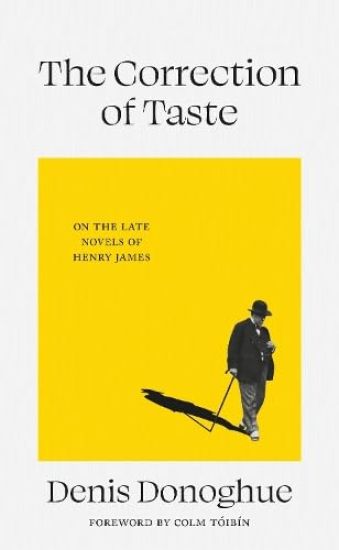
‘Donoghue was alert to the idea of the unsayable, as he circled around the idea of language itself as pliable material, all the more beautiful for that and worthy of our full consideration, but yielding at times to further levels of mystery...’ from foreword by Colm Tóibín In this last written work, the internationally renowned Irish literary critic Denis Donoghue brings an acute critical intelligence to bear on the late novels of Henry James. One of the greatest novelists in the English language, Henry James (1843-1916) was an American-British author who is regarded as a key transitional figure between literary realism and literary modernism. James’s The Portrait of a Lady (1881) was the central achievement of his early period. The Turn of the Screw (1898) was a high-point of Gothic literature. In The Correction of Taste, Denis Donoghue offers a close reading of James’s final novels, taking as his starting point an observation by T.S. Eliot about the function of literary criticism. Exploring a succession of works such as The Ambassadors (1903), The Wings of the Dove (1902) and The Golden Bowl (1905), Donoghue brings into sharp focus the complex layers of James’s literary genius.
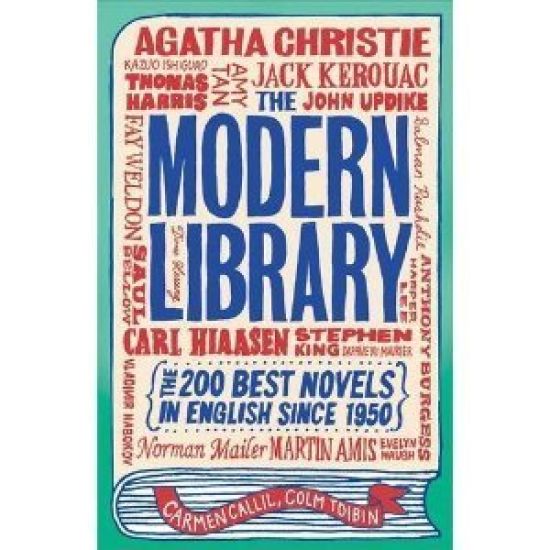
For Colm Toíbín and Carmen Callil there is no difference between literary and commercial writing - there is only the good novel: engrossing, inspirational, compelling. In their selection of the best 200 novels written since 1950, the editors make a case for the best and the best-loved works and argue why each should be considered a modern classic. Enlightening, often unexpected and always engaging this tour through the world of fiction is full of surprises, forgotten masterpieces and a valuable guide to what to read next. Authors in the collection include Agatha Christie, Georgette Heyer, Daphne du Maurier, Patrick Hamilton, Carson McCullers, J. D. Salinger, Bernard Malamud; Flannery O'Connor, Mulk Raj Anand, Raymond Chandler, L. P. Hartley, Amos Tutuola, Sylvia Townsend Warner, Samuel Beckett, Patricia Highsmith, Chinua Achebe, Isak Dineson, Alan Sillitoe, Ivy Compton-Burnett, Grace Paley, Harper Lee, Olivia Manning and Mordecai Richler.
Accompanying an exhibition at the Courtauld Gallery, London, Frank Auerbach: The Charcoal Heads presents a remarkable series of hauntingly beautiful largescale drawings by the artist. The catalogue includes a new piece of writing on one of the drawings from critically acclaimed novelist Colm Tóibín. This catalogue explores one of Frank Auerbach’s most remarkable bodies of work – a series of large-scale portrait heads made in charcoal, produced during his early years as a young artist in postwar London. Auerbach (b. 1931) spent months on each drawing, working and reworking them during numerous sessions with his sitters. This prolonged and vigorous process of creation is evident in the finished drawings, which are richly textured and layered. Auerbach would sometimes even break through the paper and patch it up before carrying on. His heads thus emerge from the darkness of the charcoal with burning vitality, born of an artistic as well as a physical struggle with the medium. The process of repeated creation and destruction, of which these images bear the visible scars, speaks profoundly of their times, as people rebuilt their lives after the ruination and upending of the war. The exhibition will be the first time Auerbach’s extraordinary drawings, made in the 1950s and early 1960s, have been brought together as a comprehensive group. They will be shown together with a selection of paintings he made of the same sitters; for the artist, painting and drawing have always been deeply entwined. The accompanying catalogue – by Deputy Head of The Courtauld Gallery, Barnaby Wright, and with an essay by one of the greatest contemporary voices in the English language, Colm Tóibín – is the first publication to explore in depth this magnificent series. Tóibín spent several hours one afternoon in front of Auerbach’s Self-Portrait (1958), which features on the front cover of the book, looking closely and taking notes. His essay is an account of his experience and offers new insights into the work and the nature of self-portaiture.
This revelatory book delves into the lives and stories of some of the staff that ran the Frick mansion. A social and historical exploration based on archival material—some published here for the first time—it repopulates the house and provides critical insight into the work it requires to run. Published by Paul Holberton Publishing
The sixth volume in the popular Very Christmas series from New Vessel Press, this collection transports readers to the Emerald Isle with stories and poems sure to bring holiday cheer. This anthology is packed with beloved classics, forgotten treasures, and modern masterpieces. You'll find wondrous works by James Joyce, W. B. Yeats, Elizabeth Bowen, Anne Enright, William Trevor, Colm T ib n, Bernard MacLaverty, and many more. See how Christmas is done in snowy Dublin and on the mean streets of Belfast, from west coast to east, and even across sea and ocean to Irish communities in London and New York City. Put a flickering candle in the window and a steaming dinner on the table, and celebrate the Irish way--Nollaig Shona Daoibh--and Merry Christmas
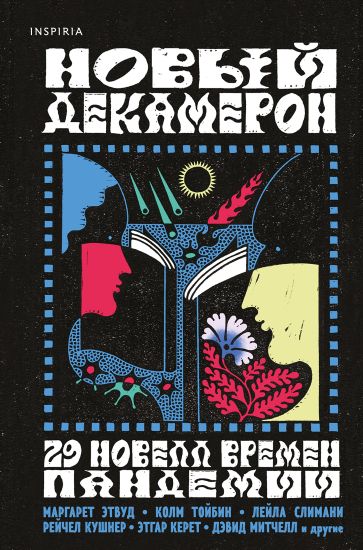
Dazhe esli ves mir pokhozh na absurd, khoroshaja kniga ne dast vam sojti s uma. Ljudi rasskazyvajut istorii s samogo nachala vremen. Rasskazyvajut o tom, chto videli i o chem slyshali. Rasskazyvajut o tom, chto bylo i chto moglo by byt. Rasskazyvajut, chtoby otvlechsja, skorotat vremja ili perezhit neprostye vremena. Inogda takie istorii prevraschajutsja v khroniki, letopisi, pamjatniki otdelnym periodam i epokham. Tak pojavilis "Skazki tysjachi i odnoj nochi", "Kenterberijskie rasskazy" i "Dekameron" Bokkachcho. "Novyj Dekameron" - eto tozhe svoeobraznyj pamjatnik epokhe, kotoraja sovershenno tochno vojdet v istoriju. Redaktory The New York Times Magazine sobrali 29 novell, esse, skazok, krokhotnykh zarisovok i razvernutykh rassuzhdenij. V nikh samye izvestnye sovremennye pisateli popytalis zapechatlet i osmyslit sobytija, okhvativshie kazhdyj ugolok mira. V sbornik voshli novelly Margaret Etvud, Kolma Tojbina, Lejly Slimani, Rejchel Kushner, Etgara Kereta, Devida Mitchella, Mony Avad i mnogikh drugikh.
The first novel from the 1991 "Irish Times"/Aer Lingus Literature prizewinner. In 1950s fascist Spain, Katherine is living in self-exile from her husband and son in Ireland. She meets Miguel and they settle in the Pyrenees, but when she returns to Ireland she finds her husband has wed again.
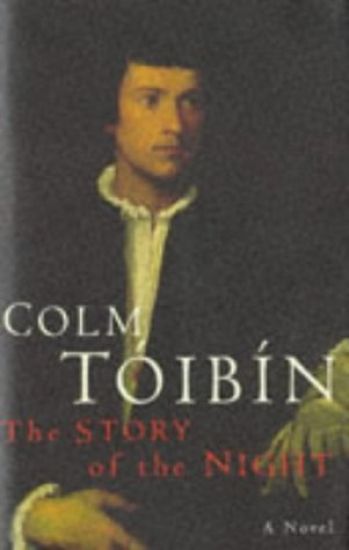
Set in Argentina in the 1980s, this novel follows the progress of a lonely young man trying to live openly with his homosexuality. His coming out mirrors the country's emergence from the repressive rule of the Generals to tentative new hope under the early Menem government.
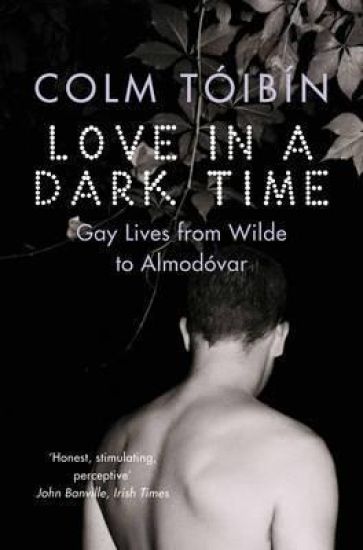
In Love in a Dark Time, Colm Tóibín looks at the life and work of some of the greatest and most influential artists of the nineteenth and twentieth centuries. His subjects range from figures such as Oscar Wilde, born in the 1850s, to Pedro Almodóvar, born nearly a hundred years later. Tóibín studies how a changing world impacted on the lives of people who, on the whole, kept their homosexuality hidden, and reveals that the laws of desire changed everything for them, both in their private lives and in the spirit of their work.