

Kirjahaku
Etsi kirjoja tekijän nimen, kirjan nimen tai ISBN:n perusteella.
215 tulosta hakusanalla Comenius


Johann Amos Comenius - Vordenker Eines Kreativen Friedens
Peter Lang AG
2004
nidottu
Dieser Band dokumentiert ein deutsch-tschechisches Kolloquium, welches im April 2004 an der Universitat Bamberg durchgefuhrt wurde. Im interdisziplinaren Diskurs arbeiten 24 Referentinnen und Referenten (12 aus Tschechien und 12 aus Deutschland) heraus, dass dem ganzheitlichen Denken des Johann Amos Comenius (1592-1670) hoechste Aktualitat fur die derzeitige Globalisierungs-Thematik zuzusprechen ist: Die von Comenius konzipierte Allreform, die politische, philosophische und religioese Komponenten einschliesst, enthalt wirksame Potentiale fur einen "kreativen Frieden" der Voelker und Kulturen. Mit diesem Begriff ist eine Ordnung gemeint, welche nicht von "aussen" oder "oben" aufgepragt wird, sondern sich vielmehr von "innen" her begrundet, indem sie der Grunddisposition des menschlichen Seins entspricht. Das genannte Kolloquium versteht sich als weitere Konkretion des international weit verzweigten Forschungsprojektes Kreativer Friede durch Begegnung der Weltkulturen. Initiator dieses Projektes und Nestor des interkulturellen Philosophierens ist der Philosoph Prof. Dr. Dr. h.c. Heinrich Beck, welcher anlasslich seines 75. Geburtstages durch das Bamberger Kolloquium geehrt wurde.
Johann Amos Comenius und die pädagogischen Hoffnungen der Gegenwart
Andreas Lischewski
Editions Rodopi B.V.
2010
nidottu
Insofern Erziehung auf die Zukunft gerichtet ist, bedarf sie der Hoffnung. Und wer nicht hofft, kann auch nicht erziehen. Doch die nicht selten euphorisch zu nennende Erwartung, dass man von einer wissenschaftlich begründeten Erziehung auch eine entscheidende Weltverbesserung erhoffen könne, dürfte wesentlich eine Erfindung der anhebenden Neuzeit gewesen sein. Die übliche pädagogische Ideengeschichte sieht in Comenius zumeist einen vormodernen Gegenpol zum technisch-zivilisatorischen Denken der Neuzeit – und übersah damit notwendig wesentliche Kontinuitäten. Denn es war Comenius, der mit seiner pansophischen Systematik zuerst die Hoffnung verband, eine solcherart durchkonstruierte Erziehungsmaschine begründet zu haben, dass eine wahrhaft pansophisch ausgerichtete Erziehung auch einen unfehlbaren Erziehungserfolg verbürgen müsse. Ein mentalitätsgeschichtlicher Zugang vermag dabei zu zeigen, wie sich die pädagogischen Hoffnungen des Comenius entwickelt und zeitgleich mit der pansophischen Systematik ausgeprägt haben. Je durchdachter die Systematik wurde, desto unfehlbarer sollte auch die Erziehung werden. Mit einer vollkommen realisierten pansophischen Erziehung würden sich also alle Hoffnungen auf eine Weltverbesserung erfüllen; alles, was bis dahin zukunftsgerichtete Hoffnung war, würde also mit der Pampaedia zur erfüllten Gegenwart werden. Von der menschlichen resignation der Frühschriften über die gott-menschliche cooperatio der pansophischen Programmschriften führt solcherart der Weg zur intendierten omnipotentia des Menschen, an welcher schließlich auch die Erziehung teilhaben soll. Unter der Rücksicht der longue durée ist Comenius damit nicht nur ein, sondern letztlich der Begründer der pädagogischen Moderne. Seit Comenius produziert wissenschaftlich-systematisches Denken immer neue Erziehungshoffnungen, die sich sodann durch gesellschaftliche Erwartungshaltungen selbstlaufend re-produzieren und die Nachfrage nach pädagogischer Wissenschaftlichkeit wiederum steigern. Doch die Welt hat sich bis heute bekanntlich nicht verbessern lassen – trotz einer über 350 Jahre alten Tradition wissenschaftlich begründeter Pädagogik.



The Great Didactic of John Amos Comenius is a book written by M.W. Keatinge. It is a comprehensive study of the educational philosophy and principles of John Amos Comenius, who was a Czech philosopher, theologian, and educator. Comenius is considered one of the founders of modern education, and his ideas have had a significant impact on the development of educational systems around the world. The book provides an in-depth analysis of Comenius' approach to education, which was based on the idea of universal education and the importance of teaching children in their native language. It also explores his views on the role of teachers, the use of textbooks, and the importance of visual aids in teaching. The Great Didactic of John Amos Comenius is a valuable resource for educators, students, and anyone interested in the history of education. It provides a detailed account of Comenius' ideas and how they have influenced modern education. The book is written in clear and accessible language, making it easy to understand and apply Comenius' principles to contemporary educational practices.This Is A New Release Of The Original 1896 Edition.This scarce antiquarian book is a facsimile reprint of the old original and may contain some imperfections such as library marks and notations. Because we believe this work is culturally important, we have made it available as part of our commitment for protecting, preserving, and promoting the world's literature in affordable, high quality, modern editions, that are true to their original work.

Beyond Borders: The Proposals of John Amos Comenius for a Democratic World Government
John Taylor
Createspace Independent Publishing Platform
2014
nidottu
The Great Didactic of John Amos Comenius, Now for the First Time Englished - With Introductions, Biographical and Historical
M W Keatinge
White Press
2018
pokkari
Die Phasentheorie bei Johann Amos Comenius und Rudolf Steiner im Vergleich
Christian Schäfer
Grin Publishing
2011
pokkari
This book has been considered by academicians and scholars of great significance and value to literature. This forms a part of the knowledge base for future generations. We have represented this book in the same form as it was first published. Hence any marks seen are left intentionally to preserve its true nature.
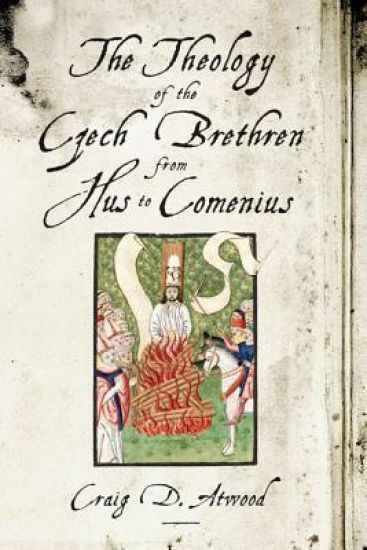
The Theology of the Czech Brethren from Hus to Comenius
Craig D. Atwood
Pennsylvania State University Press
2009
sidottu
Craig Atwood addresses the serious lack of comprehensive treatments in English of the Moravians. The Moravian Church, or Unity of the Brethren, was the first Western church to make separation of church and state a matter of doctrine and policy. The Unity’s vision for social and educational reform also sets it apart. Its theology centers on the key concepts of faith, love, and hope. The Unity—the heartbeat of the so-called Czech Reformation—was engaged with society and with other churches and did not retreat to isolationism, as did several movements in the Radical Reformation. Rather, the Unity continued to evolve as political and theological climates changed.
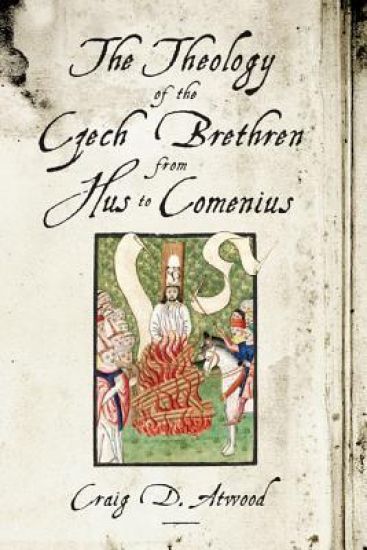
The Theology of the Czech Brethren from Hus to Comenius
Craig D. Atwood
Pennsylvania State University Press
2013
pokkari
Craig Atwood addresses the serious lack of comprehensive treatments in English of the Moravians. The Moravian Church, or Unity of the Brethren, was the first Western church to make separation of church and state a matter of doctrine and policy. The Unity’s vision for social and educational reform also sets it apart. Its theology centers on the key concepts of faith, love, and hope. The Unity—the heartbeat of the so-called Czech Reformation—was engaged with society and with other churches and did not retreat to isolationism, as did several movements in the Radical Reformation. Rather, the Unity continued to evolve as political and theological climates changed.

The Great Educators. Comenius, and the Beginnings of Educational Reform
Will S Monroe
Trieste Publishing
2018
nidottu

Hoffmeister, H: Comenius Und Pestalozzi Als Begrunder Der Vo
Hermann Wilhelm Hoffmeister
KESSINGER PUBLISHING, LLC
2010
nidottu
A Biographical Introduction to the Life of John Amos Comenius
M. W. Keatinge
Kessinger Pub
2005
pokkari