Kirjojen hintavertailu. Mukana 12 390 323 kirjaa ja 12 kauppaa.

Kirjahaku

Etsi kirjoja tekijän nimen, kirjan nimen tai ISBN:n perusteella.

1000 tulosta hakusanalla Condaminas

Contaminant Levels and Ecological Effects

Contaminant Levels and Ecological Effects

Springer Nature Switzerland AG
2021
sidottu
This volume uses chemometric mathematical modelling approaches to investigate geographic areas at risk of ecological degradation due to pollution. While most analytical approaches in environmental research involve sophisticated and sensitive instrumental techniques, this book employs chemometric techniques to create a corresponding data matrix to extract accurate and realistic environmental information in areas vulnerable to and affected by hazardous substances. The text offers case studies to establish a general framework of the opportunities, advantages, weaknesses and challenges of these mathematical approaches, and provides a chemometric model of each focus area to assess the long-distance distribution of pollutants. The case studies highlight the potential use of novel chemometric models for mitigating and preventing environmental pollution and ecological risks, while also providing reviews of the current status and developments in chemometric analysis of environmental pollution. The book will be of interest to students and researchers in environmental and agricultural chemistry, environmental pollution modelling and ecological degradation.
Contaminant Levels and Ecological Effects

Contaminant Levels and Ecological Effects

Springer Nature Switzerland AG
2022
nidottu
This volume uses chemometric mathematical modelling approaches to investigate geographic areas at risk of ecological degradation due to pollution. While most analytical approaches in environmental research involve sophisticated and sensitive instrumental techniques, this book employs chemometric techniques to create a corresponding data matrix to extract accurate and realistic environmental information in areas vulnerable to and affected by hazardous substances. The text offers case studies to establish a general framework of the opportunities, advantages, weaknesses and challenges of these mathematical approaches, and provides a chemometric model of each focus area to assess the long-distance distribution of pollutants. The case studies highlight the potential use of novel chemometric models for mitigating and preventing environmental pollution and ecological risks, while also providing reviews of the current status and developments in chemometric analysis of environmental pollution. The book will be of interest to students and researchers in environmental and agricultural chemistry, environmental pollution modelling and ecological degradation.
Contaminated Land and Water

Contaminated Land and Water

Springer International Publishing AG
2024
sidottu
This edited volumes contains overviews and case studies of land and water contamination and remediation from international scholars, most from developing countries. ?Contaminated land contains substances that are actually or potentially hazardous to health or the environment. Areas with a long history of industrial production are known as brownfield land. Land contamination can result from a variety of intended, accidental, or naturally occurring activities and events such as manufacturing, mineral extraction, abandonment of mines, national defense activities, waste disposal, accidental spills, illegal dumping, leaking underground storage tanks, hurricanes, floods, pesticide use, and fertilizer application. Chemical contamination of land has degraded this important ecosystem quality. This book provides our current understanding of land pollution and water pollution in areas such as estuaries. Topics presented include major types of pollutants in contaminated land ecosystem; factors affecting the fate of pollutants in contaminated land; biomonitoring approaches to assess the contaminated land health, and chemicals impact on human health, land microbial diversity and climate change. The book further explores persistent organic pollutants, arsenic and heavy metals pollution of contaminated land and their impact on rice quality. The last chapters focus on the sustainable management and treatment of contaminated land and water.
Contaminated Soils in Mexico

Contaminated Soils in Mexico

José Guadalupe Chan-Quijano; Jesús Ignacio Castro-Salazar; José Luis Carpio-Domínguez

Springer International Publishing AG
2025
sidottu
This book uses a green criminology lens to analyze strategies to minimize and propose alternatives on the damage caused to humans and environmental health by contaminated soils in Mexico, by recognizing that the effective application of laws is crucial for the conservation of soils. In this sense, from the perspective of contaminated soils, the compilation of data and experiences of the growing concern about the degradation of soils contaminated with hydrocarbons, heavy metals, pesticides and emerging contaminants (organic compounds, hormones and microplastics) is presented. In addition, from environmental history, the authors provide an understanding of the ontological, epistemological and methodological possibilities when assessing the relationship between the natural environment and green criminology. It is explained how the green cultural behavior of communities is directed in the face of soil contamination and environmental liabilities from the experiences of the subjects with respect to questioning the interaction of ethics and environmental responsibility. Data is presented on the consequences of soil contamination on the loss of biodiversity and the intake and bioaccumulation of pollutants in living beings. Finally, the authors discuss the deficiencies related to inspection and surveillance on issues of soil contamination, along with institutional proposals for remediation. The book seeks to position these types of issues, still scarcely discussed in Mexico, for researchers, academics, postgraduate students, decision makers and companies dedicated to the remediation and restoration of contaminated soils through sustainable management and recovery plans.
Contaminated Life: 'Hibakusha' in the Nuclear Age

Contaminated Life: 'Hibakusha' in the Nuclear Age

Adam Broinowski

de Gruyter Oldenbourg
2027
sidottu
The hibakusha category was created after the end of the Second World War, and the process of categorization helped the survivors develop an identity. This identity provided grounds for joining the collective action through which they transformed the meaning of hibakusha from a mere legal category into a collective identity bearing the burden to prevent another Hiroshima or Nagasaki.
Contaminantes orgânicos emergentes em golfinhos Franciscana do Brasil
Foram analisados compostos org nicos emergentes organobromados, piretr ides e decloranos em amostras de f gado de golfinhos franciscanas (Pontoporia blainvillei) da costa brasileira. Entre os compostos retardantes de chama bromados estavam os teres difen licos polibromados (PBDEs), com concentra es semelhantes as observadas em cet ceos do Hemisf rio Norte. Quanto aos inseticidas piretr ides, o presente estudo constitui a primeira investiga o que demonstrou a bioacumula o de piretr ides em mam feros marinhos. Pela primeira vez, mostrou-se a transfer ncia de piretr ides da m e para o filhote via gesta o e lacta o em mam feros. Pode-se verificar uma separa o das popula es de franciscanas dentro das reas de Manejo pr -estabelecidas. Considerando a avalia o da distribui o geogr fica, reas altamente urbanizadas e industrializadas foram identificadas como potenciais fontes destes compostos. S o necess rias medidas urgentes de conserva o para este pequeno cet ceo que sofre influ ncia de acumula o de compostos qu micos antr picos e naturais em seus tecidos ao longo de sua distribui o na costa brasileira, o qual agrava a situa o de uma esp cie j vulner vel.
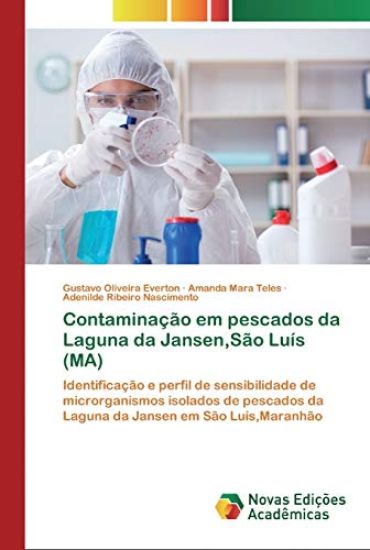
Contaminação em pescados da Laguna da Jansen, São Luís (MA)

Contaminação em pescados da Laguna da Jansen, São Luís (MA)

Gustavo Oliveira Everton; Amanda Mara Teles; Adenilde Ribeiro Nascimento

Novas Edicoes Academicas
2020
pokkari
Mesmo estando comprimida em uma rea urbana, a Laguna da Jansen mant m uma variedade de esp cies da fauna e da flora da mata nativa, por m esta tamb m sofre com o problema da polui o. Esse fator de contamina o na gua influencia na qualidade do pescado que poder ser portador de micro-organismos desencadeadores de poss veis intoxica es alimentares. Diante disto o objetivo deste estudo foi reconhecer os bioindicadores de contamina o nos pescados da Laguna da Jansen e avaliar o perfil de susceptibilidade de bact rias da fam lia Enterobacteriaceae, frente antibi ticos convencionais, isoladas do pescado da Laguna da Jansen.
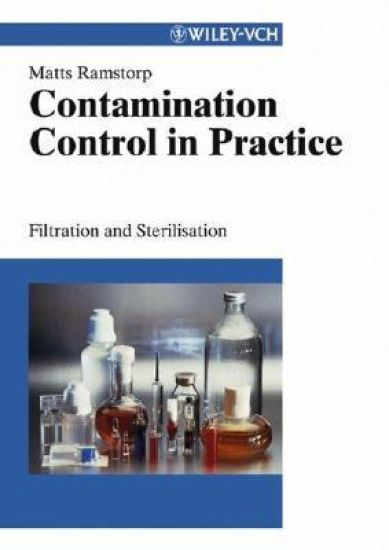
Contamination Control in Practice
Contamination control has received great interest and found increasing use within several industrial branches including microelectronics, pharmaceuticals, food and beverages using various concepts of contamination control in their production, purification or packaging process. The book supplies a holistic view of contamination control, presenting the different types of contaminants in a summarized form. The focus is on how to protect products and processes from external contamination and also on different ways to take care of and control contaminants generated in the process. The aim is to eliminate them from a product or a process flow (e.g. through filtration), or to render them harmless (e.g. through sterilisation by moist heat). Product purity or the cleanliness of process flows are often complex matters and hard to define in easily understood terms. This book covers a variety of different techniques used in order to achieve and maintain certain overall cleanliness levels for both microbiological or inanimate particle contaminants. It supplies basic knowledge including validation aspects for industrial branches working with increased demands of cleanliness, for instance water purification, steam, pressurized gases and different flows in a process together with finished products.
Contaminated Sediments

Contaminated Sediments

Ulrich Förstner

Springer-Verlag Berlin and Heidelberg GmbH Co. K
1989
nidottu
Sediments are increasingly recognized as both a carrier and a possible source of contaminants in aquatic systems, and they may also affect groundwater quality and agricultural products when disposed on land. Four aspects are covered reflecting the development of knowledge in particle-associated pollutants during the past twenty-five years: - the identification, surveillance, monitoring and control of sources and distribution of pollutants, - the evaluation of solid/solution relations of contaminants in surface waters, - the study of in-situ processes and mechanisms of pollutant transfer in various compartments of the aquatic ecosystems, - the assessment of the environmental impact of particle-bound contaminants, i.e. the development of sediment quality criteria. A final chapter focusses on practical aspects concerning contaminated sediments.
Contaminated Sediments

Contaminated Sediments

Springer-Verlag Berlin and Heidelberg GmbH Co. K
2009
sidottu
EnvironmentalChemistryisarelativelyyoungscience.Interestinthissubject, however,isgrowingveryrapidlyand,althoughnoagreementhasbeenreached as yet about the exact content and limits of this interdisciplinary discipline, there appears to be increasing interest in seeing environmental topics which are based on chemistry embodied in this subject. One of the ?rst objectives of Environmental Chemistry must be the study of the environment and of natural chemicalprocesseswhichoccur in theenvironment. Amajor purpose ofthisseriesonEnvironmentalChemistry,therefore,istopresentareasonably uniform view of various aspects of the chemistry of the environment and chemical reactions occurring in the environment. The industrial activities of man have given a new dimension to Envir- mental Chemistry. We have now synthesized and described over ?ve million chemicalcompoundsandchemicalindustryproducesabouthundredand?fty milliontonsofsyntheticchemicalsannually. Weshipbillionsoftonsofoilper yearandthroughminingoperationsandothergeophysicalmodi?cations,large quantities of inorganic and organic materials are released from their natural deposits.Citiesandmetropolitanareasofupto15millioninhabitantsproduce large quantities of waste in relatively small and con? ned areas. Much of the chemical products and waste products of modern society are released into the environment either during production,storage,transport, use orultimate disposal. These released materials participate in natural cycles and reactions and frequently lead tointerference and disturbance of natural systems. Environmental Chemistry is concerned withreactions in the environment. It is about distribution and equilibria between environmental compartments. It is about reactions, pathways, thermodynamics and kinetics. An important purpose of this Handbook, is to aid understanding of the basic distribution andchemical reactionprocesses whichoccur intheenvironment.
Contaminated Sediments

Contaminated Sediments

Springer-Verlag Berlin and Heidelberg GmbH Co. K
2010
nidottu
EnvironmentalChemistryisarelativelyyoungscience.Interestinthissubject, however,isgrowingveryrapidlyand,althoughnoagreementhasbeenreached as yet about the exact content and limits of this interdisciplinary discipline, there appears to be increasing interest in seeing environmental topics which are based on chemistry embodied in this subject. One of the ?rst objectives of Environmental Chemistry must be the study of the environment and of natural chemicalprocesseswhichoccur in theenvironment. Amajor purpose ofthisseriesonEnvironmentalChemistry,therefore,istopresentareasonably uniform view of various aspects of the chemistry of the environment and chemical reactions occurring in the environment. The industrial activities of man have given a new dimension to Envir- mental Chemistry. We have now synthesized and described over ?ve million chemicalcompoundsandchemicalindustryproducesabouthundredand?fty milliontonsofsyntheticchemicalsannually. Weshipbillionsoftonsofoilper yearandthroughminingoperationsandothergeophysicalmodi?cations,large quantities of inorganic and organic materials are released from their natural deposits.Citiesandmetropolitanareasofupto15millioninhabitantsproduce large quantities of waste in relatively small and con? ned areas. Much of the chemical products and waste products of modern society are released into the environment either during production,storage,transport, use orultimate disposal. These released materials participate in natural cycles and reactions and frequently lead tointerference and disturbance of natural systems. Environmental Chemistry is concerned withreactions in the environment. It is about distribution and equilibria between environmental compartments. It is about reactions, pathways, thermodynamics and kinetics. An important purpose of this Handbook, is to aid understanding of the basic distribution andchemical reactionprocesses whichoccur intheenvironment.
Contaminant Geochemistry

Contaminant Geochemistry

Brian Berkowitz; Ishai Dror; Bruno Yaron

Springer-Verlag Berlin and Heidelberg GmbH Co. K
2014
sidottu
In this updated and expanded second edition, new literature has been added on contaminant fate in the soil-subsurface environment. In particular, more data on the behavior of inorganic contaminants and on engineered nanomaterials were included, the latter comprising a group of “emerging contaminants” that may reach the soil and subsurface zones.New chapters are devoted to a new perspective of contaminant geochemistry, namely irreversible changes in pristine land and subsurface systems following chemical contamination. Two chapters were added on this topic, focusing attention on the impact of chemical contaminants on the matrix and properties of both liquid and solid phases of soil and subsurface domains. Contaminant impacts on irreversible changes occurring in groundwater are discussed and their irreversible changes on the porous medium solid phase are surveyed. In contrast to the geological time scale controlling natural changes of porous media liquid and solid phases, the time scale associated with chemical pollutant induced changes is far shorter and extends over a “human lifetime scale”.
Contaminants in Terrestrial Environments

Contaminants in Terrestrial Environments

Otto Fränzle

Springer-Verlag Berlin and Heidelberg GmbH Co. K
2011
nidottu
Defining ecology as a system-theory oriented synthesis of both earth and life sciences, the book aims at a novel co- herent understanding of chemicalimpact on the lower at- mosphere and characteristic types of terrestrial ecosystems. To this end comprehensive flux-analytical and hierarchical modelling approaches were developed and consulted, which in- clude a thorough consideration of the specific physical and geographic boundary conditions of the processes involved. The first part is devoted to fundamentals of environmental chemistry and ecology, while the second deals with the com- plex atmospheric pathways of anthropogenic chemicals. In the last part, the manifold interactions of these compounds or their metabolites with the soil-vegetation complex of eco- systems are described. Chapters on pollutant impact on mate- rials and a review of chemical fate modelling are included. Thus scientists and practitioners facing ecological projects may expect to obtain a deeper insight into landscape ecology from the impact point of view owing to the concise presenta- tion of complex mechanisms and the generalized modelling ap- proach.