Hidden deep in the borderland forest, bandits lurk in the ruined castle of a long-dead border lord. Their incessant raids draw a band of neophyte heroes to the derelict keep. There they discover fouler, more odious dangers lurk below the ruins.Dare you brave the terrors of the Shadowed Keep to crush that which lurks within or will darkness shroud the surrounding landsShadowed Keep on the Borderlands is an adventure for 1st-level characters compatible with the 5th edition of the world's most popular roleplaying game. Designed for the Duchy of Ashlar campaign setting the adventure can be easily inserted into a GM's home campaign.
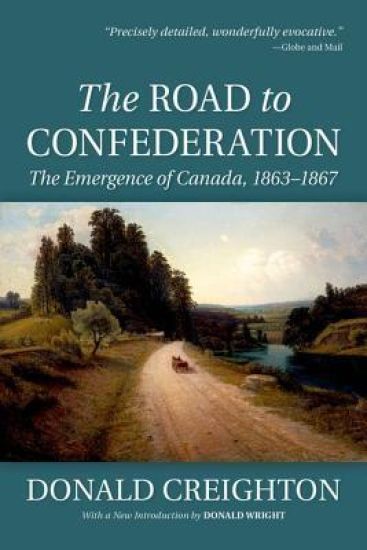
Donald Creighton was for many years one of Canada's foremost historians, a firm believer that history was closer to art than it was to science. Marked by beautiful, carefully crafted prose, The Road to Confederation reflects a style that perhaps no contemporary historian would dare: romantic, suspenseful, fearlessly narrative, and full of unapologetic opinions. If not politically correct and sanitized, it is a fascinating exploration of the personalities, the political logjams, even the debt problems that marked the period leading to Confederation. The book was also, as Donald Wright's excellent introduction argues, haunted by doubt. Not only had Canada failed to live up to Creighton's vision, Creighton himself was writing from the perspective of a rapidly changing country. Quebec was moving towards a liberal, secular, and nationalist identity; English Canada was embracing bilingualism and diversity; debates about nuclear weapons were raging; and living next to the United States was becoming increasingly uneasy. The road was becoming ever less straightforward. In many respects, The Road to Confederation reveals as much about the 1960s as it does the 1860s. Can echoes of Creighton's vision be seen even now, as Canada reinserts "Royal" into its military's name and remains entranced by William and Kate, the Duke and Duchess of Cambridge, and the future of the Royal Family?
International law and most national legal systems recognize the right to strike as a fundamental human right. However, the most common qualification for a strike is that the action must first be approved by ballot. These types of requirements are often said to be necessary to protect the democratic rights of the workers - the so-called democratic imperative. But is that truly their aim? This book draws on detailed empirical study of the Australian legislative provisions for pre-strike ballots; a comparative analysis of law and practice in a range of countries including Canada, South Africa, the United States, and the United Kingdom; and the approaches of the supervisory bodies of the International Labour Organisation to evaluate the true purpose and effect of the ballot requirement. While in some cases the ballot requirement provided additional bargaining leverage for unions, overall, the study showed that the principle purpose of ballot requirements is to curtail strikes rather than vindicate the democratic imperative it claims to support. Exploring collective bargaining and union democracy, this is an essential title for those involved in or studying labour law. This book also demonstrates the fundamental shortcomings of ballot regimes, and provides and accessible exploration of the operation of said regimes, which makes this a helpful tool for unionists to understand their rights as workers. It also considers significant policy questions in the field and is relevant in the respect of the international labour law regime.
Opposition to immigration has fueled a spate of populist movements in the United States and Europe. The potency of xenophobic politics is often explained in terms of factors such as economic insecurity, material competition, group identity, cultural conflicts, and social changes. These explanations have proven to be inadequate, particularly in often affluent and pluralistic contexts with relatively low levels of unemployment and poverty. How can these seemingly tolerant societies harbor intense antipathy toward migrants?Mathew Creighton develops a new model for understanding xenophobia by shining a light on the layers of intolerance concealed beneath the surface. Drawing on rich empirical evidence from innovative survey experiments conducted in the United States, the United Kingdom, Ireland, Norway, and the Netherlands, he argues that prejudice is often present but intentionally and strategically hidden. What can change, however, are the norms that govern the social acceptability of xenophobia. When the public expression of previously impermissible beliefs is pursued by politicians and society more broadly, the stigma of open intolerance lifts to reveal the true face of this once-masked xenophobia. Creighton challenges the assumption that overt anti-immigrant sentiment is mostly attributable to economic or social crises, showing that this narrative overlooks a substantial and largely stable reservoir of intolerance.Deeply researched, comparative, and generative, Hidden Hate provides timely and vital insight into the persistence of xenophobia.
Opposition to immigration has fueled a spate of populist movements in the United States and Europe. The potency of xenophobic politics is often explained in terms of factors such as economic insecurity, material competition, group identity, cultural conflicts, and social changes. These explanations have proven to be inadequate, particularly in often affluent and pluralistic contexts with relatively low levels of unemployment and poverty. How can these seemingly tolerant societies harbor intense antipathy toward migrants?Mathew Creighton develops a new model for understanding xenophobia by shining a light on the layers of intolerance concealed beneath the surface. Drawing on rich empirical evidence from innovative survey experiments conducted in the United States, the United Kingdom, Ireland, Norway, and the Netherlands, he argues that prejudice is often present but intentionally and strategically hidden. What can change, however, are the norms that govern the social acceptability of xenophobia. When the public expression of previously impermissible beliefs is pursued by politicians and society more broadly, the stigma of open intolerance lifts to reveal the true face of this once-masked xenophobia. Creighton challenges the assumption that overt anti-immigrant sentiment is mostly attributable to economic or social crises, showing that this narrative overlooks a substantial and largely stable reservoir of intolerance.Deeply researched, comparative, and generative, Hidden Hate provides timely and vital insight into the persistence of xenophobia.
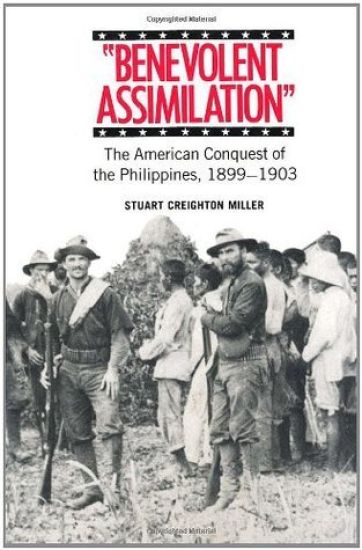
American acquisition of the Philippines and Filipino resistance to it became a focal point for debate on American imperialism. In a lively narrative, Miller tells the story of the war and how it challenged America’s sense of innocence. He examines the roles of key actors—the generals and presidents, the soldiers and senators—in America’s colonial adventure.“The most thorough, balanced, and well-written study to date of America’s imperial adventure in the western Pacific and the most persuasive analysis of the varied reactions of the American people to the military subjugation of the Filipinos. . . . [Told] with clarity, wit and a talent for the apt quotation.”—Richard E. Welch, Jr., The New York Times Book Review“A triumph of research, synthesis and storytelling, this is the wisest book on its subject and, implicitly, a significant cultural critique of the United States at the turn of the century.”—Peter Stanley, Asia“The author’s balanced summary of the historiography of imperialism and the epilogue, which considers the Philippine/Vietnam analogy, are valuable features of the work. . . . Should remain the definitive account of these events.”—Library Journal“Written with clarity and argued with passion from a wealth of primary sources.”—Jack C. Lane, The Journal of American History
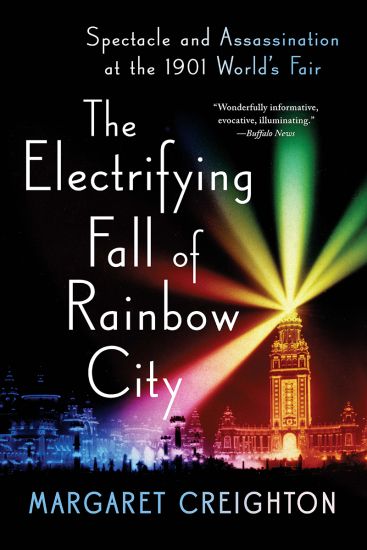
The Pan-American Exposition in Buffalo, New York, dazzled with its new rainbow-colored electric lights. It showcased an array of wonders, like daredevils attempting to go over Niagara Falls in a barrel, or the "Animal King" putting the smallest woman in the world and also terrifying animals on display. But the thrill-seeking spectators little suspected that an assassin walked the fairgrounds, waiting for President William McKinley to arrive. In Margaret Creighton's hands, the result is "a persuasive case that the fair was a microcosm of some momentous facets of the United States, good and bad, at the onset of the American Century" (Howard Schneider, Wall Street Journal).
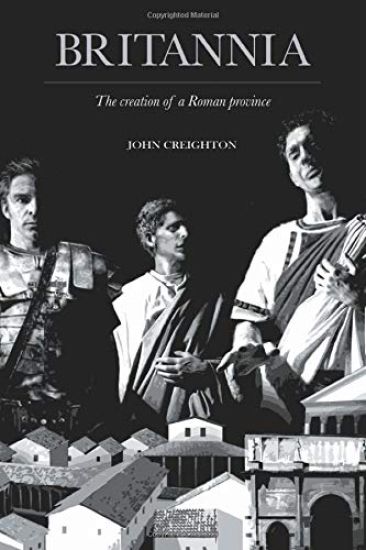
This book completely re-evaluates the evidence for, and the interpretation of, the rule of the kings of Late Iron Age Britain: Cunobelin and Verica. Within a few generations of their reigns, after one died and the other had fled, Rome’s ceremonial centres had been transformed into the magnificence of Roman towns with monumental public buildings and Britannia examines these kings’ long-lasting legacy in the creation of Britannia.Among the topics considered are:the links between Iron Age king of Britain and Rome before the Claudian conquestthe creation of the towns of Roman Britainthe different natures of 'Roman identity'the long lasting influence of the kings on the development of the province the widely different ways that archaeologists have read the evidence. Examining the kings' legacy in the creation of the Roman province of Britannia, the book examines the interface of two worlds and how much each owed to the other.
This book completely re-evaluates the evidence for, and the interpretation of, the rule of the kings of Late Iron Age Britain: Cunobelin and Verica. Within a few generations of their reigns, after one died and the other had fled, Rome’s ceremonial centres had been transformed into the magnificence of Roman towns with monumental public buildings and Britannia examines these kings’ long-lasting legacy in the creation of Britannia.Among the topics considered are:the links between Iron Age king of Britain and Rome before the Claudian conquestthe creation of the towns of Roman Britainthe different natures of 'Roman identity'the long lasting influence of the kings on the development of the province the widely different ways that archaeologists have read the evidence. Examining the kings' legacy in the creation of the Roman province of Britannia, the book examines the interface of two worlds and how much each owed to the other.
Compared to the rest of the world, Japan has a healthy population but pays relatively little for medical care. This book analyses how the health care works, and how it came into being. Taking a comparative perspective, the authors describe the politics of health care, the variety of providers, the universal health insurance system, and how the fee-schedule constrains costs at both the macro and micro levels. Special attention is paid to issues of quality and to the difficult problems of assuring adequate high-tech medicine and long-term care. Although the authors discuss the drawbacks to Japan's stringent cost-containment policy, they also keep in mind the possible implications for reform in the United States. Egalitarian values and a concern for 'balance' among constituents, the authors argue, are essential for cost containment as well as for access to health care.
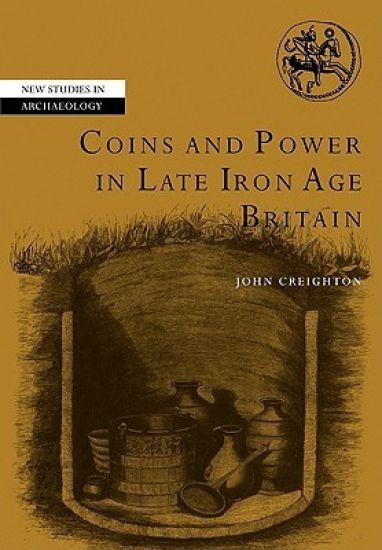
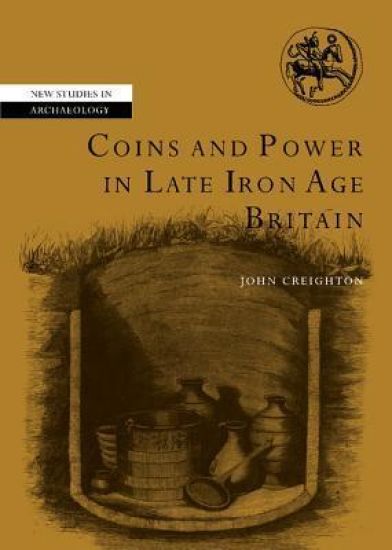
Cunobelin, Shakespeare's Cymbeline, ruled much of south-east Britain in the years before Claudius' legions arrived, creating the Roman province of Britannia. But what do we know of him and his rule, and that of competing dynasties in south-east Britain? This book examines the background to these, the first individuals in British history. It explores the way in which rulers bolstered their power through the use of imagery on coins, myths, language and material culture. After the visit of Caesar in 55 and 54 BC, the shadow of Rome played a fundamental role in this process. Combining the archaeological, literary and numismatic evidence, John Creighton paints a vivid picture of how people in late Iron Age Britain reacted to the changing world around them.
Compared to the rest of the world, Japan has a healthy population but pays relatively little for medical care. This book analyses how the health care works, and how it came into being. Taking a comparative perspective, the authors describe the politics of health care, the variety of providers, the universal health insurance system, and how the fee-schedule constrains costs at both the macro and micro levels. Special attention is paid to issues of quality and to the difficult problems of assuring adequate high-tech medicine and long-term care. Although the authors discuss the drawbacks to Japan’s stringent cost-containment policy, they also keep in mind the possible implications for reform in the United States. Egalitarian values and a concern for ‘balance’ among constituents, the authors argue, are essential for cost containment as well as for access to health care.
Cunobelin, Shakespeare’s Cymbeline, ruled much of Southeast Britain in the years before Claudius’ legions arrived, creating the Roman Province of Britannia. But what do we know of him and his rule, and that of competing dynasties in Southeast Britain? This book examines the background to these, the first individuals in British history. It explores the way in which rulers bolstered their power through the use of imagery on coins, myths, language, and material culture. After the visit of Caesar in 55 and 54 BC, the shadow of Rome played a fundamental role in this process. Combining the archaeological, literary and numismatic evidence, John Creighton paints a vivid picture of how people in Late Iron Age Britain reacted to the changing world around them.