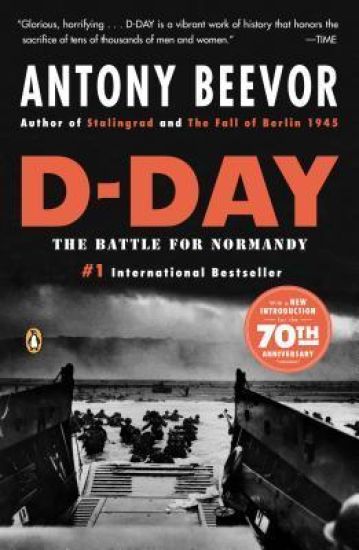
"Glorious, horrifying... D-Day is a vibrant work of history that honors the sacrifice of tens of thousands of men and women."--Time Renowned historian Antony Beevor, author of Stalingrad and The Battle of Arnhem, and the man who "single-handedly transformed the reputation of military history" (The Guardian) presents the first major account in more than twenty years of the Normandy invasion and the liberation of Paris. This is the first book to describe not only the experiences of the American, British, Canadian, and German soldiers, but also the terrible suffering of the French caught up in the fighting. Beevor draws upon his research in more than thirty archives in six countries, going back to original accounts and interviews conducted by combat historians just after the action. D-Day is the consummate account of the invasion and the ferocious offensive that led to Paris's liberation.
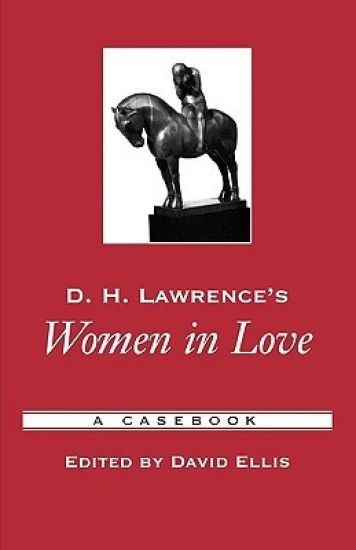
Although D. H. Lawrence's stock has fallen in recent times there are now signs of a revival. Of all his works, Women in Love is widely regarded as the most complex and rewarding. Apart from the classic essay by Joyce Carol Oates, all the items collected in this volume were published after 1990. Written by scholars from the United Kingdom, France, Australia and Canada, as well as the United States, they illustrate both the way recent theoretical developments in literary studies can be made relevant to readings of Lawrence and the healthy persistence of traditional methods of analysis. They also reveal Women in Love as a twentieth century classic that continues to challenge its readers and refuses to be pigeonholed. College students will find this collection an invaluable aid in their efforts to come to terms with the novel and for those of their elders who admire Lawrence it will provide a convenient and interesting way of discovering the kind of reactions he has provoked in the last fifteen years. The collection also contains a photograph of the statuette that was quite clearly the inspiration of Lawrence's description of Loerke's Lady Godiva, along with a note from the scholar who has only very recently announced its discovery.
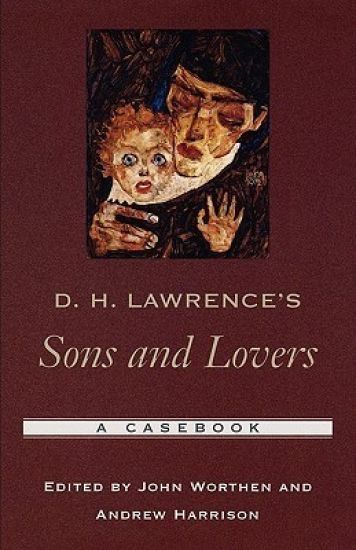
This casebook on D. H. Lawrence's Sons and Lovers is the first to address itself to the full text of the novel, first published in 1992. The introduction discusses the novel's composition and the range of approaches adopted by critics since its original publication in 1913. The nine essays that follow demonstrate the full extent of the contemporary critical response, from studies of narrative technique to psychoanalytic and gender-based analysis, and set the critical agenda for its study in the twenty-first century. This collection also reproduces excerpts from Lawrence's letters relating to Sons and Lovers, along with a full transcription of Alfred Booth Kuttner's 1916 Freudian analysis of the work.
This casebook on D. H. Lawrence's Sons and Lovers is the first to address itself to the full text of the novel, first published in 1992. The introduction discusses the novel's composition and the range of approaches adopted by critics since its original publication in 1913. The nine essays that follow demonstrate the full extent of the contemporary critical response, from studies of narrative technique to psychoanalytic and gender-based analysis, and set the critical agenda for its study in the twenty-first century. This collection also reproduces excerpts from Lawrence's letters relating to Sons and Lovers, along with a full transcription of Alfred Booth Kuttner's 1916 Freudian analysis of the work.
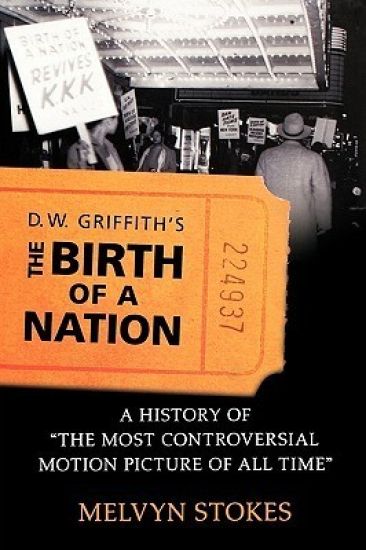
In this deeply researched and vividly written volume, Melvyn Stokes illuminates the origins, production, reception and continuing history of this ground-breaking, aesthetically brilliant, and yet highly controversial movie landmark. By going back to the original archives, particularly the NAACP and D. W. Griffith Papers, Stokes explodes many of the myths surrounding The Birth of a Nation (1915). Yet the story that remains is fascinating: the longest American film of its time, Griffith's film incorporated many new features, including the first full musical score compiled for an American film. It was distributed and advertised by pioneering methods that would quickly become standard. Through the high prices charged for admission and the fact that it was shown, at first, only in "live" theaters with orchestral accompaniment, Birth played a major role in reconfiguring the American movie audience by attracting more middle-class patrons. But if the film was a milestone in the history of cinema, it was also undeniably racist. Stokes shows that the darker side of this classic movie has its origins in the racist ideas of Thomas Dixon, Jr. and Griffith's own Kentuckian background and earlier film career. The book reveals how, as the years went by, the campaign against the film became increasingly successful. In the 1920s, for example, the NAACP exploited the fact that the new Ku Klux Klan, which used Griffith's film as a recruiting and retention tool, was not just anti-black, but also anti-Catholic and anti-Jewish, as a way to mobilize new allies in opposition to the film. This crisply written book sheds light on both the film's racism and the aesthetic brilliance of Griffith's filmmaking. It is a must-read for anyone interested in the cinema.
In this deeply researched and vividly written volume, Melvyn Stokes illuminates the origins, production, reception and continuing history of this ground-breaking, aesthetically brilliant, and yet highly controversial movie. By going back to the original archives, particularly the NAACP and D. W. Griffith Papers, Stokes explodes many of the myths surrounding The Birth of a Nation (1915). Yet the story that remains is fascinating: the longest American film of its time, Griffith's film incorporated many new features, including the first full musical score compiled for an American film. It was distributed and advertised by pioneering methods that would quickly become standard. Through the high prices charged for admission and the fact that it was shown, at first, only in "live" theaters with orchestral accompaniment, Birth played a major role in reconfiguring the American movie audience by attracting more middle-class patrons. But if the film was a milestone in the history of cinema, it was also undeniably racist. Stokes shows that the darker side of this classic movie has its origins in the racist ideas of Thomas Dixon, Jr. and Griffith's own Kentuckian background and earlier film career. The book reveals how, as the years went by, the campaign against the film became increasingly successful. In the 1920s, for example, the NAACP exploited the fact that the new Ku Klux Klan, which used Griffith's film as a recruiting and retention tool, was not just anti-black, but also anti-Catholic and anti-Jewish, as a way to mobilize new allies in opposition to the film. This crisply written book sheds light on both the film's racism and the aesthetic brilliance of Griffith's filmmaking. It is a must-read for anyone interested in the cinema.
The vast body of Lawrence scholarship has veered between the extremes of uncritical celebration and violent denigration. This first extended study of Lawrence's aesthetics draws on a number of modern critical approaches to present an original and balanced analysis of Lawrence's literary and art criticism, and of the complex cultural context from which it emerged. Emphasising the influence on this most`English' of writers of a German intellectual and cultural heritage, Anne Fernihough focuses on Lawrence's connections with the völkisch ideologies prevalent in Germany from 1910-1930, from which both Heideggerian philosophy and Nazism emerged. The deep-seated affinities between Lawrentian and Heideggerian aesthetics are examined for the first time, and the author highlights Lawrence's `green' critique of industrialization. New light is shed on Lawrence's hostility towards Freud, contrasting the two writers' thinking on art and the unconscious. The book's reassessment of Lawrence's relationship with Bloomsbury opposes the received view that Lawrence and the Bloomsbury art critics were poles apart. This fascinating and lucid study reveals Lawrence's art criticism as pluralistic and anti-authoritarian, a necessary antidote to his sometimes brutally authoritarian politics and to the dogma and rigidity that pervades so many other areas of Lawrence's thought.
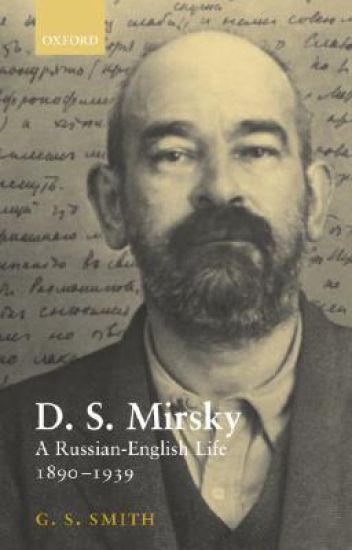
This is the first biography in any language of 'Comrade Prince' D. S. Mirsky (1890-1939), who uniquely participated in three distinctive episodes of modern European culture. In late imperial St Petersburg he was a poet, a student of Oriental languages and ancient history, and also a Guards officer. After fighting in World War I and the Russian Civil War, Mirsky emigrated, taught at London University, and became a literary critic and historian, writing prolifically in English, and also in Russian for the Paris-centred emigration, especially as a leading member of the Eurasian movement. His closest literary relationships were with Marina Tsvetaeva and Aleksei Remizov, and later with Maksim Gorky. In 1926-7 he published A History of Russian Literature, written in English, which remains the standard introduction to the subject. While in London he lived in Bloomsbury and knew the Woolfs; he also knew T. S. Eliot, and was the first Russian critic to write about him. Mirsky became a Communist in 1931 and returned to Stalin's Moscow the following year, becoming a prominent Soviet critic, and in particular championing Boris Pasternak. In 1937 he was arrested, and died in the Gulag. This biography draws on much unpublished material, including Mirsky's NKVD files.
The renowned Oxford Chemistry Primers series, which provides focused introductions to a range of important topics in chemistry, has been refreshed and updated to suit the needs of today's students, lecturers, and postgraduate researchers. The rigorous, yet accessible, treatment of each subject area is ideal for those wanting a primer in a given topic to prepare them for more advanced study or research. The learning features provided, including questions at the end of every chapter encourage active learning and promote understanding. Furthermore, frequent diagrams, margin notes, and glossary definitions all help to enhance a student's understanding of these essential areas of chemistry. d-Block Chemistry provides a succinct introduction to the field of transition metal chemistry, assuming little prior knowledge, and giving students a clear conceptual overview of the wide variety of d-block metal complexes. The text is enhanced throughout by numerous bespoke line diagrams and three-dimensional structures, enabling the reader to visualise these important inorganic compounds. Online Resources The online resources d-Block Chemistry feature: For registered adopters of the text: · Figures from the book available to download For students: · Answers to the end-of-chapter exercises
This important study from the prizewinning novelist and critic Amit Chaudhuri explores D. H. Lawrence's position as a 'foreigner' in the English canon. Focusing on the poetry, Chaudhuri examines how Lawrence's works, and Lawrence himself, have been read, and misread, in terms of their 'difference.' In contrast to the Leavisite project of placing Lawrence in the English 'great tradition,' this study demonstrates how Lawrence's writing brings into question the notion of 'Englishness' itself. It also shows how Lawrence's aesthetic sets him apart radically from both his Modernist contemporaries and his Romantic forbears. The starting-point of this enquiry into Lawrentian 'difference' is, for the purposes of this study, the poetry, its stylistic features, the ways in which it has been read, and, importantly, involves a search for a critical language by which it, and its 'difference', might be addressed. In doing so, it takes recourse to Jacques Derrida's notions of 'grammatalogy' and 'ecriture', and Michel Foucault's notion of 'discourse'. Referring to Lawrence's travel writings about Mexico and Italy, his essays on European and Etruscan art, on Mexican marketplaces and rituals, and American literature, and especially to his poetic manifesto, 'The Poetry of the Present,' this book shows how Lawrence was working towards both a theory and a practice that critique the post-Enlightenment unitary European self. Chaudhuri also, radically, allows his own post-colonial identity to inform his reading of the poetry, and to let the poems enter into a conversation with that identity. This is the first time that Lawrence's poetry has been discussed in this way, in the light of post-colonial and post-structuralist theory; it is also the first time a leading post-colonial writer of his generation has taken as his subject a major canonical English writer, and, through him, remapped the English canon as a site of 'difference.'
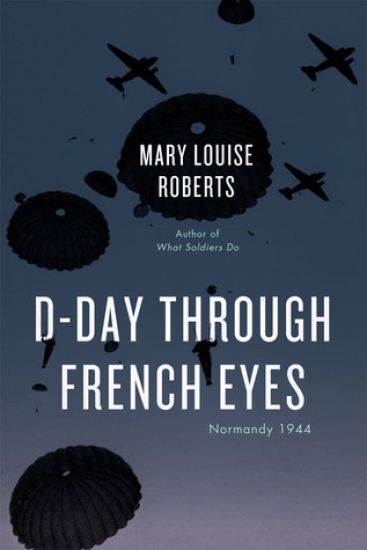
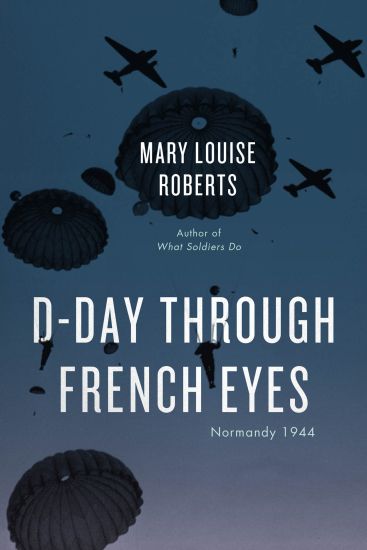
Like big black umbrellas, they rain down on the fields across the way, and then disappear behind the black line of the hedges. Silent parachutes dotting the night sky - that's how one woman in Normandy in June of 1944 learned that the D-Day invasion was under way. Though they yearned for liberation, the French in Normandy nonetheless had to steel themselves for war, knowing that their homes and land and fellow citizens would have to bear the brunt of the attack. Already battered by years of Nazi occupation, they knew they had one more trial to undergo even as freedom beckoned. With D-Day through French Eyes, Mary Louise Roberts turns the usual stories of D-Day around, taking readers across the Channel to view the invasion anew. Roberts builds her history from an impressive range of gripping first-person accounts of the invasion as seen by French citizens throughout the region. A farm family notices that cabbage is missing from their garden - then discovers that the guilty culprits are American paratroopers hiding in the cowshed. Fishermen rescue pilots from the wreck of their B-17, only to struggle to find clothes big enough to disguise them as civilians. A young man learns how to estimate the altitude of bombers and to determine whether a bomb was whistling overhead or silently headed straight for them. In small towns across Normandy, civilians hid wounded paratroopers, often at the risk of their own lives. When the allied infantry arrived, they guided soldiers to hidden paths and little-known bridges, giving them crucial advantages over the German occupiers. Through story after story, Roberts builds up an unprecedented picture of the face of battle as seen by grateful, if worried, civilians. As she did in her acclaimed account of GIs in postwar France, What Soldiers Do, Roberts here reinvigorates and reinvents a story we thought we knew. The result is a fresh perspective on the heroism, sacrifice, and achievement of D-Day.
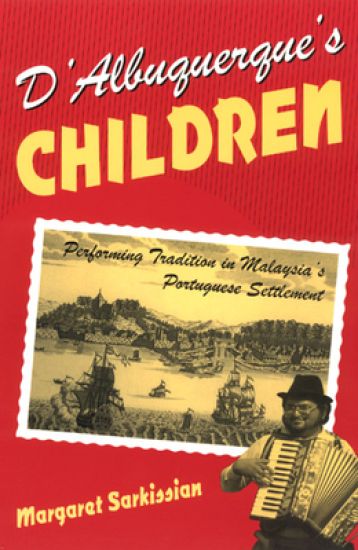
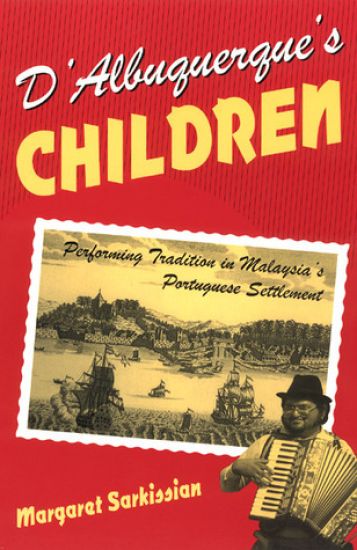
When the Portuguese seafarer Afonso de Albuquerque conquered the bustling port of Malacca in 1511, he effectively gained control of the entire South China Sea spice trade. Although Portuguese dominance lasted only 130 years, its legacy lies at the heart of a burgeoning tourist attraction on the outskirts of the city, in which performers who believe they are the descendants of swashbuckling Portuguese conquerors encapsulate their "history" in a cultural stage show. Using historical and ethnogrpahic data, Margaret Sarkissian reveals that this music and dance draws on an eclectic array of influences that span the Portuguese diaspora (one song conjures up images of Lucille Ball impersonating Carmen Miranda on "I Love Lucy"). Ironically, she shows, what began as a literate tradition in the 1950s has now become an oral one so deeply rooted in Settlement life that the younger generation, like the tourists, now sees it as an unbroken heritage stretching back almost 500 years. A fascinating case of "orientalism in reverse", "D'Albuquerque's Children" illuminates the creative ways in which one community has adapted to life in a post-colonial world.
When the Portuguese seafarer Afonso de Albuquerque conquered the bustling port of Malacca in 1511, he effectively gained control of the entire South China Sea spice trade. Although Portuguese dominance lasted only 130 years, its legacy lies at the heart of a burgeoning tourist attraction on the outskirts of the city, in which performers who believe they are the descendants of swashbuckling Portuguese conquerors encapsulate their "history" in a cultural stage show. Using historical and ethnogrpahic data, Margaret Sarkissian reveals that this music and dance draws on an eclectic array of influences that span the Portuguese diaspora (one song conjures up images of Lucille Ball impersonating Carmen Miranda on "I Love Lucy"). Ironically, she shows, what began as a literate tradition in the 1950s has now become an oral one so deeply rooted in Settlement life that the younger generation, like the tourists, now sees it as an unbroken heritage stretching back almost 500 years. A fascinating case of "orientalism in reverse", "D'Albuquerque's Children" illuminates the creative ways in which one community has adapted to life in a post-colonial world.
A gripping account of what it was like to be in the midst of the Norman Invasion on D-Day and immediately afterward. Silent parachutes dotting the night sky—that’s how one woman in Normandy in June 1944 learned that the D-Day invasion was underway. Though they yearned for liberation, the people of Normandy steeled themselves for further warfare, knowing that their homes, land, and fellow citizens would have to bear the brunt of the attack. In D-Day through French Eyes, Mary Louise Roberts resets our view of the usual stories of that momentous operation, taking readers across the Channel to view the invasion anew. Roberts builds her history from an impressive range of gripping first-person accounts from French citizens, reinvigorating a story we thought we knew. The result is a fresh perspective on the heroism, sacrifice, and achievement of D-Day.
Though we all face a tug of war between dependency and autonomy while growing up, British author D.H. Lawrence (1885–1930) experienced the struggle with particular intensity. Later in life, his acute observational skills, high emotional intelligence, and expressive abilities would allow him to articulate this conflict in his works as few other writers have.Applying concepts from attachment theory, D.H. Lawrence and Attachment presents innovative readings of a broad swath of Lawrence’s fiction. Ronald Granofsky teases out hidden patterns in Lawrence’s work, deepening our understanding of his fictional characters and revealing new significance to key thematic concerns like gender identification, marriage, and class. Lawrence’s too-close relationship with his own mother, in particular, was the foundation for his lifelong interest in attachment, as well as the impetus for his literary exploration of the delicate balance between the desire for closeness and the need for separation. While the theories of Margaret S. Mahler, D.W. Winnicott, John Bowlby, and others were developed after Lawrence’s death, his writing about relationships - and how they are influenced by early childhood experiences - bears a striking resemblance to the concepts of attachment theory.The Lawrence who emerges from D.H. Lawrence and Attachment is a psychological writer of great power whose intuitive insights into the vagaries of attachment resulted in rich, complex fiction.
Though we all face a tug of war between dependency and autonomy while growing up, British author D.H. Lawrence (1885–1930) experienced the struggle with particular intensity. Later in life, his acute observational skills, high emotional intelligence, and expressive abilities would allow him to articulate this conflict in his works as few other writers have.Applying concepts from attachment theory, D.H. Lawrence and Attachment presents innovative readings of a broad swath of Lawrence’s fiction. Ronald Granofsky teases out hidden patterns in Lawrence’s work, deepening our understanding of his fictional characters and revealing new significance to key thematic concerns like gender identification, marriage, and class. Lawrence’s too-close relationship with his own mother, in particular, was the foundation for his lifelong interest in attachment, as well as the impetus for his literary exploration of the delicate balance between the desire for closeness and the need for separation. While the theories of Margaret S. Mahler, D.W. Winnicott, John Bowlby, and others were developed after Lawrence’s death, his writing about relationships - and how they are influenced by early childhood experiences - bears a striking resemblance to the concepts of attachment theory.The Lawrence who emerges from D.H. Lawrence and Attachment is a psychological writer of great power whose intuitive insights into the vagaries of attachment resulted in rich, complex fiction.
Je suis n e Magog, en 1940 une petite ville dans les Cantons de l'Est du Qu bec avec un baluchon sur mon paule. D'Eastman Montr al en passant par Toronto, je l'ai d pos en n Victoria en 2023. Mon long parcours est parfois triste, parfois dr le mais jamais ennuyant.
Guillaume d'Orange is the most extensive epic cycle of the Middle Ages. Set in the ninth century, the poems on the life of William of Orange grew out of several centuries of oral composition and were written down for the first time in the twelfth century. Changing and growing through the years, the poems reflect historical events from the ninth to the twelfth century. Joan M. Ferrante writes in the Introduction, "History tells us little of the medieval William of Orange, but legend tells us a great deal. From the legends grew the most extensive epic cycle of the Middle Ages."