Kirjojen hintavertailu. Mukana 11 342 296 kirjaa ja 12 kauppaa.

Kirjahaku

Etsi kirjoja tekijän nimen, kirjan nimen tai ISBN:n perusteella.

1000 tulosta hakusanalla David A. Alhadeff

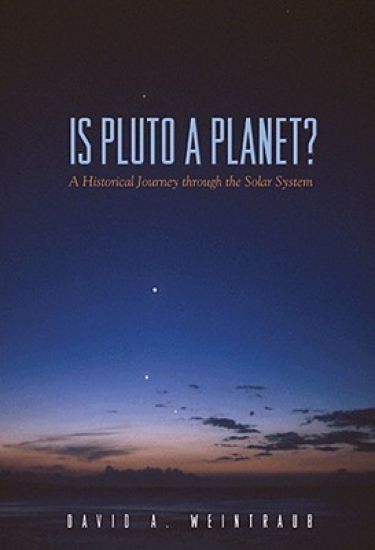
Is Pluto a Planet?

Is Pluto a Planet?

David A. Weintraub

Princeton University Press
2008
pokkari
A Note from the Author: On August 24, 2006, at the 26th General Assembly of the International Astronomical Union (IAU) in Prague, by a majority vote of only the 424 members present, the IAU (an organization of over 10,000 members) passed a resolution defining planet in such a way as to exclude Pluto and established a new class of objects in the solar system to be called "dwarf planets," which was deliberately designed to include Pluto. With the discovery of Eris (2003 UB313)--an outer solar system object thought to be both slightly larger than Pluto and twice as far from the Sun--astronomers have again been thrown into an age-old debate about what is and what is not a planet. One of many sizeable hunks of rock and ice in the Kuiper Belt, Eris has resisted easy classification and inspired much controversy over the definition of planethood. But, Pluto itself has been subject to controversy since its discovery in 1930, and questions over its status linger. Is it a planet? What exactly is a planet? Is Pluto a Planet? tells the story of how the meaning of the word "planet" has changed from antiquity to the present day, as new objects in our solar system have been discovered. In lively, thoroughly accessible prose, David Weintraub provides the historical, philosophical, and astronomical background that allows us to decide for ourselves whether Pluto is indeed a planet. The number of possible planets has ranged widely over the centuries, from five to seventeen. This book makes sense of it all--from the ancient Greeks' observation that some stars wander while others don't; to Copernicus, who made Earth a planet but rejected the Sun and the Moon; to the discoveries of comets, Uranus, Ceres, the asteroid belt, Neptune, Pluto, centaurs, the Kuiper Belt and Eris, and extrasolar planets. Weaving the history of our thinking about planets and cosmology into a single, remarkable story, Is Pluto a Planet? is for all those who seek a fuller understanding of the science surrounding both Pluto and the provocative recent discoveries in our outer solar system.
A Pocket Guide to Sharks of the World

A Pocket Guide to Sharks of the World

David A. Ebert; Marc Dando; Sarah Fowler

Princeton University Press
2021
nidottu
An updated and comprehensive guide identifying all of the world's sharksSharks are some of the most misunderstood animals on the planet. We still have a lot to learn about these fascinating creatures, which are more seriously threatened with extinction and in greater need of conservation and management than any other major group of vertebrates.A Pocket Guide to Sharks of the World is the only field guide to identify, illustrate, and describe every known shark species. Its compact format makes it handy for many situations, including recognizing living species, fishery catches, or parts sold at markets. This expanded second edition presents lavish images, details on newly discovered species, and updated text throughout. The book contains useful sections on identifying shark teeth and the shark fins most commonly encountered in the fin trade, and takes a look at shark biology, ecology, and conservation. A Pocket Guide to Sharks of the World will be an essential resource and definitive reference for years to come.An updated guide to all of the world’s sharksEach species is illustrated and describedHandy, compact format with concise textUseful sections on the identification of shark teeth and fins
Once a Week

Once a Week

David a Esposito

Harvest Time Partners, Inc.
2018
pokkari
The weekly writings of David A. Esposito captured in the Character Creates Opportunity(R) blog have encouraged and inspired readers for years. Once a Week is a collection of the 52 most popular blog posts from the last 5 years to provide readers with a weekly message to create a time of reflection, encouragement and hope to stay on an effective path to reach their full potential. David is a combat veteran, business executive, husband and father of four children. David's writings share practical and relevant insights on universal and timeless principles that can transform people of all ages, backgrounds and beliefs.
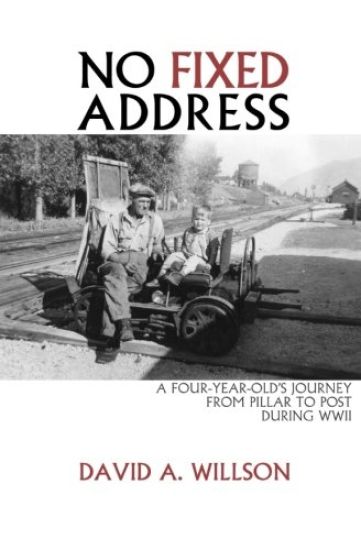
No Fixed Address: A Four-Year-Old's Journey from Pillar to Post During WWII
No Fixed Address is the first-person account of a precocious 4-year-old, who wanders the West during WWII with his mother, while his father fights in the Pacific. A work of Creative Non-Fiction by the author of REMF Diary, The REMF Returns, and In the Army Now. Praise for No Fixed Address: "In the fine tradition of Tony Early and Homer Hickam, this book touches you on every page." --Patrick Sheane Duncan, Writer, Director, Producer "...a brilliant collection of short stories written by a master storyteller." --D.S. Literas, author of Viet Man and Flames and Smoke Visible "...David Willson shows off his dry wit and his brilliant storytelling ability as he shines an illuminating light on...the homefront during WWII. Highly recommended." --Marc Leepson, Arts Editor, the VVA Veteran "This story of a melancholy young boy struggling to cope with the impact of WWII on his family and himself is sweet, lovely, and deeply affecting, a window into American history that is uniquely Willson's." --W.D.Ehrhart, American poet, memoirist, and essayist "...the magician who has broken his wand of savage irony to tell as simply as possible the story of four generations of anger and war and the love and work that a stove-up grandfather could teach." --Dan Duffy, Viet Nam Literature Project
A Soldier without Arms

A Soldier without Arms

David A. Kronick

Hamilton Books
2005
nidottu
In A Soldier Without Arms, author David A. Kronick describes his experiences as a World War II Medical Supply Officer at station hospitals in the United States, England, France, and Germany. The author's personal accounts provide a unique and fascinating firsthand view of the dominant historical event of the 20th century.
A Handbook of Play Therapy with Aggressive Children

A Handbook of Play Therapy with Aggressive Children

David A. Crenshaw; John B. Mordock

Jason Aronson Inc. Publishers
2005
sidottu
Written by two authors with a combined experience of more than fifty years in the residential treatment of severely aggressive-and often traumatized-children, this book has proven invaluable to new as well as seasoned child practitioners. The chapters cover the nuts and bolts of play therapy with this extremely challenging clinical population, including the therapeutic alliance, aims of play therapy with aggressive children, setting limits on destructive and obtrusive behaviors, typical play themes of aggressive children, and developing distancing and displacement through playful action and through teaching, modeling, and structuring action play. Other chapters cover such topics as: how to create more mature defenses and calming strategies; the role of interpretation; the use of spontaneous drawings as a bridge to fantasy play; specific drawing techniques to create access to the inner world of children; how to teach and model pro-social skills and the language of feeling; and how to facilitate affect expression and modulation, contained reenactment of trauma, and children's ability to mourn tangible as well as intangible, unacknowledged and invisible losses. Later chapters cover the therapeutic process and techniques to facilitate termination. The authors introduce the Play Therapy Decision Grid, which is intended to guide the therapist into the levels of therapy best suited for the child at any given point based on the child's resources and the anxiety engendered by the therapy.
A Handbook of Play Therapy with Aggressive Children

A Handbook of Play Therapy with Aggressive Children

David A. Crenshaw; John B. Mordock

Jason Aronson Inc. Publishers
2007
nidottu
Written by two authors with a combined experience of more than fifty years in the residential treatment of severely aggressive-and often traumatized-children, this book has proven invaluable to new as well as seasoned child practitioners. The chapters cover the nuts and bolts of play therapy with this extremely challenging clinical population, including the therapeutic alliance, aims of play therapy with aggressive children, setting limits on destructive and obtrusive behaviors, typical play themes of aggressive children, and developing distancing and displacement through playful action and through teaching, modeling, and structuring action play. Other chapters cover such topics as: how to create more mature defenses and calming strategies; the role of interpretation; the use of spontaneous drawings as a bridge to fantasy play; specific drawing techniques to create access to the inner world of children; how to teach and model pro-social skills and the language of feeling; and how to facilitate affect expression and modulation, contained reenactment of trauma, and children's ability to mourn tangible as well as intangible, unacknowledged and invisible losses. Later chapters cover the therapeutic process and techniques to facilitate termination. The authors introduce the Play Therapy Decision Grid, which is intended to guide the therapist into the levels of therapy best suited for the child at any given point based on the child's resources and the anxiety engendered by the therapy.
Ireland, a Bicycle, and a Tin Whistle

Ireland, a Bicycle, and a Tin Whistle

David A. Wilson

McGill-Queen's University Press
1995
sidottu
As he travels through the North, Wilson gets beneath the political surface to portray both the tragedy and comedy of everyday life in the Protestant and Catholic communities. Aware of the polarized image that each side has of the other, he emphasizes the importance of finding common ground and of asserting the middle against the extremes. Just as traditional Irish music is characterized by ornamentations and elaborations on a melodic theme, Ireland, a Bicycle, and a Tin Whistle is full of variations and wanderings on the theme of the trip itself. And just as traditional Irish musicians will follow a sad slow air with a lively foot-tapping reel, Wilson's mood ranges from the nostalgic and reflective to the irreverent and mischievous. If there is a lament in one ear, there is a song in the other.
Ireland, a Bicycle, and a Tin Whistle

Ireland, a Bicycle, and a Tin Whistle

David A. Wilson

McGill-Queen's University Press
1995
nidottu
As he travels through the North, Wilson gets beneath the political surface to portray both the tragedy and comedy of everyday life in the Protestant and Catholic communities. Aware of the polarized image that each side has of the other, he emphasizes the importance of finding common ground and of asserting the middle against the extremes. Just as traditional Irish music is characterized by ornamentations and elaborations on a melodic theme, Ireland, a Bicycle, and a Tin Whistle is full of variations and wanderings on the theme of the trip itself. And just as traditional Irish musicians will follow a sad slow air with a lively foot-tapping reel, Wilson's mood ranges from the nostalgic and reflective to the irreverent and mischievous. If there is a lament in one ear, there is a song in the other.
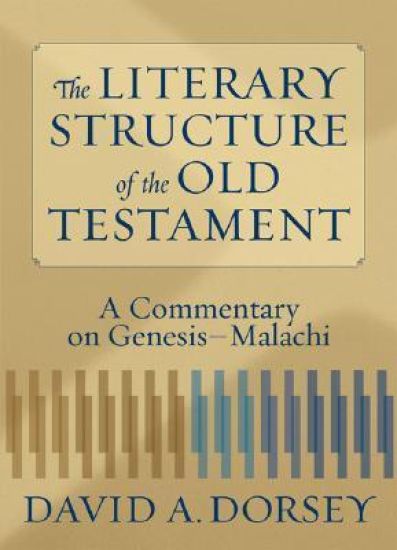
The Literary Structure of the Old Testament – A Commentary on Genesis–Malachi

The Literary Structure of the Old Testament – A Commentary on Genesis–Malachi

David A. Dorsey

Baker Academic, Div of Baker Publishing Group
2004
nidottu
Dorsey proceeds book-by-book through the entire Old Testament, identifying the structure and offering commentary as to how it clarifies the text's meaning. He illuminates the "big picture" of each book, providing a framework for further study."This book will become a standard reference tool for all serious students of the Bible."--Temper Longman III, Westmont College
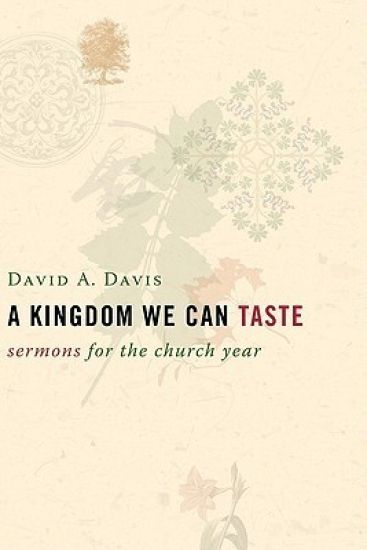
A Kingdom We Can Taste

A Kingdom We Can Taste

David A. Davis

William B Eerdmans Publishing Co
2007
nidottu
These rich sermons are rooted in congregational life and steeped in Christian doctrine and the celebrations of the church year. "A Kingdom We Can Taste" reflects one preacher's effort at leading a congregation through the seasons of Advent, Christmas, Epiphany, Lent, and Easter. David Davis uses a unique combination of resources - select Old Testament texts, the Apostles' Creed, lectionary assignments, and more - in his progression of sermons. Readers who "listen" to these thirteen messages, or preaching conversations, will experience the gospel proclaimed and feel a comforting sense of belonging to the community of faith. This inspiring little volume is perfect for pastors preparing sermons of their own, seminary students looking for a model of good preaching, or laypeople wanting quality meditations to chew on.
The Idea of a Free Press

The Idea of a Free Press

David A. Copeland; Daniel Schorr

Northwestern University Press
2006
nidottu
With the introduction of the printing press in England in 1476, a struggle over its control - and its potential for interrupting power - was joined. The written word, once the domain of the upper levels of society that controlled politics, economics, and religion, could be seen passing into the hands of anyone throughout the social strata who wished to voice opinions on any topic of interest or importance. How the advent of printing led to the idea of a free press is the story told by David Copeland in this book, which traces a confrontation that began with issues of religion and gradually expanded into the realm of political freedom. The rise of a free press was, in many ways, a legacy of the Reformation and Enlightenment. Copeland describes a discourse centered on questions of religion - a discussion that the government, with all its religious authority, could not suppress because of the belief that the ability to reason for oneself was God-given. In this account, we see how the debate moved from religion to the purely political sphere, and how, through the increased use of the printing press, it was opened to a multiplicity of voices and opinions. Spanning nearly four centuries in Britain and America, Copeland's book reveals how the tension between government control and the right to debate public affairs openly ultimately led to the idea of a free press; in doing so, it documents an intellectual development of unparalleled relevance and importance to the history of journalism.
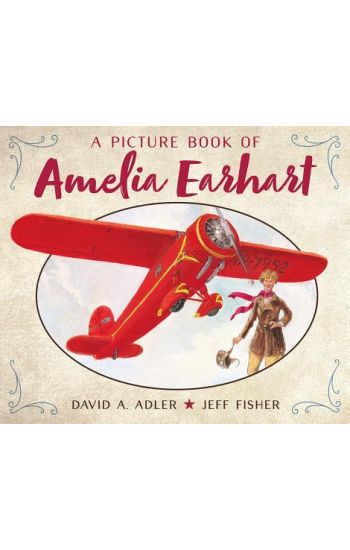
A Picture Book of Amelia Earhart

A Picture Book of Amelia Earhart

David A. Adler

Holiday House Inc
2018
pokkari
When Amelia Earhart was eleven, she saw her first airplane. At the time she thought it was "not at all interesting." Despite this beginning, Amelia would go on to become one of the most famous aviators of her day. Never conventional, she grew up playing football and later studied automobile-engine repair. But she was planning a career in medical research, when on Christmas Day, 1920, she took her first plane ride -- a ride that changed her life. She bought her first plane the following year, and by 1928 became the first woman to fly across the Atlantic Ocean. Amelia Earhart went on to have many more flying adventures, but perhaps her best known flight is the one from which she never returned. When she disappeared mysteriously, Amelia Earhart was considered a hero.