This book, the first of its kind, comprehensively explores Native American claims against the United States government over the past two centuries. Despite the federal government’s multiple attempts to redress indigenous claims, a close examination reveals that even when compensatory programs were instituted, Native peoples never attained a genuine sense of justice. David E. Wilkins addresses the important question of what one nation owes another when the balance of rights, resources, and responsibilities have been negotiated through treaties. How does the United States assure that guarantees made to tribal nations, whether through a century old treaty or a modern day compact, remain viable and lasting?
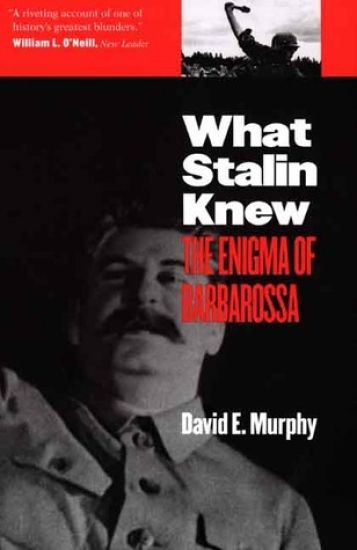
“A riveting account of one of history’s greatest blunders.”—William L. O’Neill, The New Leader This extensively researched book illuminates many of the enigmas that have surrounded the Nazi invasion of the Soviet Union, offering keen insights into Stalin’s thinking and the reasons for his catastrophic blunder. “If, after the war, the Soviet Union had somehow been capable of producing an official inquiry into the catastrophe of 6/22—comparable in its mandate to the 9/11 commission here—its report might have read a little like [this book]. . . . Murphy brings to his subject both knowledge of Russian history and an insider’s grasp of how intelligence is gathered, analyzed and used—or not.”—Niall Ferguson, New York Times Book Review"A fascinating and meticulously researched account of mistaken assumptions and errors of judgment that culminated in Hitler’s invasion of Russia in June 1941. Never before has this fateful period been so fully documented."—Henry A. Kissinger
Greatly revised, the Second Edition presents an extended survey of this rapidly growing field. The book reviews the effects of industrial and pharmaceutical chemicals on human behavior, cognitive function, and emotional status. Features include two new chapters addressing key forensic issues and recent views on multiple chemical sensitivity, sick building syndrome, and psychosomatic disorders; current data on NIOSH and OSHA exposure levels for industrial toxins; and enhanced coverage of testing methods; studies of PET, SPECT, and BEAM imaging applied to neurotoxic exposure.
Readers of The New York Times know David Sanger as one of the most trusted correspondents in Washington, one to whom presidents, secretaries of state, and foreign leaders talk with unusual candor. Now, with a historian's sweep and an insider's eye for telling detail, Sanger delivers an urgent intelligence briefing on the world America faces. In a riveting narrative, The Inheritance describes the huge costs of distraction and lost opportunities at home and abroad as Iraq soaked up manpower, money, and intelligence capabilities. The 2008 market collapse further undermined American leadership, leaving the new president with a set of challenges unparalleled since Franklin D. Roosevelt entered the Oval Office. Sanger takes readers into the White House Situation Room to reveal how Washington penetrated Tehran's nuclear secrets, leading President Bush, in his last year, to secretly step up covert actions in a desperate effort to delay an Iranian bomb. Meanwhile, his intelligence chiefs made repeated secret missions to Pakistan as they tried to stem a growing insurgency and cope with an ally who was also aiding the enemy-while receiving billions in American military aid. Now the new president faces critical choices: Is it better to learn to live with a nuclear Iran or risk overt or covert confrontation? Is it worth sending U.S. forces deep into Pakistani territory at the risk of undermining an unstable Pakistani government sitting on a nuclear arsenal? It is a race against time and against a new effort by Islamic extremists-never before disclosed-to quietly infiltrate Pakistan's nuclear weapons program. "Bush wrote a lot of checks," one senior intelligence official told Sanger, "that the next president is going to have to cash." The Inheritance takes readers to Afghanistan, where Bush never delivered on his promises for a Marshall Plan to rebuild the country, paving the way for the Taliban's return. It examines the chilling calculus of North Korea's Kim Jong-Il, who built actual weapons of mass destruction in the same months that the Bush administration pursued phantoms in Iraq, then sold his nuclear technology in the Middle East in an operation the American intelligence apparatus missed. And it explores how China became one of the real winners of the Iraq war, using the past eight years to expand its influence in Asia, and lock up oil supplies in Africa while Washington was bogged down in the Middle East. Yet Sanger, a former foreign correspondent in Asia, sees enormous potential for the next administration to forge a partnership with Beijing on energy and the environment. At once a secret history of our foreign policy misadventures and a lucid explanation of the opportunities they create, The Inheritance is vital reading for anyone trying to understand the extraordinary challenges that lie ahead.
Theologians have not often mined 2 Corinthians for its theological gemstones, but careful reading uncovers significant doctrinal insights. It is not just an occasional letter that battles those inside and outside of the congregation who have belittled Paul for lacking power and glory. He writes as a pastor dousing the flames of dissension, disgruntlement, toxic leadership, and deviant theology.Therefore, what he says can be meaningful to ministers today who may face the same kinds of problems and seek to live a cruciform ministry. The letter has relevance for the church universal, and Paul's responses to the various issues are grounded in a well-developed theological substructure. The letter offers profound insights into the Trinity, atonement, reconciliation, being in Christ, cruciform ministry, and the hope of the resurrection.
Concentrate on the biblical author's message as it unfolds.Designed to assist the pastor and Bible teacher in conveying the significance of God's Word, the Zondervan Exegetical Commentary on the New Testament series treats the literary context and structure of every passage of the New Testament book in the original Greek.With a unique layout designed to help you comprehend the form and flow of each passage, the ZECNT unpacks:The key message.The author's original translation.An exegetical outline.Verse-by-verse commentary.Theology in application.While primarily designed for those with a basic knowledge of biblical Greek, all who strive to understand and teach the New Testament will benefit from the depth, format, and scholarship of these volumes.In this volume, David E. Garland offers pastors, students, and teachers a focused resource for reading Luke. Luke sought to assure believers about the truth of the gospel and to advance their understanding of God's ways in the world as revealed in Christ's ministry, death, and resurrection. Luke wrote as a historian, theologian, and pastor, and Garland's commentary strives to follow suit in assisting those who will preach and teach the text and those who seek to understand it better.
A Theology of Mark’s Gospel is the fourth volume in the BTNT series. This landmark textbook, written by leading New Testament scholar David E. Garland, thoroughly explores the theology of Mark’s Gospel. It both covers major Markan themes and also sets forth the distinctive contribution of Mark to the New Testament and the canon of Scripture, providing readers with an in-depth and holistic grasp of Markan theology in the larger context of the Bible. This substantive, evangelical treatment of Markan theology makes an ideal college- or seminary-level text.
If you want to move from the biblical text to contemporary life on solid ground, this series has been written for you. The Bringing the Bible to Life series, a companion to Zondervan’s NIV Application Commentary, is intended to bring both the historical meaning of the biblical text and its contemporary significance. Each guide provides an introduction to the biblical book, six to twelve sessions with discussion questions, and a closing section that assists the group in responding to God’s Word together or individually. The included Leader’s Guide helps busy people prepare to lead the study. Sessions on Mark include: • 1 The Messiah Arrives • 2 Who Speaks for God? • 3 Fruitful and Unfruitful Soil • 4 Fear and Faith • 5 The Training of the Twelve • 6 Unclean? • 7 The Unexpected Mission • 8 The Right Question • 9 The Fruitless Tree • 10 What Matters Now • 11 Betrayal • 12 End and Beginning
The NIV Application Commentary helps you communicate and apply biblical text effectively in today's context.To bring the ancient messages of the Bible into today's world, each passage is treated in three sections:Original Meaning. Concise exegesis to help readers understand the original meaning of the biblical text in its historical, literary, and cultural context.Bridging Contexts. A bridge between the world of the Bible and the world of today, built by discerning what is timeless in the timely pages of the Bible.Contemporary Significance. This section identifies comparable situations to those faced in the Bible and explores relevant application of the biblical messages. The author alerts the readers of problems they may encounter when seeking to apply the passage and helps them think through the issues involved.This unique, award-winning commentary is the ideal resource for today's preachers, teachers, and serious students of the Bible, giving them the tools, ideas, and insights they need to communicate God's Word with the same powerful impact it had when it was first written.The book you receive may have a different cover design than shown on the website.
The NIV Application Commentary helps you communicate and apply biblical text effectively in today's context.To bring the ancient messages of the Bible into today's world, each passage is treated in three sections:Original Meaning. Concise exegesis to help readers understand the original meaning of the biblical text in its historical, literary, and cultural context.Bridging Contexts. A bridge between the world of the Bible and the world of today, built by discerning what is timeless in the timely pages of the Bible.Contemporary Significance. This section identifies comparable situations to those faced in the Bible and explores relevant application of the biblical messages. The author alerts the readers of problems they may encounter when seeking to apply the passage and helps them think through the issues involved.This unique, award-winning commentary is the ideal resource for today's preachers, teachers, and serious students of the Bible, giving them the tools, ideas, and insights they need to communicate God's Word with the same powerful impact it had when it was first written.The book you receive may have a different cover design than shown on the website.
Brimming with photos and graphics, the Zondervan Illustrated Bible Backgrounds Commentary walks you verse by verse through all the books of the New Testament. It’s like slipping on a set of glasses that lets you read the Bible through the eyes of a first-century reader! Discoveries await you that will snap the world of the New Testament into gripping immediacy. Things that seem mystifying, puzzling, or obscure will take on tremendous meaning when you view them in their ancient context. You'll deepen your understanding of the teachings of Jesus. You'll discover the close, sometimes startling interplay between God's kingdom and the practical affairs of the church. Best of all, you'll gain a deepened awareness of the Bible’s relevance for your life. Written in a clear, engaging style, this beautiful set provides a new and accessible approach that more technical expository and exegetical commentaries don't offer.
This first annotated guide devoted entirely to American humor magazines and periodicals provides a comprehensive survey of a genre that has both enriched and reflected American mores, popular culture, and literature for over two hundred years. It offers analytical essays, bibliographies, and historical information on nearly three hundred of the most important individual publications, as well as extensive listings of rare periodicals about which very little is presently known.
The past fifteen years have seen a major evolution in French society and the way it views culture. Cultural Policy and Socialist France offers a multi-faceted approach to determining what role the Socialist Party has had in that change through a detailed evaluation of the policies of the Ministry of Culture under President Francois Mitterrand and Minister of Culture Jack Lang.
Among the significant trends in human services during the 1980s has been the emergence of emphasis on social networks and social supports in research, prevention, and treatment efforts. Today's human service professionals and planners routinely incorporate information about social networks and social supports into assessments and interventions for a wide range of individual and community problems. Social Support Networks is the most comprehensive, up-to-date bibliography yet published on the theory, research, and practical application of social support networks. Containing approximately 2,700 references, it offers detailed listings for journal articles, books, book chapters, and published reports which appeared from 1983 to 1987.In recent years, social support networks have become a focus for research and scholarship in anthropology, epidemiology, nursing, psychiatry, psychology, public health, social work, and sociology. The literature represented in this bibliography includes a focus on theory, research, practice, and policy drawn from these as well as other disciplines. As such, the volume lends itself to the transfer of ideas and practice across various branches of the social support intervention field, particularly addressing the requirements of practitioners who may feel they have become limited in their response to social problems by relying on their agencies' traditional ways of meeting client needs. The bibliography is divided into five major headings: Overview and Theory, Research-Physical Health, Research-Mental Health, Intervention, and Professional Roles and Policy, and all entries are consecutively numbered to aid cross-referencing by the Author and Subject Indexes. To further facilitate cross-referencing, many Subject Index terms also have sub-indices. This important reference tool will be welcomed by service providers and planners in gerontology, nursing, psychiatry, psychology, public health, social work, sociology, anthropology, and urban affairs.
Not surprisingly, African Americans have faced considerable obstacles in pursuing careers in engineering in the United States. Wharton has constructed the first history of black efforts to advance in this field from Emancipation to the present. Utilizing contemporary correspondence and documents, Wharton shows the range of responses from educators and politicians on both sides of the controversy and examines in detail institutions and individuals responsible for the racial and educational climate surrounding this issue.The struggle for the opportunity and acceptance of African-American participants in the technological arena is a struggle worthy of note. The struggle and the examination of this topic is important because, despite the significance of the topic, it has been minimally explored. A pioneering effort, the book will be of concern to all students of American race relations, higher education, and the history of engineering education.
During the 1920s and 1930s, changes in the American population, increasing urbanization, and innovations in technology exerted major influences on the daily lives of ordinary people. Explore how everyday living changed during these years when use of automobiles and home electrification first became commonplace, when radio emerged, and when cinema, with the addition of sound, became broadly popular. Find out how worklife, domestic life, and leisure-time activities were affected by these factors as well as by the politics of the time. Details of matters such as the creation of the pickup truck, the development of radio programming, and the first mass use of cosmetics provide an enjoyable read that brings the period clearly into focus. Centering its attention on the broad masses of the population, this animated reference resource emphasizes the wide variety of experiences of people living through The Roaring Twenties and The Great Depression. Readers will be surprised to discover that some of the assumptions we have about the lives of average Americans during these eras are historically inaccurate. A final chapter provides a unique look at six American communities and gives a vivid sense of the diversity of American experience over the course of these tumultuous years.
This user-friendly guide explains economic concepts and principles in a lively, informative way. Clear and easy-to-understand definitions and explanations, with examples that relate to issues and problems relevant to teenagers, will help students gain a better understanding of economics. In 15 chapters, the guide covers all the basic information students need to understand the basic concepts and principles of economics, including: definition of economics in historical context; how various economics systems work; how prices are set in the U.S. economy; consumer behavior; factors of production; types of businesses; competition in the marketplace; the functions of money; banking and credit; types of investments; the federal budget and taxation; federal monetary and fiscal policies; income distribution in the United States; labor and management issues; international trade. Each chapter explores a key question in economics, is illustrated with graphs and tables, and features the latest economic data. Profiles of the major economic thinkers who influenced thinking on concepts and principles provide historical context. In addition to improving students' conceptual understanding, the guide also encourages critical thinking by investigating controversial issues related to topics as varied as the minimum wage, the decay of our natural environment, poverty, and business ethics of multinational corporations. An extensive glossary of key economic concepts, terms, and institutions is a handy tool. Unlike cut-and-dried, difficult to follow reference works on economics, this guide, designed and written especially for students, will help readers better understand economic information and issues.