

Kirjahaku
Etsi kirjoja tekijän nimen, kirjan nimen tai ISBN:n perusteella.
1000 tulosta hakusanalla David F Bates
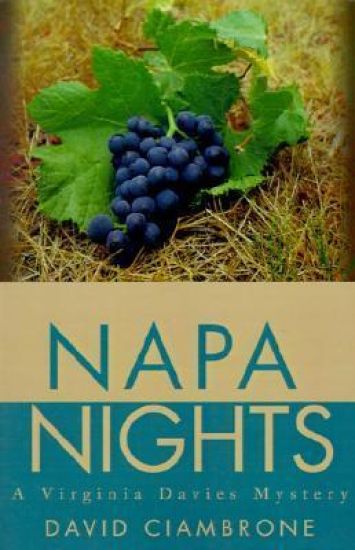
Virginia Davies, a curator at the Southbrook Museum, discovers a murder at the American Archaeological Convention only to become the next target in a fast-paced action thriller.Archaeologists and televangelists are about as compatible as oil and water. Virginia Davies, a curator of American History at the Southbrook Museum, attends the American Archaeological Convention in Napa, California. The arrival of The Reverend Hockings is controversial enough. His dropping dead makes it worse. The coroner and police rule the cause of death a stroke. Virginia discovers it is a murder. The killers now want her dead. Virginal follows a trail of blood and corruption from the lush vineyards of Napa to the cool fog-shrouded coast of Northern California to find the killers of a seemingly unsolvable case.



Enticed by a job offer in the subtropical paradise, Hilton Head Island, Dr. Peter Fredericks moves from Maryland with his young wife to become director of the island ER. Troubled by past events and burnout, he hopes for a fresh start in his job and his life. He soon realizes that his problems follow him and there are new battles to fight on Hilton Head. Unwittingly drawn into the whirlpool of controversy surrounding a famous cancer doctor, Pete is slow to realize how close he is to being pulled under. When the danger comes to his back yard, he and a private detective from New Orleans rally Pete's friends. This unlikely crew formulates an underhanded plan to explain the death of the hospital CEO. Their search for the elusive truth leads them into more jeopardy than any imagined. Dr. David Baehren's first novel blends medicine, corruption, and murder into a thrilling story using memorable characters. Some will be loved, others despised.

Museum curator Virginia Davies is on a vacation with her fiancé , Dr. Andy Clark, and his parents to Scotland to visit Andy's Great Uncle, The Baron of Finlaystoke. They are there to witness a centuries old ceremony involving a locked chest and a mysterious historic treasure. Murder, however, is not on the agenda. Snobbish relatives, pompous lawyers, poisonings, a madman on a motorcycle and someone out to kill her make for an interesting party and another misadventure for Virginia. With the police and killer trailing behind, Virginia hunts for the mysterious treasure and murderer at the Baron's ancient stone manor. Virginia figures out what the treasure is, but locating it proves daunting until she remembers the clue from the chest. Weaving her way through secret tunnels, and a using a cache of medieval weapons she discovers, Virginia turns the tables on the culprits in the cutting conclusion.



Enticed by a job offer in the subtropical paradise, Hilton Head Island, Dr. Peter Fredericks moves from Maryland with his young wife to become director of the island ER. Troubled by past events and burnout, he hopes for a fresh start in his job and his life. He soon realizes that his problems follow him and there are new battles to fight on Hilton Head. Unwittingly drawn into the whirlpool of controversy surrounding a famous cancer doctor, Pete is slow to realize how close he is to being pulled under. When the danger comes to his back yard, he and a private detective from New Orleans rally Pete's friends. This unlikely crew formulates an underhanded plan to explain the death of the hospital CEO. Their search for the elusive truth leads them into more jeopardy than any imagined. Dr. David Baehren's first novel blends medicine, corruption, and murder into a thrilling story using memorable characters. Some will be loved, others despised.

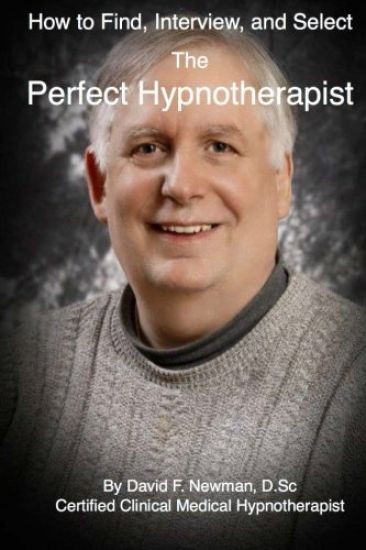
How To Find, Interview, and Select The Perfect Hypnotherapist: The Perfect Hypnotherapist
David F. Newman
Roseheart Institute
2013
nidottu
David F. Payne's commentary explores the interplay of history, theology, and key figures in the drama of the books of Samuel.The books of Samuel present a drama in which the principal players are the God of Israel, the prophet Samuel, and the first kings of Israel, Saul and David. In his masterful commentary David F. Payne shows that this Old Testament book combines history and theology as it narrates Samuel's virtues, Saul's defeats, and David's successes in relation to God's activities during an important phase in the life of Israel.The Daily Study Bible series seamlessly continues the legacy of William Barclay’s renowned New Testament series by delving into the texts of the Old Testament, weaving together ancient wisdom and modern insights for a transformative reading experience. Perfectly tailored for individual study, spirited group discussions, or classroom exploration, the Daily Study Bible series offers an indispensable resource for spiritual seekers and scholars alike. Within these volumes, readers will encounter a profound exploration of the Scriptures, uncovering the profound messages they held in the past and discerning their relevance in the present.
David F. Payne helps readers see the importance of this pivotal biblical book and guides them in applying its message to today's world. In his perceptive commentary, David F. Payne helps readers see the importance of this pivotal biblical book and guides them in applying its message to today's world. Deuteronomy consists of three major addresses to the people in which Moses repeats the laws already set forth. Why, then, is Deuteronomy necessary with its repeat of law and covenant? “The internal logic of Deuteronomy,” writes Payne, “provides one answer to this question: Israel’s forthcoming entry into the Promised Land would create a dramatic break with the past, as a wandering people become a settled nation, with an entirely different way of life. So Israel’s great leader, Moses, takes great pains to make sure that Israel will be faithful to her God-given law and covenant, and will remember her formative past.” Readers, then as now, are called upon to “renew their covenant with God; or… to examine their hearts and lives, and then to reassert their loyalty to God’s calling and service.” The Daily Study Bible series seamlessly continues the legacy of William Barclay’s renowned New Testament series by delving into the texts of the Old Testament, weaving together ancient wisdom and modern insights for a transformative reading experience. Perfectly tailored for individual study, spirited group discussions, or classroom exploration, the Daily Study Bible series offers an indispensable resource for spiritual seekers and scholars alike. Within these volumes, readers will encounter a profound exploration of the Scriptures, uncovering the profound messages they held in the past and discerning their relevance in the present.

What do we really want from schools? Only everything, in all its contradictions. Most of all, we want access and opportunity for all children—but all possible advantages for our own. So argues historian David Labaree in this provocative look at the way “this archetype of dysfunction works so well at what we want it to do even as it evades what we explicitly ask it to do.” Ever since the common school movement of the nineteenth century, mass schooling has been seen as an essential solution to great social problems. Yet as wave after wave of reform movements have shown, schools are extremely difficult to change. Labaree shows how the very organization of the locally controlled, administratively limited school system makes reform difficult. At the same time, he argues, the choices of educational consumers have always overwhelmed top-down efforts at school reform. Individual families seek to use schools for their own purposes—to pursue social opportunity, if they need it, and to preserve social advantage, if they have it. In principle, we want the best for all children. In practice, we want the best for our own.Provocative, unflinching, wry, Someone Has to Fail looks at the way that unintended consequences of consumer choices have created an extraordinarily resilient educational system, perpetually expanding, perpetually unequal, constantly being reformed, and never changing much.

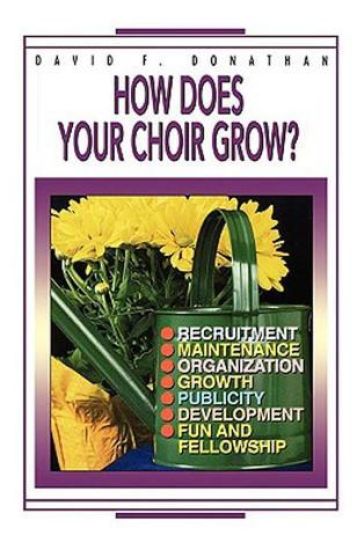
The sixth book in Abingdon's series of how-to books for church musicians desiring further training, How Does Your Choir Grow? treats the subject of recruiting and maintaining choir members, a key task in the role of church music leadership. The area of choir recruiting is a time-cosuming, often frustrating task, particularly in light of the many other aspects of the job. Designed to help directors develop a concrete plan for growth, this book deals with choir recruitment at all age levels. David Donathan has written an easy-to-read, easy-to-understand treatment of concern faced by all choir directors in their ongoing ministry. Any choir director, no matter the number of years of their leadership, will find this book to be a valuable resources. * Helps choir directors develop an organized program of recruitment * Contains practical, useful information on getting and keeping choir members * Written in an easy-to-read, easy to understand style * Written by someone who has conducted numerous workshops in this area
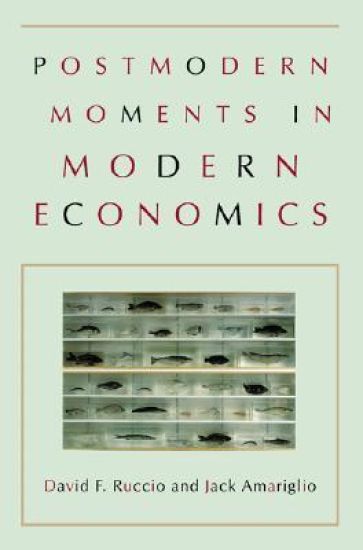
Postmodern Moments in Modern Economics
David F. Ruccio; Jack Amariglio
Princeton University Press
2003
sidottu
Of all the areas of contemporary thought, economics seems the most resistant to the destabilizing effects of postmodernism. Yet, David Ruccio and Jack Amariglio argue that one can detect, within the diverse schools of thought that comprise the discipline of economics, "moments" that defy the modernist ideas to which many economists and methodologists remain wedded. This is the first book to document the existence and to explore the implications of the postmodern moments in modern economics. Ruccio and Amariglio begin with a powerful argument for the general relevance of postmodernism to contemporary economic thought. They then conduct a series of case studies in six key areas of economics. From the idea of the "multiple self" and notions of uncertainty and information, through market anomalies and competing concepts of value, to analytical distinctions based on gender and academic standing, economics is revealed as defying the modernist frame of a singular science. The authors conclude by showing how economic theory would change if the postmodern elements were allowed to flourish. A work of daring analysis sure to be vigorously debated, Postmodern Moments in Modern Economics is both accessible and relevant to all readers concerned about the modernist straightjacket that has been imposed on the way economics is thought about and practiced in the world today.
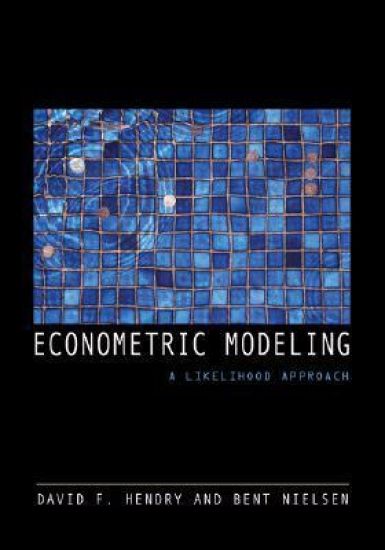
Econometric Modeling provides a new and stimulating introduction to econometrics, focusing on modeling. The key issue confronting empirical economics is to establish sustainable relationships that are both supported by data and interpretable from economic theory. The unified likelihood-based approach of this book gives students the required statistical foundations of estimation and inference, and leads to a thorough understanding of econometric techniques. David Hendry and Bent Nielsen introduce modeling for a range of situations, including binary data sets, multiple regression, and cointegrated systems. In each setting, a statistical model is constructed to explain the observed variation in the data, with estimation and inference based on the likelihood function. Substantive issues are always addressed, showing how both statistical and economic assumptions can be tested and empirical results interpreted. Important empirical problems such as structural breaks, forecasting, and model selection are covered, and Monte Carlo simulation is explained and applied. Econometric Modeling is a self-contained introduction for advanced undergraduate or graduate students. Throughout, data illustrate and motivate the approach, and are available for computer-based teaching. Technical issues from probability theory and statistical theory are introduced only as needed. Nevertheless, the approach is rigorous, emphasizing the coherent formulation, estimation, and evaluation of econometric models relevant for empirical research.