Some places are just not safe.The multiverse is a ramshackle creation at best and sometimes the fabric of reality is worn thin.The ancient Green Man Inn in England's rural Cheshire is such a place. Long before the Vikings came here there were others who imbued the land with energies some would call occult.Now the Old Powers are waking again and all hell is let loose.The Society for Unexplained Phenomena finds itself very much in demand as a horde of strange visitors seem compelled to tell their even stranger stories. Mad scientists;time travelling alien art collectors;a man with the Devil's luck;pilgrim ghosts;the real origins of Atlantis and Olympus;some lessons on raising hell;how Aborigines discovered America;why William Turner RA went mad on the Wirral;how creation really happened-maybe;Professor Lennox learns his purpose in time;the Wicca Woman saves the day;an immortal dog lover gets stoned;computing the second coming of Christ;who or what will inherit the Earth?;morality and the death of Alan Turing;a new universal religion and how to live forever;a real UFO experience;a true guardian of time-and the vulnerable;conversations with sentient lifts and why to never cross Senior Citizens.As usual we have several guest appearances including Reg...Death's taxi driver. These are 20 short stories of weird science and the supernatural in the tradition of Arthur C Clarke with a little Terry Pratchett thrown in.
Appearing together in English for the first time, two masterpieces that take on the jazz age, the Nuremburg trials, postwar commercialism, and the feat of writing a book, presented in one brilliant volume In 1985, Gregor von Rezzori published an English translation of a novel entitled The Death of My Brother Abel. The ambition of the work, certainly the most brilliant and extravagant of Rezzori's career, was immediately recognized, but; the transla- tion was deemed faulty. Now Abel appears in a revised translation along with the prequel that Rezzori promised in its last pages, Cain. Here Abel and Cain are finally united as Rezzori intended, giving readers a chance to appreciate the genius of one of the twentieth-century's great provocateurs. The Death of My Brother Abel zigzags across the middle of the twentieth century, from the 1918 to 1968, taking in the Jazz Age, the Anschluss, the Nuremberg trials, and postwar commercialism. At the center of the book is the unnamed narrator, holed up in a Paris hotel and writing a kind of novel, a collage of sardonic and passionate set pieces about love and work, sex and writing, families and nations, and human treachery and cruelty. In Cain, that narrator is revealed as Aristide Subics, or so at least it appears, since Subics' identity is as unstable as the fictional apparatus that contains him and the times he lived through. Questions abound: How can a man who lived in a time of lies know himself? And is it even possible to tell the story of an era of lies truthfully? Primarily set in the bombed-out, rubble- strewn Hamburg of the years just after the war, the dark confusion and deadly confrontation and of Cain and Abel, inseparable brothers, goes on.
This document uses the criteria defined by the UK central government and Wirral Council for assessing the suitability and desirability of releasing Green Belt land for housing development, to independently assess site 1984 at Poulton Lancelyn, Wirral. On many of the key criteria the site is found to be contrary to the stated policy objectives and unsuitable for housing development. This document is intended to inform local residents at Poulton Lancelyn, in particular, of the well founded basis for opposing such damaging development. It will be submitted to the planning process in the upcoming public consultation.
'A deeply thought-provoking book full of wisdom, insight and common sense, by two of our foremost strategists' James Holland, bestselling author of The War in the WestFOREWORD BY SIR NICK CARTER, FORMER UK CHIEF OF DEFENCE STAFF How have the character and technology of war changed in recent times?Why does battlefield victory often fail to result in a sustainable peace?What is the best way to prevent, fight and resolve future conflict?The world is becoming a more dangerous place. Since the fall of Kabul and Russia's invasion of Ukraine, the US-led liberal international order is giving way to a more chaotic and contested world system. Western credibility and deterrence are diminishing in the face of wars in Europe and the Middle East, tensions across the Taiwan Strait, and rising populism and terrorism around the world. Can peace, mutual respect and democracy survive, or are we destined to a permanent chaos in which authoritarians and populists thrive?Using decades of experience as policy advisors in conflicts in Iraq and across Africa, and on recent fieldwork in Israel and Taiwan, the authors analyse the nature of modern war, considering state-on-state and intra-state conflicts. They investigate how technology can be a leveller for small powers against larger aggressors and the role of leadership, diplomacy and economic assistance.Weighing up past lessons, present observations and predictions about the future, The Art of War and Peace explores how wars can be won on the battlefield and how that success can be translated into a stable and enduring peace.
'These things happened. They were glorious and they changed the world,' said Charlie Wilson, of America's role backing the anti-Soviet mujahideen. 'And then we fucked up the endgame.' With no support for Afghanistan after that war, the vacuum was filled by the Taliban and bin Laden. 'The Ledger' assesses the West's similarly failed approach to Afghanistan after 9/11--in military, diplomatic, political and developmental terms. Dr David Kilcullen and Dr Greg Mills are uniquely placed to reflect backwards and forwards on the Afghan conflict: they worked with the international mission both as advisers and within the Arg, and they have considerable experience of counterinsurgency and stabilisation operations elsewhere in the world. Here these two experts show that there is plenty of blame to go around when explaining the failure to bring peace to Afghanistan after 9/11. The signs of collapse were conveniently ignored, in favour of political narratives of progress and success. Yet for Afghans, the war and its geopolitical effects are not over because NATO is gone--Afghanistan remains globally connected through digital communications and networks. This vital book explains why and where failings in Afghanistan happened, warning against exceptionalist approaches to future peacebuilding missions around the globe.
Knowledge is a product of human social systems and, therefore, the foundations of the knowledge-based economy are social and cultural. Communication is central to knowledge creation and diffusion, and Public Policy in Knowledge-Based Economies highlights specific social and cultural conditions that can enhance the communication, use and creation of knowledge in a society. The purpose of this book is to illustrate how these social and cultural conditions are identified and analysed through new conceptual frameworks. Such frameworks are necessary to penetrate the surface features of knowledge-based economies - science and technology - and disclose what drives such economies. The authors employ a trans-disciplinary approach to explore the nature of knowledge systems or environments and examine questions regarding the measurement of knowledge. Lessons are drawn from a variety of perspectives, including the history of information policy, philosophy, economic history, sociology, psychology, information economics, complex systems theory, organisational knowledge theory and political science.This book will provide policymakers, analysts and academics with the fundamental tools needed for the development of policy in this little understood and emerging area.
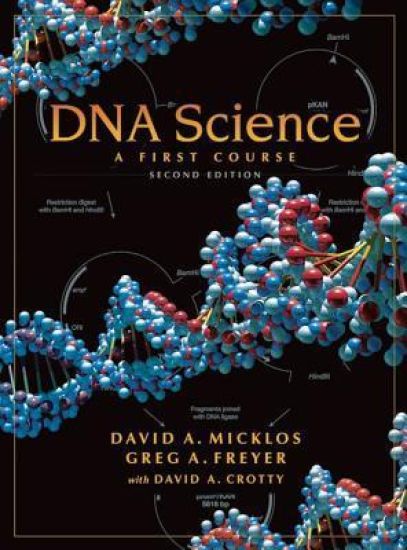
This is the second edition of a highly successful textbook (over 50,000 copies sold) in which a highly illustrated, narrative text is combined with easytouse thoroughly reliable laboratory protocols. It contains a fully uptodate collection of 12 rigorously tested and reliable lab experiments in molecular biology, developed at the internationally renowned Dolan DNA Learning Center of Cold Spring Harbor Laboratory, which culminate in the construction and cloning of a recombinant DNA molecule. Proven through more than 10 years of teaching at research and nonresearch colleges and universities, junior colleges, community colleges, and advanced biology programs in high school, this book has been successfully integrated into introductory biology, general biology, genetics, microbiology, cell biology, molecular genetics, and molecular biology courses. The first eight chapters have been completely revised, extensively rewritten, and updated. The new coverage extends to the completion of the draft sequence of the human genome and the enormous impact these and other sequence data are having on medicine, research, and our view of human evolution. All sections on the concepts and techniques of molecular biology have been updated to reflect the current state of laboratory research. The laboratory experiments cover basic techniques of gene isolation and analysis, honed by over 10 years of classroom use to be thoroughly reliable, even in the hands of teachers and students with no prior experience. Extensive prelab notes at the beginning of each experiment explain how to schedule and prepare, while flow charts and icons make the protocols easy to follow. As in the first edition of this book, the laboratory course is completely supported by qualityassured products from the Carolina Biological Supply Company, from bulk reagents, to useable reagent systems, to singleuse kits, thus satisfying a broad range of teaching applications.
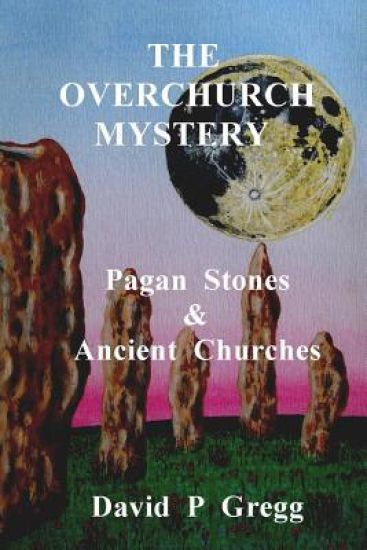
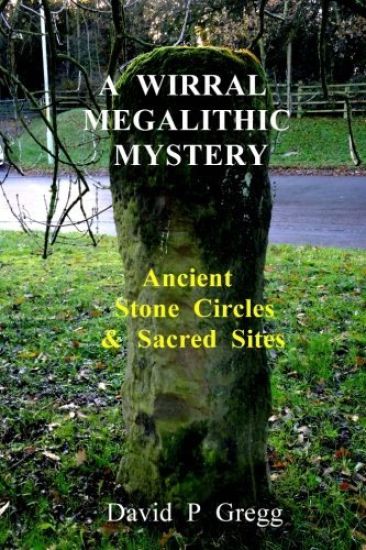
The Wirral peninsula in Cheshire, England is well known for its Roman and Viking past.Recently remains have been found from the Mesolithic period, nearly ten thousand years ago.In between there is little known except the stone carvings of Bidston Hill.Using new evidence Professor Gregg shows the probable presence of a huge stone circle surrounding the Saxon church site at Overchurch, Upton.It may be that Overchurch is a corruption of 'Ofer's Ring'.This circle is marked by several stones recorded on 19th century OS maps and more recent limited geophysical surveys.Even stranger there are obvious geometrical links between the circle and the Saxon-Norman church site which sits with its graveyard on a large raised platform.Early Christian churches were often sited on much earlier pagan sites and the professor demonstrates how the church position and scale are intimately defined by the platform geometry.Even more surprising the construction lines defining the platform design point to the rising and setting points of the Sun on the horizon at the solstices, equinoxes and pagan cross-quarter day festivals such as May Day and Halloween. The same markers survive in the positions of the great circle stones.The circle is 1176ft in diameter or 173 megalithic rods.This would make it 4X the size of Stonehenge and the largest stone circle in Britain.Over half the circle is now covered by roads and houses but half is still accessible.A full geophysical survey of the circle's path should be undertaken before all of this important listed site is lost.Gravestones from the abandoned Overchurch are still being taken for local garden rockeries. Remarkably Overchurch is not alone. A mile to the south Professor Gregg analyses a set of three giant circles at Arrowe Park: the largest is over 4000 ft across.As before the geometry is hexagon based and the 13 stones involved mark out several accurate lines to sun and moon events on the horizon.We also find the same cannon of proportions based on geometry familiar in English medieval cathedrals: the silver and golden sections and simple functions of pi and phi.The patterns are so clear that the author considered a Victorian hoax by an antiquarian land owner with knowledge of Euclid However this would be a century before the first pioneers of calendrical landscape astronomy laid down the necessary mathematics. On balance these Wirral anomalies are probably ancient and indeed Neolithic in date.The geometry in these circles is familiar from Stonehenge and Avebury but the Arrowe big circle is 4X the diameter of the Avebury ring...if real it would be the largest geometrical figure on the planet...so f
This is an ancient mystery story. The Wirral peninsula in the county of Cheshire, just north of ancient Chester, is well known for its Viking and Roman history but artifacts going back to the Mesolithic and Neolithic periods, such as ritual stone axes and flint arrow heads are also known.Yet no other signs of these early occupants have been recognised...until now.Professor Gregg following clues found by students of old maps, has discovered that at three sites these people designed and constructed great circles and arrays of standing stones using geometrical rules familiar from later European medieval cathedrals.At Saxon Overchurch the ancient chapel stands on a raised platform of earlier date.The platform in turn is surrounded by a great circle, 8 stones of which still survived in the 19th century. That circle is over 1100 ft across and hosted an inscribed hexagon.The professor shows that the probability of chance creating this geometry is minute.Here is the mystery: the position and dimensions of the Saxon and later Norman and medieval church are simply related to the design of the platform and to the great stone circle.There appears to be continuity of design from the Neolithic to the medieval period.The professor explains why this is not so unexpected. Even more remarkable a little to the south at Arrowe Park there once stood two larger concentric circles involving a dozen stones.The inner circle which also hosted a hexagon, was over 2000 ft across.As at Overchurch the proportions of the circles show familiar patterns involving prime roots, phi and pi.Again the professor shows that a chance explanation is out of the question. The geometry is so striking that he investigates the possibility of a 19th century hoax by a Druid obsessed antiquarian landowner.He shows that a hoax is very unlikely. These results are so surprising the skeptical reader may require further evidence.To provide it the professor analyses a third Wirral site. Near the ancient village of Bidston he describes a regular, organised array of 42 stones over 1250 ft long by 800 ft wide.The array has interesting and familiar geometry and as at Overchurch and Arrowe Park that geometry leads to alignments involving 3 or more stones which point to rising and setting points of the Sun and Moon on the local horizon. Major events such as midsummer sunrise are marked by several alignments.Also notable are markers for the pagan cross quarter day festivals of Imbolc, Beltain, Lughnasadh and Samhain which were adopted by the Christian church.It is this continuity of calendrical events from pagan through to Christian times which explains the strange design links at Overchurch spanning the millennia.Professor Gregg reminds us that Pope Gregory the Great himself instructed St. Augustine to adopt the temples of the heathens and rededicate them to Christ and the saints. Overchurch may be a classic example of the results of that policy in Britain. The three ancient sites described in this short book, if the analyses here are confirmed by further field work and research, may be as important as Stonehenge and Avebury. The Arrowe Park circles, for example, far exceed Avebury and all other known stone circles in diameter.The sites are currently unprotected and have already suffered from housing and road developments.It is time to take action to save what may remain.
Time Management is perhaps something every person should learn about in greatest detail. This is because time is the only commodity in your life that you cannot regain once it is lost. Time is what makes your life and if and when you realize that with every minute that passes you are closer to your death, you will never ever want to see a moment lost. Many people complain that they don't have enough time in the day to do everything they need to get done. Remember though that you have the same amount of time given to people like Albert Einstein, Nicholas Tesla, and JK Rowling. It's how you manage it that counts All projects, especially those which are more complex in nature, require prioritization but this is much easier said than done. The thing about large projects is that the workload can tend to overwhelm leading to greater procrastination instead of focus. When you start feeling that you have too much on your plate, you will lose interest and find it challenging to keep your work momentum. If you want to finally become more productive and squeeze the most out of your time on a daily basis, so you can spend more time doing the things you love the most, then make sure to get your copy today
"Sumo" is a fresh and funny introduction to the fascinating world of sumo, Japan's national sport. Author David Benjamin peels away the veneer of sumo as a cultural treasure and reveals it as an action-packed sport populated by superb athletes who employ numerous strategies and techniques to overcome their gargantuan opponents. "Sumo" provides an engaging, witty, behind-the-scenes look at sumo today. This volume is an updated and thoroughly revised version of Benjamin's popular "The Joy of Sumo", which was called the most entertaining and irreverent guide to sumo by James Fallows in "The Atlantic". Benjamin's enthusiasm and insight into the sport remain unmatched, and his frequently humorous descriptions of the personalities and pageantry of the sport will have you laughing out loud.
'Gold, or I'm a Dutchman!' Ernest Mansfield exclaimed as he pored over specimens of rock and sand that the local rector had brought back from Svalbard to the small English village of Goldhanger. His unshakable belief in the ultimate strike sent Mansfield into the Arctic as one of the pioneers of the 'Klondike period' in Svalbard and established his name amongst the unforgettable historical personalities of the time. His flamboyant style and lavish, self-promoting writings give us today nuggets of information about the man, and leave some tantalising questions about his true character. In this book we follow Ernest Mansfield's tracks through three continents: from his native England to New Zealand, Canada, Scotland, and Svalbard, and back to England - with forays into Australia and northern USA. He left behind him material traces in the form of half-attempted mine workings and quarries, huts and miners' living quarters, machinery, and abandoned tools. He also left behind books, poetry, and newspaper articles. Perhaps most of all, he left behind an aura of mystery about himself and a legend in the history of an Arctic archipelago.
In 1609 Galileo first used his telescope to kick start the science of observational astronomy - an event that proved to be of enormous historic, scientific, and cultural importance. Galileo and 400 Years of Telescopic Astronomy will feature the life and achievements of Galileo, around which has pivoted the story of four centuries of telescopic astronomy. The book will detail how astronomy has progressed through four centuries and contain glimpses of future space research and astronomy goals. Uniquely, interwoven with the text will be a range of practical projects for backyard astronomers in which to participate, projects that serve to illustrate many of Galileo's scientific discoveries.
Contributions to the History of the Development of the Human Race is an unchanged, high-quality reprint of the original edition of 1880. Hansebooks is editor of the literature on different topic areas such as research and science, travel and expeditions, cooking and nutrition, medicine, and other genres. As a publisher we focus on the preservation of historical literature. Many works of historical writers and scientists are available today as antiques only. Hansebooks newly publishes these books and contributes to the preservation of literature which has become rare and historical knowledge for the future.
Traces how the author, having been rescued and resuscitated by Himalayan villagers after a failed attempt to climb K2, worked to build schools that would particularly benefit the young girls who were forbidden an education by Taliban restrictions, an endeavor for which his life has been repeatedly threatened. Reader's Guide available. Reprint. 100,000 first printing.
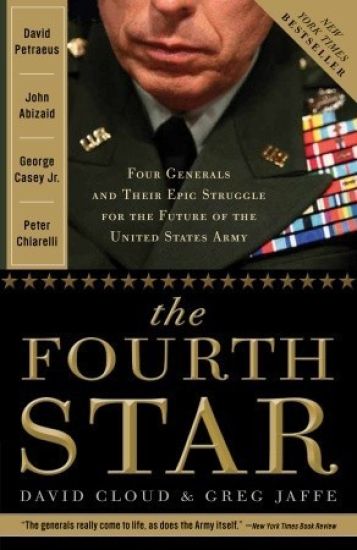
They were four exceptional soldiers, a new generation asked to save an army that had been hollowed out after Vietnam. They survived the military's brutal winnowing to reach its top echelon. They became the Army's most influential generals in the crucible of Iraq. Collectively, their lives tell the story of the Army over the last four decades and illuminate the path it must travel to protect the nation over the next century. Theirs is a story of successes and failures, of ambitions achieved and thwarted, of the responsibilities and perils of command. The careers of this elite quartet show how the most powerful military force in the world entered a major war unprepared, and how the Army, drawing on a reservoir of talent that few thought it possessed, saved itself from crushing defeat against a ruthless, low-tech foe. In The Fourth Star, you'll follow: -Gen. John Abizaid, one of the Army's most brilliant minds. Fluent in Arabic, he forged an unconventional path in the military to make himself an expert on the Middle East, but this unique background made him skeptical of the war he found himself leading. -Gen. George Casey Jr., the son of the highest-ranking general to be killed in the Vietnam War. Casey had grown up in the Army and won praise for his common touch and skill as a soldier. He was determined not to repeat the mistakes of Vietnam but would take much of the blame as Iraq collapsed around him. -Gen. Peter Chiarelli, an emotional, take-charge leader who, more than any other senior officer, felt the sting of the Army's failures in Iraq. He drove his soldiers, the chain of command, and the U.S. government to rethink the occupation plans-yet rarely achieved the results he sought. -Gen. David Petraeus, a driven soldier-scholar. Determined to reach the Army's summit almost since the day he entered West Point, he sometimes alienated peers with his ambition and competitiveness. When he finally got his chance in Iraq, he-more than anyone-changed the Army's conception of what was possible. Masterfully written and richly reported, The Fourth Star ranges far beyond today's battlefields, evoking the Army's tumultuous history since Vietnam through these four captivating lives and ultimately revealing a fascinating irony: In an institution that prizes obedience, the most effective warriors are often those who dare to question the prevailing orthodoxy and in doing so redefine the American way of war.
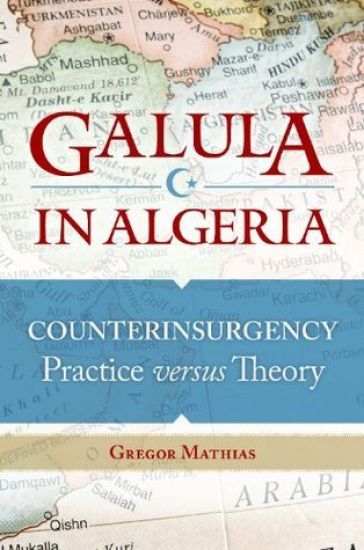
This groundbreaking investigation uncovers serious mismatches between David Galula's counterinsurgency practice in Algeria and his counterinsurgency theory—the foundation of current U.S. counterinsurgency doctrine in Iraq and Afghanistan.Given the centrality of David Galula's theory to U.S. Counterinsurgency (COIN) doctrine in Iraq and Afghanistan, it is striking that there has been no independent evaluation of Galula's recollection of his COIN operations in Algeria. Galula in Algeria: Counterinsurgency Practice versus Theory delivers just such an analysis, exploring the colonial French counter-insurrectionary theoretical milieu of which Galula's COIN theory was a part, the influence of Galula's theory on U.S. COIN doctrine, and the current views of Galula's theory in France and other NATO countries. French defense researcher Grégor Mathias compares each of the eight steps of Galula's theory set out in Counterinsurgency Warfare against his practice of them as described in his writings and now, for the first time, against the SAS archives and those of Galula's infantry company and battalion. The study shows that Galula systematically inflated his operational successes to match his theoretical scheme and that he left problems unresolved, causing his work to unravel quickly after he left his command. Mathias concludes that, however heuristically fruitful Galula's theory might prove for U.S. COIN doctrine, it must be interpreted and implemented under the caveat that it was not successfully field-tested by its author..