Kirjojen hintavertailu. Mukana 12 390 323 kirjaa ja 12 kauppaa.

Kirjahaku

Etsi kirjoja tekijän nimen, kirjan nimen tai ISBN:n perusteella.

1000 tulosta hakusanalla David Jansen

Kid Jensen

Kid Jensen

David Jensen

Mango Books
2021
sidottu
Few of a generation do not recall listening to Radio Luxembourg 'under the bed clothes'. At a time when the station was huge, David 'Kid' Jensen was one of its best-known names, broadcasting to millions across Europe, showcasing music at a key moment of change. Transferring eventually to the BBC, he was part of a golden era for Radio 1. When the station was reaching peak audiences he was on board, working alongside the radio names who have become part of folklore such as John Peel and Kenny Everett, and appearing in person in front of thousands at the Radio 1 Roadshows and on television to millions on Top Of The Pops. David Jensen's encounters with the big names are incomparable: Michael Jackson teaching the moonwalk on the shag pile carpet; playing football at midnight on an airport runway with the Rolling Stones; an exclusive party at the Holiday Inn with a young Freddie Mercury; going on holiday with Paul McCartney. As a knowledgeable and high-profile music-loving radio presenter, the list is never-ending and in this book he tells of his impressions of the characters: who was fun, and who was more difficult. Two years ago, David revealed he'd been battling incurable Parkinson's, saying he'd delayed disclosing his illness to all but family and close friends for fear that people might think less of me. This is the personal story - with all its ups and downs - of the Canadian who sold his motorbike and trumpet to venture to London to pursue his dream - and achieved it.
The Violent Gift

The Violent Gift

David Janzen

T. T.Clark Ltd
2014
nidottu
The Violent Gift traces the narrative of the exilic author of the Deuteronomistic History, a narrative that provides an explanation for the trauma that the Judean community in Babylon suffered. As the book follows this explanation through the History, however, it also reads Dtr through the lens of trauma theory. Massive psychic trauma is not something that can be captured within narrative explanation, and trauma intrudes into the narrative's explanation of the exiles' trauma. Trauma challenges the claims upon which the narrative's explanation is based, thus subverting this attempt to make sense of the exile. The author argues that we can trace a single, coherent narrative throughout the Deuteronomistic History that is an attempt to explain to its original readers why the exile occurred. The narrative offers two reasons for the exile, and these form the two main themes of Dtr's narrative: the people failed in their covenantal loyalty to God; and their leadership also failed to enforce this loyalty. These themes can be traced consistently through all of the component books of the History.
The Violent Gift

The Violent Gift

David Janzen

T. T.Clark Ltd
2012
sidottu
The Violent Gift traces the narrative of the exilic author of the Deuteronomistic History, a narrative that provides an explanation for the trauma that the Judean community in Babylon suffered. As the book follows this explanation through the History, however, it also reads Dtr through the lens of trauma theory. Massive psychic trauma is not something that can be captured within narrative explanation, and trauma intrudes into the narrative's explanation of the exiles' trauma. Trauma challenges the claims upon which the narrative's explanation is based, thus subverting this attempt to make sense of the exile. The author argues that we can trace a single, coherent narrative throughout the Deuteronomistic History that is an attempt to explain to its original readers why the exile occurred. The narrative offers two reasons for the exile, and these form the two main themes of Dtr's narrative: the people failed in their covenantal loyalty to God; and their leadership also failed to enforce this loyalty. These themes can be traced consistently through all of the component books of the History.
Chronicles and the Politics of Davidic Restoration
David Janzen argues that the Book of Chronicles is a document with a political message as well as a theological one and moreover, that the book’s politics explain its theology. The author of Chronicles was part of a 4th century B.C.E. group within the post-exilic Judean community that hoped to see the Davidides restored to power, and he or she composed this work to promote a restoration of this house to the position of a client monarchy within the Persian Empire. Once this is understood as the political motivation for the work’s composition, the reasons behind the Chronicler's particular alterations to source material and emphasis of certain issues becomes clear. The doctrine of immediate retribution, the role of ‘all Israel’ at important junctures in Judah’s past, the promotion of Levitical status and authority, the virtual joint reign of David and Solomon, and the decision to begin the narrative with Saul’s death can all be explained as ways in which the Chronicler tries to assure the 4th century assembly that a change in local government to Davidic client rule would benefit them. It is not necessary to argue that Chronicles is either pro-Davidic or pro-Levitical; it is both, and the attention Chronicles pays to the Levites is done in the service of winning over a group within the temple personnel to the pro-Davidic cause, just as many of its other features were designed to appeal to other interest groups within the assembly.
Chronicles and the Politics of Davidic Restoration
David Janzen argues that the Book of Chronicles is a document with a political message as well as a theological one and moreover, that the book’s politics explain its theology. The author of Chronicles was part of a 4th century B.C.E. group within the post-exilic Judean community that hoped to see the Davidides restored to power, and he or she composed this work to promote a restoration of this house to the position of a client monarchy within the Persian Empire. Once this is understood as the political motivation for the work’s composition, the reasons behind the Chronicler's particular alterations to source material and emphasis of certain issues becomes clear. The doctrine of immediate retribution, the role of ‘all Israel’ at important junctures in Judah’s past, the promotion of Levitical status and authority, the virtual joint reign of David and Solomon, and the decision to begin the narrative with Saul’s death can all be explained as ways in which the Chronicler tries to assure the 4th century assembly that a change in local government to Davidic client rule would benefit them. It is not necessary to argue that Chronicles is either pro-Davidic or pro-Levitical; it is both, and the attention Chronicles pays to the Levites is done in the service of winning over a group within the temple personnel to the pro-Davidic cause, just as many of its other features were designed to appeal to other interest groups within the assembly.
The End of History and the Last King

The End of History and the Last King

David Janzen

BLOOMSBURY PUBLISHING PLC
2022
nidottu
This book examines community identity in the post-exilic temple community in Ezra-Nehemiah, and explores the possible influences that the Achaemenids, the ruling Persian dynasty, might have had on its construction. In the book, David Janzen reads Ezra-Nehemiah in dialogue with the Achaemenids’ Old Persian inscriptions, as well as with other media the dynasty used, such as reliefs, seals, coins, architecture, and imperial parks. In addition, he discusses the cultural and religious background of Achaemenid thought, especially its intersections with Zoroastrian beliefs. Ezra-Nehemiah, Janzen argues, accepts Achaemenid claims for the necessity and beneficence of their hegemony. The result is that Ezra-Nehemiah, like the imperial ideology it mimics, claims that divine and royal wills are entirely aligned. Ezra-Nehemiah reflects the Achaemenid assertion that the peoples they have colonized are incapable of living in peace and happiness without the Persian rule that God established to benefit humanity, and that the dynasty rewards the peoples who do what they desire, since that reflects divine desire. The final chapter of the book argues that Ezra-Nehemiah was produced by an elite group within the Persian-period temple assembly, and shows that Ezra-Nehemiah’s pro-Achaemenid worldview was not widely accepted within that community.
The End of History and the Last King

The End of History and the Last King

David Janzen

T. T.Clark Ltd
2021
sidottu
This book examines community identity in the post-exilic temple community in Ezra-Nehemiah, and explores the possible influences that the Achaemenids, the ruling Persian dynasty, might have had on its construction. In the book, David Janzen reads Ezra-Nehemiah in dialogue with the Achaemenids’ Old Persian inscriptions, as well as with other media the dynasty used, such as reliefs, seals, coins, architecture, and imperial parks. In addition, he discusses the cultural and religious background of Achaemenid thought, especially its intersections with Zoroastrian beliefs. Ezra-Nehemiah, Janzen argues, accepts Achaemenid claims for the necessity and beneficence of their hegemony. The result is that Ezra-Nehemiah, like the imperial ideology it mimics, claims that divine and royal wills are entirely aligned. Ezra-Nehemiah reflects the Achaemenid assertion that the peoples they have colonized are incapable of living in peace and happiness without the Persian rule that God established to benefit humanity, and that the dynasty rewards the peoples who do what they desire, since that reflects divine desire. The final chapter of the book argues that Ezra-Nehemiah was produced by an elite group within the Persian-period temple assembly, and shows that Ezra-Nehemiah’s pro-Achaemenid worldview was not widely accepted within that community.
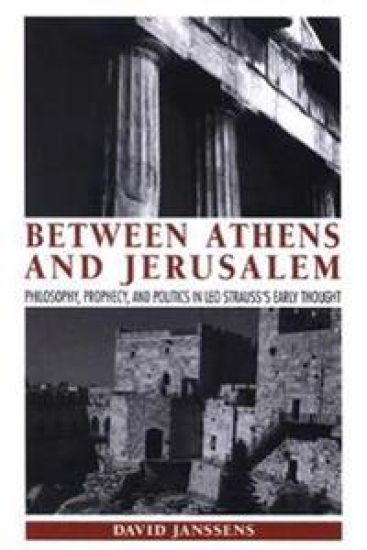
Between Athens and Jerusalem

Between Athens and Jerusalem

David Janssens

State University of New York Press
2009
pokkari
Examines the early works of German-Jewish philosopher Leo Strauss (1899-1973). Praised as a major political thinker of the twentieth century and vilified as the putative godfather of contemporary neoconservatism, Leo Strauss (1899–1973) has been the object of heated controversy both in the United States and abroad. This book offers a more balanced appraisal by focusing on Strauss's early writings. By means of a close and comprehensive study of these texts, David Janssens reconstructs the genesis of Strauss's thought from its earliest beginnings until his emigration to the United States in 1937. He discusses the first stages in Strauss's grappling with the "theological-political problem," from his doctoral dissertation on Friedrich Heinrich Jacobi to his contributions to Zionist periodicals, from his groundbreaking study of Spinoza's critique of religion to his research on Moses Mendelssohn, and from his rediscovery of medieval Jewish and Islamic philosophy to his research on Hobbes. Throughout, Janssens traces Strauss's rediscovery of the Socratic way of life as a viable alternative to both modern philosophy and revealed religion.
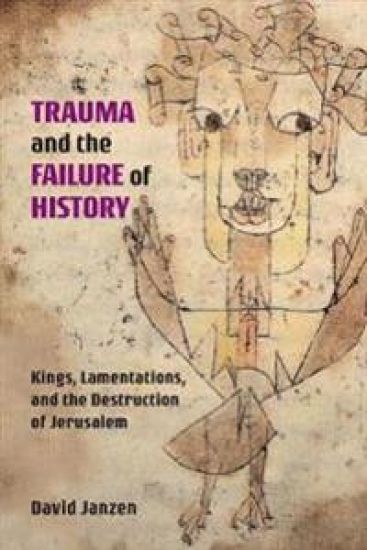
Trauma and the Failure of History

Trauma and the Failure of History

David Janzen

Society of Biblical Literature
2019
sidottu
David Janzen blends history theory and trauma theory to apply them to the books of Kings and Lamentations. Janzen argues that Kings tells a story that explains the horrific events of the Babylonian destruction of Jerusalem, but Lamentations reflects the perspective of trauma survivors and rejects any explanatory narrative refusing to let the trauma be part of a past. Interpreters of the Bible and historians of ancient Israel should take this trauma into account, even though it can never be a part of the biblical histories they write.
Beginning Azure IoT Edge Computing
Use a step-by-step process to create and deploy your first Azure IoT Edge solution.Modern day developers and architects in today’s cloud-focused world must understand when it makes sense to leverage the cloud. Computing on the edge is a new paradigm for most people. The Azure IoT Edge platform uses many existing technologies that may be familiar to developers, but understanding how to leverage those technologies in an edge computing scenario can be challenging. Beginning Azure IoT Edge Computing demystifies computing on the edge and explains, through concrete examples and exercises, how and when to leverage the power of intelligent edge computing. It introduces the possibilities of intelligent edge computing using the Azure IoT Edge platform, and guides you through hands-on exercises to make edge computing approachable, understandable, and highly useful.Through user-friendlydiscussion you will not only understand how to build edge solutions, but also when to build them. By explaining some common solution patterns, the decision on when to use the cloud and when to avoid the cloud will become much clearer. What You'll LearnCreate and deploy Azure IoT Edge solutionsRecognize when to leverage the intelligent edge pattern and when to avoid itLeverage the available developer tooling to develop and debug IoT Edge solutionsKnow which off-the-shelf edge computing modules are availableBecome familiar with some of the lesser-known device protocols used in conjunction with edge computingUnderstand how to securely deploy and bootstrap an IoT Edge deviceExplore related topics such as containers and secure device provisioningWho This Book Is ForDevelopers or architects who want to understand edge computing and when and where to use it. Readers should be familiar with C# or Python and have a high-level understanding of the Azure IoT platform.
The Liberation of Method

The Liberation of Method

David Janzen

Fortress Press,U.S.
2021
sidottu
The field of biblical studies has championed the historical-critical method as the only way to guarantee objective interpretation. But in recent decades, women, people of color, scholars from the Two-Thirds World, and members of the the LGBTQIA+ community have pursued hermeneutical approaches that provide interpretations useful for marginalized communities who see the Bible as a resource in their struggles against oppression. Such liberative strategies remain at the margins of the field. The Liberation of Method argues that this marginality must end, and that liberative methods should become the central methods of biblical studies. The first part of the book draws upon the hermeneutics of philosophical pragmatism to argue that, because readers are responsible for the interpretation, there is no necessary connection between the meanings they produce and the ones ancient authors may have intended. As a result, the historical-critical method, which prioritizes the study of the ancient contexts of biblical writings, becomes an optional rather than a necessary aspect of interpretation. The second part of The Liberation of Method argues that if we truly hope to create an ethical academic field, more privileged scholars and students must see their minoritized colleagues as the leaders in the field, as models of the ethical liberative standards of interpretation.
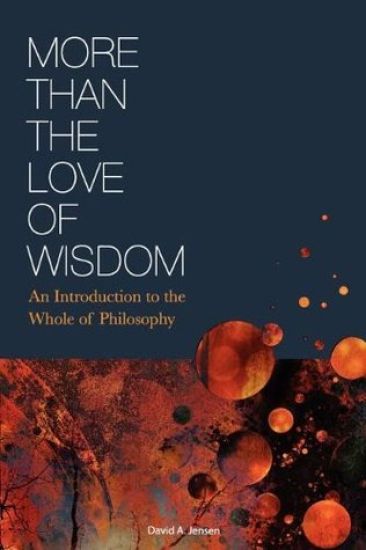
More Than the Love of Wisdom

More Than the Love of Wisdom

David Jensen

Cognella Academic Publishing
2013
sidottu
"The textbook More Than the Love of Wisdom: An Introduction to the Whole of Philosophy responds to the oversimplified and trite description of philosophy that new students to the discipline typically produce or encounter. In contrast to many standard textbooks and courses, which present philosophy as a series of sub-topics such as ethics or metaphysics, this book familiarizes students with philosophy as a whole. It addresses what unifies the extreme diversity of philosophical questions and topics into one coherent discipline. The book begins by introducing, and rejecting, many popular but ill-informed responses to the question of what philosophy actually is. It disabuses the reader of common misunderstanding, and prepares the way for moving toward a clear and well-informed understanding of the nature of philosophy. Subsequent material addresses the various parts of philosophy, and its history, paving the way for readers to explore philosophy as an inquiry into the most general and fundamental concepts, principles, and features of the world. Concise and conversational, More Than the Love of Wisdom reasons with readers to reach a conclusion, making the book itself an exercise in doing philosophy. More Than the Love of Wisdom is written for undergraduate Introduction to Philosophy courses. It can also be used as a supplemental text for lower-division courses in ethics and the philosophy of the mind. David A. Jensen is associate professor of philosophy at Brigham Young University, where he teaches courses in Kant, ethics, and the philosophy of language. He earned his doctoral degree in philosophy at the University of California, Los Angeles. Dr. Jensen has been honored as a Mellon Fellow in Humanistic Studies, and an Ezra Taft Benson Scholar. His professional writing has appeared in peer-reviewed journals, and he is the author of the book Practical Reasons and Rationality."
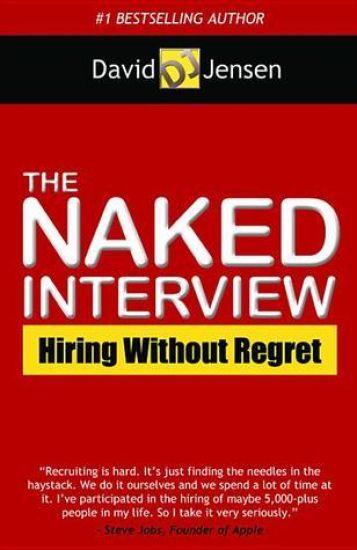
The Naked Interview

The Naked Interview

David Jensen

Morgan James Publishing llc
2012
pokkari
David Jensen is an author, speaker, consultant and Founder of The Hiring Academy. He addresses what has proven to be the most critical success or failure point of any business of any size: hiring the right personnel.Jensen’s purpose is to help business owners find and hire the right people so that they can pull back from their business and yet continue expanding.Surveyed business owners, executives, and Human Resource personnel unanimously HATED the process of hiring! Jensen aims to help fill that important void with simple guidelines. He is going to give you real stories, actual examples, basic rules, sample questions, and invaluable solutions.
The Naked Interview

The Naked Interview

David Jensen

Morgan James Publishing llc
2018
sidottu
David Jensen is an author, speaker, consultant and Founder of The Hiring Academy. He addresses what has proven to be the most critical success or failure point of any business of any size: hiring the right personnel.Jensen’s purpose is to help business owners find and hire the right people so that they can pull back from their business and yet continue expanding.Surveyed business owners, executives, and Human Resource personnel unanimously HATED the process of hiring! Jensen aims to help fill that important void with simple guidelines. He is going to give you real stories, actual examples, basic rules, sample questions, and invaluable solutions.
More Than the Love of Wisdom

More Than the Love of Wisdom

David Jensen

Cognella, Inc
2013
nidottu
The textbook More Than the Love of Wisdom: An Introduction to the Whole of Philosophy responds to the oversimplified and trite description of philosophy that new students to the discipline typically produce or encounter.In contrast to many standard textbooks and courses, which present philosophy as a series of sub-topics such as ethics or metaphysics, this book familiarizes students with philosophy as a whole. It addresses what unifies the extreme diversity of philosophical questions and topics into one coherent discipline.The book begins by introducing, and rejecting, many popular but ill-informed responses to the question of what philosophy actually is. It disabuses the reader of common misunderstanding, and prepares the way for moving toward a clear and well-informed understanding of the nature of philosophy.Subsequent material addresses the various parts of philosophy, and its history, paving the way for readers to explore philosophy as an inquiry into the most general and fundamental concepts, principles, and features of the world.Concise and conversational, More Than the Love of Wisdom reasons with readers to reach a conclusion, making the book itself an exercise in doing philosophy.More Than the Love of Wisdom is written for undergraduate Introduction to Philosophy courses. It can also be used as a supplemental text for lower-division courses in ethics and the philosophy of the mind.
Trauma and the Failure of History
David Janzen blends history theory and trauma theory to apply them to the books of Kings and Lamentations. Janzen argues that Kings tells a story that explains the horrific events of the Babylonian destruction of Jerusalem, but Lamentations reflects the perspective of trauma survivors and rejects any explanatory narrative refusing to let the trauma be part of a past. Interpreters of the Bible and historians of ancient Israel should take this trauma into account, even though it can never be a part of the biblical histories they write.