Kirjojen hintavertailu. Mukana 11 342 296 kirjaa ja 12 kauppaa.

Kirjahaku

Etsi kirjoja tekijän nimen, kirjan nimen tai ISBN:n perusteella.

1000 tulosta hakusanalla David L. Block; Kenneth C. Freeman

People Trees

People Trees

David L. Haberman

Oxford University Press Inc
2013
nidottu
This is a book about religious conceptions of trees within the cultural world of tree worship at the tree shrines of northern India. Sacred trees have been worshipped for millennia in India and today tree worship continues there among all segments of society. In the past, tree worship was regarded by many Western anthropologists and scholars of religion as a prime example of childish animism or decadent ''popular religion.'' More recently this aspect of world religious cultures is almost completely ignored in the theoretical concerns of the day. David Haberman hopes to demonstrate that by seriously investigating the world of Indian tree worship, we can learn much about not only this prominent feature of the landscape of South Asian religion, but also something about the cultural construction of nature as well as religion overall. The title People Trees relates to the content of this book in at least six ways. First, although other sacred trees are examined, the pipal-arguably the most sacred tree in India-receives the greatest attention in this study. The Hindi word ''pipal'' is pronounced similarly to the English word ''people.''Second, the ''personhood'' of trees is a commonly accepted notion in India. Haberman was often told: ''This tree is a person just like you and me.'' Third, this is not a study of isolated trees in some remote wilderness area, but rather a study of trees in densely populated urban environments. This is a study of trees who live with people and people who live with trees. Fourth, the trees examined in this book have been planted and nurtured by people for many centuries. They seem to have benefited from human cultivation and flourished in environments managed by humans. Fifth, the book involves an examination of the human experience of trees, of the relationship between people and trees. Haberman is interested in people's sense of trees. And finally, the trees located in the neighborhood tree shrines of northern India are not controlled by a professional or elite class of priests. Common people have direct access to them and are free to worship them in their own way. They are part of the people's religion. Haberman hopes that this book will help readers expand their sense of the possible relationships that exist between humans and trees. By broadening our understanding of this relationship, he says, we may begin to think differently of the value of trees and the impact of deforestation and other human threats to trees.
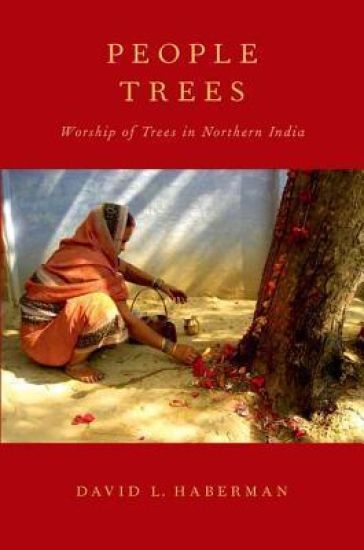
People Trees

People Trees

David L. Haberman

Oxford University Press Inc
2013
sidottu
This is a book about religious conceptions of trees within the cultural world of tree worship at the tree shrines of northern India. Sacred trees have been worshipped for millennia in India and today tree worship continues there among all segments of society. In the past, tree worship was regarded by many Western anthropologists and scholars of religion as a prime example of childish animism or decadent ''popular religion.'' More recently this aspect of world religious cultures is almost completely ignored in the theoretical concerns of the day. David Haberman hopes to demonstrate that by seriously investigating the world of Indian tree worship, we can learn much about not only this prominent feature of the landscape of South Asian religion, but also something about the cultural construction of nature as well as religion overall. The title People Trees relates to the content of this book in at least six ways. First, although other sacred trees are examined, the pipal-arguably the most sacred tree in India-receives the greatest attention in this study. The Hindi word ''pipal'' is pronounced similarly to the English word ''people.''Second, the ''personhood'' of trees is a commonly accepted notion in India. Haberman was often told: ''This tree is a person just like you and me.'' Third, this is not a study of isolated trees in some remote wilderness area, but rather a study of trees in densely populated urban environments. This is a study of trees who live with people and people who live with trees. Fourth, the trees examined in this book have been planted and nurtured by people for many centuries. They seem to have benefited from human cultivation and flourished in environments managed by humans. Fifth, the book involves an examination of the human experience of trees, of the relationship between people and trees. Haberman is interested in people's sense of trees. And finally, the trees located in the neighborhood tree shrines of northern India are not controlled by a professional or elite class of priests. Common people have direct access to them and are free to worship them in their own way. They are part of the people's religion. Haberman hopes that this book will help readers expand their sense of the possible relationships that exist between humans and trees. By broadening our understanding of this relationship, he says, we may begin to think differently of the value of trees and the impact of deforestation and other human threats to trees.
Improbable Scholars

Improbable Scholars

David L. Kirp

Oxford University Press Inc
2013
sidottu
The conventional wisdom, voiced by everyone from Bill Gates to Education Secretary Arne Duncan, is that public schools are so terrible that simply reforming them won't do the trick. Instead, they must be "transformed," blown up and then rebuilt, if they're going to offer students a good education. We relish stories about electrifying teachers like Jaime Escalante, who made math whizzes out of no-hoper teenagers in East LA, or inner city charter schools like the KIPP academies. But success in the public schools of an entire city-a poor, crowded city, with more than its share of immigrant Latino youngsters, the kind of kids who elsewhere will likely drop out or flunk out? That sounds as elusive and improbable as the Loch Ness monster. But no school district can be all charismatic leaders and super-teachers. It can't start from scratch, and it can't fire all its teachers and principals when students do poorly. Great charter schools can only serve a tiny minority of students. Whether we like it or not, most of our youngsters will continue to be educated it is in mainstream public schools. Improbable Scholars shows that there's a sensible way to rebuild public education and close the achievement gap for all students. Miracles aren't required-instead, we need to make smart use of what we already know can work. This is precisely what's happening in a most unlikely place: Union City, New Jersey. What makes Union City so headline-worthy is its ordinariness, its lack of flash and pizzazz. The school district has ignored trendy, blow-up-and-rebuild reforms in favor of old school ideas like top-drawer early education, a word-soaked curriculum and hands-on help for teachers. When good new strategies have emerged, like using sophisticated data-crunching to generate pinpoint assessments of the help that particular students need, they have been folded into the mix. A generation ago, Union City's schools were so bad that state officials threatened to seize control of them. But the situation has entirely turned around. Here's the reason to stand up and take notice-from third grade through high school, Union City students' scores on the high-stakes state tests approximate the statewide average. In other words, these inner city kids are achieving just as much as their suburban cousins in reading, writing and math. This is no one-year wonder-year after year, from 1990 onward, the students in Union City have steadily improved. In 2011 every senior passed the state's exit exam and received a diploma, and nearly 60 percent of those graduates enrolled in college. The best students are winning national science awards, Gates Millennium Scholarships, and full rides at Ivy League universities. These schools are not just good places for poor kids. They are good places for kids, period. They pass the Golden Rule Test-- you'd be pleased if children you love were educated here. Improbable Scholars will change your mind about the possibility of reviving public education.
Ecology of Communication

Ecology of Communication

David L. Altheide

AldineTransaction
1995
nidottu
Altheide's new book advances the argument set in motion some years ago with 'Media Logic' and continued in 'Media Worlds in the Postjournalism Era:' that in our age, information technology and the communication environments it posits have affected the private and the social spheres of all our power relationships, redefining the ground rules for social life and concepts such as freedom and justice. Articulated through an interactionist and non-deterministic focus, 'An Ecology of Communication' offers a distinctive perspective for understanding the impact of information technology, communication formats, and social activities in the new electronic environment. As more routines, rituals, and activities incorporate such technologies within their organizational cultures, new sorts of activities are added and previous ones are changed according to an underlying logic explored in these pages. Various chapters illustrate some of these altered and redefined organizational cultures: bureaucracy, the mass media, computer formats, war, surveillance, and testing, among others.
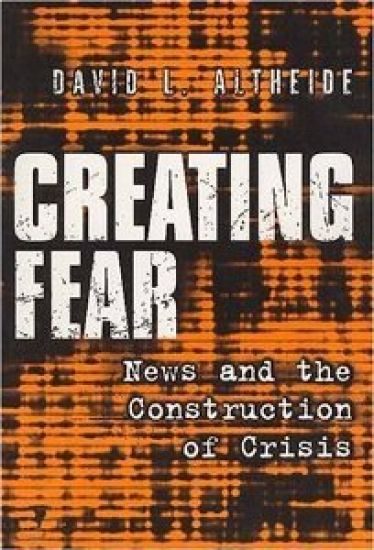
Creating Fear

Creating Fear

David L. Altheide

AldineTransaction
2002
nidottu
The creative use of fear by news media and social control organizations has produced a "discurse of fear" - the awareness and expection that danger and risk are lurking everywhere. Case studies illustrates how certain organizations and social institutions benefit from the explotation of such fear construction. One social impact is a manipulated public empathy: We now have more "victims" than at any time in our prior history. Another, more troubling resutl is the role we have ceded to law enforcement and punishment: we turn ever more readily to the state and formal control to protect us from what we fear. This book attempts through the marshalling of significant data to interrupt that vicious cycle of fear discourse.
Poverty, Family, and Kinship in a Heartland Community
With a few notable exceptions, sociological studies of poor, native-born, non-ethnic whites in rural areas are rare. This book corrects this oversight with an ethnographic study of a small, poor, white, heartland community that the author calls "Potter Addition." The community consists of some 100 families and is located on the rural-urban fringe of a medium-sized Midwestern city.Poverty, Family, and Kinship in a Heartland Community is the story of three generations of rural families who, one after another, have been driven from the land during the last seventy-five years. Harvey argues against the grain of a number of recent studies that "Potter Addition's" poverty, like much modern poverty, has its origins in the productive contradictions of late capitalism. It is not the result of some moral or motivational defect of the poor themselves. At the same time he shows, even as they struggle to survive their uncertain niche and learn how to adapt, these families play an active role in reproducing the everyday material and cultural details of their poverty from the substance of their daily experiences.Working from this premise, Harvey provides a detailed ethnographic description of "Potter Addition" and its people. The volume focuses especially on the family and kinship structures that have developed in "Potter Addition" and shows how they fit into the overall response of the poor to their uncertain and unpredictable class situation. This is a unique effort by a knowledgeable researcher who, in this work, boldly steps outside conventional realms of discourse in sociology and geography.
Making Fathers Pay

Making Fathers Pay

David L. Chambers

University of Chicago Press
1979
sidottu
A couple with children divorce. A court orders the father to pay child support, but the father fails to pay. This pattern repeats itself thousands of times every year in nearly every American state. Making Fathers Pay is David L. Chambers's study of the child-support collection process in Michigan, the state most successful in inducing fathers to pay. He begins by reporting the perilous financial problems of divorced mothers with children, problems faced even by mothers who work full time and receive child support. The study then examines the characteristics of fathers who do and do not pay support and the characteristics of collections systems that work. Chambers's findings are based largely on records of fathers' support payments in twenty-eight Michigan counties, some of which jail hundreds of men for nonpayment every year. Chambers finds that in places well organized to collect support, jailing nonpayers seems to produce higher payments from men jailed and from men not jailed, but only at a high social cost. He also raises grave doubts about the fairness of the judicial process that leads to jail. While Chambers's total sample includes 12,000 men, he interweaves through his text moving interviews with members of one family caught in the painful predicaments that men, women, and children face upon separation. To increase support for children at lower social costs, Chambers advocates a national system of compulsory deductions from the wages of non-custodial parents who earn more than enough for their own subsistence.
Science as a Process

Science as a Process

David L. Hull

University of Chicago Press
1990
nidottu
"Legend is overdue for replacement, and an adequate replacement must attend to the process of science as carefully as Hull has done. I share his vision of a serious account of the social and intellectual dynamics of science that will avoid both the rosy blur of Legend and the facile charms of relativism. . . . Because of [Hull's] deep concern with the ways in which research is actually done, Science as a Process begins an important project in the study of science. It is one of a distinguished series of books, which Hull himself edits."—Philip Kitcher, Nature "In Science as a Process, [David Hull] argues that the tension between cooperation and competition is exactly what makes science so successful. . . . Hull takes an unusual approach to his subject. He applies the rules of evolution in nature to the evolution of science, arguing that the same kinds of forces responsible for shaping the rise and demise of species also act on the development of scientific ideas."—Natalie Angier, New York Times Book Review"By far the most professional and thorough case in favour of an evolutionary philosophy of science ever to have been made. It contains excellent short histories of evolutionary biology and of systematics (the science of classifying living things); an important and original account of modern systematic controversy; a counter-attack against the philosophical critics of evolutionary philosophy; social-psychological evidence, collected by Hull himself, to show that science does have the character demanded by his philosophy; and a philosophical analysis of evolution which is general enough to apply to both biological and historical change."—Mark Ridley, Times Literary Supplement"Hull is primarily interested in how social interactions within the scientific community can help or hinder the process by which new theories and techniques get accepted. . . . The claim that science is a process for selecting out the best new ideas is not a new one, but Hull tells us exactly how scientists go about it, and he is prepared to accept that at least to some extent, the social activities of the scientists promoting a new idea can affect its chances of being accepted."—Peter J. Bowler, Archives of Natural History "I have been doing philosophy of science now for twenty-five years, and whilst I would never have claimed that I knew everything, I felt that I had a really good handle on the nature of science, Again and again, Hull was able to show me just how incomplete my understanding was. . . . Moreover, [Science as a Process] is one of the most compulsively readable books that I have ever encountered."—Michael Ruse, Biology and Philosophy
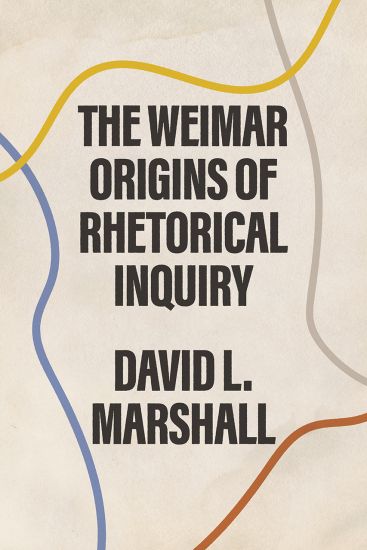
The Weimar Origins of Rhetorical Inquiry

The Weimar Origins of Rhetorical Inquiry

David L. Marshall

University of Chicago Press
2020
sidottu
The Weimar origins of political theory is a widespread and powerful narrative, but this singular focus leaves out another intellectual history that historian David L. Marshall works to reveal: the Weimar origins of rhetorical inquiry. Marshall focuses his attention on Martin Heidegger, Hannah Arendt, Walter Benjamin, and Aby Warburg, revealing how these influential thinkers inflected and transformed problems originally set out by Max Weber, Carl Schmitt, Theodor Adorno, Hans Baron, and Leo Strauss. He contends that we miss major opportunities if we do not attend to the rhetorical aspects of their thought, and his aim, in the end, is to lay out an intellectual history that can become a zone of theoretical experimentation in para-democratic times. Redescribing the Weimar origins of political theory in terms of rhetorical inquiry, Marshall provides fresh readings of pivotal thinkers and argues that the vision of rhetorical inquiry that they open up allows for new ways of imagining political communities today.
Trapped by Success

Trapped by Success

David L. Anderson

Columbia University Press
1993
pokkari
The Eisenhower Administration developed and implemented policies in Southeast Asia that contributed directly to the massive American military involvement in Vietnam in the decade after Dwight Eisenhower left office. Working with the most recently declassified government records on U.S. policy in Vietnam in the 1950s, David L. Anderson asserts that the Eisenhower Administration was less successful in Vietnam than the revisionists suggests.Trapped By Success is the first systematic study of the entire eight years of the Eisenhower Administration's efforts to build a nation in South Vietnam in order to protect U.S. global interests. Proclaiming success, where, in fact, failure abounded, the Eisenhower Administration trapped itself and its successors into a commitment to the survival of its own frail creation in Indochina. The book is a chronicle of clandestine plots, bureaucratic fights, cultural and strategic mistakes, and missed opportunities. Anderson examines the politicla environments in Saigon and Washington that contributed to the deepening of American involvement. Contrary to other studies that highlight Eisenhower's restraint in preventing French collapse in Indochina in 1954,Trapped By Success shows how the administration publicly applauded South Veitnam's survival and growing stability, while it was actually producing an almost totally dependent regime that would ultimately consume billions of American dollars and thousands of American lives.
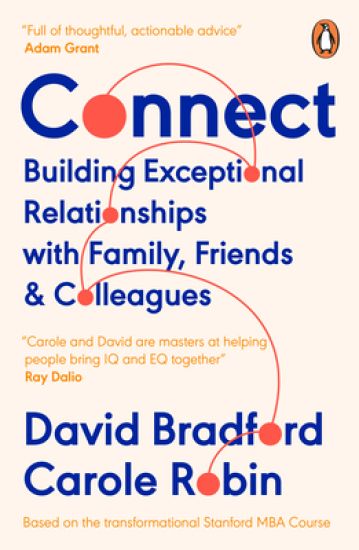
Connect

Connect

David L. Bradford; Carole Robin

Penguin Life
2022
pokkari
'A practical and timely book I highly recommend' Arianna Huffington, Founder and CEO, Thrive Global'Connect offers a compelling and highly accessible roadmap for building relationships that lead to professional success and personal fulfilment. I highly recommend this book' Reid Hoffman, co-founder of LinkedIn and co-author of Blitzscaling and The Alliance'I encourage anyone who cares to develop stronger and more meaningful relationships anywhere in their life to read this book' David Rogier, Founder and CEO at MasterClass ________________David Bradford and Carole Robin taught interpersonal skills to MBA candidates for a combined seventy-five years on their legendary Stanford Graduate School of Business course, "Interpersonal Dynamics". Now, in Connect, they share their time-tested strategies for developing the interpersonal skills that have become fundamental to success at work and in our everyday lives, such as building trust, giving feedback and navigating conflict.Connect shows why relationship-building is crucial to becoming a more effective manager and leader and living a fulfilled life, from highlighting the importance of curiosity and empathy to demonstrating how to break logjams and negotiate boundaries. Filled with research-backed insights, useful concepts and thought-provoking exercises, Connect is an important resource for anyone hoping to build and sustain relationships, providing tools to make relationships robust -- and even exceptional.________________WHAT FORMER STUDENTS SAID ABOUT INTERPERSONAL DYNAMICS:'I can't believe how much I learned about myself and about how others see the world''This course changed my life; it was transformational''I feel so much better equipped to create the kinds of relationships I want in my life'
Sandow the Magnificent

Sandow the Magnificent

David L. Chapman

University of Illinois Press
2006
nidottu
Looks at the life and career of the man who invented the business of bodybuilding, from his days in a European circus to his performances in Amsterdam and continual self-publicity that made him famous.
African Americans in Indianapolis

African Americans in Indianapolis

David L. Williams

Indiana University Press
2022
sidottu
Indianapolis has long been steeped in important moments in African American history, from businesswoman Madame C. J. Walker's success to the rise of the Ku Klux Klan to the founding of Crispus Attucks High School, which remained segregated through the 1960s. In African Americans in Indianapolis, author and historian David Leander Williams explores this history by examining the daunting and horrendous historical events African Americans living in Indianapolis encountered between 1820 and 1970, as well as the community's determination to overcome these challenges. Revealing many events that have yet to be recorded in history books, textbooks, or literature, Williams chronicles the lives and careers of many influential individuals and the organizations that worked tirelessly to open doors of opportunity to the entire African American community. African Americans in Indianapolis serves as a reminder of the advancements that Black midwestern ancestors made toward freedom and equality, as well as the continual struggle against inequalities that must be overcome.
African Americans in Indianapolis

African Americans in Indianapolis

David L. Williams

Indiana University Press
2022
pokkari
Indianapolis has long been steeped in important moments in African American history, from businesswoman Madame C. J. Walker's success to the rise of the Ku Klux Klan to the founding of Crispus Attucks High School, which remained segregated through the 1960s. In African Americans in Indianapolis, author and historian David Leander Williams explores this history by examining the daunting and horrendous historical events African Americans living in Indianapolis encountered between 1820 and 1970, as well as the community's determination to overcome these challenges. Revealing many events that have yet to be recorded in history books, textbooks, or literature, Williams chronicles the lives and careers of many influential individuals and the organizations that worked tirelessly to open doors of opportunity to the entire African American community. African Americans in Indianapolis serves as a reminder of the advancements that Black midwestern ancestors made toward freedom and equality, as well as the continual struggle against inequalities that must be overcome.
Village Mothers

Village Mothers

David L. Ransel

Indiana University Press
2005
pokkari
"[A]n outstanding work of historical ethnography. . . . The book offers wonderful insight into how women created and understood the great changes of the 20th century. It is unique in its scope and its intimate knowledge of rural life." —Russian Review "[A] major contribution to the field. . . . an important book that should be of considerable interest to medical historians and historians of peasants, the family, and of women." —American Historical Review Village Mothers describes the reception of modern medical ideas and practices by three generations of Russian and Tatar village women in the 20th century. Using the village mothers' own words, David L. Ransel shows how the women mediated the inherited beliefs of their families and communities, the claims of the state to control reproduction, and their personal desires for a better life.
A Russian Merchant's Tale

A Russian Merchant's Tale

David L. Ransel

Indiana University Press
2008
pokkari
Based on the rare diary of an 18th-century Russian provincial merchant, A Russian Merchant's Tale presents a revealing portrait of Russia's little-known commercial class. By recording his daily contacts with a wide array of individuals from lords to laborers for more than 40 years, Ivan Alekseevich Tolchënov opened a window onto the education, work, birth, death, marriage, business, civic, holiday, and religious practices of a social group about which little has been known. Using the tools of microhistory to interpret the diary, David L. Ransel vividly brings to life Tolchënov's self-construction, his relations with family and society, and his entire world of aspirations, achievements, and failures. Challenging prevailing stereotypes of Russian merchants as tradition-bound and narrow-minded, A Russian Merchant's Tale offers important new insights into the social history of imperial Russia.
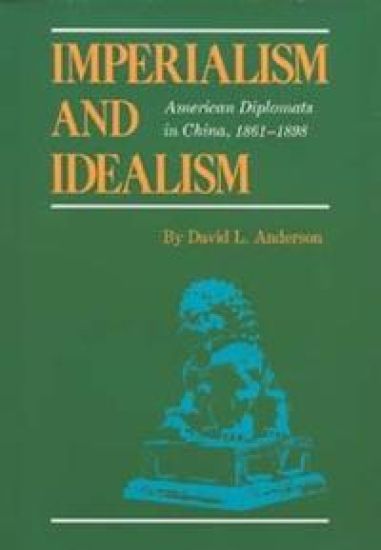
Imperialism and Idealism

Imperialism and Idealism

David L. Anderson

Indiana University Press
1986
sidottu
Combining biography with foreign-policy analysis, David L. Anderson provides a fresh interpretation of Sino-American relations in the nineteenth century. The book focuses on the eight Americans who occupied the chief U.S. diplomatic post in China from 1861 to 1898 and personally shaped American policy toward China in the forty years before Secretary of State John Hay's Open Door Notes. Their policies, as Anderson explains, were as varied as the eight individuals, and yet at the same time were characteristically American—expressing both idealistic altruism and imperialistic self-interest. Ultimately, John Hay merged the altruism and the self-interest in the Open Door Notes of 1899 and 1900, which influenced much of America's twentieth-century conduct in Asia. Anderson reemphasizes Hay's role in bridging the differences that have plagued U.S. policy in China.