Kirjojen hintavertailu. Mukana 11 699 587 kirjaa ja 12 kauppaa.

Kirjahaku

Etsi kirjoja tekijän nimen, kirjan nimen tai ISBN:n perusteella.

1000 tulosta hakusanalla David M Pack

Campaign Finance and American Democracy

Campaign Finance and American Democracy

David M Primo; Jeffrey D Milyo

University of Chicago Press
2020
sidottu
In recent decades, and particularly since the Supreme court's controversial Citizens United decision, lawmakers and other elites have told Americans that stricter campaign finance laws are needed to improve people's faith in the election process, increase trust in the government, and counter cynicism toward politics more generally. But as David M. Primo and Jeffrey D. Milyo argue, politicians and the public alike would do well to reconsider the conventional wisdom in light of surprising empirical evidence to the contrary. Primo and Milyo probe original survey data to determine Americans' sentiments on the role of money in politics, what drives these sentiments, and why they matter. What Primo and Milyo find is that while many individuals support the idea of reform, they are also skeptical that reform would successfully limit corruption, which Americans believe stains almost every fiber of the political system. Moreover, support for campaign finance restrictions is deeply divided along party lines, reflecting the polarization of our times. Ultimately, Primo and Milyo contend, American attitudes toward money in politics reflect larger fears about the health of American democracy, fears that will not be allayed by campaign finance reform.
Campaign Finance and American Democracy

Campaign Finance and American Democracy

David M Primo; Jeffrey D Milyo

University of Chicago Press
2020
pokkari
In recent decades, and particularly since the Supreme court's controversial Citizens United decision, lawmakers and other elites have told Americans that stricter campaign finance laws are needed to improve people's faith in the election process, increase trust in the government, and counter cynicism toward politics more generally. But as David M. Primo and Jeffrey D. Milyo argue, politicians and the public alike would do well to reconsider the conventional wisdom in light of surprising empirical evidence to the contrary. Primo and Milyo probe original survey data to determine Americans' sentiments on the role of money in politics, what drives these sentiments, and why they matter. What Primo and Milyo find is that while many individuals support the idea of reform, they are also skeptical that reform would successfully limit corruption, which Americans believe stains almost every fiber of the political system. Moreover, support for campaign finance restrictions is deeply divided along party lines, reflecting the polarization of our times. Ultimately, Primo and Milyo contend, American attitudes toward money in politics reflect larger fears about the health of American democracy, fears that will not be allayed by campaign finance reform.
American Kinship

American Kinship

David M. Schneider

University of Chicago Press
1980
nidottu
American Kinship is the first attempt to deal systematically with kinship as a system of symbols and meanings, and not simply as a network of functionally interrelated familial roles. Schneider argues that the study of a highly differentiated society such as our own may be more revealing of the nature of kinship than the study of anthropologically more familiar, but less differentiated societies. He goes to the heart of the ideology of relations among relatives in America by locating the underlying features of the definition of kinship-nature vs. law, substance vs. code. One of the most significant features of American Kinship, then, is the explicit development of a theory of culture on which the analysis is based, a theory that has since proved valuable in the analysis of other cultures. For this Phoenix edition, Schneider has written a substantial new chapter, responding to his critics and recounting the charges in his thought since the book was first published in 1968.
Little Theologians

Little Theologians

David M. Csinos

McGill-Queen's University Press
2020
sidottu
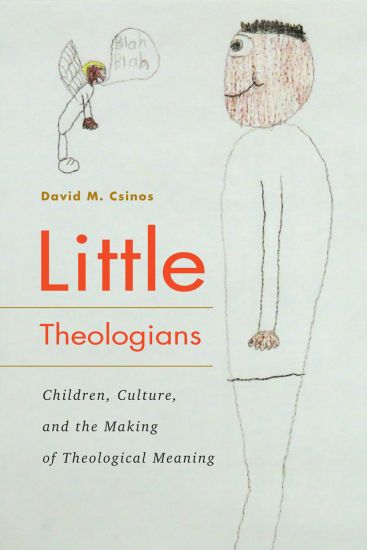
Children don't just learn theology. They actively create it, playing with ideas and drawing together aspects of their own lives to form theological understanding. In Little Theologians David Csinos offers a groundbreaking exploration of how cultural contexts intersect with the theological meaning-making of children. The qualitative research that Csinos undertook opened windows onto the religious and spiritual lives of children within four culturally distinct congregations of the United Church of Canada. He began by inviting the children to draw pictures of God and encouraging them to describe what they had drawn. Their answers led to revealing exchanges about who God is, how children understand spiritual experiences, what it means to believe, and what it means that people may believe differently. This innovative study offers an in-depth look at each congregation and how children make theological meaning in ways that reflect the broader culture around them, as well as ways that are all their own. By illuminating the diverse theological understanding of children, Csinos highlights characteristics that are shared among children and those that are unique to each child. Providing a radical twist of perspective, Little Theologians looks to the theological insights and experiences of children to provide a lens for critiquing broader discourses surrounding cultural diversity and spirituality.
Little Theologians

Little Theologians

David M. Csinos

McGill-Queen's University Press
2020
nidottu
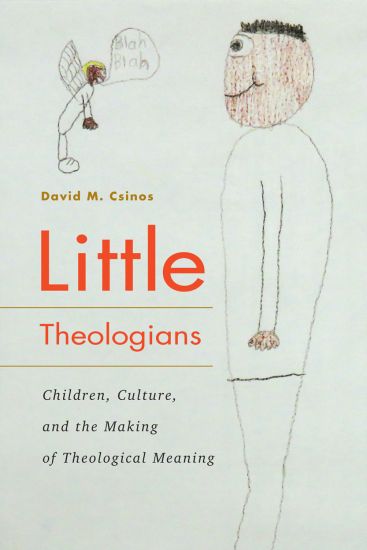
Children don't just learn theology. They actively create it, playing with ideas and drawing together aspects of their own lives to form theological understanding. In Little Theologians David Csinos offers a groundbreaking exploration of how cultural contexts intersect with the theological meaning-making of children. The qualitative research that Csinos undertook opened windows onto the religious and spiritual lives of children within four culturally distinct congregations of the United Church of Canada. He began by inviting the children to draw pictures of God and encouraging them to describe what they had drawn. Their answers led to revealing exchanges about who God is, how children understand spiritual experiences, what it means to believe, and what it means that people may believe differently. This innovative study offers an in-depth look at each congregation and how children make theological meaning in ways that reflect the broader culture around them, as well as ways that are all their own. By illuminating the diverse theological understanding of children, Csinos highlights characteristics that are shared among children and those that are unique to each child. Providing a radical twist of perspective, Little Theologians looks to the theological insights and experiences of children to provide a lens for critiquing broader discourses surrounding cultural diversity and spirituality.
Modern Days and Eye Focus Yearnings

Modern Days and Eye Focus Yearnings

David M Goodyear; Aunty Fannie

Tellwell Talent
2022
pokkari
Never forget a brief glimpse. Present days command it. Victory, humor and dilemma originate from eye focus. Wishes, emotion and loss reflect through as well. Once upon a time, it was a mechanism suggested when one was in danger in the wilderness, a quick peek to assess and decide the next move. With constant changes, many, indeed all of us, participate in each and everyone's space. Guarding one another at the entrances and parks, security is paid to pick up eye clues or cues. Looking at one's face guides us to narrow down perceptions of the intentions. Harmonious living and interaction are conveyed to us all from the onlookers' visions. Similarly, the uncouth one will find an admirer or an accomplice who feels quite comfortable in their company and craves for the congregation. Eye focus is a bridge to pinpoint, connect, cement and conspire. All fit in together to all whose vision is identical or crude and offers notions before cajolery, flattery or simple pure deception. Eye contact overrides physical disabilities, presenting the reality of why beauty may fail, where for years the average one flourishes in bliss. Our focus reminds self to conform to invisible eyes of machines, cameras and all whistles and beeps staged by the investor's sight. The book offers the feelings of any one of us at different phases of growth, time and day in our differing communities with our various individual contacts. Enjoy what may be the safest mode of "be aware . . ."
Modern Days and Eye Focus Yearnings

Modern Days and Eye Focus Yearnings

David M Goodyear; Aunty Fannie

Tellwell Talent
2022
sidottu
Never forget a brief glimpse. Present days command it. Victory, humor and dilemma originate from eye focus. Wishes, emotion and loss reflect through as well. Once upon a time, it was a mechanism suggested when one was in danger in the wilderness, a quick peek to assess and decide the next move. With constant changes, many, indeed all of us, participate in each and everyone's space. Guarding one another at the entrances and parks, security is paid to pick up eye clues or cues. Looking at one's face guides us to narrow down perceptions of the intentions. Harmonious living and interaction are conveyed to us all from the onlookers' visions. Similarly, the uncouth one will find an admirer or an accomplice who feels quite comfortable in their company and craves for the congregation. Eye focus is a bridge to pinpoint, connect, cement and conspire. All fit in together to all whose vision is identical or crude and offers notions before cajolery, flattery or simple pure deception. Eye contact overrides physical disabilities, presenting the reality of why beauty may fail, where for years the average one flourishes in bliss. Our focus reminds self to conform to invisible eyes of machines, cameras and all whistles and beeps staged by the investor's sight. The book offers the feelings of any one of us at different phases of growth, time and day in our differing communities with our various individual contacts. Enjoy what may be the safest mode of "be aware . . ."
Still the Golden Door

Still the Golden Door

David M. Reimers

Columbia University Press
1992
pokkari
This work updates an established American textbook on immigration and ethnic history, demonstrating the post-war shift from European to Third World immigrants. Extensive revisions include a discussion of undocumented immigration and the Simpson-Rodino Bill. All the important events of the last five years, especially the 1990 Immigration Act, are presented. The author examines the changes in refugee status and highlights the new wave of East European and Soviet immigrants to the USA.
Unwelcome Strangers

Unwelcome Strangers

David M. Reimers

Columbia University Press
1999
pokkari
Is it time for America-a country founded and forged by immigrants-to shut its doors? After decades of liberal policies that welcomed ever greater numbers of immigrants, America is seeing a surge in anti-immigration sentiment. Congressional debates, polls, incidents of violence, and the growing strength of anti-immigration groups all indicate a growing nativism. In Unwelcome Strangers, David M. Reimers enters into the emotionally charged immigration debate, looking at all sides of the argument. Who are the nativists, and are any of their views legitimate? This balanced investigation traces the history of American attitudes toward immigration and offers a new perspective on the current crisis. The core of this book uncovers the heated arguments of the anti-immigration forces, from environmental groups that warn against the consequences of overpopulation, to economic concerns that immigrants take jobs away from Americans, to assimilationist fears that newcomers-especially from Latin America, and Asia-threaten American culture. Reimers questions these arguments while acknowledging that pro-immigration forces hurt their position by not considering whether the United States can actually absorb one million immigrants a year. Reimers sees potential solutions in English language instruction for newcomers, greater accountability of sponsors, and government intervention to counterbalance the negative economic impact some immigrants have on poor communities. Reimers outlines the many bureaucratic and practical challenges faced by the INS, from determining who gets political asylum to screening applicants for criminal records. Reimers charts the history of U.S. immigration policy and public reaction to newcomers, from the Puritan colonists to World War II refugees. The rise of nativism that began in the 1880s culminated with the highly restrictive immigration policies of the 1920s. Reimers shows how immigrant groups have historically been targeted-whether for ethnic, racial, or religious reasons. Quakers, Catholics, and Jews were the focus of anti-immigrant sentiment as were Germans, Irish, Italians, and Asians. This history of prejudice throws light on later developments in immigration history, such as the public response to the Cuban refugee crisis, the growing proportion of Third World immigrants, and the relationship between legal and illegal immigration, right up to the battles over California's proposition 187-which proposed to restrict public assistance for aliens and their children-and major congressional legislation passed in 1996 to deal with immigration.
Food Philosophy

Food Philosophy

David M. Kaplan

Columbia University Press
2019
sidottu
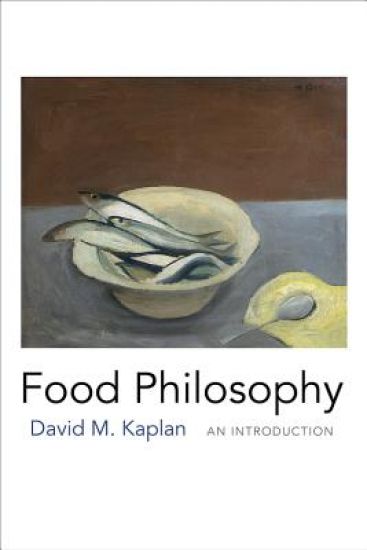
Food is a challenging subject. There is little consensus about how and what we should produce and consume. It is not even clear what food is or whether people have similar experiences of it. On one hand, food is recognized as a basic need, if not a basic right. On the other hand, it is hard to generalize about it given the wide range of practices and cuisines, and the even wider range of tastes.This book is an introduction to the philosophical dimensions of food. David M. Kaplan examines the nature and meaning of food, how we experience it, the social role it plays, its moral and political dimensions, and how we judge it to be delicious or awful. He shows how the different branches of philosophy contribute to a broader understanding of food: what food is (metaphysics), how we experience food (epistemology), what taste in food is (aesthetics), how we should make and eat food (ethics), how governments should regulate food (political philosophy), and why food matters to us (existentialism). Kaplan embarks on a series of philosophical investigations, considering topics such as culinary identity and authenticity, tasting and food criticism, appetite and disgust, meat eating and techno-foods, and consumerism and conformity. He emphasizes how different narratives help us navigate the complex world of food and reminds us we all have responsibilities to ourselves, to others, and to animals. An original treatment of a timely subject, Food Philosophy is suitable for undergraduates while making a significant contribution to scholarly debates.
Food Philosophy

Food Philosophy

David M. Kaplan

Columbia University Press
2019
pokkari
Food is a challenging subject. There is little consensus about how and what we should produce and consume. It is not even clear what food is or whether people have similar experiences of it. On one hand, food is recognized as a basic need, if not a basic right. On the other hand, it is hard to generalize about it given the wide range of practices and cuisines, and the even wider range of tastes.This book is an introduction to the philosophical dimensions of food. David M. Kaplan examines the nature and meaning of food, how we experience it, the social role it plays, its moral and political dimensions, and how we judge it to be delicious or awful. He shows how the different branches of philosophy contribute to a broader understanding of food: what food is (metaphysics), how we experience food (epistemology), what taste in food is (aesthetics), how we should make and eat food (ethics), how governments should regulate food (political philosophy), and why food matters to us (existentialism). Kaplan embarks on a series of philosophical investigations, considering topics such as culinary identity and authenticity, tasting and food criticism, appetite and disgust, meat eating and techno-foods, and consumerism and conformity. He emphasizes how different narratives help us navigate the complex world of food and reminds us we all have responsibilities to ourselves, to others, and to animals. An original treatment of a timely subject, Food Philosophy is suitable for undergraduates while making a significant contribution to scholarly debates.
Mountain Dharma

Mountain Dharma

David M. DiValerio

Columbia University Press
2025
sidottu
An emphasis on practicing meditation in yearslong retreats—whether in a cave or a cloister, alone or with a small number of peers—has been a defining feature of Tibetan Buddhism throughout its entire history. Although the life stories and writings of the Himalaya’s most famous hermits are well known, the history of this tradition and the details of its practice have largely remained a mystery.A groundbreaking exploration of individual long-term meditative retreat in Tibetan Buddhism, Mountain Dharma tracks developments in ascetic discourse and practice from the twelfth century to the twentieth. David M. DiValerio provides a comprehensive reading of texts that offer instruction on the eremitic endeavor, comparing how dozens of authors have treated six key orienting concerns: place, people, food, sources of danger, the spiritual lineage, and time. The book traces a genealogy of the Tibetan ascetic self, demonstrating an increasing tendency to adopt practices that contrast the meditator with earlier generations of enlightened masters, defining the latter-day retreatant as a being in time. By viewing instructions for how to live in retreat as technologies of self, this book sheds new light on how the history of this tradition has been driven by evolving notions of personhood.Methodologically innovative and richly sourced, Mountain Dharma sets a new standard for the historical study of asceticism.
Mountain Dharma

Mountain Dharma

David M. DiValerio

Columbia University Press
2025
pokkari
An emphasis on practicing meditation in yearslong retreats—whether in a cave or a cloister, alone or with a small number of peers—has been a defining feature of Tibetan Buddhism throughout its entire history. Although the life stories and writings of the Himalaya’s most famous hermits are well known, the history of this tradition and the details of its practice have largely remained a mystery.A groundbreaking exploration of individual long-term meditative retreat in Tibetan Buddhism, Mountain Dharma tracks developments in ascetic discourse and practice from the twelfth century to the twentieth. David M. DiValerio provides a comprehensive reading of texts that offer instruction on the eremitic endeavor, comparing how dozens of authors have treated six key orienting concerns: place, people, food, sources of danger, the spiritual lineage, and time. The book traces a genealogy of the Tibetan ascetic self, demonstrating an increasing tendency to adopt practices that contrast the meditator with earlier generations of enlightened masters, defining the latter-day retreatant as a being in time. By viewing instructions for how to live in retreat as technologies of self, this book sheds new light on how the history of this tradition has been driven by evolving notions of personhood.Methodologically innovative and richly sourced, Mountain Dharma sets a new standard for the historical study of asceticism.
The World in a City

The World in a City

David M Struthers

University of Illinois Press
2019
sidottu
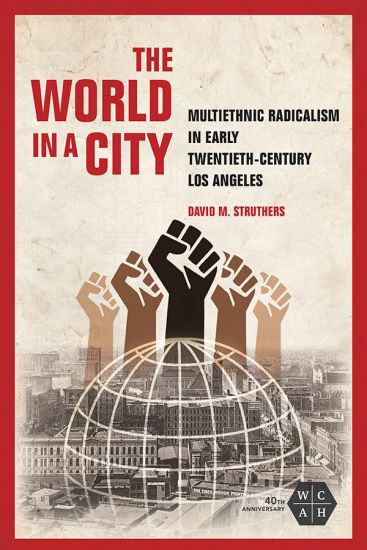
A massive population shift transformed Los Angeles in the first decades of the twentieth century. Americans from across the country relocated to the city even as an unprecedented transnational migration brought people from Asia, Europe, and Mexico. Together, these newcomers forged a multiethnic alliance of anarchists, labor unions, and leftists dedicated to challenging capitalism, racism, and often the state. David M. Struthers draws on the anarchist concept of affinity to explore the radicalism of Los Angeles's interracial working class from 1900 to 1930. Uneven economic development created precarious employment and living conditions for laborers. The resulting worker mobility led to coalitions that, inevitably, remained short lived. As Struthers shows, affinity helps us understand how individual cooperative actions shaped and reshaped these alliances. It also reveals social practices of resistance that are often too unstructured or episodic for historians to capture. What emerges is an untold history of Los Angeles and a revolutionary movement that, through myriad successes and failures, produced powerful examples of racial cooperation.
History's Erratics

History's Erratics

David M. Emmons

UNIVERSITY OF ILLINOIS PRESS
2024
sidottu
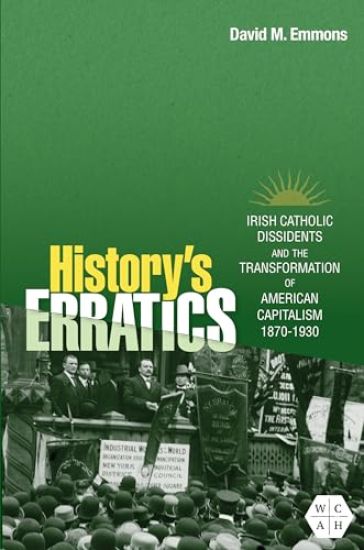
As Ice Age glaciers left behind erratics, so the external forces of history tumbled the Irish into America. Existing both out of time and out of space, a diverse range of these Roman-Catholic immigrants saw their new country in a much different way than did the Protestants who settled and claimed it. These erratics chose backward looking tradition and independence over assimilation and embraced a quintessentially Irish form of subversiveness that arose from their culture, faith, and working-class outlook. David M. Emmons draws on decades of research and thought to plumb the mismatch of values between Protestant Americans hostile to Roman Catholicism and the Catholic Irish strangers among them. Joining ethnicity and faith to social class, Emmons explores the unique form of dissidence that arose when Catholic Irish workers and their sympathizers rejected the beliefs and symbols of American capitalism. A vibrant and original tour de force, History’s Erratics explores the ancestral roots of Irish nonconformity and defiance in America.
The Butte Irish

The Butte Irish

David M. Emmons

University of Illinois Press
1989
nidottu
In this pioneering study, David Emmons tells the story of Butte's large and assertive population of Irish immigrants. He traces their backgrounds in Ireland, the building of an ethnic community in Butte, the nature and hazards of their work in the copper mines, and the complex interplay between Irish nationalism and worker consciousness. From a treasure trove of "Irish stuff," the reports, minutes, and correspondence of the major Irish-American organizations in Butte, Emmons shows how the stalwart supporters of the RELA and the Ancient Order of Hiberians marched and drilled for Irish freedom---and how, as they ran the town, the miners' union, and the largest mining companies, they used this tradition of ethnic cooperation to ensure safe and steady work, Irish mines taking care of Irish miners. Butte was new, overwhelmingly Irish, and extraordinarily dangerous---the ideal place to test the seam between class and ethnicity.
Race Against Liberalism

Race Against Liberalism

David M. Lewis-Colman

University of Illinois Press
2008
nidottu
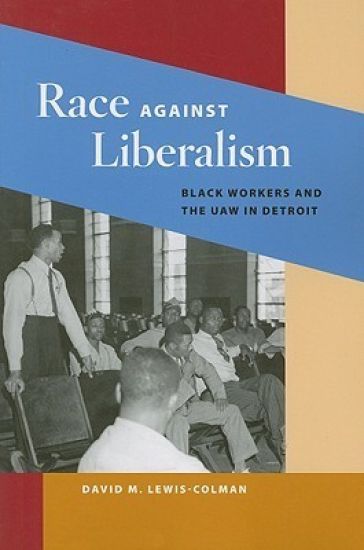
Race against Liberalism examines how black worker activism in Detroit shaped the racial politics of the labor movement and the white working class. David M. Lewis-Colman traces the substantive, long-standing disagreements between liberals and the black workers who embraced autonomous race-based action. As he shows, black autoworkers placed themselves at the center of Detroit's working-class politics and sought to forge a kind of working class unity that accommodated their interests as African Americans. The book covers the independent caucuses in the 1940s and the Trade Union Leadership Council in the 1950s; the black power movement and Revolutionary Union Movements of the mid-1960s; and the independent race-based activism of the 1970s that resulted in Coleman Young's 1973 election as the city's first black mayor.
The World in a City

The World in a City

David M Struthers

University of Illinois Press
2019
nidottu
A massive population shift transformed Los Angeles in the first decades of the twentieth century. Americans from across the country relocated to the city even as an unprecedented transnational migration brought people from Asia, Europe, and Mexico. Together, these newcomers forged a multiethnic alliance of anarchists, labor unions, and leftists dedicated to challenging capitalism, racism, and often the state. David M. Struthers draws on the anarchist concept of affinity to explore the radicalism of Los Angeles's interracial working class from 1900 to 1930. Uneven economic development created precarious employment and living conditions for laborers. The resulting worker mobility led to coalitions that, inevitably, remained short lived. As Struthers shows, affinity helps us understand how individual cooperative actions shaped and reshaped these alliances. It also reveals social practices of resistance that are often too unstructured or episodic for historians to capture. What emerges is an untold history of Los Angeles and a revolutionary movement that, through myriad successes and failures, produced powerful examples of racial cooperation.