This fresh, new work explores major themes in Christian theology, refracted through a worldview that perceives everything—God and the world—to be dynamic, temporal, and interrelated.Though seemingly complicated, process theology offers a worldview that is attractive to Christians seeking a better understanding of their faith in the context of science and the challenges of the "new atheism." Something That Matters: A Theology for Critical Believers makes both this worldview and its applications for life today accessible to the lay reader.The book's argument is built around the conviction that we are all "something that matters," that humans make a difference in the world, and hence in the life of God. The book addresses a broad range of topics important to Christian theology: faith, religion, God, Christ, the Trinity, prayer, the ethical life, what it means to be human, and our ultimate destiny (eschatology). It also includes a chapter on the development and basic ideas of "process philosophy," which informs this theology. Incorporating insights from the sciences, as well as from the Bible, this critical reevaluation brings the Christian proclamation to life for a modern world.
Consulting Editor, Dr. Bonita Stanton has worked closely with Guest Editors Drs. David R. Rosenberg and Leslie H. Lundahl to create a current issue devoted to substance abuse in children. Expert authors have written clinical review articles with the goal of providing the pediatrician with the latest information on substances and addiction medicine. The first half of the issue focuses on the following substances: Nicotine Use Disorders in Adolescents; Alcohol Use Disorders in Adolescents; Cannabis Use and Consequences; Medical and Non-Medical Use of Opiates; Stimulant Use and Cognitive Enhancement; and Club Drugs. The second half of the issue focuses on special topics important to pediatricians: Contingency Management for Substance Use Disorders; Behavioral Addictions: Gambling, Gaming, Internet; Juvenile Drug Court: Novel Approach to Treatment; Computer-Assisted Approaches to Substance Abuse Treatment; Co-Morbid Substance Use and Other Psychiatric Disorders; and Drug Use in Pregnant Teens. Readers will come away with the information they need to stay current on this changing field and to improve patient outcomes.
A personal interpretation of the impact of the Chernobyl disaster both in the Soviet Union and the West, examining the environmental consequences, Soviet media coverage, reconstruction of life in the disaster zone (including the city built for Chernobyl workers) and safety changes in the industry.
This volume highlights the problems of the environment and industry in Ukraine from 1985 to 1990. The main theme of the book is the close link between the damage to nature and the growth of political activism and patriotism in Ukraine.
This book analyses the normative and institutional aspects of the civil-military relationship to demonstrate that it is the politics of the relationship rather than its form that influences the likelihood of democracy and regional peace. It is useful for policymakers, academics, and general readers.
Only several years after the collapse of the Soviet Union, nuclear security issues are again at the forefront of international concern. This timely collection addresses issues of cleanup at Chernobyl and other sites of nuclear disasters, nuclear smuggling, safety concerns in the Ukrainian and Russian nuclear industries, and Ukraine's negotiations w
Development projects are the building blocks of urban growth. Put enough of the right projects together in the right way, and you have sustainable cities. But getting the pieces to stack up takes a feat of coordination and cooperation. In our market economy, developers, designers, and planners tend to operate in silos, each focused on its own pi
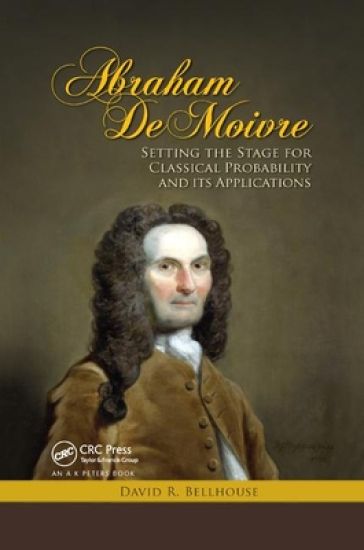
Extensively researched, this book traces the life and work of Abraham De Moivre as well as the state of probability and statistics in eighteenth-century Britain. It is the first extensive biography of De Moivre and is based on recently discovered material and translations, including some of De Moivre’s letters.The book begins with discussions on De Moivre’s early life in France and his initial work in pure mathematics with some excursions into celestial mechanics. It then describes his fundamental contributions to probability theory and applications, including those in finance and actuarial science. The author explores how De Moivre’s wide network of personal and professional connections often motivated his research. The book also covers De Moivre’s contemporaries and his impact on the field. Written in a clear, approachable style, this biography will appeal to historians and practitioners of the art of probability and statistics in a wide range of applications, including finance and actuarial science.
Across the continental United States, one can identify 20 distinct forest cover types. Most of these are to be found on federal lands managed by the U.S. Forest Service and Bureau of Land Management. Those responsible for the management of trees that form the 20 different cover types and the diversity of forest wildlife that reside in them must have a solid grounding in concepts of forest management, especially silviculture, as well as concepts of wildlife management, in order to integrate both as part of any effective natural resource management plan. Forest Wildlife Ecology and Habitat Management provides both foresters and wildlife biologists responsible for managing forest resources with an integrated understanding of the relationship between forests and wildlife. Based on David Patton’s 50 years of experience as a forester and wildlife biologist, the book shows readers how to look at forests as ecological systems and wildlife as part of the energy flow and nutrient cycling process within those systems. He offers readers a fundamental understanding of the natural processes that occur in a forest taking into consideration vegetation, water, and the natural effects of climate and time. He then provides a biological perspective on wildlife, discussing reproduction, behavior, feeding habits, and mobility. He also discusses the various influences on forests and wildlife by both natural and human-caused events. Covering those forest types included in the U.S. National Atlas, and associating over 1,100 wildlife species with 20 major forest types in 48 states, Professor Patton provides recommendations for ways to restore and maintain wildlife habitat by direct and indirect coordination. Towards this end, the author — Evaluates various approaches to integrate forestry and wildlife managementOffers a number of practical management strategies, emphasizing a progressive holistic approach
Although we live in an era in which we are surrounded by an ever-deepening fog of data, few of us truly understand how the data are created, where data are stored, or how to retrieve or destroy data—if that is indeed possible. This book is for all of you, whatever your need or interest.Electronically Stored Information: The Complete Guide to Management, Understanding, Acquisition, Storage, Search, and Retrieval, Second Edition explains the reasons you need to know about electronic data. It also gets into great detail about the how, what, when, and where of what is known in legal circles as electronically stored information (ESI).With easy-to-understand explanations and guidelines, this book provides the practical understanding you need to effectively manage the complex world of ESI. Whether you are an attorney, judge, paralegal, business manager or owner, or just one of the ever-growing population of computer users, you will benefit from the information presented in this book.
A thumb print left at the scene of a grisly murder. Fingerprints taken from a getaway car used in a bank robbery. A palm print recovered from the shattered glass door of a burglarized home. Indeed, where crimes are committed, careless perpetrators will invariably leave behind the critical pieces of evidence—most likely in the form of fingerprints—needed to catch and convict them. But the science of fingerprint identification isn’t always as cut and dry as detective novels and movies make it out to be.Quantitative-Qualitative Friction Ridge Analysis, a new book in the ongoing Practical Aspects of Criminal and Forensic Investigations series, examines the latest methods and techniques in the science of friction ridge identification, or ridgeology. David R. Ashbaugh examines every facet of the discipline, from the history of friction ridge identification and its earliest pioneers and researchers, to the scientific basis and the various steps of the identification process. The structure and growth of friction skin and how it can leave latent or visible prints are examined, as well as advanced identification methods in ridgeology, including Poroscopy, Edgeoscopy, Pressure Distortion and Complex or Problem Print Analysis. The book, which features several detailed illustrations and photographs, also includes a new method for Palmar Flexion Crease Identification (palm lines) designed by the author and which has helped solve several criminal cases where fingerprints were not available. For crime scene technicians, forensic identification specialists, or anyone else pursuing a career in forensic science, this book is arguably the definitive source in the science of friction ridge identification.
This book elucidates the important role of conduction, convection, and radiation heat transfer, mass transport in solids and fluids, and internal and external fluid flow in the behavior of materials processes. These phenomena are critical in materials engineering because of the connection of transport to the evolution and distribution of microstructural properties during processing. From making choices in the derivation of fundamental conservation equations, to using scaling (order-of-magnitude) analysis showing relationships among different phenomena, to giving examples of how to represent real systems by simple models, the book takes the reader through the fundamentals of transport phenomena applied to materials processing. Fully updated, this third edition of a classic textbook offers a significant shift from the previous editions in the approach to this subject, representing an evolution incorporating the original ideas and extending them to a more comprehensive approach to the topic.FEATURESIntroduces order-of-magnitude (scaling) analysis and uses it to quickly obtain approximate solutions for complicated problems throughout the bookFocuses on building models to solve practical problemsAdds new sections on non-Newtonian flows, turbulence, and measurement of heat transfer coefficientsOffers expanded sections on thermal resistance networks, transient heat transfer, two-phase diffusion mass transfer, and flow in porous mediaFeatures more homework problems, mostly on the analysis of practical problems, and new examples from a much broader range of materials classes and processes, including metals, ceramics, polymers, and electronic materialsIncludes homework problems for the review of the mathematics required for a course based on this book and connects the theory represented by mathematics with real-world problemsThis book is aimed at advanced engineering undergraduates and students early in their graduate studies, as well as practicing engineers interested in understanding the behavior of heat and mass transfer and fluid flow during materials processing. While it is designed primarily for materials engineering education, it is a good reference for practicing materials engineers looking for insight into phenomena controlling their processes.A solutions manual, lecture slides, and figure slides are available for qualifying adopting professors. Companion website: https://transportphenomena.org/
We have long been taught that emotions should be felt and expressed in carefully controlled ways, and then only in certain environments and at certain times. This is especially true when at work, particularly when managing others. It is considered terribly unprofessional to express emotion while on the job, and many of us believe that our biggest mistakes and regrets are due to our reactions at those times when our emotions get the better of us. David R. Caruso and Peter Salovey believe that this view of emotion is not correct. The emotion centers of the brain, they argue, are not relegated to a secondary place in our thinking and reasoning, but instead are an integral part of what it means to think, reason, and to be intelligent. In The Emotionally Intelligent Manager, they show that emotion is not just important, but absolutely necessary for us to make good decisions, take action to solve problems, cope with change, and succeed. The authors detail a practical four-part hierarchy of emotional skills: identifying emotions, using emotions to facilitate thinking, understanding emotions, and managing emotions-and show how we can measure, learn, and develop each skill and employ them in an integrated way to solve our most difficult work-related problems.
Many books teach computational statistics. Until now, however, none has shown how to write a good program. This book gives statisticians, biostatisticians and methodologically-oriented researchers the tools they need to develop high-quality statistical software. Topics include how to: Program in Fortran 95 using a pseudo object-oriented style Write accurate and efficient computational procedures Create console applications Build dynamic-link libraries (DLLs) and Windows-based software components Develop graphical user interfaces (GUIs) Through detailed examples, readers are shown how to call Fortran procedures from packages including Excel, SAS, SPSS, S-PLUS, R, and MATLAB. They are even given a tutorial on creating GUIs for Fortran computational code using Visual Basic.NET. This book is for those who want to learn how to create statistical applications quickly and effectively. Prior experience with a programming language such as Basic, Fortran or C is helpful but not required. More experienced programmers will learn new strategies to harness the power of modern Fortran and the object-oriented paradigm. This may serve as a supplementary text for a graduate course on statistical computing. From the reviews: "This book should be read by all statisticians, engineers, and scientists who want to implement an algorithm as a computer program. The book is the best introduction to programming that I have ever read. I value it as one of my important reference books in my personal library." Melvin J. Hinich for Techonmetrics, November 2006 "Overall, the book is well written and provides a reasonable introduction to the use of modern versions of Fortran for statistical computation. The real thrust of the book is building COM interfaces using Fortran, and it will no doubt be most useful to anyone who needs to build such interfaces." Journal of the American Statistical Association, June 2006 "The book is well written and is divided into chapters and sections which are coherent...Overall the book seems like a good resource for someone that already knows some dialect of FORTRAN and wants to learn a bit about what is new in FORTRAN 95..." Robert Gentleman for the Journal of Statistical Software, December 2006
Expressive Order introduces affect control theory to lay readers of sociology, and additionally guides sociology specialists into the theory's deep structure. Briefly, affect control theory proposes that individuals shape their social interactions so that emerging impressions reinforce sentiments about salient identities, behaviors, and settings. Emotions signal how the process of confirming sentiments is going for each individual. The theory explains behaviors, emotions, social labeling, and personality attributions in a wide variety of social contexts – including intimate relations, work-world interactions, courtrooms, and international relations. Part 1 of the book provides a plain-language exposition of the theory, along with numerous interpretive analyses of everyday situations. This is engaging and provocative reading for anyone interested in social relations, including undergraduates in and out of the social sciences. Part 2 presents the mathematical derivations that define sentiment-confirming behavior, labeling, attribution, and emotion. The mathematical solutions, conjoined with understandings about social institutions, are the basis of the theory's explanations. The derivations clarify the theory's assumptions and reasoning, as only mathematics can. Part 3 of Expressive Order describes the research program associated with the theory and the computer simulation software that is used in research. This part of the book offers a jump start for individuals wishing to use affect control theory in their own research.
These historical narratives of scientific behavior reveal the often irrational way scientists arrive at and assess their theories. There are stories of Einstein’s stubbornness leading him to reject a correct interpretation of an experiment and miss an important deduction from his own theory, and Newton missing the important deduction from one of his most celebrated discoveries. Copernicus and Galileo are found suppressing information. A theme running throughout the book is the notion that what is obvious today was not so in the past. Scientists seen in their historical context shatter myths and show them to be less modern than we often like to think of them.
The abstract concept of “information” can be quantified and this has led to many important advances in the analysis of data in the empirical sciences. This text focuses on a science philosophy based on “multiple working hypotheses” and statistical models to represent them. The fundamental science question relates to the empirical evidence for hypotheses in this set—a formal strength of evidence. Kullback-Leibler information is the information lost when a model is used to approximate full reality. Hirotugu Akaike found a link between K-L information (a cornerstone of information theory) and the maximized log-likelihood (a cornerstone of mathematical statistics). This combination has become the basis for a new paradigm in model based inference. The text advocates formal inference from all the hypotheses/models in the a priori set—multimodel inference. This compelling approach allows a simple ranking of the science hypothesis and their models. Simple methods are introduced for computing the likelihood of model i, given the data; the probability of model i, given the data; and evidence ratios. These quantities represent a formal strength of evidence and are easy to compute and understand, given the estimated model parameters and associated quantities (e.g., residual sum of squares, maximized log-likelihood, and covariance matrices). Additional forms of multimodel inference include model averaging, unconditional variances, and ways to rank the relative importance of predictor variables. This textbook is written for people new to the information-theoretic approaches to statistical inference, whether graduate students, post-docs, or professionals in various universities, agencies or institutes. Readers are expected to have a background in general statistical principles, regression analysis, and some exposure to likelihood methods. This is not an elementary text as it assumes reasonable competence in modeling and parameterestimation.
Many books on stability theory of motion have been published in various lan guages, including English. Most of these are comprehensive monographs, with each one devoted to a separate complicated issue of the theory. Generally, the examples included in such books are very interesting from the point of view of mathematics, without necessarily having much practical value. Usually, they are written using complicated mathematical language, so that except in rare cases, their content becomes incomprehensible to engineers, researchers, students, and sometimes even to professors at technical universities. The present book deals only with those issues of stability of motion that most often are encountered in the solution of scientific and technical problems. This allows the author to explain the theory in a simple but rigorous manner without going into minute details that would be of interest only to specialists. Also, using appropriate examples, he demonstrates the process of investigating the stability of motion from the formulation of a problem and obtaining the differential equations of perturbed motion to complete analysis and recommendations. About one fourth of the examples are from various areas of science and technology. Moreover, some of the examples and the problems have an independent value in that they could be applicable to the design of various mechanisms and devices. The present translation is based on the third Russian edition of 1987.
1 The Purpose of This Text This text has been written in response to two trends that have gained considerable momentum over the past few years. The first is the decision by many undergraduate engineering and science departments to abandon the traditional programming course based on the aging Fortran 77 standard. This decision is not surprising, considering the more modem features found in languages such as Pascal and C. However, Pascal never developed a strong following in scientific computing, and its use is in decline. The new Fortran 90 standard defines a powerful, modem language, but this long-overdue redesign of Fortran has come too late to prevent many colleges and universities from switching to C. The acceptance of C by scientists and engineers is based perhaps as. much on their perceptions of C as an important language, which it certainly is, and on C programming experience as a highly marketable skill, as it is on the suitability of C for scientific computation. For whatever reason, C or its derivative C++ is now widely taught as the first and often only programming language for undergraduates in science and engineering. The second trend is the evolving nature of the undergraduate engineering curriculum. At a growing number of institutions, the traditional approach of stressing theory and mathematics fundamentals in the early undergraduate years, and postponing real engineering applications until later in the curriculum, has been turned upside down.