

Kirjahaku
Etsi kirjoja tekijän nimen, kirjan nimen tai ISBN:n perusteella.
1000 tulosta hakusanalla Dawn Kinzer

Dawn
Antigonos Verlag
2025
sidottu
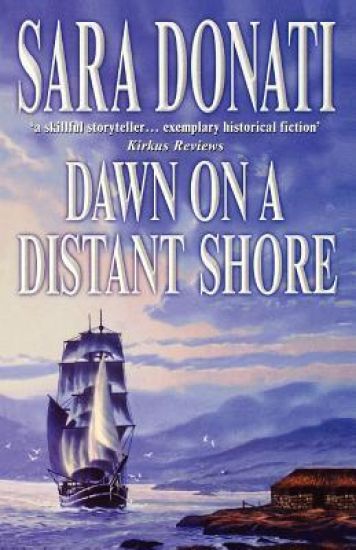
The second book in The Wilderness Series is set in Canada and Scotland. Now blissfully married, Nathaniel and Elizabeth Bonner, the hero and heroine of Into The Wilderness, have settled into their new life together in the North American frontier. When Elizabeth gives birth to twins their happiness seems complete. However, it proves to be short-lived. While attempting to rescue his father, Hawkeye, who has been imprisoned in Canada, Nathaniel is arrested by British colonials for spying – a hanging offence. Left alone in the wilderness with only her step-daughter Hannah and her newly-born twins, Elizabeth embarks on a desperate bid to save her husband. Gathering up the children, she sets out on a dangerous journey across unremittingly hostile terrain. However, the fate of the Bonner family appears to be in the hands of other forces, who intend to kidnap them to Scotland in order to engage them in a bitter family feud and a destiny they could never have imagained.

CUNDILL PRIZE 2018 WINNER SHORTLISTED FOR THE JAMES TAIT BLACK BIOGRAPHY PRIZE 2018 `Enlightening, compassionate, superb' John le Carre A visionary life and times of Joseph Conrad, and of our global world, from one of the best historians writing today.

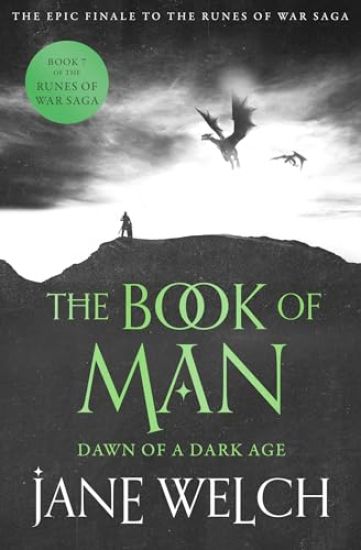
The first book in a new epic fantasy trilogy by British author Jane Welch. Prince Rollo’s world is shattered by the death of his mother, Queen Ursula. But even before he can grieve he faces the bitter disappointment of being overlooked as his mother’s heir in favour of his younger sister; as only the female line in Artor’s Royal family inherit the magical power to control the Great Bears of Artor (a talent every sovereign must possess). Seething with self loathing, grief and disappointment Rollo focuses his anger and resentment upon his father. Deeply concerned for his son Spar decides to leave his daughter, now Artor’s Queen, and take 13 year old Rollo half way across the world to Torra Alta, his barony in Belbidia, to claim the only birthright left to him. But fifteen years have passed since Spar left Hal and Brid as guardians of his remote fortress and in the intervening years, many things have changed. Beasts of legend have grown in strength and will. A huge golden dragon plagues the mountains and swarms of Hobs ransack the fertile plains of Belbidia. Fourteen years ago the Chalice of Önd, was lost. A sacred artefact with the power to transfer the magic of one object to another the chalice is the only explanation for the rising threat. If this powerful weapon has fallen into the wrong hands the dawn of a dark age will come to Belbidia.
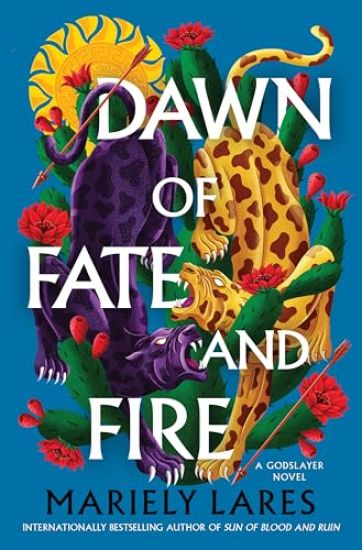
The stunning conclusion to the duology that began with the internationally bestselling Sun of Blood and Ruin, this Zorro reimagining weaves Mesoamerican mythology and sixteenth-century Mexican history into a swashbuckling historical fantasy filled with magic, intrigue, treachery, and romance.They call her many things. Witch, Nagual Warrior, lady, Pantera. And after defeating the Obsidian Butterfly, Leonora carries a new title: Godslayer.Peace in Mexico City is fragile. Rebellion brews in the North, and when the people's safety is at risk, Pantera must once again become the demure viceregent Leonora to stop a war before it begins. But her friends are scattered, Tezca is gone, and one wrong move could seal her fate. Caution is her ally, for the real Prince of Asturias--her former betrothed--has arrived at court, reigniting rumors that Leonora and Pantera are one.A greater threat looms in the mountains, where a false king seeks to summon the god of night using a weapon of untold power. It's up to the Godslayer to confront this enemy. . . and the one growing within her. Only by embracing her divine origins can Leonora triumph over the forces of darkness--and maybe even spark a revolution that could change Mexico's fate forever. But in doing so, she risks losing herself forever.


With a Foreword by J.D. VanceHeritage Foundation president Kevin Roberts outlines a peaceful "Second American Revolution" for voters looking to shift the power back into the hands of the people.America is on the brink of destruction. A corrupt and incompetent elite has uprooted our way of life and is brainwashing the next generation. Many so-called conservatives are as culpable as their progressive counterparts.In this ambitious and provocative book, Heritage Foundation President Dr. Kevin Roberts announces the arrival of a New Conservative Movement. His message is simple: Global elites -- your time is up.Dawn's Early Light blazes a promising path for the American people to take back their country. Chapter by chapter, it identifies institutions that conservatives need to build, others that we need to take back, and more still that are too corrupt to save: Ivy League colleges, the FBI, the New York Times, the National Institute of Allergy and Infectious Diseases, the Department of Education, BlackRock, the Bill and Melinda Gates Foundation, the National Endowment for Democracy, to name a few.All these need to be dissolved if the American way of life is to be passed down to future generations.The good news is, we're going to win.The Swamp is so drunk on power that the elites don't realize the ground is moving beneath their feet. In Washington, they wear foreign flags on their lapels, but they don't protect our border. They wave around the Constitution, but they don't respect its wisdom. They appeal to Reagan, but Reagan would never put up with this non-sense.Their decadence will be their downfall. A new day is here.
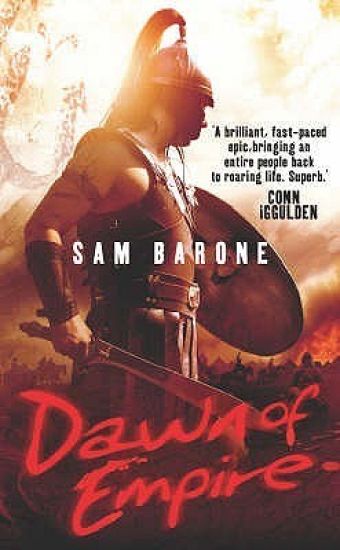
The last time the invaders came to Orak, they spared no one and the tiny candle of trade and agriculture that had begun there, the first in all of human history, was extinguished. But Eskkar and Trella, the beautiful slave girl he has been given by the grateful townsfolk, and the raggle-taggle army he has inherited are not going to flee.
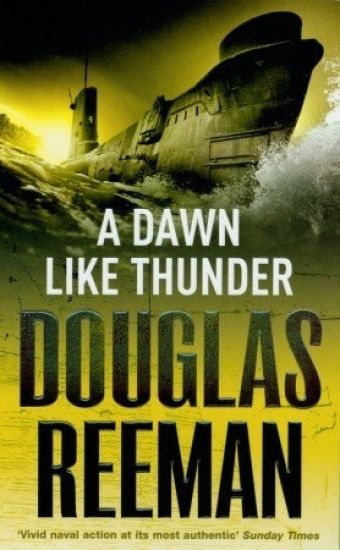
After four years, the tide of war is turning in North Africa and Europe. Men like Lieutenant James Ross, awarded the Victoria Cross for his work in underwater sabotage, or the desperate amateur Charles villiers, heir to a fortune now controlled by the Japanese. The two-man torpedo - the chariot - is the ultimate weapon in a high-risk war.
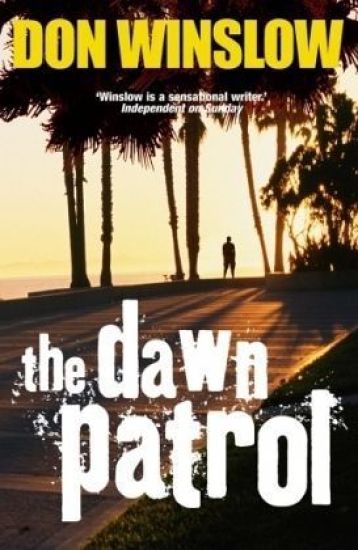
Unfortunately he's just landed a case involving one dead and one missing stripper, but with the help - or hindrance, Boone thinks - of uptight lawyer Petra Hall, he's determined to wrap it up in time for the epic surf.

'Brilliant, bold and beautifully told ... A profound piece of political thinking' Ben Judah, author of This Is London In this original and timely book, Bruno Macaes argues that the best word for the emerging global order is 'Eurasian', and shows why we need to begin thinking on a super-continental scale. While China and Russia have been quicker to recognise the increasing strategic significance of Eurasia, even Europeans are realizing that their political project is intimately linked to the rest of the supercontinent - and as Macaes shows, they will be stronger for it. Weaving together history, diplomacy and vivid reports from his six-month overland journey across Eurasia from Baku to Samarkand, Vladivostock to Beijing, Macaes provides a fascinating portrait of this shifting geopolitical landscape. As he demonstrates, we can already see the coming Eurasianism in China's bold infrastructure project reopening the historic Silk Road, in the success of cities like Hong Kong and Singapore, in Turkey's increasing global role and in the fact that, revealingly, the United States is redefining its place as between Europe and Asia. An insightful and clarifying book for our turbulent times, The Dawn of Eurasia argues that the artificial separation of the world's largest island cannot hold, and the sooner we realise it, the better.
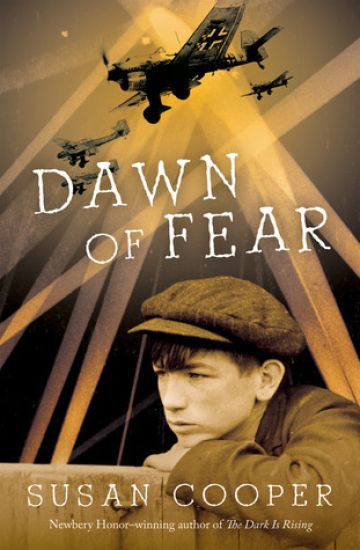
Derek and his friends, living outside of London during World War II, regard the frequent air raids with more fascination than fear--after all, they can barely remember a time without them. The boys are thrilled when school is canceled for a few days due to a raid, giving them time to work on their secret camp. But when their camp is savagely attacked by a rival gang from the neighborhood, the harsh reality of the violence surrouding them suddenly crashes down upon Derek and his friends--and a long night of bombing changes his feelings about the war forever. Includes a reader's guide.

Dawn ot the DAW tells the story of how the dividing line between the traditional roles of musicians and recording studio personnel (producers, recording engineers, mixing engineers, technicians, etc.) has eroded throughout the latter half of the twentieth century to the present. Whereas those equally adept in music and technology such as Raymond Scott and Les Paul were exceptions to their eras, the millennial music maker is ensconced in a world in which the symbiosis of music and technology is commonplace. As audio production skills such as recording, editing, and mixing are increasingly co-opted by musicians teaching themselves in their do-it-yourself (DIY) recording studios, conventions of how music production is taught and practiced are remixed to reflect this reality. Dawn ot the DAW first examines DIY recording practices within the context of recording history from the late nineteenth century to the present. Second, Dawn ot the DAW discusses the concept of "the studio as musical instrument" and the role of the producer, detailing how these constructs have evolved throughout the history of recorded music in tandem. Third, Dawn ot the DAW details current practices of DIY recording-how recording technologies are incorporated into music making, and how they are learned by DIY studio users in the musically-chic borough of Brooklyn. Finally, Dawn ot the DAW examines the broader trends heard throughout, summarizing the different models of learning and approaches to music making. Dawn ot the DAW concludes by discussing the ramifications of these new directions for the field of music education.

Dawn ot the DAW tells the story of how the dividing line between the traditional roles of musicians and recording studio personnel (producers, recording engineers, mixing engineers, technicians, etc.) has eroded throughout the latter half of the twentieth century to the present. Whereas those equally adept in music and technology such as Raymond Scott and Les Paul were exceptions to their eras, the millennial music maker is ensconced in a world in which the symbiosis of music and technology is commonplace. As audio production skills such as recording, editing, and mixing are increasingly co-opted by musicians teaching themselves in their do-it-yourself (DIY) recording studios, conventions of how music production is taught and practiced are remixed to reflect this reality. Dawn ot the DAW first examines DIY recording practices within the context of recording history from the late nineteenth century to the present. Second, Dawn ot the DAW discusses the concept of "the studio as musical instrument" and the role of the producer, detailing how these constructs have evolved throughout the history of recorded music in tandem. Third, Dawn ot the DAW details current practices of DIY recording-how recording technologies are incorporated into music making, and how they are learned by DIY studio users in the musically-chic borough of Brooklyn. Finally, Dawn ot the DAW examines the broader trends heard throughout, summarizing the different models of learning and approaches to music making. Dawn ot the DAW concludes by discussing the ramifications of these new directions for the field of music education.
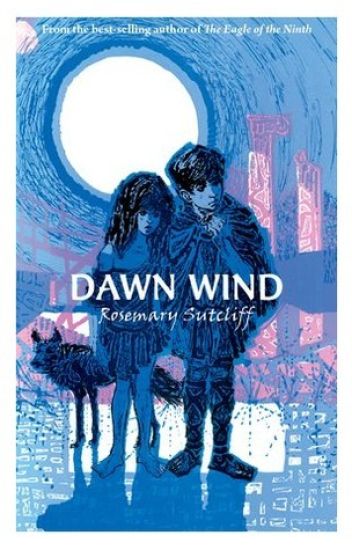
The boy lay in the silence of the great battlefield, gazing at his own hand spread on the ground beside him. The hand moved and he realized, with something like surprise, that he was not dead. His name was Owain and further up the hillside lay his father and brother, both killed by Saxon warriors in that last great battle of Aquae Sulis. From that moment Owain knows that he must make his own way in the world and so begins his journey to face the many challenges that lie ahead. Rosemary Sutcliff is one of the greatest writers of historical fiction and Dawn Wind is an acclaimed and much-loved classic tale which will enthral readers old and new. This stunning new edition features the evocative original black and white illustrations by award-winning artist, Charles Keeping, which bring the story vividly to life.
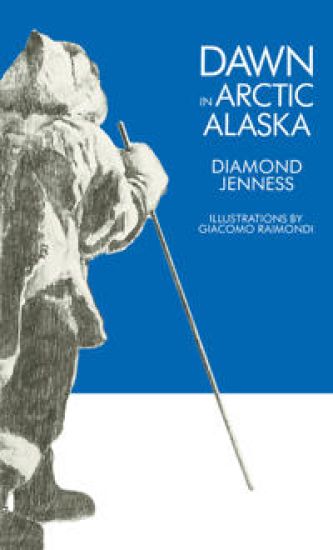
"The Karluk had disappeared. Whether the vessel had freed itself from the ice and steamed eastward, or whether, still imprisoned, it had been carried by the ice westward, we could not know. In any case it was gone, leaving our hunting party of six men marooned on a sandy islet surrounded by thin ice and open water. The wind finally died away, in the calm air the water rapidly froze over again, and on September 30 we crossed with our two sleds to the mainland." In 1913 a young ethnologist from New Zealand boarded a ship for the Arctic, beginning a personal journey that was to make Diamond Jenness one of the twentieth century's foremost authorities on Alaskan Eskimos. Jenness had been asked to join the Stefansson expedition, and his official duties were to collect ethnographic details on the Eskimos—their culture, technology, religion, and social organization. His account of the expedition was published as People of the Twilight in 1928, but Jenness also kept a diary of his three years among the Eskimos. He was eventually persuaded to publish it as Dawn in Arctic Alaska. Predating the genre of personal ethnographies that has become so popular and important today, Jenness's tales blend his keen observations of the Arctic and its people with his own reflections and sensory experiences. He expresses great adimiration for the customs and character of the Eskimos and great regret and disappointment over the destruction of their lifeway through contact with white men.