

Kirjahaku
Etsi kirjoja tekijän nimen, kirjan nimen tai ISBN:n perusteella.
1000 tulosta hakusanalla Dieter Struss

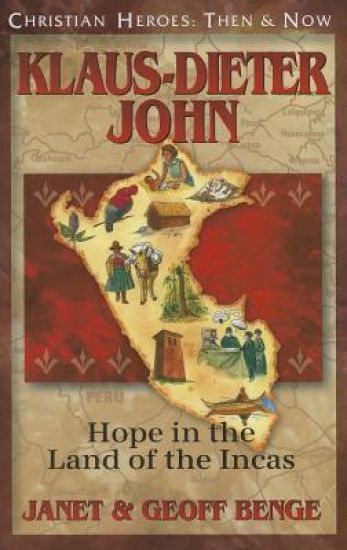
Klaus-Dieter John dreamed of becoming a medical missionary in the developing world. He would do whatever it took -- study in top universities and practice surgery in remote and dangerous places -- to reach his goal of providing health care for people who needed it most. Dr. John's seemingly impossible vision of Diospi-Suyana, a world-class hospital for impoverished Peruvians deep in the Andes Mountains, was blessed by God to the end. Despite challenges in fund-raising, construction, moving his family from Germany, and countless roadblocks, Klaus's dream was finally realized, bringing hope in a land loved by God. (1960-)
J.'s incredible journey, from overcoming an early setback - waking up in hospital with a broken leg after a drunken binge - to the triumph of shedding the first, and last, kilo.
The Psychological Dieter explores a variety of research topics in psychology to explain how diet is acquired and why it is so difficult to change. While many healthier diets on the market will work, few (if any) will provide long-term solutions to healthier dieting. This is a key challenge for research psychologists who study diet and health. Based on scientific research and thinking, this book is one of the first to explore how psychology can help explain why shifting diet is so difficult and provides practical suggestions for what can be done to stop this trend. Professor Privitera integrates research from the biological to the behavioral to provide an easy to follow and broad review of these topics. The Psychological Dieter explores how factors such as metabolism, the brain, sensation, perception, learning, society, and culture all influence weight gain, food choice, meal size, and consumption. Organized into three sections, this book describes how the body regulates hunger and fullness, why diet change is so difficult long-term, and how learning can affect almost any sensation and behavior associated with diet. Rooted in scientific research and clearly written, this book's engaging style makes topics in psychology accessible to scientists, health professionals, and everyday dieters alike.
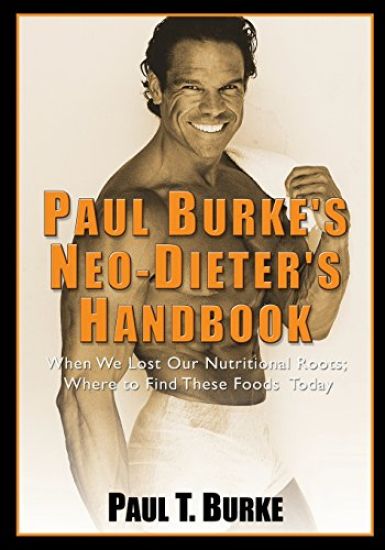
Paul Burke's Neo-Dieter's Handbook: When We Lost Our Nutritional Roots; Where to Find These Foods Today.
Paul Burke M. Ed
Booksurge Publishing
2009
nidottu
Paul Burke 's second book focuses on nutrition-three decades of research compiled for those who enjoy learning about health, exercise, weight training, fitness, and the right nutrition to enhance all of the above. This masterpiece of research, experience, and wisdom contains all-from the nutritional habits of prehistoric man to the "nutrition" of today's processed food. This book will answer such questions as: -Why should we stay away from chicken, pork, and beef if the animals are not pasture fed or not on a "non-grain" diet? -Why were mutant plants the source of present-day domesticated grains? -What are the numerous downfalls of animal domestication? -Why was every great human plague historically restricted to animals before jumping to humans? -Why did the Grist Mill change human longevity forever? -Why do doctors die at age 56-58 on average? -Why did pre-colonial Native Americans die of harsh weather or old age, but not disease? Burke takes the reader through the stages of human evolution with various indigenous cultures and their eating habits-from the massively muscled and healthy hunter-gatherers of 40,000 years ago to the culture of domesticated plants and animals. Burke's recommendations about the good and bad in his "Body Building Paleolithic Diet" may shock you, but the consequences of animal and plant domestication will shock you even more-things that neither the government nor family doctors talk about After laying the evolutionary groundwork, Burke builds the anthropological/Paleonutritionolgy case for why one should not eat domesticated grains such as wheat and barely. About 40,000 years ago, the body no longer needed to organically change. Then, about 10,000 years ago, the last of the great Neo Paleolithians discovered something that would change everything-from what we ate to how wars were fought and why we colonized the New World. Plant and animal domestication robbed us of the great energy and power that wild plants and animals possess. In addition, the tenacious skills needed for hunting and gathering were lost-skills that made us the biggest, strongest, fastest, and most intuitive human beings of all time... LOST The correlation between plant and animal domestication and diminishing human stature is striking. Within a few thousand years, we became a comparative skeleton. By the 16th-18th century, man was not much bigger than our chimpanzee ancestors averaging 5'6" and weighing 150 pounds-most of which was bones, organ tissue, and fat... lots of fat Of course, the lifestyle of the hunter-gatherer made them strong and powerful, but more importantly, what they ate-wild animals, nuts, vegetables, and fruits-was the reason for their massive stature. Wild, wild, wild The more an animal moves the more energy you get from it in the form of protein and carbohydrates as well as the "wild energy" stored in those tissues. A cow held fast in a metal harness all its life, only eating and defecating has no wild energy, very little life force. What you get on your plate is full of drugs and fat... lots and lots of fat On the other hand, a wild deer, or one of the new "Free Range Buffalo," will give you protein and carbohydrates, in addition to that invisible, unquantifiable wild life force that made our great Neo Paleolithic ancestors such huge muscular marvels. The advent of the Grist Mill, spawned another industry-the research and treatment of cancer and diabetes. Our pancreas evolved to send out glucagon when protein was digested and insulin when carbohydrates and large amounts of fats where taken in. The mission: restore worked muscle tissue, replace organic tissue, and create fat. Back when we ate once a day at best, fat was used as fuel as soon as the glucose and stored glycogen was burned. Fast-forward to present day where we eat three meals of manufactured food and an absolute epidemic of diabetes is the result-Flour? Pasta? Bread? They are all forms of sugar A lot of what we eat
The secret to getting thin with lasting results is doing something different...and this book, The delirious dieter is completely different The delirious dieter will be the strangest diet you will ever try. But the results will speak for themselves. Dieting, slimming, being fat and fed up with failing time and time again becomes a thing of the past with the delirious dieter. If you dismiss it as being one of those diets that won't work and no good without trying it then it is definitely not for you. If you are at the desperate stage to try anything and you are willing to forgo all that you think you know to be the right thing to do to lose weight and give this a go, the delirious dieter is just for you.

The War in Letters: Dieter Schoeller 1938-49
Karin Gunnemann-Schoeller
Createspace Independent Publishing Platform
2017
nidottu

Doktor Kleinermacher Fuehrt Dieter in Die Welt
Herbert Paatz; Claus H. Stumpff
Createspace Independent Publishing Platform
2017
nidottu
Protagonist dieses Jugendbuchs ist ein alter Naturforscher, dem es mittels eines von ihm entwickelten Wirkstoffs gelingt, sich und ein jugendliches Geschwisterpaar bis auf Fliegengr e oder noch kleiner schrumpfen zu lassen.Als winzige Zwerge unternehmen die drei Ausfl ge in Bienenk rbe und Ameisenh gel, zu Meerestieren oder Kleinstlebewesen in Wasserlachen und Erdreich. Jedesmal geraten sie in atemberaubende, gefahrvolle Situationen. Die mit besonderer Anschaulichkeit und m rchenhaft dargestellten Ereignisse in jene, f r Menschen nicht zug ngliche Gebiete sollen das Interesse jugendlicher Leser f r Natur und Umwelt wecken.

There are no recipes in this book. There are no diets as if you needed another one.This is a book about dieting, not a how-to diet book, even though I tell you what I did. It is about a personal weight loss journey. It is not a pep talk on how to stay positive when hunger pangs stab like sharp spears, not the supposed gentle waves that come and go.How bad does it get? try living with no results for 3 years. I suffered struggles of lethargy, depression, irritability, frustration and defeat. It's like when I'm walking on the local jogging path. People run past me. Go around, please. I'm slow. No matter. I'm getting my walk in.It takes as long as it takes. Call me cynical. Call me negative. Call me irresponsible.However, I was able to lose weight and keep it off.There is hope and it is possible to reach the finish line.I wrote this because I believe that you can do it, too.

Festschrift für Dieter Leipold zum 70. Geburtstag
Mohr Siebeck
2009
sidottu
Im Januar 2009 vollendete Dieter Leipold sein siebzigstes Lebensjahr. Aus diesem Anlass widmen ihm Kollegen und Freunde aus Deutschland und Europa, Asien und Amerika diese Festschrift.Dieter Leipold ist ein Rechtswissenschaftler mit einem überaus breiten Tätigkeitsfeld und internationaler Ausstrahlung. Auf dem Gebiet des materiellen Zivilrechts liegen seine Schwerpunkte im Erbrecht sowie im Allgemeinen Teil des Bürgerlichen Rechts. Vor allem aber ist Dieter Leipold ein großer Prozessualist, der die Entwicklung des Zivilverfahrensrechts dogmatisch, empirisch und rechtsvergleichend begleitet hat. Seine Beiträge sind nicht nur im Inland von großem Einfluss, sondern finden stets auch im Ausland aufmerksames Gehör. Diese weltweite Anerkennung spiegelt sich in den hier versammelten Beiträgen wider, die von Fragen der Geschäftsfähigkeit des Minderjährigen bis zur Sonderrechtsnachfolge im Sozialrecht und vom deutschen und europäischen Prozessrecht und dem Schiedsverfahrensrecht bis hin zur Rechtskraft in China reichen.

Festschrift für Dieter Martiny zum 70. Geburtstag
Mohr Siebeck
2014
sidottu
Die Festschrift zum 70. Geburtstag von Dieter Martiny würdigt einen außergewöhnlichen Juristen, der mit seinem umfangreichen und breit gefächerten wissenschaftlichen Œuvre in vielen Bereichen Maßstäbe gesetzt hat. Dieter Martiny ist Internationalität immer ein besonderes Anliegen gewesen. Seine Arbeiten, insbesondere zum Internationalen Privatrecht und Internationalen Prozessrecht, zur Rechtsvergleichung sowie zum deutschen und europäischen Familienrecht, haben wichtige Impulse gesetzt. Sein Werk und Wirken verbinden höchste wissenschaftliche Qualität mit praktischer Relevanz.Die vorliegende Festschrift enthält über 60 Beiträge von Freunden, Kollegen und wissenschaftlichen Weggefährten aus dem In- und Ausland. Diese Beiträge widmen sich sowohl grundsätzlichen dogmatischen Fragen als auch aktuellen rechtspolitischen Problemen aus allen genannten Rechtsgebieten. Mit Beiträgen von: Marianne Andrae, Tugrul Ansay, Jürgen Basedow, Harald Baum, Michael Becker, Katharina Boele-Woelki, Eckart Broedermann, Markus Buschbaum, Alfonso-Luis Calvo Caravaca, Olaf Deinert, Nina Dethloff, Anatol Dutta, Eberhard Eichenhofer, Reinhard Ellger, Ulrich Ernst, Frédérique Ferrand, Angelika Fuchs, Martin Gebauer, Reinhold Geimer, Ulla Gläßer, Cristina Gonzáles Beilfuss, Ulrich Häde, Rainer Hausmann, Jan von Hein, Helmut Heiss, Katharina Hilbig-Lugani, Armin Höland, Maarit Jänterä-Jareborg, Abbo Junker, Marian Kepinski, Eva-Maria Kieninger, Eva Kocher, Albert Lamarca Marquès, Stefan Leible, Nigel Lowe, Andrzej Maczynski, Ulrich Magnus, Peter Mankowski, Stephan Meder, Hanno Merkt, Yuko Nishitani, Eva Inés Obergfell, Jadwiga Pazdan, Maksymilian Pazdan, Franz-Joseph Peine, Walter Pintens, Jörg Pirrung, Stefanie Raschke, Oliver Remien, Christoph Reithmann, Karl Riesenhuber, Erik Røsæg, Wulf-Henning Roth, Jürgen Samtleben, Jens M. Scherpe, Kirsten Scheiwe, Anton K. Schnyder, Rolf A. Schütze, Kurt Siehr, Hans Jürgen Sonnenberger, Michael Stürner, Luboš Tichý, Harry Willekens, Peter Winkler v. Mohrenfels, Normann Witzleb, Arkadiusz Wudarski

Die Energiewirtschaft ist in Bewegung. Täglich wird von Fusionen berichtet. Hans-Dieter Harig, Vorstandsvorsitzender der E.ON Energie, ist seit 30 Jahren im Energiegeschäft und verfügt über eine einmalige Erfahrung. Dieses Buch schildert ihn, seine Karrierestufen, seine philosophische Prägung und gleichzeitig die Entwicklungen in der Energiewirtschaft. Sehr informativ und spannend.


Sprachkritik bei Rolf Dieter Brinkmann. Mögliche Auswege aus der "Sprachkrise"
Theresa Gießau
GRIN Verlag
2022
pokkari

Krise Und Utopie: Dieter Wellershoff - Leben Und Werk
Markus Schwering
Bohlau Verlag Koln
2025
sidottu
Dieter Wellershoff (1925-2018) gilt heute - neben Heinrich Boll und Jurgen Becker - als massgeblicher Vertreter der Kolner Literaturszene nach dem Zweiten Weltkrieg. Sein neuer "Ton" stand jenseits des lange Zeit die deutsche Erzahlprosa dominierenden Mainstreams moralisierender oder grotesk-satirischer Schreibweisen. Zentral in seinem Werk steht die Frage, ob und wie der von institutionellen Leitplanken freigesetzte Mensch der spaten Moderne uberhaupt noch ein gluckendes Leben zu fuhren vermag - eine Frage, die nicht an Relevanz verloren hat. Markus Schwering nimmt den 100. Geburtstag des Autors zum Anlass fur eine Gesamtdarstellung seines Lebens - verstanden als Zeitgenossenschaft - im engen Zusammenhang mit seinem OEuvre. Statt Textanalysen aneinanderzureihen, sucht er die Einheit des Gesamtwerks im dichten Geflecht unterschiedlicher und zugleich wiederkehrender Themen und Motive.

Zu Rolf Dieter Brinkmanns "Rom, Blicke" - Über die Faszination des Sehens und die Verzweiflung an der Gegenwart
Ina Brauckhoff
Grin Publishing
2008
pokkari

Bioethische Betrachtungen anhand von Dieter Birnbachers "Natürlichkeit", Kapitel 6 und 7
Julia Kulewatz
Grin Publishing
2008
pokkari
Studienarbeit aus dem Jahr 2008 im Fachbereich Philosophie - Philosophie des 20. Jahrhunderts / Gegenwart, Note: 2,00, Universit t Erfurt, Veranstaltung: Dieter Birnbacher; "Die Nat rlichkeit", 11 Quellen im Literaturverzeichnis, Sprache: Deutsch, Abstract: Heute sind dem Menschen neue Gestaltungsr ume auch innerhalb seiner eigenen Gattung m glich. Humangenetik und Reproduktionsmedizin er ffnen ihm diese. Die Grenze verschiebt sich merklich, doch welche Grenzbereiche sind betroffen? Ist es noch m glich, tats chlich zwischen Nat rlichkeit und K nstlichkeit zu unterscheiden, welche Methoden sind moralisch verwerflich und warum? Ab wann greift die K nstlichkeit in die Fortpflanzung des Menschen ein? Ist es moralisch richtig, allein der Natur die Entscheidung ber Leben und Sterben zu berlassen? Fragen die der Philosoph Dieter Birnbacher in den Kapiteln 6 und 7 seiner "Nat rlichkeit" kl ren will.