Kirjojen hintavertailu. Mukana 11 342 296 kirjaa ja 12 kauppaa.

Kirjahaku

Etsi kirjoja tekijän nimen, kirjan nimen tai ISBN:n perusteella.

1000 tulosta hakusanalla Dmitri Mereschkowski
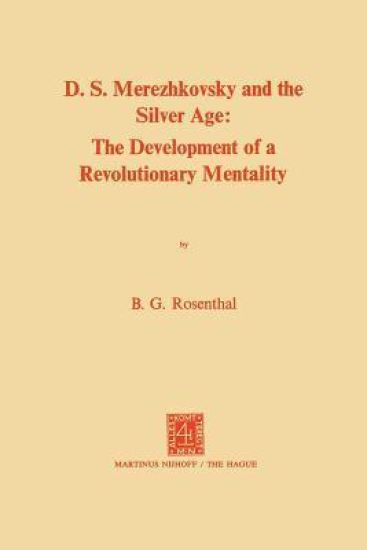
Dmitri Sergeevich Merezhkovsky and the Silver Age

Dmitri Sergeevich Merezhkovsky and the Silver Age

Bernice Glatzer Rosenthal

Springer
1975
nidottu
As the central event of modern times, the Bolshevik Revolution of 1917 remains a major focus of historical investigation and controversy. Unavoidably, the conception of the historical problems and the evidence presented are shaped by the historian's view on both the desirability and the inevitability of the Bolshevik Revolution. The years 1890-1917 are particularly important as the crucible in which revolutionary forces developed. In the nineties, Finance Minister Sergei Witte laid the groundwork for a modern economy. While he achieved many of his economic goals, the stresses and strains of forced draft industrialization contributed to the revival of the revolutionary movement; political instability was their immediate effect. By the turn of the century the peasants were in open revolt, an alienated and militant urban proletariat was emerging, and a cohesive liberal opposition was beginning to develop. All these groups demanded fundamental reforms including full political rights for all citizens. By 1905 they had gathered sufficient strength to force the government to issue a constitution and a legislature called the Duma. Neither side, however, was satisfied. The Imperial government tried to take back what it had granted under duress and the opposition parties attempted to discredit the system as "sham constitutionalism. " Only a small center was willing to work with the government and the government was not always willing to work with them.
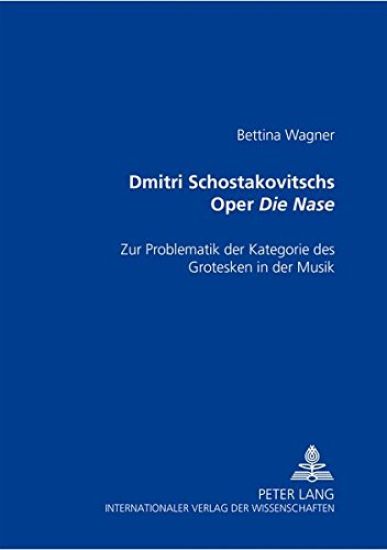
Dmitri Schostakowitschs Oper «Die Nase»

Dmitri Schostakowitschs Oper «Die Nase»

Bettina Wagner

Peter Lang AG
2003
nidottu
Zentrales Anliegen dieser Untersuchung ist es, die Problematik des Grotesken im Bereich der Musik darzustellen. Die in der kulturellen Umbruchphase der 1920er Jahre geschriebene Oper Die Nase liefert hierzu ein uberaus geeignetes Studienobjekt, das aufgrund seiner Besonderheiten eine interdisziplinare Vorgehensweise nahelegt: Auf der Grundlage literaturwissenschaftlicher Diskussion des Groteskebegriffes wird zunachst die grundsatzliche Problematik seiner Anwendung auf musikalischem Gebiet eroertert. Die nachfolgende Analyse der Oper und der anschliessende Blick auf wichtige Stationen ihrer Inszenierungsgeschichte ermoeglicht es, das Problem des musikalisch Grotesken am konkreten Beispiel darzustellen. Ein Appendix mit Ausschnitten aus historisch bedeutsamen sowjetisch-russischen Textdokumenten erganzt die Untersuchung.
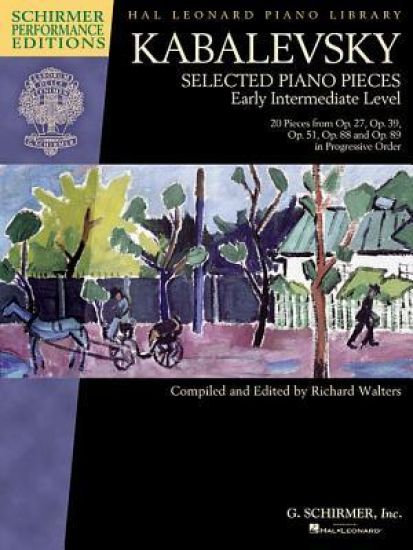
Dmitri Kabalevsky - Selected Piano Pieces: Early Intermediate Level
(Schirmer Performance Editions). 20 pieces from Op. 27, Op. 39, Op. 51, Op. 88, and Op. 89 in progressive order. Kabalevsky often quoted Russian writer Maxim Gorky that books for children should be "the same as for adults, only better." In one volume the miniature masterpieces that Kabalevsky composed for piano students have been grouped by level of difficulty, drawn from various sets. The composer believed that "no piece of music, however short and modest, should pass by a child without touching his mind and heart." Contents: Playing Ball, Op. 27, No. 5 * Sad Story, Op. 27, No. 6 * An Old Dance, Op. 27, No. 7 * Lullaby, Op. 27, No. 8 * A Little Fable, Op. 27, No. 9 * Toccatina, Op. 27, No. 12 * Sonatina, Op. 27, No. 18 * Folk Dance, Op. 39, No. 17 * Galop Op. 39, No. 18 * Prelude, Op. 39, No. 19 * Five Variations on a Russian Folk Song, Op. 51, No. 1 * Tale of an Old Organ-Grinder, Op. 88, No. 3 * Chastushka, Op. 89, No. 25 * Melody, Op. 89, No. 29 * Fighting Song, Op. 89, No. 30 * Rabbit Teasing a Bear-Cub, Op. 89, No. 31 * Little Hippo Dance, Op. 89, No. 32 * Almost a Waltz, Op. 89, No. 33 * Melancholy Rain, Op. 89, No. 34 * By the Water, Op. 89, No. 35
Stealing Dmitri

Stealing Dmitri

Nicola Cameron

Independently Published
2019
pokkari
Rory MacLellan, AKA the Highlander, may be the most successful interstellar art thief in the Known Worlds, but he still has a conscience. So when he runs into a suicidal museum worker during his latest job, he has no choice but to stun the man and rescue him from certain death.Dr. Dmitri Grigoryev was an up-and-coming exoarchaeologist until a disastrous dig left his career in tatters. Hungry, broke, and desperate, the last thing he expected was a dashing thief to come along and save his life.Thrown together by accident and with interstellar police on their tail, Rory and Dmitri reluctantly join forces for a major heist. But will their simmering attraction get in the way, or prove that they were meant to be together?
The Riddle of Dmitri

The Riddle of Dmitri

Sergei O. Prokofieff

TEMPLE LODGE PUBLISHING
2022
nidottu
In a private conversation on his deathbed, Rudolf Steiner informed his friend Count Polzer-Hoditz of three spiritual problems that would need to be resolved in the coming years: 'Firstly, the question of the two Johns [John the Baptist and John the Evangelist]. Secondly: Who was Dmitri? Thirdly: Where did Caspar Hauser come from?' Tackling these issues, said Steiner, would be of critical importance for humanity's future. He added: 'In all three problems it is important that one's gaze is directed not towards death but towards birth. Where did they come from and with what tasks?' In Dmitri's case, Steiner emphasized that the most important thing was to discover what was to have been achieved through him. --- Utilizing the significant clues left by Rudolf Steiner, Sergei O. Prokofieff takes on the second of these tasks, the great unsolved mystery of Russian history. Tsarevich Dmitri, the son of Tsar Ivan the Terrible, was tragically murdered as a young boy. Later, he was impersonated by a series of rogues and pretenders. Prokofieff's wide-ranging study integrates historical, psychological and spiritual-scientific perspectives to work towards the truth behind Dmitri's brief life, his mission and the distortions created by the 'false Dmitris'. He also examines the significance of Friedrich Schiller's unfinished play, Demetrius.
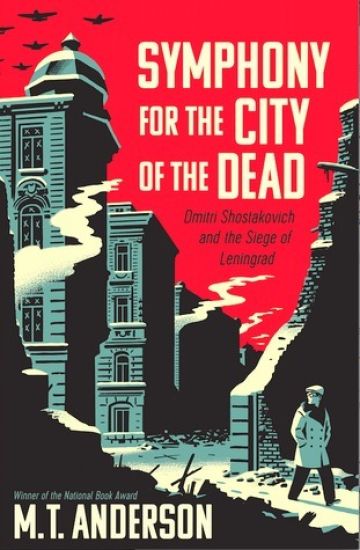
Symphony for the City of the Dead: Dmitri Shostakovich and the Siege of Leningrad
A Wall Street Journal 20 Best Children's Books of the Past 20 Years Selection A 2016 YALSA Award for Excellence in Nonfiction for Young Adults Finalist National Book Award winner M. T. Anderson delivers a brilliant and riveting account of the Siege of Leningrad and the role played by Russian composer Shostakovich and his Leningrad Symphony. In September 1941, Adolf Hitler's Wehrmacht surrounded Leningrad in what was to become one of the longest and most destructive sieges in Western history--almost three years of bombardment and starvation that culminated in the harsh winter of 1943-1944. More than a million citizens perished. Survivors recall corpses littering the frozen streets, their relatives having neither the means nor the strength to bury them. Residents burned books, furniture, and floorboards to keep warm; they ate family pets and--eventually--one another to stay alive. Trapped between the Nazi invading force and the Soviet government itself was composer Dmitri Shostakovich, who would write a symphony that roused, rallied, eulogized, and commemorated his fellow citizens--the Leningrad Symphony, which came to occupy a surprising place of prominence in the eventual Allied victory. This is the true story of a city under siege: the triumph of bravery and defiance in the face of terrifying odds. It is also a look at the power--and layered meaning--of music in beleaguered lives. Symphony for the City of the Dead is a masterwork thrillingly told and impeccably researched by National Book Award-winning author M. T. Anderson.
Composing the Modern Subject: Four String Quartets by Dmitri Shostakovich
Since the publication of Solomon Volkov's disputed memoirs of Dmitri Shostakovich, the composer and his music has been subject to heated debate concerning how the musical meaning of his works can be understood in relationship to the composer's life within the Soviet State. While much ink has been spilled, very little work has attempted to define how Shostakovich's music has remained so arresting not only to those within the Soviet culture, but also to Western audiences - even though such audiences are often largely ignorant of the compositional context or even the biography of the composer. This book offers a useful corrective: setting aside biographically grounded and traditional analytical modes of explication, Reichardt uncovers and explores the musical ambiguities of four of the composer’s middle string quartets, especially those ambiguities located in moments of rupture within the musical structure. The music is constantly collapsing, reversing, inverting and denying its own structural imperatives. Reichardt argues that such confrontation of the musical language with itself, though perhaps interpretable as Shostakovich's own unique version of double-speak, also poignantly articulates the fractured state of a more general form of modern subjectivity. Reichardt employs the framework of Lacanian psychoanalysis to offer a cogent explanation of this connection between disruptive musical process and modern subjectivity. The ruptures of Shostakovich's music become symptoms of the pathologies at the core of modern subjectivity. These symptoms, in turn, relate to the Lacanian concept of the real, which is the empty kernel around which the modern subject constructs reality. This framework proves invaluable in developing a powerful, original hermeneutic understanding of the music. Read through the lens of the real, the riddles written into the quartets reveal the arbitrary and contingent state of the musical subject's constructed reality, reflecting pathologies ende
Composing the Modern Subject: Four String Quartets by Dmitri Shostakovich
Since the publication of Solomon Volkov's disputed memoirs of Dmitri Shostakovich, the composer and his music has been subject to heated debate concerning how the musical meaning of his works can be understood in relationship to the composer's life within the Soviet State. While much ink has been spilled, very little work has attempted to define how Shostakovich's music has remained so arresting not only to those within the Soviet culture, but also to Western audiences - even though such audiences are often largely ignorant of the compositional context or even the biography of the composer. This book offers a useful corrective: setting aside biographically grounded and traditional analytical modes of explication, Reichardt uncovers and explores the musical ambiguities of four of the composer’s middle string quartets, especially those ambiguities located in moments of rupture within the musical structure. The music is constantly collapsing, reversing, inverting and denying its own structural imperatives. Reichardt argues that such confrontation of the musical language with itself, though perhaps interpretable as Shostakovich's own unique version of double-speak, also poignantly articulates the fractured state of a more general form of modern subjectivity. Reichardt employs the framework of Lacanian psychoanalysis to offer a cogent explanation of this connection between disruptive musical process and modern subjectivity. The ruptures of Shostakovich's music become symptoms of the pathologies at the core of modern subjectivity. These symptoms, in turn, relate to the Lacanian concept of the real, which is the empty kernel around which the modern subject constructs reality. This framework proves invaluable in developing a powerful, original hermeneutic understanding of the music. Read through the lens of the real, the riddles written into the quartets reveal the arbitrary and contingent state of the musical subject's constructed reality, reflecting pathologies ende