Kirjojen hintavertailu. Mukana 11 371 988 kirjaa ja 12 kauppaa.

Kirjahaku

Etsi kirjoja tekijän nimen, kirjan nimen tai ISBN:n perusteella.

1000 tulosta hakusanalla E. M. Delafield

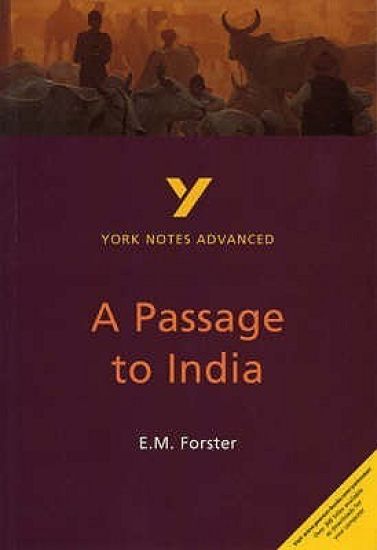
E. M. Forster 'A Passage to India': everything you need to catch up, study and prepare for 2025 assessments and 2026 exams
York Notes Advanced offer a fresh and accessible approach to English Literature. This market-leading series has been completely updated to meet the needs of today's A-level and undergraduate students. Written by established literature experts, York Notes Advanced intorduce students to more sophisticated analysis, a range of critical perspectives and wider contexts.

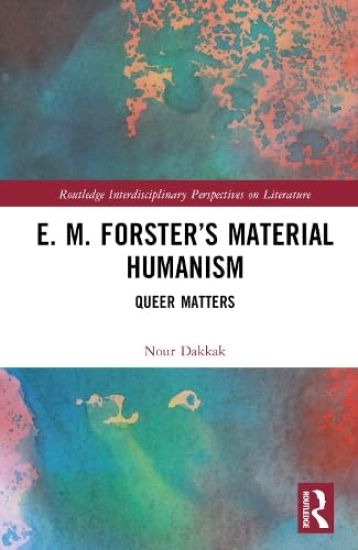
E. M. Forster’s Material Humanism

E. M. Forster’s Material Humanism

Nour Dakkak

TAYLOR FRANCIS LTD
2023
sidottu
Through attending to the nonhuman, E. M. Forster’s Material Humanism: Queer Matters places Forster’s fiction in conversation with contemporary debates concerned with the intersection of neomaterialism, environmental humanities, and queer ecology. The book revisits Forster’s liberal humanism from a materialist perspective by focusing on humans’ embodied activities in artificial and natural environments. By examining the everyday embodied experiences of characters, the book thus brings to the fore insignificant and sometimes overlooked aspects in Forster’s fiction. It also places importance on the texts’ treatment of queer intimacy as an embodied experience that can transcend sexual desire. The book acknowledges nonhuman agency as central to our understanding of queerness in Forster’s texts and studies the representation of formless matters such as dust as a way through which Forster’s ecological concerns arise by linking the fate of oppressed humans with oppressed nonhuman others.
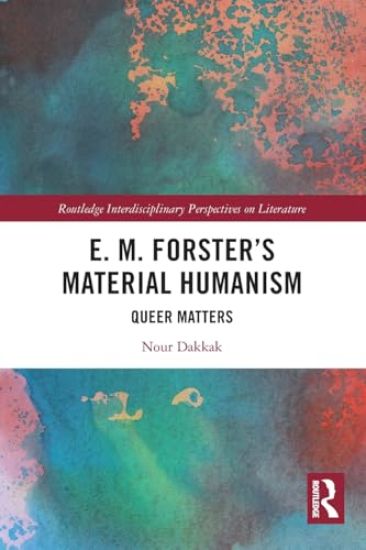
E. M. Forster’s Material Humanism

E. M. Forster’s Material Humanism

Nour Dakkak

TAYLOR FRANCIS LTD
2025
nidottu
Through attending to the nonhuman, E. M. Forster’s Material Humanism: Queer Matters places Forster’s fiction in conversation with contemporary debates concerned with the intersection of neomaterialism, environmental humanities, and queer ecology. The book revisits Forster’s liberal humanism from a materialist perspective by focusing on humans’ embodied activities in artificial and natural environments. By examining the everyday embodied experiences of characters, the book thus brings to the fore insignificant and sometimes overlooked aspects in Forster’s fiction. It also places importance on the texts’ treatment of queer intimacy as an embodied experience that can transcend sexual desire. The book acknowledges nonhuman agency as central to our understanding of queerness in Forster’s texts and studies the representation of formless matters such as dust as a way through which Forster’s ecological concerns arise by linking the fate of oppressed humans with oppressed nonhuman others.
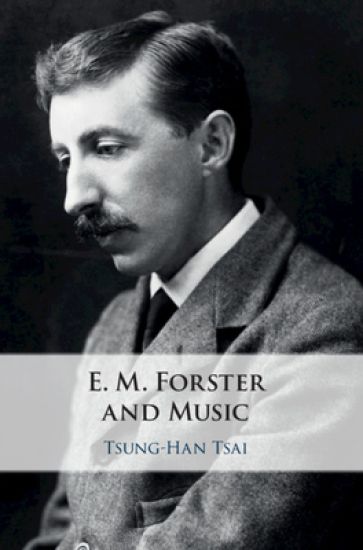
E. M. Forster and Music

E. M. Forster and Music

Tsung-Han Tsai

Cambridge University Press
2021
sidottu
This book examines the political resonances of E. M. Forster's representations of music, offering readings of canonical and overlooked works. It reveals music's crucial role in his writing and draws attention to a previously unacknowledged eclecticism and complexity in Forster's ideological outlook. Examining unobtrusive musical allusions in a variety of Forster's writings, this book demonstrates how music provided Forster with a means of reflecting on race and epistemology, material culture and colonialism, literary heritage and national character, hero-worship and war, and gender and professionalism. It unveils how Forster's musical representations are mediated through a matrix of ideas and debates of his time, such as those about evolution, empire, Britain's relationship with the Continent, the rise of fascism, and the emergence of musicology as an academic discipline.
E. M. Forster as Critic

E. M. Forster as Critic

Rukun Advani

Routledge
2016
sidottu
This title, first published in 1984, is a study of E. M. Forster as a liberal-humanist thinker and socio-literary critic. Advani discusses Forster’s ideas on man, society, politics, religion, art, aesthetics, fiction and literary criticism. The author examines why Forster was impelled from fiction towards socio-literary criticism and propaganda for art within the political and cultural context of post-Great War Britain. The book argues for Forster’s continuing importance as much more than a skilful novelist. It will be of interest to students of English cultural history, literary theory and criticism, and the work of E. M. Forster.
E. M. Forster as Critic

E. M. Forster as Critic

Rukun Advani

Routledge
2018
nidottu
This title, first published in 1984, is a study of E. M. Forster as a liberal-humanist thinker and socio-literary critic. Advani discusses Forster’s ideas on man, society, politics, religion, art, aesthetics, fiction and literary criticism. The author examines why Forster was impelled from fiction towards socio-literary criticism and propaganda for art within the political and cultural context of post-Great War Britain. The book argues for Forster’s continuing importance as much more than a skilful novelist. It will be of interest to students of English cultural history, literary theory and criticism, and the work of E. M. Forster.
E. M., 2013

E. M., 2013

Alinor K. Austen

Lulu.com
2014
nidottu
First of April 2013 is also Easter Monday. The play takes place in an Australian country town and is about elationships between three sisters. Pratical jokes are the MO of the day against the background of religious devotion.
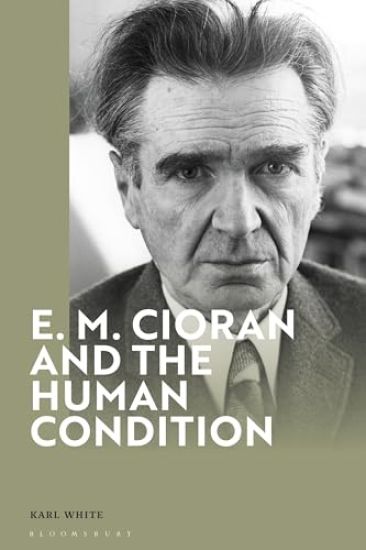
E. M. Cioran and the Human Condition

E. M. Cioran and the Human Condition

Karl White

BLOOMSBURY PUBLISHING PLC
2025
sidottu
This masterful account situates E.M. Cioran in his rightful place as one of the key figures in French post-war thought.Acknowledged for decades as a pillar of European culture, the Romanian émigré to Paris has been overlooked by Anglophone scholarship, but by placing him in conversation with acclaimed mainstream thinkers like Martha Nussbaum, Hannah Arendt and Samuel Beckett this book finally redresses that balance. Cioran is a thinker determined to peel back the layers of ‘polite’ philosophy to explore the anxious and difficult experience of being human. E.M. Cioran and the Human Condition focuses in on the iconoclastic force of his work and, in particular, his preoccupation with birth, which he conceives of as the source of life’s dilemmas. Framing its discussions with enduring theological themes like guilt, original sin, salvation and apocalypse, this book brings the true value of Cioran’s work for Western thought to the fore. These ideas often go unnoticed in the work of more conventional thinkers, making Cioran an essential figure in confronting the apocalyptic nature of our own age. The unique combination of pessimism, dark humour and morbid wit in Cioran’s writing pushes us to explore what, if any, future there is for humanity in a world becoming ever more inhuman. This is a lively and thought-provoking introduction to an unjustly marginalized thinker who has much to teach us about the human condition after the crises of the twentieth century.
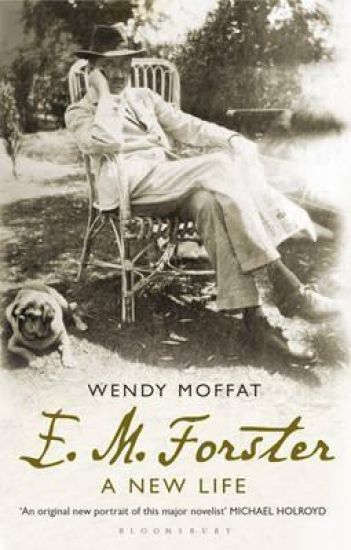
E. M. Forster

E. M. Forster

Wendy Moffat

Bloomsbury Publishing PLC
2011
nidottu
One of the great mysteries in the life of E. M. Forster (1879-1970) is why, after the publication of A Passage to India in 1924, he never published another novel although he lived to be 90. In Wendy Moffat's biography, based on a lifetime's dedication to her subject, we gain extraordinary insights into a man with a gift for writing fiction of great humanity, warmth and humour, who realised early that the society of his time would not allow him to publish the fiction he really wanted to write. At the end of A Passage to India, his readers were left with the melancholy sight of Aziz and Fielding, friends of different races and cultures, riding out of the novel down separate paths. In real life, although frustrated at not being able to write out of his true self - it would not be until after his death that Maurice, his novel of a homosexual affair, would be published - E. M.Forster led a full and energetic life. He was a successful broadcaster, a brilliant essayist (Abinger Harvest and Two Cheers for Democracy are still must-reads) and a leading figure in Europe's intellectual life. Moffat argues that with his support for colleagues from Lowes Dickinson and Radclyffe Hall to Christopher Isherwood and Benjamin Britten, and his quiet championing of humanistic values, he helped create the more tolerant world we now enjoy.Moffat's achievement is not to show that Forster was homosexual (this is well known) but how deeply his ideas on individual freedom, tolerance, sexuality and love, permeated every act and aspect of his life.