Kirjojen hintavertailu. Mukana 11 224 866 kirjaa ja 12 kauppaa.

Kirjahaku

Etsi kirjoja tekijän nimen, kirjan nimen tai ISBN:n perusteella.

1000 tulosta hakusanalla Edith Beale

Edith Wharton and the Visual Arts

Edith Wharton and the Visual Arts

Emily J. Orlando

The University of Alabama Press
2007
sidottu
This work explores Edith Wharton's career-long concern with a 19th-century visual culture that limited female artistic agency and expression. Wharton repeatedly invoked the visual arts - especially painting - as a medium for revealing the ways that women's bodies have been represented (as passive, sexualized, infantalized, sickly, dead). Wellversed in the Italian masters, Wharton made special use of the art of the Pre-Raphaelite Brotherhood, particularly its penchant for producing not portraits of individual women but instead icons onto whose bodies male desire is superimposed. Emily Orlando contends that while Wharton's early work presents women enshrined by men through art, the middle and later fiction shifts the seat of power to women. From Lily Bart in ""The House of Mirth"" to Undine Spragg in ""The Custom of the Country"" and Ellen Olenska in ""The Age of Innocence"", women evolve from victims to vital agents, securing for themselves a more empowering and satisfying relationship to art and to their own identities. Orlando also studies the lesser-known short stories and novels, revealing Wharton's re-workings of texts by Browning, Poe, Balzac, George Eliot, Sir Joshua Reynolds, and, most significantly, Dante Gabriel Rossetti. ""Edith Wharton and the Visual Arts"" is the first extended study to examine the presence in Wharton's fiction of the Pre-Raphaelite poetry and painting of Rossetti and his muses, notably Elizabeth Siddall and Jane Morris. Wharton emerges as one of American literature's most gifted inter-textual realists, providing a vivid lens through which to view issues of power, resistance, and social change as they surface in American literature and culture.
Edith Wharton and the Visual Arts

Edith Wharton and the Visual Arts

Emily J. Orlando

The University of Alabama Press
2009
nidottu
This work explores Edith Wharton's career-long concern with a 19th-century visual culture that limited female artistic agency and expression. Wharton repeatedly invoked the visual arts - especially painting - as a medium for revealing the ways that women's bodies have been represented (as passive, sexualized, infantilized, sickly, dead). Well-versed in the Italian masters, Wharton made special use of the art of the Pre-Raphaelite Brotherhood, particularly its penchant for producing not portraits of individual women but instead icons onto whose bodies male desire is superimposed.
Edith Wharton in Context

Edith Wharton in Context

Adeline R. Tintner

The University of Alabama Press
2015
nidottu
Tintner provides a detailed analysis of the complex interplay between Wharton and James?how they influenced each other and how some of their writings operate as homages or personal jokes. So deeply was James in Wharton’s confidence, Tintner argues, that he provided her with source models for a number of her characters. In addition, Wharton found in his fiction structures for her own, especially for The Age of Innocence. Tintner also brings her considerable knowledge of art history to bear in her study of art allusions in Wharton’s work. Wharton’s response both to the Italian painters active before Raphael and to the English Pre-Raphaelites of a generation before her own is analyzed here in three essays. These pieces demonstrate Wharton’s sensibility to changes in art tastes and collecting, the inheritance of Rossetti’s revolutionary paintings in the unfinished novel, The Buccaneers, and the importance of home in The Glimpses of the Moon, as demonstrated by Wharton’s use of Tiepolo’s fresco in the church of Scalzi. Tintner concludes by considering Wharton’s literary legacy and who Wharton has figured in the imaginations of recent writers, including Richard Howard, Louis Auchincloss, and Cathleen Schine. Tintner finds some part of Wharton’s personality or work evoked in a number of contemporary works and argues that this presence signals the beginning of an increasing influence.
Edith Stein and the Body-soul-spirit at the Center of Holistic Formation
With a particular emphasis on the soul, this book explores Edith Stein's holistic conception of the human being's body-soul-spirit unity, which forms the foundation of her Christian anthropology and her view of human formation. Characterized by an unremitting attention to interconnections, Stein emerges as a forerunner of contemporary holistic approaches. Edith Stein and the Body-Soul-Spirit at the Center of Holistic Formation demonstrates the breadth and relevance of Stein's work by engaging her thought with the anthropological views of fellow phenomenologist John Paul II, Wilkie Au's perspectives on holistic spirituality and formation, and several nonreductionist, neuroscientific viewpoints of the human being. This book also makes available to the English reader a significant amount of material from Stein's untranslated works. Anyone interested in theological anthropology, holistic spirituality, human formation, the body-mind question, or Edith Stein studies will benefit from the wealth of material presented in this single book.
Edith Stein

Edith Stein

Alasdair MacIntyre

Continuum International Publishing Group Ltd.
2007
nidottu
MacIntyre is one of the major British philosophers of the post-war years, and a convert to Roman Catholicism. Edith Stein was an intellectual of considerable importance in the period between the two World Wars. The fact that she was also canonised as a Saint is truly remarkable: a Jewish convert to Roman Catholicism, she died in the gas chambers of Auschwitz. In this major study of Stein's development as a theologian and philosopher, MacIntyre reveals many of the fundamental issues in both disciplines and in their cross-fertilisation. Stein was a pupil of the phenomenological philosopher Edmund Husserl. She then sought in her own writing to interpret phenomenology in a Thomistic way. In this, she was as original and innovative as were the Catholic philosophers - such as Peter Geach and Elizabeth Anscombe - who made similar interpretations of the work of Wittgenstein in this country.
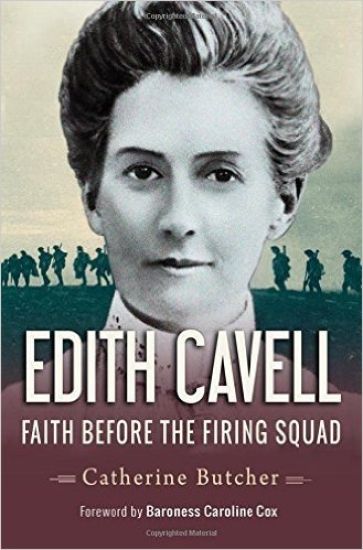
Edith Cavell

Edith Cavell

Catherine Butcher

Monarch Books
2015
nidottu
Edith Louisa Cavell was a British nurse. She is celebrated for saving the lives of soldiers from both sides and in helping some 200 Allied soldiers escape from German-occupied Belgium during the First World War, for which she was arrested. She was subsequently court-martialled, found guilty of treason and sentenced to death. She was shot by a German firing squad at the age of 49. Her execution was greeted with worldwide condemnation and extensive press coverage. A woman of profound faith, she told her chaplain, on the night before her execution, 'Standing as I do in view of God and eternity, I realize that patriotism is not enough. I must have no hatred or bitterness towards anyone." Her death caused international outrage and may have contributed to America's decision to enter the war. Three films and a stage play have been written about her life, and many public buildings and streets named after her. She will feature on a commemorative [5.00 coin in 2015.
Edith Stein: The Life of a Philosopher and Carmelite

Edith Stein: The Life of a Philosopher and Carmelite

Teresia Renata Posselt

ICS Publications
2005
nidottu
The first biography of Edith Stein, written by her prioress in the Cologne Carmel, was out of print for half a century. The original text, "a wreath of recollections, lovingly woven together," is here re-edited and enhanced by scholarly perspectives, and also updated and corrected in the light of information that was not available to the author at the time. The book includes 9 photos.