Kirjojen hintavertailu. Mukana 11 627 067 kirjaa ja 12 kauppaa.

Kirjahaku

Etsi kirjoja tekijän nimen, kirjan nimen tai ISBN:n perusteella.

1000 tulosta hakusanalla Edith C Kenyon

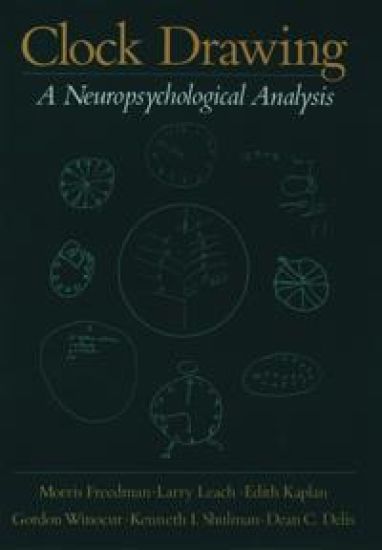
Clock Drawing

Clock Drawing

Morris Freedman; Larry Leach; Edith Kaplan; Gordon Winocur; Ken Shulman; Dean C. Delis

Oxford University Press Inc
1994
sidottu
Written by a multi-disciplinary team of experts in neurobehaviour, this concise, well-illustrated book provides long-awaited normative data on clock drawing from ages 20 to 90 years. A practical guide to the quantitative assessment of clock drawing, it also takes a process-oriented approach to qualitative impairment. The authors discuss clock drawing as a neuropsychological test instrument and the rationale for selecting specific time settings, as well as the basis for using different clock conditions. The book contains numerous examples of clocks drawn by patients with cognitive impairment due to dementia, metabolic encephalopathy, traumatic brain injury, disconnection syndrome and focal brain lesions. Insight into changes in clock drawing ability that may represent the earliest markers of cognitive decline in dementia are also presented. This volume will be of interest to clinicians and researchers in neuropsychology, neurology, psychiatry, geriatric medicine, language therapy, and occupational therapy. It offers readers normative data on the clock drawing task, guidelines for administration and scoring, and a rich selection of clock drawings that illustrate the abnormalities commonly encountered in clinical practice and research.
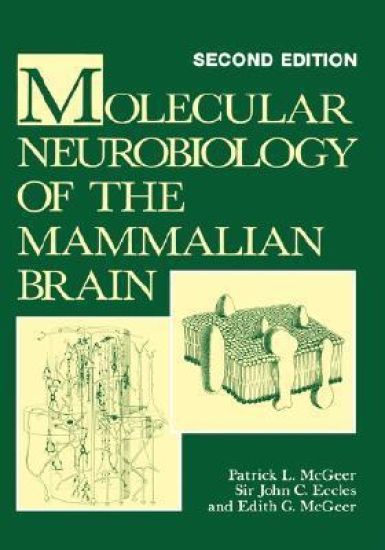
Molecular Neurobiology of the Mammalian Brain

Molecular Neurobiology of the Mammalian Brain

Patrick L. McGeer; John C. Eccles; Edith G. McGeer

Kluwer Academic/Plenum Publishers
1987
nidottu
The human brain is the inner universe through which all external events are perceived. That fact alone should ensure that neuroscience will eventually receive top priority in the list of human endeavors. The brain represents the pinnacle of sophistication in the realm of living systems. Yet it is an imperfect organ, whose failures in disease processes lead to the occupation of more than half of all hospital beds and whose variable performance in the healthy state contributes in undetermined degree to the world's social problems. Every significant advance in or understanding of the brain has yielded enormous practical dividends. There is every reason to believe the future holds even greater promise. In the preface to our first edition, we drew attention to the establishment of graduate programs in dozens of universities around the world and the emergence of numerous international journals devoted to interdisciplinary work on the brain. The discoveries that have flowed from this activity have required extensive updating of the details of this book, which is a testimony to the fruitfulness of neuroscience research. Yet the basics remain the same. It is more important than ever that the neuroscientist be presented with the fundamental subdisciplines that together make up the total of brain research in an integrated manner.
Watch for the Light

Watch for the Light

Dietrich Bonhoeffer; John Donne; C. S. Lewis; Henri J. M. Nouwen; Meister Eckhart; Dorothy Day; Thomas Stearns Eliot; Stein Edith; Aquinas Thomas; Yancey Philip

PLOUGH PUBLISHING HOUSE
2014
nidottu
Though Christians the world over make yearly preparations for Lent, there’s a conspicuous lack of good books for that other great spiritual season: Advent. All the same, this four-week period leading up to Christmas is making a comeback as growing numbers reject shopping-mall frenzy and examine the deeper meaning of the season. Ecumenical in scope, these fifty devotions invite the reader to contemplate the great themes of Christmas and the significance that the coming of Jesus has for each of us – not only during Advent, but every day. Whether dipped into at leisure or used on a daily basis, Watch for the Light gives the phrase “holiday preparations” new depth and meaning. Includes writings by Christoph Friedrich Blumhardt, Sylvia Plath, J. B. Phillips, Friedrich Wilhelm Foerster, Henri Nouwen, Bernard of Clairvaux, Kathleen Norris, Meister Eckhart, St. Thomas Aquinas, Karl Rahner, Isaac Penington, Madeleine L’Engle, Alfred Delp, Loretta Ross-Gotta, William Stringfellow, J. Heinrich Arnold, Edith Stein, Philip Britts, Jane Kenyon, John Howard Yoder, Emmy Arnold, Karl Barth, Oscar Romero, William Willimon, Johann Christoph Arnold, Gail Godwin, Leonardo Boff, G. M. Hopkins, Evelyn Underhill, Dorothy Day, Brennan Manning, Dietrich Bonhoeffer, Romano Guardini, Annie Dillard, Martin Luther, St. John Chrysostom, Giovanni Papini, Dorothee Soelle, C. S. Lewis, Gustavo Gutiérrez, Philip Yancey, J. T. Clement, Thomas Merton, Eberhard Arnold, Ernesto Cardenal, T. S. Eliot, John Donne, Gian Carlo Menotti and Jürgen Moltmann.
Düngung der Kulturpflanzen

Düngung der Kulturpflanzen

N. Atanasiu; W. Baden; F. Baltin; L. D. Baver; A. Blamauer; E. v. Boguslawski; K. Bräunlich; D. Brüning; Y. Coïc; Diplomgärtnerin Liselotte Forchthammer; W. Frohner; A. Fruhstorfer; L. Gisiger; M. Gökgöl; W. Gruppe; C. Heinemann; W. Jahn-Deesbach; J. Jung; E. Klapp; L. M. Kopetz; H. Kraut; P. W. Kürten; H. Linser; H. Löcker; H. Lüdecke; Direktor F. Mappes; A. v. Müller; W. Müller; K. Nehring; K.-H. Neumann; F. Penningsfeld; Edith Primost; H. Rüther; K. Schmid; H. Schröder; W. Schuster; O. Siegel; O. Steineck; R. Steiner; V. Tay?i

Springer Verlag GmbH
2012
nidottu
Seit dem Erscheinen des zweibändigen Standardwerkes von F. HONCAMP, "Handbuch der Pflanzenernährung und Düngerlehre", sind mehr als dreißig Jahre vergangen. Bei den stürmischen Fortschritten auf allen Gebieten der Natur­ wissenschaften, insbesondere der Chemie, Pflanzenphysiologie, Biochemie, Bodenkunde und Technologie, ist dieses zur Zeit seines Erscheinens so aus­ gezeichnete Handbuch natürlich längst veraltet. Zweifellos besteht heute ein dringendes Bedürfnis nach einem ähnlichen Werk. Wenn wir von dem ursprünglichen Plan abgekommen sind, das HONCAMP­ sche Handbuch in neuer Auflage zu bearbeiten, so vor allem deswegen, weil die tiefgreifende Entwicklung auf diesem Gebiet eine völlig neue Gestaltung des Werkes geboten erscheinen ließ. Es gliedert sich nun in drei Bände. Band I behandelt im wesentlichen die physiologischen Grundlagen der Pflanzenernährung. Er enthält eine ausführliche und systematische Darstellung der eigentlichen Ernährungsphysiologie. Auf eine Erörterung der allgemeinen pflanzen­ physiologischen Grundlagen konnte dabei verzichtet werden, weil im RUHLAND­ sehen "Handbuch der Pflanzenphysiologie" ein umfassendes und modernes Nach­ schlagewerk zur Verfügung steht. Band II beschäftigt sich mit dem Boden und den Düngemitteln. Unter Berücksichtigung der modernen Agrikulturchemie haben wir das heutige Wissen über den Boden als Standort und Nährstoffquelle der Pflanze unter den Verhält­ nissen der landwirtschaftlichen Praxis und des Gartenbaues bzw. des Forstwesens systematisch zusammengefaßt. Die folgenden Kapitel befassen sich mit der Beschreibung und Herstellung der verschiedenen Wirtschafts- und Handels­ düngemittel. Gerade auf diesem Gebiet bestehen in der wissenschaftlichen Literatur erhebliche Lücken, da keinegrößeren Lehr-oder Handbücher vorhanden sind, die sich eingehender mit der Technologie der Düngemittel und der Düngung beschäftigen.
Ny Jord 3-4

Ny Jord 3-4

Andreas Malm; Margaret Mead; Emil Leth Meilvang; Peter Handke; Rune Engelbreht Larsen; Christoffer Basse Eriksen; Simone Weil; Anders Dunker; Francisco Goya; Liv Sejrbo Lidegaard; Arno Schmidt; Phillip Martinussen; Walt Whitman; Emil Bønnelycke; Signe Gjessing; Daniel Flendt Dreesen; Gaston Bachelard; Jørn H. Sværen; Michael Stoltze; Lao Zi; Ursula K. Le Guin; Peter Sloterdijk; Oliver Bak; Anna Marie Ortese; Edith Södergran; August Strindberg; C.Y. Frostholm; Lea Marie Løppenthin; Max Klinger; Charles Sanders Peirce

Forlaget Virkelig
2020
nidottu
Ny Jord – Tidsskrift for naturkritik er et multidisciplinært tidsskrift, der orienterer sig på tværs af århundreder og landegrænser og bringer videnskab, litteratur og kunst side om side i ønsket om at bidrage til en kvalificeret samtale om naturen i en tid, hvor vores forestillinger og idéer om den ændres markant.