Kirjojen hintavertailu. Mukana 11 235 027 kirjaa ja 12 kauppaa.

Kirjahaku

Etsi kirjoja tekijän nimen, kirjan nimen tai ISBN:n perusteella.

1000 tulosta hakusanalla Edith Hamilton

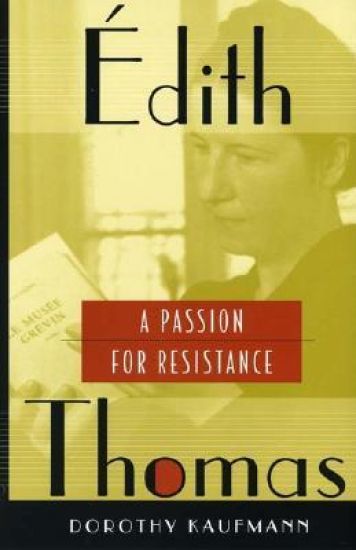
Édith Thomas

Édith Thomas

Dorothy Kaufmann

Cornell University Press
2004
sidottu
Édith Thomas (1909–1970), a remarkable French woman of letters, was deeply involved in the traumatic upheavals of her time: most crucially the resistance to Nazi occupation and the collaborationist Vichy regime, but also the Spanish Civil War and the Algerian War. During the occupation, she played an essential role in the struggle to counteract Nazi and Pétainist propaganda. She was the only woman in the Paris network of Resistance writers; they held their clandestine meetings in her left-bank apartment.Dorothy Kaufmann's powerful and moving book is based in large part on previously unavailable material that Édith Thomas, a historian, novelist, and journalist, chose not to publish during her lifetime. A particularly fascinating chapter in Thomas's life was her intimate relationship with Dominique Aury, who wrote Story of O as "Pauline Réage." The astonishing documents made available to Kaufmann by Aury include Thomas's eight notebooks of diaries, which she kept from 1931 to 1963; her fictional diary of a collaborator, written during the first year of the occupation; and her political memoir, to which she gave the disturbing title Le Témoin compromis (The Compromised Witness).Édith Thomas: A Passion for Resistance sheds light on the historical dimensions of Thomas's life and work and on the autobiographical complexity of her writing, which everywhere illustrates her personal courage. Kaufmann follows Édith Thomas's itinerary as it intersects with that of well-known contemporaries—in particular Simone de Beauvoir, Jean-Paul Sartre, Albert Camus, Louis Aragon, Jean Paulhan, and, of course, Dominique Aury.
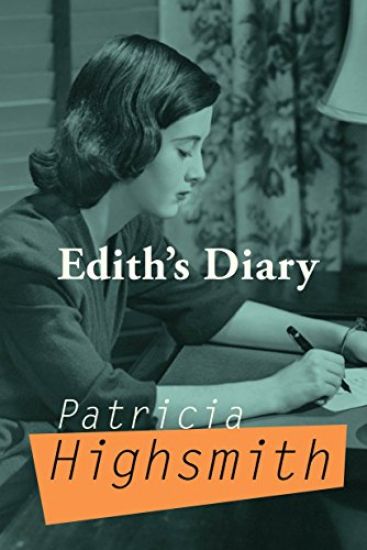
Edith's Diary

Edith's Diary

Patricia Highsmith

Black Cat
2018
nidottu
Edith Howland's diary is her most precious possession. After moving with her family from New York City to suburban Pennsylvania, Edith's husband abandons her for a younger woman, leaving her trapped in a bleak existence with her degenerate son and his senile uncle. As Edith's life turns sour, she retreats into her writing; and while her life plunges into chaos, a disturbing tale of success and happiness blooms in her diary. She invents a happy life, and as she knits for imaginary grandchildren, the real world recedes further still, marking a descent into madness that may well be unstoppable. Originally published in 1977, Edith's Diary is a masterpiece of psychological suspense, a harrowing and tautly written tale of an ordinary woman whose life is slipping out of control. The author of Strangers on a Train and The Talented Mr. Ripley, Patricia Highsmith is one of the most original voices in twentieth-century American fiction.
EDITH WHARTON'S LETTERS FROM THE UNDERWORLD-FICTIONS OF WOMEN AND WRITING
In this book, Candace Waid presents an innovative reading of the work of Edith Wharton. Waid examines Wharton's lifelong preoccupation with the place of the American woman writer, which she locates in the context of Wharton's ambivalent reaction to America and American literature. She argues that Wharton used the myth of Persephone to represent both the woman artist and her identification with the daughter who leaves the world of mother to dwell in the underworld of experience.Waid offers detailed interpretations of such works such as The House of Mirth, Ethan Frome, Artemis to Actaeon, Summer, The Custom of the Country, and Ghosts -- all of which are read as complex meditations about women and writing. According to Waid, Wharton is obsessed by the potential failure of the American woman artist who risks succumbing to to the false muse of a feminine aesthetic. Tracing Wharton's literary dialogues with sources ranging from Mary Wilkins to Goethe, from Andrew Marvel to Sir Joshua Reynolds, Waid reveals Wharton's haunting allegories about women, art, and letters.Originally published in 1991.A UNC Press Enduring Edition -- UNC Press Enduring Editions use the latest in digital technology to make available again books from our distinguished backlist that were previously out of print. These editions are published unaltered from the original, and are presented in affordable paperback formats, bringing readers both historical and cultural value.
Edith Stein

Edith Stein

Sarah Borden Sharkey

Paulist Press International,U.S.
2016
sidottu
The first book to present Edith Stein specifically as a spiritual author, this volume contains selections of her works in a wide range of genres and reveals a wide range of spiritual concerns. †
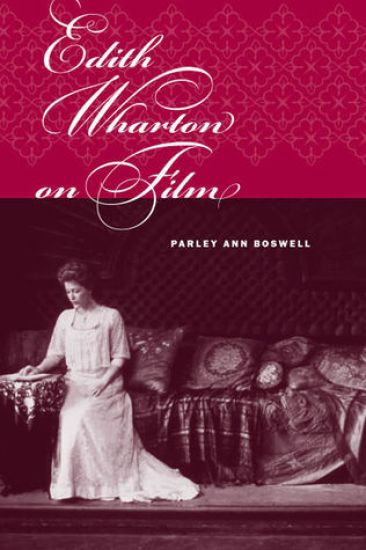
Edith Wharton on Film

Edith Wharton on Film

Parley Ann Boswell

Southern Illinois University Press
2007
sidottu
Edith Wharton (1862-1937), who lived nearly half of her life during the cinema age when she published many of her well-known works, acknowledged that she disliked the movies, characterizing them as an enemy of the imagination. Yet her fiction often referenced film and popular Hollywood culture, and she even sold the rights to several of her novels to Hollywood studios. ""Edith Wharton on Film"" explores these seeming contradictions and examines the relationships among Wharton's writings, the popular culture in which she published them, and the subsequent film adaptations of her work (three from the 1930s and four from the 1990s). Author Parley Ann Boswell examines the texts in which Wharton referenced film and Hollywood culture and evaluates the extant films adapted from Wharton's fiction. The volume introduces Wharton's use of cinema culture in her fiction through the 1917 novella ""Summer"", written during the nation's first wave of feminism, in which the heroine Charity Royall is moviegoer and new American woman, consumer and consumable. Boswell considers the source of this conformity and entrapment, especially for women. She discloses how Wharton struggled to write popular stories and then how she revealed her antipathy toward popular movie culture in two late novels. Boswell describes Wharton's financial dependence on the American movie industry, which fueled her antagonism toward Hollywood culture, her well-documented disdain for popular culture, and her struggles to publish in women's magazines. This first full-length study that examines the film adaptations of Wharton's fiction covers seven films adapted from Wharton's works between 1930 and 2000 and the fifty-year gap in Wharton film adaptations. The study also analyzes Sophy Viner in ""The Reef"" as pre-Hollywood ingenue, in ""Twilight Sleep"" and ""The Children"" and the real Hollywood figures who might have inspired them, and The Sheik and racial stereotypes. Boswell traces the complicated relationship of fiction and narrative film, the adaptations and cinematic metaphors of Wharton's work in the 1990s, and Wharton's persona as an outsider. Wharton's fiction on film corresponds in striking ways to American noir cinema, says Boswell, because contemporary filmmakers recognize and celebrate the subversive qualities of Wharton's work. ""Edith Wharton on Film"", which includes eleven illustrations, enhances Wharton's stature as a major American author and provides persuasive evidence that her fiction should be read as American noir literature.
Edith Wharton's Writings from the Great War
Edith Wharton resided in France during World War I, visiting combat zones and hospitals and working tirelessly with refugee and children's relief organizations. In magazines and newspapers such as the New York Times, Saturday Evening Post, and Scribner's, she wrote prodigiously about the war - dispatches, feature articles, and poems. During this time she also completed a number of short stories, two books (Summer and The Marne), and the essays that were collected in French Ways and Their Meaning. The war remained a topic for her after its conclusion, most notably in her 1923 novel. A Son at the Front. Yet none of this work has received the critical attention it deserves. Julie Olin-Ammentorp, through her detailed examination of a wide range of texts, including archival sources and materials long out of print, reclaims Wharton's war writings and places her in the company of other ""Great War"" writers. Olin-Ammentorp integrates all of Wharton's war-time literary genres, discusses common themes, and examines issues such as Wharton's exclusion from the canon of Great War writers; the effect of the war on her choice of subject, style, and tone; her shifting perspective on the war itself.
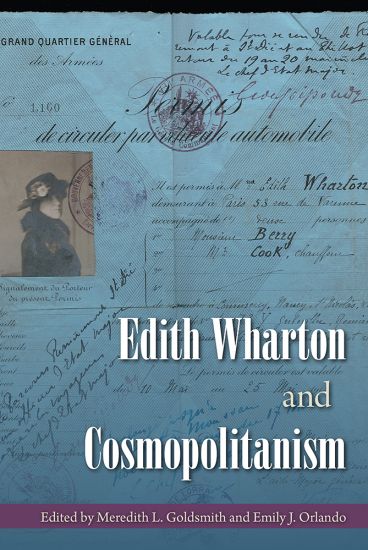
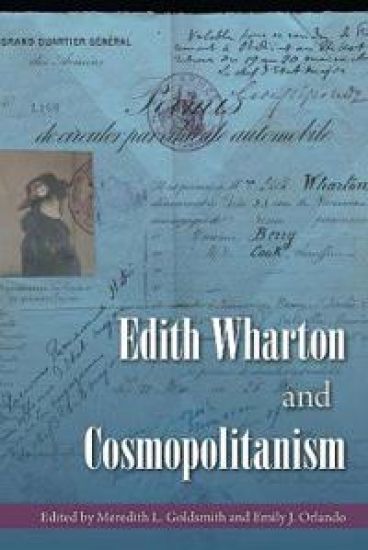
Edith Wharton and Cosmopolitanism

Edith Wharton and Cosmopolitanism

University Press of Florida
2016
sidottu
Hailed for her remarkable social and psychological insights into the Gilded Age lives of privileged Americans, Edith Wharton, the first woman to win the Pulitzer Prize, was also a transnational author who cultivated contradictory approaches to identity, difference, and belonging. As literary studies continue to expand beyond nation-based topics, readers are becoming more interested in the international scope of her life and writing.Edith Wharton and Cosmopolitanism shows that Wharton was highly engaged with global issues of her time, due in part to her extensive travel abroad. Examining both her canonical and lesser-known works and including her art historical discoveries, her political writings, and her travel writing, the essays in this volume explore Wharton’s diverse, complex, and sometimes problematic relationship to a cosmopolitan vision.
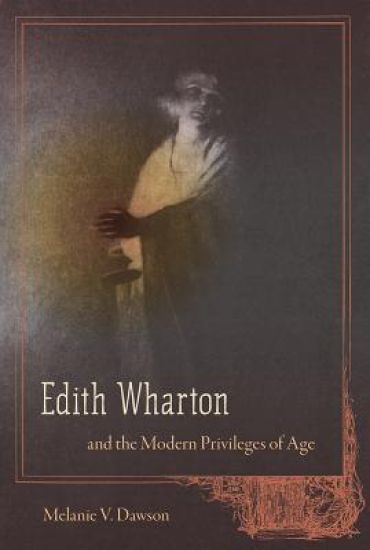
Edith Wharton and the Modern Privileges of Age

Edith Wharton and the Modern Privileges of Age

Melanie V. Dawson

University Press of Florida
2020
sidottu
Providing a counterpoint to readings of modern American culture that focus on the cult of youth, Edith Wharton and the Modern Privileges of Age focuses on representations of modern American identities past early youth in twentieth-century literature. Looking at the works of Edith Wharton and her contemporaries, Melanie Dawson argues that obsessions with age and the narrative conflicts they generated act as central narratives characterizing a popular United States modernity. Dawson examines how representations of aging connect the work of Edith Wharton to writings by a number of modern authors, including Willa Cather, Marjorie Kinnan Rawlings, Zora Neale Hurston, F. Scott Fitzgerald, Floyd Dell, Eugene O'Neill, and Gertrude Atherton. For these writers, age-based ideologies filter through narratives of mourning for youth lost in the Great War, the trauma connected to personal change, the contested self-determination of the aged, the perceived problem of middle-aged sexuality, fantasies of rejuvenation, and persistent patterns of patriarchal authority. The work of these writers shows that as the generational ascendancy of some groups was imagined to operate in tandem with disempowerment of others, the charged dynamics of age gave rise to contests about property and authority. Constructions of age-based values also reinforced gender norms, producing questions about personal value that were directed toward women of all ages. By interpreting Edith Wharton's and her contemporaries' works in relation to age-based anxieties, Dawson sets Wharton's work at the center of a vital debate about the contested privileges associated with age in contemporary culture.
Edith Wharton's Writings from the Great War

Edith Wharton's Writings from the Great War

Julie Olin-Ammentorp

University Press of Florida
2026
pokkari
An examination of Edith Wharton's works from World War I, reclaiming Wharton as a "Great War" writer Edith Wharton resided in France during World War I, visiting combat zones and hospitals and working tirelessly with refugee and children’s relief organizations. In magazines and newspapers such as the New York Times, Saturday Evening Post, and Scribner’s, she wrote prodigiously about the war—dispatches, feature articles, and poems. During this time she also completed a number of short stories, two books (Summer and The Marne), and the essays that were collected in French Ways and Their Meaning. The war remained a topic for her after its conclusion, most notably in her 1923 novel, A Son at the Front. Yet none of this work has received the critical attention it deserves. Julie Olin-Ammentorp, through her detailed examination of a wide range of texts, including archival sources and materials long out of print, reclaims Wharton’s war writings and places her in the company of other "Great War" writers. Olin-Ammentorp integrates all of Wharton’s war-time literary genres, discusses common themes, and examines issues such as Wharton’s exclusion from the canon of Great War writers; the effect of the war on her choice of subject, style, and tone; her shifting perspective on the war itself, as it dragged on far longer than anyone anticipated; her sense of personal, social, and literary destabilization during the war; and her increased sense of the role of history during and after the war. Olin-Ammentorp quotes many evocative passages from Wharton’s wartime correspondence—most notably to Henry James, who avidly read Wharton’s letters as if they were dispatches from the front. Particularly new is the inclusion of Wharton’s poetry composed during the war years, most of which has remained unpublished until now. In addition, Olin-Ammentorp’s examination of A Son at the Front is more detailed, comprehensive, and complex than any study to date. She concludes with a reflection on Wharton’s last depiction of the war years in her memoir, A Backward Glance. In addition to providing a thorough analysis of Wharton’s war writings, the book includes two appendixes of her out-of-print and scattered writings, available for the first time in over 85 years. The first contains the war poetry; the second includes a sampling of Wharton’s war-related nonfiction prose, including newspaper reportage, magazine articles, an obituary for her young friend Ronald Simmons who died in the war, and a speech she gave to American servicemen.
Edith Wharton and Cosmopolitanism

Edith Wharton and Cosmopolitanism

University Press of Florida
2026
pokkari
Exploring Edith Wharton's engagement with global issues in her life and writing Hailed for her remarkable social and psychological insights into the Gilded Age lives of privileged Americans, Edith Wharton, the first woman to win the Pulitzer Prize, was also a transnational author who cultivated contradictory approaches to identity, difference, and belonging. As literary studies continue to expand beyond nation-based topics, readers are becoming more interested in the international scope of her life and writing. Edith Wharton and Cosmopolitanism shows that Wharton was highly engaged with global issues of her time, due in part to her extensive travel abroad. Examining both her canonical and lesser-known works and including her art historical discoveries, her political writings, and her travel writing, the essays in this volume explore Wharton’s diverse, complex, and sometimes problematic relationship to a cosmopolitan vision. Contributors: Ferdâ Asya William Blazek Rita Bode Donna Campbell Mary Carney Clare Virginia Eby June Howard Meredith L. Goldsmith Sharon Kim D. Medina Lasansky Maureen Montgomery Emily J. Orlando Margaret A. Toth Gary Totten
Edith Wharton - American Writers 12

Edith Wharton - American Writers 12

UNIVERSITY OF MINNESOTA PRESS
1961
nidottu
Edith Wharton - American Writers 12 was first published in 1961. Minnesota Archive Editions uses digital technology to make long-unavailable books once again accessible, and are published unaltered from the original University of Minnesota Press editions.
Edith Wharton

Edith Wharton

Helen Killoran

The University of Alabama Press
1998
nidottu
Despite the popularity of Edith Wharton's novels and stories, her artistic genius has never been fully appreciated. Accordingly, this book provides new readings of such familiar favourites as ""The House of Mirth"" and ""The Age of Innocence"" as well as neglected works such as ""Twilight Sleep"" and ""The Glimpses of the Moon"". The effect of this study is to require reassessment not only of the critical possibilities of Edith Wharton's work and the private life about which she was so reticent, but also of her position in American literature. The book concludes that as a bridge between the Victorian and modern periods, Edith Wharton should stand independently as an American writer of the first rank.
Edith Wharton and the Visual Arts

Edith Wharton and the Visual Arts

Emily J. Orlando

The University of Alabama Press
2007
sidottu
This work explores Edith Wharton's career-long concern with a 19th-century visual culture that limited female artistic agency and expression. Wharton repeatedly invoked the visual arts - especially painting - as a medium for revealing the ways that women's bodies have been represented (as passive, sexualized, infantalized, sickly, dead). Wellversed in the Italian masters, Wharton made special use of the art of the Pre-Raphaelite Brotherhood, particularly its penchant for producing not portraits of individual women but instead icons onto whose bodies male desire is superimposed. Emily Orlando contends that while Wharton's early work presents women enshrined by men through art, the middle and later fiction shifts the seat of power to women. From Lily Bart in ""The House of Mirth"" to Undine Spragg in ""The Custom of the Country"" and Ellen Olenska in ""The Age of Innocence"", women evolve from victims to vital agents, securing for themselves a more empowering and satisfying relationship to art and to their own identities. Orlando also studies the lesser-known short stories and novels, revealing Wharton's re-workings of texts by Browning, Poe, Balzac, George Eliot, Sir Joshua Reynolds, and, most significantly, Dante Gabriel Rossetti. ""Edith Wharton and the Visual Arts"" is the first extended study to examine the presence in Wharton's fiction of the Pre-Raphaelite poetry and painting of Rossetti and his muses, notably Elizabeth Siddall and Jane Morris. Wharton emerges as one of American literature's most gifted inter-textual realists, providing a vivid lens through which to view issues of power, resistance, and social change as they surface in American literature and culture.
Edith Wharton and the Visual Arts

Edith Wharton and the Visual Arts

Emily J. Orlando

The University of Alabama Press
2009
nidottu
This work explores Edith Wharton's career-long concern with a 19th-century visual culture that limited female artistic agency and expression. Wharton repeatedly invoked the visual arts - especially painting - as a medium for revealing the ways that women's bodies have been represented (as passive, sexualized, infantilized, sickly, dead). Well-versed in the Italian masters, Wharton made special use of the art of the Pre-Raphaelite Brotherhood, particularly its penchant for producing not portraits of individual women but instead icons onto whose bodies male desire is superimposed.
Edith Wharton in Context

Edith Wharton in Context

Adeline R. Tintner

The University of Alabama Press
2015
nidottu
Tintner provides a detailed analysis of the complex interplay between Wharton and James?how they influenced each other and how some of their writings operate as homages or personal jokes. So deeply was James in Wharton’s confidence, Tintner argues, that he provided her with source models for a number of her characters. In addition, Wharton found in his fiction structures for her own, especially for The Age of Innocence. Tintner also brings her considerable knowledge of art history to bear in her study of art allusions in Wharton’s work. Wharton’s response both to the Italian painters active before Raphael and to the English Pre-Raphaelites of a generation before her own is analyzed here in three essays. These pieces demonstrate Wharton’s sensibility to changes in art tastes and collecting, the inheritance of Rossetti’s revolutionary paintings in the unfinished novel, The Buccaneers, and the importance of home in The Glimpses of the Moon, as demonstrated by Wharton’s use of Tiepolo’s fresco in the church of Scalzi. Tintner concludes by considering Wharton’s literary legacy and who Wharton has figured in the imaginations of recent writers, including Richard Howard, Louis Auchincloss, and Cathleen Schine. Tintner finds some part of Wharton’s personality or work evoked in a number of contemporary works and argues that this presence signals the beginning of an increasing influence.
Edith Stein and the Body-soul-spirit at the Center of Holistic Formation
With a particular emphasis on the soul, this book explores Edith Stein's holistic conception of the human being's body-soul-spirit unity, which forms the foundation of her Christian anthropology and her view of human formation. Characterized by an unremitting attention to interconnections, Stein emerges as a forerunner of contemporary holistic approaches. Edith Stein and the Body-Soul-Spirit at the Center of Holistic Formation demonstrates the breadth and relevance of Stein's work by engaging her thought with the anthropological views of fellow phenomenologist John Paul II, Wilkie Au's perspectives on holistic spirituality and formation, and several nonreductionist, neuroscientific viewpoints of the human being. This book also makes available to the English reader a significant amount of material from Stein's untranslated works. Anyone interested in theological anthropology, holistic spirituality, human formation, the body-mind question, or Edith Stein studies will benefit from the wealth of material presented in this single book.
Edith Stein

Edith Stein

Alasdair MacIntyre

Continuum International Publishing Group Ltd.
2007
nidottu
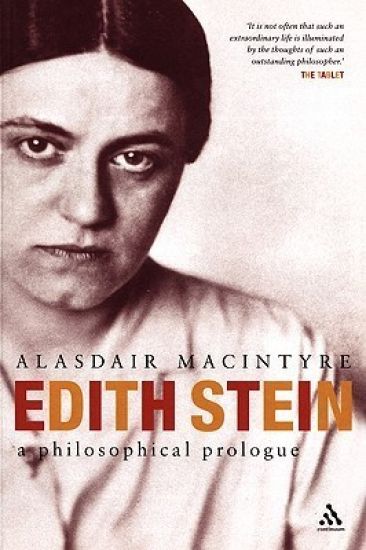
MacIntyre is one of the major British philosophers of the post-war years, and a convert to Roman Catholicism. Edith Stein was an intellectual of considerable importance in the period between the two World Wars. The fact that she was also canonised as a Saint is truly remarkable: a Jewish convert to Roman Catholicism, she died in the gas chambers of Auschwitz. In this major study of Stein's development as a theologian and philosopher, MacIntyre reveals many of the fundamental issues in both disciplines and in their cross-fertilisation. Stein was a pupil of the phenomenological philosopher Edmund Husserl. She then sought in her own writing to interpret phenomenology in a Thomistic way. In this, she was as original and innovative as were the Catholic philosophers - such as Peter Geach and Elizabeth Anscombe - who made similar interpretations of the work of Wittgenstein in this country.