In his own time Edward IV was seen as an able and successful king who rescued England from the miseries of civil war and provided the country with firm, judicious, and popular government. The prejudices of later historians diminished this high reputation, until recent research confirmed Edward as a ruler of substantial achievement, whose methods and policies formed the foundation of early Tudor government. This classic study by Charles Ross places the reign firmly in the context of late medieval power politics, analyzing the methods by which a usurper sought to retain his throne and reassert the power of a monarchy seriously weakened by the feeble rule of Henry VI. Edward's relations with the politically active classes—the merchants, gentry, and nobility—form a major theme, and against this background Ross provides an evaluation of the many innovations in government on which the king's achievement rests.
Edward VI was the son of Henry VIII and his second wife, Jane Seymour. He ruled for only six years (1547-1553) and died at the age of sixteen. But these were years of fundamental importance in the history of the English state, and in particular of the English church. This new biography reveals for the first time that, despite his youth, Edward had a significant personal impact. Jennifer Loach draws a fresh portrait of the boy king as a highly precocious, well educated, intellectually confident, and remarkably decisive youth, with clear views on the future of the English church. Loach also offers a new understanding of Edward’s health, arguing that the cause of his death was a severe infection of the lungs rather than tuberculosis, the commonly accepted diagnosis. The author views Edward not as a sickly child but as a healthy and vigorous boy, devoted to hunting and tournaments like any young aristocrat of the day. This book tells the story of the monarch and of his time. It supplies the dramatic context in which the short reign of Edward VI was played out—the momentous religious changes, factional fights, and popular risings. And it offers vivid details on Edward’s increasing absorption in politics, his consciousness of his role as supreme head of the English church, his determination to lay the foundation for a Protestant regime, and how his failure in this ambition brought England to the brink of civil war.
The latest definitive biography in the acclaimed Yale English Monarchs series Edward II (1284–1327), King of England, Lord of Ireland, and Duke of Aquitaine, was the object of ignominy during his lifetime and calumny since it. Conventionally viewed as worthless, incapable of sustained policy, and significant only for his sporadic displays of ill-directed energy or a stubborn adherence to greedy and ambitious favorites, he has been presented as fit only to be deposed and replaced by someone more worthy of the throne. This definitive biography, the fruit of a lifetime’s study, does not present Edward II as a heroic or successful king: his deposition after a turbulent reign of nearly twenty years is proof enough that it went terribly wrong. But Seymour Phillips’ scrutiny of the multitude of available sources shows that a richer picture emerges, in line with the complexity of events and of the man himself. If Edward II was not a successful king, he was not fundamentally different in many ways from most English monarchs. The biography strikes a deft balance, taking full account of the problems the king faced in England, Scotland, and Ireland and in his relations with France. It also tackles the contentious issue of whether Edward II did not die in 1327, murdered under barbaric circumstances, but lived on as a captive in England and then a wanderer on the Continent. Eight hundred years on, a king’s life is properly examined.
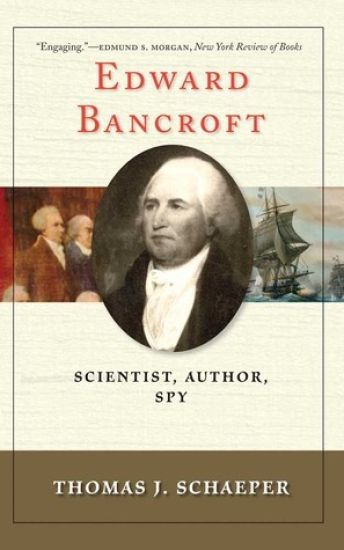
The first complete biography of a little-known but fascinating figure in the history of espionage and the American Revolution A man of as many names as motives, Edward Bancroft is a singular figure in the history of Revolutionary America. Born in Massachusetts in 1745, Bancroft moved to England as a young man in the 1760s and began building a respectable résumé as both a scientist and a man of letters. In recognition of his works in natural history, Bancroft was unanimously elected to the Royal Society, and while working to secure French aid for the American Revolution, he became a close associate of such luminaries as Benjamin Franklin, Silas Deane, and John Adams. Though lauded in his time as a staunch American patriot, when the British diplomatic archives were opened in the late nineteenth century, it was revealed that Bancroft led a secret life as a British agent acting against French and American interests.In this book, the first complete biography of Bancroft, historian Thomas J. Schaeper reveals the full extent of the agent's deception during the crucial years of the American Revolution. Operating under aliases, working in ciphers, and leaving coded messages in the trees of Paris's Tuileries Gardens, Bancroft filtered information from unsuspecting figures including Franklin and Deane back to his contacts in Britain, navigating a complicated web of political allegiances. Through Schaeper's keen analysis of Bancroft's correspondence and diplomatic records, this biography reveals whether Bancroft should ultimately be considered a traitor to America or a patriot to Britain.
A landmark biography of the charismatic king beloved of fourteenth-century England Edward III (1312-1377) was the most successful European ruler of his age. Reigning for over fifty years, he achieved spectacular military triumphs and overcame grave threats to his authority, from parliamentary revolt to the Black Death. Revered by his subjects as a chivalric dynamo, he initiated the Hundred Years' War and gloriously led his men into battle against the Scots and the French.In this illuminating biography, W. Mark Ormrod takes a deeper look at Edward to reveal the man beneath the military muscle. What emerges is Edward's clear sense of his duty to rebuild the prestige of the Crown, and through military gains and shifting diplomacy, to secure a legacy for posterity. New details of the splendor of Edward's court, lavish national celebrations, and innovative use of imagery establish the king's instinctive understanding of the bond between ruler and people. With fresh emphasis on how Edward's rule was affected by his family relationships-including his roles as traumatized son, loving husband, and dutiful father-Ormrod gives a valuable new dimension to our understanding of this remarkable warrior king.
Volume 2 of this exceptional catalogue raisonné project compiles the unique works on paper that Edward Ruscha (b. 1937) made between 1977 and 1997, the artist’s midcareer period, during which he achieved international renown. More than 1,000 works are documented, among them hundreds that have rarely, or never, been exhibited or published. Highlights include Ruscha’s inimitable word and phrase works, made in organic materials, pastel, or acrylic; compositions featuring signature images (windows, ships, silhouetted objects and figures, and film closing credits); and drawings and studies related to important public commissions for the Miami-Dade Public Library, the Denver Central Library, and the Getty Center. Each work is catalogued with a beautiful color reproduction, collection details, full chronological provenance, exhibition history, and bibliographic references. Essays by Lisa Turvey and Gwen Allen complete the volume, providing critical frameworks and historical context for the art within.Distributed for Gagosian Gallery
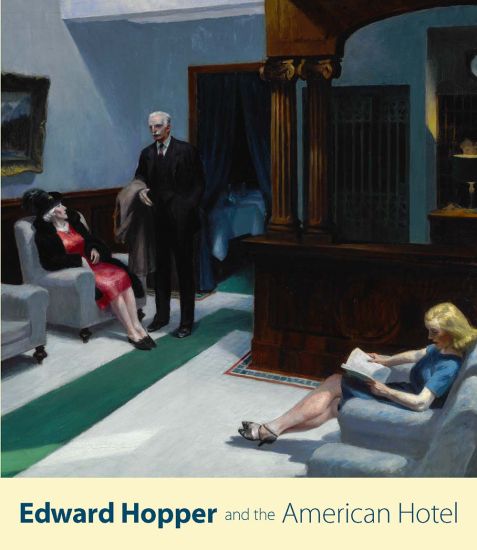
Using recreated itineraries, travel along with Edward Hopper on his various road trips and encounter hotels, staff, and guests as seen through the artist's eyes The painter, draftsman, and illustrator Edward Hopper (1882–1967) is one of America’s best-known and most frequently exhibited artists. Hotels, motels, and tourist homes are recurring motifs in his work, along with streets, lighthouses, and gas stations forming a visual vocabulary of transportation infrastructure. In ten essays, this fascinating volume explores Hopper’s lifelong investigation of such spaces, shedding light on both his professional practice and far-reaching changes in transportation and communications, which affected not only work and leisure but also dynamics of race, class, and gender. Hopper’s covers for the trade journal Hotel Management, in addition to other well-known works, invite reflection on the complicated roles of the nascent New Woman; the erasure of hotel work and workers; contemporary associations of the color white with cleanliness and purity; the watercolors Hopper made from hotel windows and rooftops in Mexico; and the broader context of transportation history. A final chapter then situates Hopper's contribution to the fascinating role that the hotel has played in the broader development of American art in the 20th century. As a unique feature, the book's backflap also holds two "TripTik"-like, removable maps that trace the journeys that Hopper and his wife, the artist Josephine “Jo” Nivison Hopper, took by car in the 1940s and 1950s; selected correspondence and quotations from Jo’s own diaries join reproductions of postcards and ephemera illuminating their—and fellow Americans’—shifting travel habits. Distributed for the Virginia Museum of Fine Arts Exhibition Schedule: Virginia Museum of Fine Arts, Richmond (October 26, 2019–February 23, 2020) Indianapolis Museum of Art at Newfields (June 4, 2020–September 13, 2020)
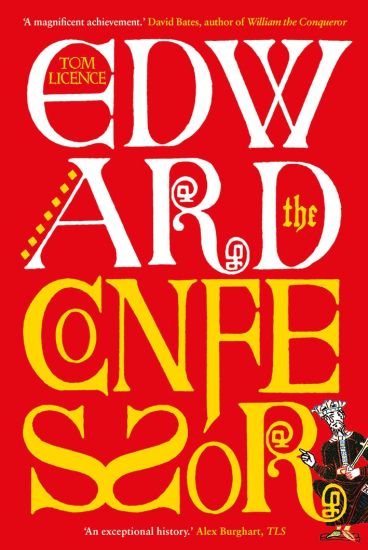
An authoritative life of Edward the Confessor, the monarch whose death sparked the invasion of 1066"In putting flesh back on Edward’s bones Licence has brought a new succession story to popular attention."—Leanda de Lisle, The Times“This fine biography of Edward the Confessor is both entertaining and elegiac.”—Nicholas Vincent, The Tablet One of the last kings of Anglo-Saxon England, Edward the Confessor regained the throne for the House of Wessex and is the only English monarch to have been canonized. Often cast as a reluctant ruler, easily manipulated by his in-laws, he has been blamed for causing the invasion of 1066—the last successful conquest of England by a foreign power. Tom Licence navigates the contemporary webs of political deceit to present a strikingly different Edward. He was a compassionate man and conscientious ruler, whose reign marked an interval of peace and prosperity between periods of strife. More than any monarch before, he exploited the mystique of royalty to capture the hearts of his subjects. This compelling biography provides a much-needed reassessment of Edward’s reign—calling into doubt the legitimacy of his successors and rewriting the ending of Anglo-Saxon England.
This third volume of the catalogue raisonné of Ed Ruscha’s works on paper documents more than 1,000 works created between 1998 and 2018 The third volume of this extraordinary catalogue raisonné project compiles the unique works on paper that celebrated American artist Edward Ruscha (b. 1937) made between 1998 and 2018. There are 1,068 works documented, hundreds of which have rarely, or never, been exhibited or published. Drawing is the mode in which Ruscha is most prolific, poetic, and experimental. In this period, he further developed some of his iconic subjects, among them film titles, gasoline stations, mountains, and of course words and phrases. He also expanded into new thematic territory in palindrome drawings, map-like representations, and “swiped word” works that incisively reflect the contemporary moment. Included are pencil, dry pigment, pastel, and acrylic drawings on paper, board, and assorted unconventional supports; collages and photo-based works; and sketches and studies for various contemporaneous paintings, commissions, and miscellaneous projects. Each work is catalogued with a beautiful color reproduction, collection details, full chronological provenance, exhibition history, and bibliographic references.Distributed for Gagosian
A revealing exploration of Edward Hopper’s inspired relationship to New York City through his paintings, drawings, prints, and never-before-published archival materials This engaging book delves into the iconic relationship between Edward Hopper (1882–1967) and New York City. This comprehensive look at an essential aspect of the revered American artist’s life reveals how Hopper’s experience of New York’s spaces, sensations, and architecture shaped his vision and served as a backdrop for his distillations of the urban experience. During sidewalk strolls and elevated train rides, Hopper sketched the city’s many windowed facades. Exterior views gave way to interior lives, forging one of Hopper’s defining preoccupations: the convergence of public and private. These permeable walls allowed Hopper to evoke the perplexing awareness of being alone in a crowd that is synonymous with modern urban life. Drawing on the vast resources of the Whitney Museum of American Art, the largest repository of Hopper’s work, and the recently acquired gift of the Sanborn Hopper Archive, this book features more than 300 illustrations and fresh insight from authoritative and emerging scholars.Distributed for the Whitney Museum of American ArtExhibition Schedule:Whitney Museum of American Art, New York (October 19, 2022–March 5, 2023)
In his desperate quest for an heir, King Henry VIII divorced one wife and beheaded another. The birth of Prince Edward on October 12, 1537, ended his father's twenty-seven-year wait. Nine years later, Edward was on the throne, a boy-king of a nation in religious limbo and in a court where manipulation, treachery, and plotting were rife.Chris Skidmore describes how, in the six years of Edward's reign, court intrigue, deceit, and treason very nearly plunged the country into civil war while the stability that the Tudors had sought to achieve came close to being torn apart. Even today, Henry VIII and Elizabeth I are considered the two dominant figures of the Tudor period. But Edward's reign is equally important. It was one of dramatic change and tumult whose impact is still felt today certainly in terms of his religious reformation, which not only exceeded Henry's ambitions but has endured for over four centuries since Edward's death in 1553."
Breaking with the Teutonic tradition of his predecessors, composer Edward Burlingame Hill was among the first Americans to study composition in Paris. His music, in which he incorporated new harmonic, instrumental, and textural devices, helped foster acceptance for many early twentieth-century innovations. Hill also shared his predilection for French music with students at Harvard, where he taught from 1908 until 1940. Through his courses in orchestration and music history, Hill's students were exposed first-hand to modern French compositional techniques and the latest European musical trends. As a writer, Hill served as a Boston music critic, authored many journal articles on contemporary music, and wrote the first systematic English-language study of French musical thought from Chabrier to Les Six. This volume charts Hill's life and career as a composer, educator, and writer in the context of early twentieth-century American culture. The first section consists in a biographical and interpretive essay that details his multifaceted career and identifies his contributions to American music. Subsequent chapters provide the first complete listing of his musical and prose writings, a bibliography of writings about him, and a discography of commercially produced recordings.This bio-bibliography represents the first study of Edward Burlingame Hill to appear in print, and it offers an in-depth look at this important musical figure through annotated citations of his works and their performances, writings by and about him, and his recorded works. It illustrates the significance of his role in the early twentieth-century musical scene as composer, influential mentor, and early music historian. A useful guide to further research as well, this work will serve as an important resource for musicologists, music historians, and students of American music.
If Edward Everett is remembered at all today, it is as the orator who gave the other speech at Gettysburg, Pennsylvania on November 19, 1863. Ironically, Everett's oration, which was given wide coverage in contemporary newspapers, was recognized as both epideictic and argumentative. Everett defended the Union cause, whereas Lincoln's speech was strictly ceremonial. A second irony that attends Everett's oratorical career is that his countrymen believed him to be one of the great orators of the time, the undisputed master of ceremonial address. In this first new study of Edward Everett's oratory, author Ronald Reid addresses the historical and oratorical paradoxes that have influenced perceptions of Everett's career. Reid reconstitutes the role of epideictic rhetoric in the United States from the end of the Revolutionary War to the eve of the Civil War and reinstates Everett in the pantheon of great American orators. He demonstrates why Everett fell into virtual obscurity and treats the reader to a penetrating analysis of the role of public persuasion in the United States during a critical period in its history. In Edward Everett: Unionist Orator Reid effectively restores Everett to his rightful rostrum in the unfolding national drama from the 1820s to the 1860s, providing a sweeping story of America's golden age of oratory in the process.The book opens with a discussion of the influence of Everett's eighteenth-century heritage on his desire to save the Union at all costs. The author shows how the seeds of Everett's Unionism were starting to sprout in his literary and theological speeches and writings, and how he developed the rhetorical methods that he would use throughout his career. Next, Reid deals with Everett's oratory during his years of service, first as a congressman and then as governor of Massachusetts. Here he discusses Everett's increasing concern about the divisiveness of the partisan and sectional causes he espoused. Chapters three and four deal with Everett's modification of his earlier Unionist strategies in an effort to deal with increasing sectionalism and preserve the United States. In conclusion, Reid reviews Everett's oratory, speculating about the role of epideictic oratory in general in maintaining, or failing to maintain, social unity. Sample speeches complete the work, which include a partial text of one of Everett's congressional speeches, a 4th of July oration, his Character of Washington, and a partial text of Everett's Gettysburg address.
This volume documents the life and works of the acclaimed playwright, Edward Albee. His first four plays were all produced Off Broadway from 1960-1961, creating buzz that he was an up-and-coming avant-garde playwright. But his most notable accomplishment came a year later with his first full-length play, Who's Afraid of Virginia Woolf?. His plays were linked with the philosophies of the European absurdists, Beckett and Ionesco, and the American traditional social criticism of Arthur Miller, Tennessee Williams, and Eugene O'Neill.Intended to serve as a quick reference guide and an exhaustive resource, this collection includes play synopses and critical overviews, production histories and credits, and locator suggestions on unpublished archival material and lists of texts/anthologies that have published Albee's material. The two secondary bibliographies contained within are fully annotated chronologically and alphabetically with the year of publication, presenting a fuller sense of Albee's playwriting career.
Edward IV was the first Yorkist king. He ruled (with only a brief hiatus) for 22 years, ended the Wars of the Roses triumphantly in 1471, and died in his bed not invariably the place of death for a medieval monarch. The best general of his day, he destroyed the House of Lancaster. At a very difficult time, he redeemed royal prestige at home and abroad, restored order and public finances, and crushed all his opponents, including his brother Clarence. His son Edward V, still a minor, succeeded him peacefully. Yet within months Edward was deposed in favour of Richard III, his uncle. The Wars of the Roses resumed, Edward IV's sons met violent deaths, and so at Bosworth Field did the usurping Richard III. Assessment of Edward IV is inextricably bound up not only in the record of his reign, itself much disputed, but also with what turned out to be his baleful legacy. This book explores how his reputation has changed and analyses the major issues in light of contemporary and later perceptions of this controversial king
The publisher Edward Lloyd (1815-1890) helped shape Victorian popular culture in ways that have left a legacy that lasts right up to today. He was a major pioneer of both popular fiction and journalism but has never received extended scholarly investigation until now. Lloyd shaped the modern popular press: Lloyd's Weekly Newspaper became the first paper to sell over a million copies. Along with publishing songs and broadsides, Lloyd dominated the fiction market in the early Victorian period issuing Gothic stories such as Varney the Vampire (1845-7) and other 'penny dreadfuls', which became bestsellers. Lloyd's publications introduced the enduring figure of Sweeney Todd whilst his authors penned plagiarisms of Dickens's novels, such as Oliver Twiss (1838-9). Many readers in the early Victorian period may have been as likely to have encountered the author of Pickwick in a Lloyd-published plagiarism as in the pages of the original author. This book makes us rethink the early reception of Dickens. In this interdisciplinary collection, leading scholars explore the world of Edward Lloyd and his stable of writers, such as Thomas Peckett Prest and James Malcolm Rymer. The Lloyd brand shaped popular taste in the age of Dickens and the Chartists. Edward Lloyd and his World fills a major gap in the histories of popular fiction and journalism, whilst developing links with Victorian politics, theatre and music.
Edward MacDowell’s European Piano Music is a critical study of the piano music that MacDowell composed during his European sojourn (1876–1888), steeped in reception history and with a special emphasis of programmaticism.The book expands current knowledge of MacDowell’s childhood in four of the chapters based on his previously uninvestigated sheet music collection, thereby achieving a better balance among the stages of MacDowell’s life than is evident in most books of the life-and-works variety. Prolific contemporaneous music criticism, meticulously preserved in MacDowell’s scrapbooks, is likewise undervalued in the MacDowell literature, but it furnishes penetrating observations about the expressive and programmatic content of numerous compositions, especially as it was revealed to critics when MacDowell performed his own works. Lastly, the book offers explanations for why MacDowell immersed himself in European culture for decades and then, at a crucial juncture in his career, embraced diverse American heritages and worked toward a conception of a pluralistic music that was American “in a creative sense.”The book’s content and methodology would appeal most directly to specialists within the broad fields of musicology and music theory, particularly within American art music and its composers; nineteenth-century music; program music; reception history; and piano literature.
Edward Steichen (1879-1973) is unquestionably one of the most prolific, influential, and indeed controversial names in the history of photography. He was admired by many for his achievements as a fine-art photographer, while impressing countless others with the force of his commercial accomplishments. The influence of his legendary exhibition, The Family of Man, is still felt. This volume traces Steichen s career trajectory from his Pictoralist beginnings to his time with Conde Nast through his directorship of photography at the Museum of Modern Art. Hundreds of his photographs are reproduced in stunning four-color to reveal the complexities and nuances of these black-and-white images. Essays from a range of scholars explore his most important subjects and weigh his legacy. Contributors include A. D. Coleman, Joanna T. Steichen, and Ronald Gedrim. With a full bibliography and chronology, this is the most complete and wide-ranging volume on Steichen ever published."