This book is the first full-length study to focus on the representation of masculinity in Elizabeth Gaskell’s novels. In examining Gaskell’s understanding of masculine identity as a social construct and considering how her writing engages with Victorian ideologies of gender, this book demonstrates that Gaskell defies an essentialist approach to gender and instead explores masculinity over time, genre, region, and class, making it clear that masculinity is not monolithic but relational, culturally constructed, and dependent on many contexts. It analyses Gaskell’s depiction of what it means to be a ‘man’ and a ‘gentleman’, exploring Mary Barton, North and South, Ruth, Cousin Phillis, Sylvia’s Lovers, and Wives and Daughters, as well as contemporary Victorian works and key contexts such as sympathy, historic change, and industrialism. The target audiences are academics, as well as undergraduate and postgraduate students and research specialists, and it will most appeal toVictorian Literature, Gender Studies, and Masculinity Studies disciplines.
Writing during periods of dramatic social change, Maria Edgeworth and Elizabeth Gaskell were both attracted to the idea of radical societal transformation at the same time that their writings express nostalgia for a traditional, paternalistic ruling class. The author shows how this tension is played out especially through the characters of servants in short fiction and novels such as Edgeworth's Castle Rackrent, Belinda, and Helen and Gaskell's North and South and Cranford. Servant characters, the author contends, enable these writers to give voice to the contradictions inherent in the popular paternalistic philosophy of their times because the situation of domestic servitude itself embodies such inconsistencies. Servants, whose labor was essential to the economic and social function of eighteenth- and nineteenth-century British society, made up the largest category of workers in England by the nineteenth century and yet were expected to be socially invisible. At the same time, they lived in the same houses as their masters and mistresses and were privy to the most intimate details of their lives. Both Edgeworth and Gaskell created servant characters who challenge the social hierarchy, thus exposing the potential for dehumanization and corruption inherent in the paternalistic philosophy. the author's study opens up important avenues for future scholars of women's fiction in the nineteenth century.
Elizabeth Gaskell’s writings abound in references to a cultural materiality encompassing different types of fabric, stuffs, calicoes, chintzes and fine-point lace. These are not merely the motifs of the Realist genre but reveal a complex polysemy. Utilizing a metonymic examination of these tropes, this volume exposes the dramatic structural and socio-economic upheaval generated by industrialization, urbanization and the widening sphere of empire. The material evidence testifies to the technological and production innovations evolving diachronically for the period, and the evolution of Manchester as the industrial ‘Cottonpolis’ that clothed the world by the 1840s. This volume analyses Gaskell’s manipulation of the materiality, arguing its firm roots lie in the quotidian of women’s domestic and provincial life within the growing ranks of the middle classes. Exploring Gaskell’s tactile imagination, an embodied relationship with fabrics and sewing, a function of her daily life from an early age, this volume provides insight into the sensory aspects of cloth and its ability to stir affective responses, emotions and memories, whereby worn fabrics and even the absence of previous textile treasures, is poignant, recreating layers of recollection. This book aims to restore the pulsating, dynamic context of ordinary women’s dressed lives and presents innovative interpretations of Gaskell’s texts.
Elizabeth Gaskell’s writings abound in references to a cultural materiality encompassing different types of fabric, stuffs, calicoes, chintzes and fine-point lace. These are not merely the motifs of the Realist genre but reveal a complex polysemy. Utilizing a metonymic examination of these tropes, this volume exposes the dramatic structural and socio-economic upheaval generated by industrialization, urbanization and the widening sphere of empire. The material evidence testifies to the technological and production innovations evolving diachronically for the period, and the evolution of Manchester as the industrial ‘Cottonpolis’ that clothed the world by the 1840s. This volume analyses Gaskell’s manipulation of the materiality, arguing its firm roots lie in the quotidian of women’s domestic and provincial life within the growing ranks of the middle classes. Exploring Gaskell’s tactile imagination, an embodied relationship with fabrics and sewing, a function of her daily life from an early age, this volume provides insight into the sensory aspects of cloth and its ability to stir affective responses, emotions and memories, whereby worn fabrics and even the absence of previous textile treasures, is poignant, recreating layers of recollection. This book aims to restore the pulsating, dynamic context of ordinary women’s dressed lives and presents innovative interpretations of Gaskell’s texts.
Writing during periods of dramatic social change, Maria Edgeworth and Elizabeth Gaskell were both attracted to the idea of radical societal transformation at the same time that their writings express nostalgia for a traditional, paternalistic ruling class. The author shows how this tension is played out especially through the characters of servants in short fiction and novels such as Edgeworth's Castle Rackrent, Belinda, and Helen and Gaskell's North and South and Cranford. Servant characters, the author contends, enable these writers to give voice to the contradictions inherent in the popular paternalistic philosophy of their times because the situation of domestic servitude itself embodies such inconsistencies. Servants, whose labor was essential to the economic and social function of eighteenth- and nineteenth-century British society, made up the largest category of workers in England by the nineteenth century and yet were expected to be socially invisible. At the same time, they lived in the same houses as their masters and mistresses and were privy to the most intimate details of their lives. Both Edgeworth and Gaskell created servant characters who challenge the social hierarchy, thus exposing the potential for dehumanization and corruption inherent in the paternalistic philosophy. the author's study opens up important avenues for future scholars of women's fiction in the nineteenth century.
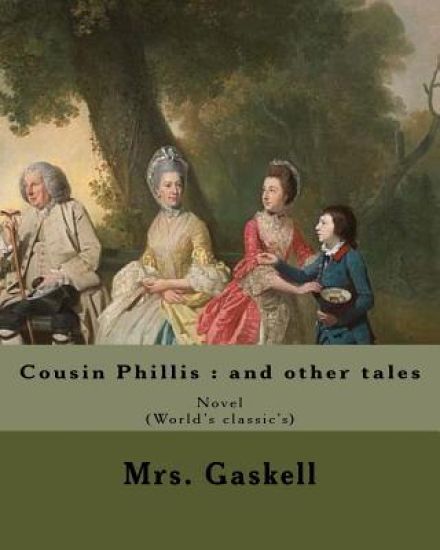
Cousin Phillis (1864) is a novel by Elizabeth Gaskell. It was published in four parts, though a fifth and sixth part were planned. The story is about 19-year-old Paul Manning, A 1] who moves to the country and befriends his mother's family and his (second) cousin Phillis Holman, who is confused by her own placement at the edge of adolescence. Most critics agree that Cousin Phillis is Gaskell's crowning achievement in the short novel. The story is uncomplicated; its virtues are in the manner of its development and telling. Cousin Phillis is also recognized as a fitting prelude for Gaskell's final and most widely acclaimed novel, Wives and Daughters, which ran in Cornhill Magazine from August 1864 to January 1866. Characters: Paul Manning (the narrator, Phillis's cousin) Mr Manning (Paul's father) Mr Edward Holdsworth Mr Holman (independent church minister) Mrs Holman Miss Phillis Holman Mr Ellison (Mr Manning's business partner) Miss Lucille Ventadur (at last Mr Holdsworth's wife) Betty (the servant at Holman house) Elizabeth Cleghorn Gaskell, (n e Stevenson; 29 September 1810 - 12 November 1865), often referred to as Mrs Gaskell, was an English novelist and short story writer. Her novels offer a detailed portrait of the lives of many strata of Victorian society, including the very poor, and are of interest to social historians as well as lovers of literature. Her first novel, Mary Barton, was published in 1848. Gaskell's The Life of Charlotte Bront , published in 1857, was the first biography of Bront . Some of Gaskell's best known novels are Cranford (1851-53), North and South (1854-55), and Wives and Daughters (1865). Gaskell was born Elizabeth Cleghorn Stevenson on 29 September 1810 in Lindsey Row, Chelsea, at the house which is now 93 Cheyne Walk. She was the youngest of eight children; only she and her brother John survived infancy. Her father, William Stevenson, a Unitarian from Berwick-upon-Tweed, was minister at Failsworth, Lancashire, but resigned his orders on conscientious grounds and moved to London in 1806 with the intention of going to India after he was appointed private secretary to the Earl of Lauderdale, who was to become Governor General of India. That position did not materialise, however, and instead Stevenson was nominated Keeper of the Treasury Records. His wife, Elizabeth Holland, came from a family from the English Midlands that was connected with other prominent Unitarian families, including the Wedgwoods, the Martineaus, the Turners and the Darwins. When she died 13 months after giving birth to her youngest daughter, she left a bewildered husband who saw no alternative for Elizabeth but to be sent to live with her mother's sister, Hannah Lumb, in Knutsford, Cheshire. While she was growing up, Elizabeth's future was uncertain, as she had no personal wealth and no firm home, though she was a permanent guest at her aunt and grandparents' house. Her father married Catherine Thomson in 1814 and they had a son, William (born 1815), and a daughter, Catherine (born 1816). Although Elizabeth spent several years without seeing her father, to whom she was devoted, her older brother John often visited her in Knutsford. John was destined for the Royal Navy from an early age, like his grandfathers and uncles, but he had no entry and had to join the Merchant Navy with the East India Company's fleet. John went missing in 1827 during an expedition to India.......
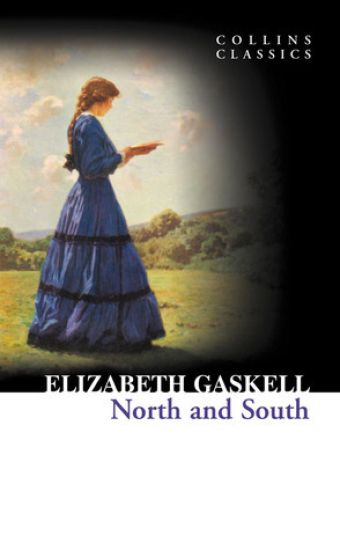
HarperCollins is proud to present its new range of best-loved, essential classics. ‘But the cloud never comes in that quarter of the horizon from which we watch for it.’ When Margaret Hale is uprooted from Hampshire and moves to the industrial town of Milton in the North of England, her whole world changes. As her sympathy for the town’s mill workers grows, her sense of social injustice piques and she passionately fights their corner. However, just as she disputes the mill owner, John Thornton’s treatment of his workers, she cannot deny her growing attraction to him. Highlighting the changing landscape of nineteenth-century Britain and championing the role of women in Victorian society, Gaskell brilliantly captures the lives of ordinary people through one of her strongest female characters in literature.
'Gaskell's shocking, moving and contemporary account of the corrosive effects of injustice and poverty' Sunday Telegraph Mary Barton is the pretty daughter of a factory worker who finds herself dreaming of a better life when the mill-owner's charming son, Henry, starts to court her. She rejects her childhood friend Jem's affections in the hope of marrying Henry and escaping from the hard and bitter life that is the fate of the workers, who are resentfully dependent on the callous mill-owners for their livelihoods. But when Henry is shot dead in the street Jem becomes the prime suspect and Mary finds her loyalties tested to the limit.
'A really remarkable picture of the reality, as well as the prosperity, of northern industrial life, and an interesting examination of changing social conscience' Joanna TrollopeMilton is a sooty, noisy northern town centred around the cotton mills that employ most of its inhabitants. Arriving from a rural idyll in the south, Margaret Hale is initially shocked by the social unrest and poverty she finds in her new hometown. However, as she begins to befriend her neighbours, and her stormy relationship with the mill-owner John Thornton develops, she starts to see Milton in a different light. WITH AN INTRODUCTION BY JENNY UGLOW
In this witty and poignant story the railway is pushing its way relentlessly towards the town from Manchester, bringing fears of migrant workers and the breakdown of law and order. The arrival of handsome young Doctor Harrison causes yet further agitation not just because of his revolutionary methods but also because of his effect on the hearts of the ladies. Meanwhile Miss Matty Jenkyns nurses her own broken heart after she was forced to give up the man she loved when she was a young girl.
This tender story of parents, children and step-children, mistakes and secrets was Elizabeth Gaskell's last novel and is considered her masterpiece. Set in the watchful society of Hollingford, this is a warm tale of love and longing. Molly Gibson is the spirited, loyal daughter of the local doctor. Their peaceful close-knit home is turned upside down when Molly's father decides to remarry. Whilst Molly struggles to adjust to her snobbish stepmother, she forms a close relationship with her glamorous new stepsister Cynthia. The strength of this friendship is soon tested as their lives become entwined with Squire Hamley and his two sons. ‘Gaskell's work will always be one of the adornments of liberal Britain’ Guardian
Cranford depicts the lives and preoccupations of the inhabitants of a small village - their petty snobberies and appetite for gossip, and their loyal support for each other in times of need. The village is dominated by women, from the kindly spinster Miss Matty, living in genteel poverty with her redoubtable sister, to Lady Glenmire, who shocks everyone by marrying the doctor. When men do appear, such as 'modern' Captain Brown or Matty's suitor from the past, they bring disruption and excitement to the everyday life of Cranford. This volume includes the novella Cousin Phillis, which depicts a fleeting love affair in a rural community at a time when old values are being supplanted by the new. Both works are exquisitely observed tragicomedies of human nature, told with great delicacy and affection.
Elizabeth Gaskell's only historical novel, Sylvia's Lovers, is set in 1790 in the seaside town of Monkshaven (Whitby) where press-gangs wreak havoc by seizing young men for service in the Napoleonic wars. One of their victims is whaling harpooner, Charley Kinraid, whose charm and vivacity have captured the heart of Sylvia Robson. But Sylvia's devoted cousin, Philip Hepburn, hopes to marry her himself and, in order to win her, deliberately withholds crucial information - with devastating consequences. With its themes of suffering, unrequited love, and the clash between desire and duty, Sylvia's Lovers is one of the most powerfully moving of all Gaskell's novels, reputedly described by its author as 'the saddest story I ever wrote'.