Kirjojen hintavertailu. Mukana 11 244 527 kirjaa ja 12 kauppaa.

Kirjahaku

Etsi kirjoja tekijän nimen, kirjan nimen tai ISBN:n perusteella.

1000 tulosta hakusanalla Elizabeth Engstrom

Elizabeth II (Penguin Monarchs)

Elizabeth II (Penguin Monarchs)

Douglas Hurd

Penguin Books Ltd
2018
nidottu
The acclaimed Penguin Monarchs series: short, fresh, expert accounts of England's rulers - now in paperbackElizabeth II is the longest-serving monarch who ever sat on the English or British throne. Yet her personality and influence remain elusive. This book, by a senior politician who has spent significant periods of time in her company, and is also a distinguished historian, portrays her more credibly than any other yet published.Douglas Hurd was a politician, biographer and novelist who served in the governments of Margaret Thatcher and John Major, as Minister for Europe (1979-83), Secretary of State for Northern Ireland (1984-85), Home Secretary (1985-89) and Secretary of State for Foreign and Commonwealth Affairs (1989-95). His previous books include his Memoirs, Robert Peel: A Biography and, with Edward Young, Choose Your Weapons: The British Foreign Secretary - 200 Years of Argument, Success and Failure.
Elizabeth I (Penguin Monarchs)

Elizabeth I (Penguin Monarchs)

Helen Castor

Penguin Books Ltd
2019
nidottu
'The experience of insecurity, it turned out, would shape one of the most remarkable monarchs in England's history' In the popular imagination, as in her portraits, Elizabeth I is the image of monarchical power. But this image is as much armour as a reflection of the truth. In this illuminating account of England's iconic queen, Helen Castor reveals her reign as shaped by a profound and enduring insecurity that was a matter of both practical politics and personal psychology.
Elizabeth Costello: Fiction

Elizabeth Costello: Fiction

J. M. Coetzee

Penguin Publishing Group
2004
nidottu
J.M. Coetzee's latest novel, The Schooldays of Jesus, is now available from Viking. Late Essays: 2006-2016 will be available January 2018. Since 1982, J. M. Coetzee has been dazzling the literary world. After eight novels that have won, among other awards, two Booker Prizes, and most recently, the Nobel Prize, Coetzee has once again crafted an unusual and deeply affecting tale. Told through an ingenious series of formal addresses, Elizabeth Costello is, on the surface, the story of a woman's life as mother, sister, lover, and writer. Yet it is also a profound and haunting meditation on the nature of storytelling.
Elizabeth & Leicester: The Truth about the Virgin Queen and the Man She Loved
View our feature on Sarah Gristwood's Elizabeth & Leicester.Though the story has been told on film--and whispered in historic gossip--this is the first book in almost fifty years to solely explore the great queen's attachment to her beloved Robert Dudley, the Earl of Leicester. Fueled by scandal and intrigue, their relationship set the explosive connection between public and private life in sixteenth-century England in bold relief. Why did they never marry? How much of what seemed a passionate obsession was actually political convenience? Elizabeth and Leicester reignites this 400- year-old love story in a book for anyone interested in Elizabethan literature.
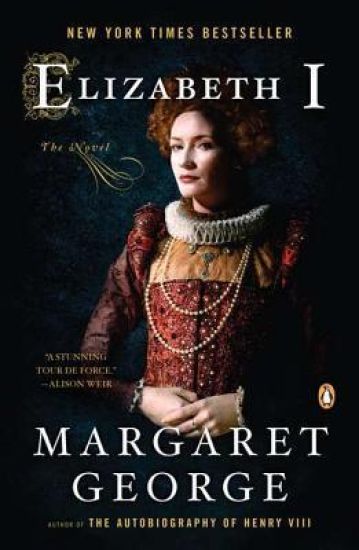
Elizabeth I: The Novel

Elizabeth I: The Novel

Margaret George

Penguin Publishing Group
2012
nidottu
The New York Times bestseller from Margaret George--a captivating novel about history's most enthralling queen, the legendary Elizabeth I. England's greatest monarch has baffled and intrigued the world for centuries. But what was the Virgin Queen really like? Lettice Knollys--Elizabeth's flame-haired, look-alike coussin--thinks she knows all too well. Elizabeth's rival for the love of Robert Dudley, Earl of Leicester, and mother to the Earl of Essex, Lettice has been intertwined with Elizabeth since childhood. This is a story of two women of fierce intellect and desire, one trying to protect her country and throne, the other trying to regain power and position for her family. Their rivalry, and its ensuing drama, soon involves everyone close to Elizabeth, from the famed courtiers who enriched the crown to the legendary poets and playwrights who paid homage to it with their works. Filled with intimate portraits of the personalities who made the Elizabethan age great--Shakespeare, Marlowe, Dudley, Raleigh, Drake--Elizabeth I provides an unforgettable glimpse of a woman who considered herself married to her people. A queen who ruled as much from the heart as from the head.
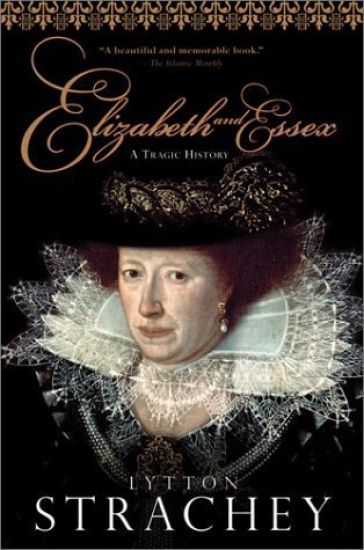
Elizabeth and Essex: A Tragic History

Elizabeth and Essex: A Tragic History

Lytton Strachey; Strachey

Mariner Books
2002
nidottu
One of the most famous and baffling romances in history-between Elizabeth I, Queen of England and Robert Devereux, Earl of Essex-began in May of 1587, when she was fifty-three and he was just shy of twenty. Their relationship continued until 1601, when the Earl of Essex was beheaded for treason. And, in a succession of brilliant scenes, Strachey portrays the Queen's and the Earl's compelling attraction for on another, their impassioned disagreements, and their mutual contest for power, which led to a final, tragic confrontation. Here we also have superb portraits of influential people of the time: Francis Bacon, Robert Cecil, Walter Raleigh, and other figures of the court who struggled to assert themselves in a kingdom that was primarily defined by her sovereign, and so now seen through history's lens as Elizabethan England.
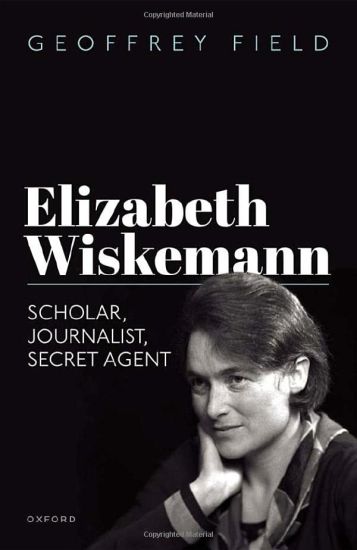
Elizabeth Wiskemann

Elizabeth Wiskemann

Geoffrey Field

Oxford University Press
2023
sidottu
This biography examines the life and career of scholar-journalist Elizabeth Wiskemann (1899-1971) from her youth and student years at Cambridge to her death by suicide. Disappointed in her hopes for an academic career, she reinvented herself as a journalist in Berlin, covering the overthrow of the Weimar Republic and the rise of Nazism for The New Statesman, Nation, and numerous other newspapers and periodicals. Expelled from Germany, she settled in Prague and funded by Chatham House wrote the most important account of the Czech-German conflict and the Sudeten crisis, still a classic, followed by a detailed analysis of Nazi political and economic destabilization of the countries of eastern Europe. Her journalistic skills served her well in the war years when she worked as a secret agent in Switzerland, gathering intelligence, running agents into Axis-controlled Europe, and working closely with Allen Dulles, the O.S.S. chief in Bern. Postwar, Wiskemann returned to freelance journalism, focusing especially on Italy and Germany, while also writing several books, including the first scholarly study of the Hitler-Mussolini relationship and the first major account of the expulsion of 12 million ethnic Germans from Eastern Europe. Although a prolific writer and highly regarded as a commentator on international affairs, she remained on the fringes of academia until 1958 when she was appointed Professor of International Relations at Edinburgh (the first woman to receive a Chair there in any discipline); she later became one of the first faculty recruited by the new Sussex University. In her later years she published several works of contemporary history, including Europe of the Dictators, 1919-45, widely used in schools and universities. Blinded in one eye by a botched surgery and increasingly anxious as her other eye deteriorated, she became terrified of going completely blind and ended her life. Aside from its intrinsic interest, Wiskemann's biography is illustrative of a whole cohort of women - graduates in the 1920s and 30s - who found ways to pursue their interests in international affairs and contemporary history. In this sense the book foregrounds the gendered experience of these pioneers whose professional lives often intersected through journalism, Chatham House, and service in the propaganda and intelligence agencies of the wartime state.
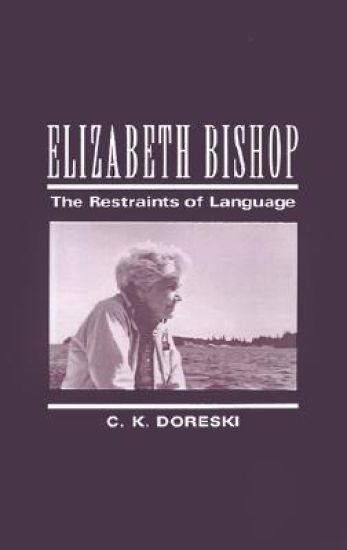
Elizabeth Bishop

Elizabeth Bishop

C. K. Doreski

Oxford University Press Inc
1993
sidottu
Doreski's book examines Elizabeth VBishop's rhetorical strategies as they shape the formal and thematic movements of her poetry and stories. It deals with her poetic not as a visual or geographical one, but as a series of linguistic stratgegies designed to create the maximum illusion of representation whilst resisting the romantic devices of self-revelation and solipsistic narration. Her poetry emphasizes control over language, voice and personality, yet becomes autobiographical in a more profound way than has usually been assumed. Unlike other recent studies of Bishop, this concerns itself less with her visual imagery than with her poetic, which is Emersonian and Worsworthian, yet critiques the romantic use of transcendence and epiphany. Bishop takes advantage of the inadequacies of language, and with a post-modern sense of limitation explores silences and bridges them with the mundane - thus leaving an air of emotional intimacy without committing itself to the banality of full exposure. Finding the poems and stories mutually illuminating, this study moves back and forth among Bishop's works, but acknowledges the intelligent ordering of the volumes Bishop published in her lifetime.
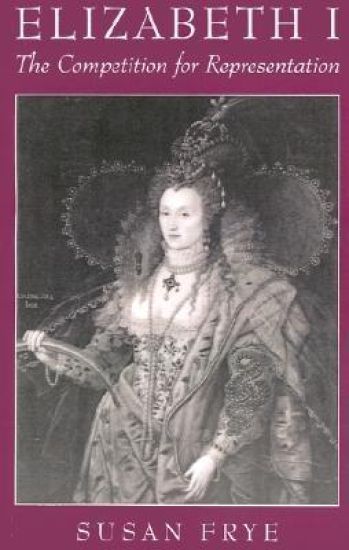
Elizabeth I: The Competition for Representation

Elizabeth I: The Competition for Representation

Frye

Oxford University Press Inc
1997
nidottu
Elizabeth I is perhaps the most visible woman in early modern Europe, yet little attention has been paid to what she said about the difficulties of constructing her power in a patriarchal society. This revisionist study examines her struggle for authority through the representation of her female body. Based on a variety of extant historical and literary materials, Frye's interpretation focuses on three representational crises spaced fifteen years apart: the London coronation of 1559, the Kenilworth entertainments of 1575, and the publication of The Faerie Queene in 1590. In ways which varied with social class and historical circumstance, the London merchants, the members of the Protestant faction, courtly artists, and artful courtiers all sought to stabilize their own gendered identities by constructing the queen within the "natural" definitions of the feminine as passive and weak. Elizabeth fought back, acting as a discursive agent by crossing, and thus disrupting, these definitions. She and those closely identified with her interests evolved a number of strategies through which to express her political control in terms of the ownership of her body, including her elaborate iconography and a mythic biography upon which most accounts of Elizabeth's life have been based. The more authoritative her image became, the more vigorously it was contested in a process which this study examines and consciously perpetuates.
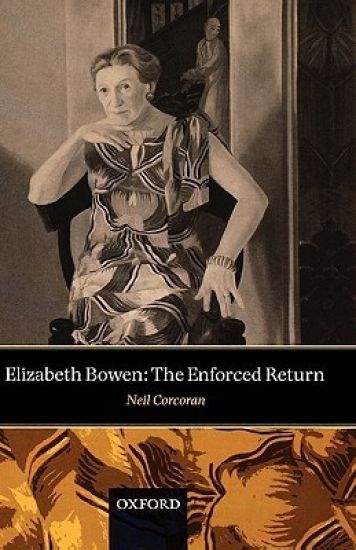
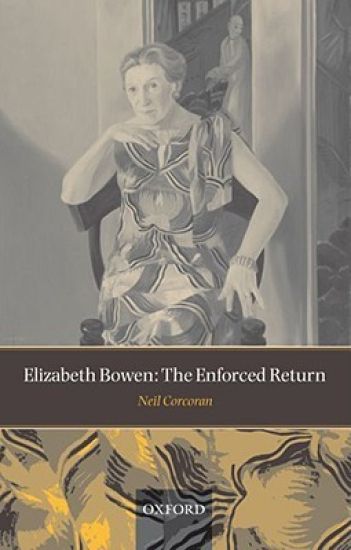
Elizabeth Bowen

Elizabeth Bowen

Neil Corcoran

Oxford University Press
2004
sidottu
Elizabeth Bowen is a writer who is still too little appreciated. Neil Corcoran presents here a critical study of her novels, short stories, family history, and essays, and shows that her work both inherits from the Modernist movement and transforms its experimental traditions. Elizabeth Bowen: The Enforced Return explores how she adapts Irish Protestant Gothic as a means of interpreting Irish experience during the Troubles of the 1920s and the Second World War, and also as a way of defining the defencelessness of those enduring the Blitz in wartime London. She employs versions of the Jamesian child as a way of offering a critique of the treatment of children in the European novel of adultery, and indeed, implicitly, of the Jamesian child itself. Corcoran relates the various kinds of return and reflex in her work-notably the presence of the supernatural, but also the sense of being haunted by reading-to both the Freudian concept of the 'return of the repressed' and to T. S. Eliot's conception of the auditory imagination as a 'return to the origin'. Making greater interpretative use of extra-fictional materials than previous Bowen critics (notably her wartime reports from neutral Ireland to Churchill's government and the diaries of her wartime lover, the Canadian diplomat Charles Ritchie), Corcoran reveals how her fiction merges personal story with public history. Employing a wealth of original research, his radical new readings propose that Bowen is as important as Samuel Beckett to twentieth-century literary studies--a writer who returns us anew to the histories of both her time and ours.
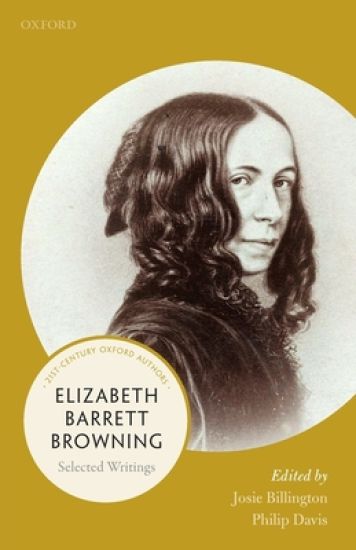
Elizabeth Barrett Browning

Elizabeth Barrett Browning

Oxford University Press
2018
nidottu
This volume in the 21st Century Oxford Authors series offers students and readers a comprehensive selection of the work of the poet Elizabeth Barrett Browning (1806-1861). Accompanied by full scholarly apparatus, this authoritative edition enables students to study Barrett Browning's work within the rich context of her life and writing career. The revaluation of Elizabeth Barrett Browning's work by feminist scholars has made her an established author in university syllabuses in Britain and in America. Yet the reception of Barrett Browning as a writer within an explicitly female tradition has tended to limit the appreciation of her wider contribution to English literary culture in the nineteenth century, just as her popular image as a ringleted romantic heroine served sentimentally to eclipse her role as a literary pioneer. This edition complements or corrects these emphases by being the first edition dedicated to witnessing the progress and growth of the poet's creative direction--from her juvenilia through to her major achievements and beyond. The selection of works presented here appear in the order in which they were originally published, enabling students and readers to experience the contours of Barrett Browning's poetic career. Thus, following selections from published juvenilia, The Battle of Marathon (1820) and 'An Essay on Mind' and Other Poems (1826) and from 'Prometheus Bound' and Miscellaneous Poems (1833), there are more extensive selections from 'The Seraphim' and Other Poems (1838), from Poems 1844 and from Poems 1850 including the full text of Sonnets from the Portuguese. Substantial excerpts from Casa Guidi Windows (1851) is followed by the full text of Aurora Leigh (1857) and by selections from the posthumous Last Poems (1862). These individual sections are supplemented by careful selections (also chronologically ordered) from the correspondence, including the courtship letters with Robert Browning, and, where applicable, from poetry unpublished in the nineteenth century. Explanatory notes and commentary are included, to enhance the study, understanding, and enjoyment of these works, and the edition includes an Introduction to the life and works of Barrett Browning, and a Chronology.
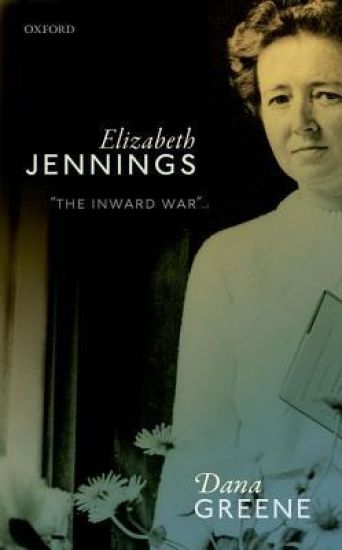
Elizabeth Jennings

Elizabeth Jennings

Dana Greene

Oxford University Press
2018
sidottu
Elizabeth Jennings was one of the most popular, prolific, and widely anthologized lyric poets in the second half of the twentieth century. This first biography, based on extensive archival research and interviews with Jennings's contemporaries, integrates her life and work and explores the 'inward war' the poet experienced as a result of her gender, religion, and mental fragility. Originally associated with the Movement, Jennings was sui generis, believing poetry was 'communication' and 'communion.' She wrote of nature, friendship, childhood, religion, love, and art, endearing her to a wide audience. Yet lifelong depression, unbearable loneliness, unrelenting fears, poverty, and physical illness plagued her. These were exacerbated by her gender in a male-dominated literary world and an inherited Catholic worldview which initially inculcated guilt and shame. However, a tenacious drive to be a poet made her, 'the most unconditionally loved writer of her generation.' Although her claim was that the poem is not the poet, her life is tracked in her voluminous published and unpublished poetry and prose. The themes of mental illness, the importance of place, the problems associated with being an unmarried woman artist, her relationship with literary mentors and younger poets, her non-feminist feminism, and her marginality and sympathy for the outcast are all explored. It was poetry which saved her; it helped her push back darkness and discover order in the midst of chaos. Poetry was her raison d'etre. It was her life.
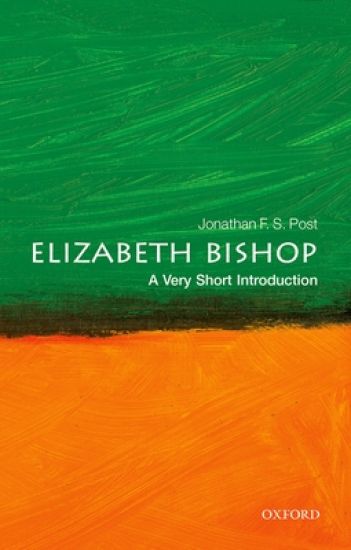
Elizabeth Bishop

Elizabeth Bishop

Jonathan F. S. Post

Oxford University Press
2022
nidottu
Very Short Introductions: Brilliant, Sharp, Inspiring Elizabeth Bishop has been described as the 'best-loved' poet in English of the second half of the twentieth century. This Very Short Introduction explores the 90 or so published poems that are at the core of her remarkable canon of verse. Drawing on biographical and critical material, Jonathan Post also makes frequent use of Bishop's letters and commentary by fellow poets, including Marianne Moore, Robert Lowell, and James Merrill to illuminate her writing and contemporary literary landscape. Throughout, Post places Bishop's lyric poetry within the context of her life and aesthetic values, showing how these shaped her work. The book covers a wide range of core themes present in her poetry, including her powerful use of description, the environment, balance, and ideas of love and loss, as well as looking at Bishop's interest in the visual arts. ABOUT THE SERIES: The Very Short Introductions series from Oxford University Press contains hundreds of titles in almost every subject area. These pocket-sized books are the perfect way to get ahead in a new subject quickly. Our expert authors combine facts, analysis, perspective, new ideas, and enthusiasm to make interesting and challenging topics highly readable.
Elizabeth Bowen

Elizabeth Bowen

Neil Corcoran

Oxford University Press
2008
nidottu
Elizabeth Bowen is a writer who is still too little appreciated. Neil Corcoran presents here a critical study of her novels, short stories, family history, and essays, and shows that her work both inherits from the Modernist movement and transforms its experimental traditions. Elizabeth Bowen: The Enforced Return explores how she adapts Irish Protestant Gothic as a means of interpreting Irish experience during the Troubles of the 1920s and the Second World War, and also as a way of defining the defencelessness of those enduring the Blitz in wartime London. She employs versions of the Jamesian child as a way of offering a critique of the treatment of children in the European novel of adultery, and indeed, implicitly, of the Jamesian child itself. Corcoran relates the various kinds of return and reflex in her work-notably the presence of the supernatural, but also the sense of being haunted by reading-to both the Freudian concept of the 'return of the repressed' and to T. S. Eliot's conception of the auditory imagination as a 'return to the origin'. Making greater interpretative use of extra-fictional materials than previous Bowen critics (notably her wartime reports from neutral Ireland to Churchill's government and the diaries of her wartime lover, the Canadian diplomat Charles Ritchie), Corcoran reveals how her fiction merges personal story with public history. Employing a wealth of original research, his radical new readings propose that Bowen is as important as Samuel Beckett to twentieth-century literary studies--a writer who returns us anew to the histories of both her time and ours.
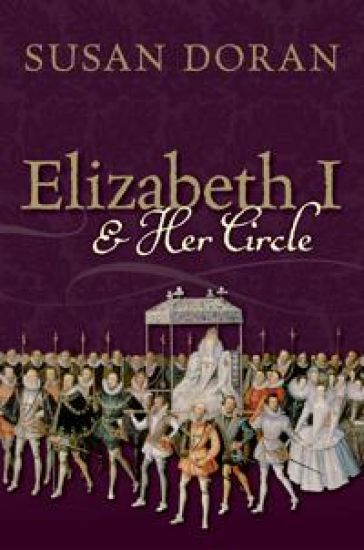
Elizabeth I and Her Circle

Elizabeth I and Her Circle

Susan Doran

Oxford University Press
2015
sidottu
This is the story of Elizabeth I's inner circle and the crucial human relationships which lay at the heart of her personal and political life. Using a wide range of original sources - including private letters, portraits, verse, drama, and state papers - Susan Doran provides a vivid and often dramatic account of political life in Elizabethan England and the queen at its centre, offering a deeper insight into Elizabeth's emotional and political conduct - and challenging many of the popular myths that have grown up around her. It is a story replete with fascinating questions. What was the true nature of Elizabeth's relationship with her father, Henry VIII, especially after his execution of her mother? How close was she to her half-brother Edward VI - and were relations with her half-sister Mary really as poisonous as is popularly assumed? And what of her relationship with her Stewart cousins, most famously with Mary Queen of Scots, executed on Elizabeth's orders in 1587, but also with Mary's son James VI of Scotland, later to succeed Elizabeth as her chosen successor? Elizabeth's relations with her family were crucial, but just as crucial were her relations with her courtiers and her councillors. Here again, the story raises a host of fascinating questions. Was the queen really sexually jealous of her maids of honour? Did physically attractive male favourties dominate her court? What does her long and intimate relationship with the Earl of Leicester reveal about her character, personality, and attitude to marriage? What can the fall of Essex tell us about Elizabeth's political management in the final years of her reign? And what was the true nature of her personal and political relationship with influential and long-serving councillors such as the Cecils and Sir Francis Walsingham? And how did courtiers and councillors deal with their demanding royal mistress?
Elizabeth Barrett Browning

Elizabeth Barrett Browning

Oxford University Press
2014
sidottu
The Barret Browning volume in the 21st Century Oxford Authors series offers a comprehensive selection of the works of one of the nineteenth-century's most famous poets. The revaluation of Elizabeth Barrett Browning's work by feminist scholars has made her an established (indeed standard) author in university syllabuses in Britain and in America. Yet the emphasis upon her contribution to a female tradition has tended to rigidify Barrett Browning's contribution to English literary culture in the nineteenth century, just as her popular image as ringleted-invalid-turned-romantic-heroine served sentimentally to eclipse her role as a literary pioneer. This edition complements or corrects these emphases by being the first edition dedicated to witnessing the progress and growth of the poet's creative direction - from her juvenilia through to her major achievements and beyond. In keeping with the aims of the series, the selection honours the original sequencing of the published works as the best means of indicating the contours of Barrett Browning's poetic career. Thus, following fairly limited selections from published juvenilia, The Battle of Marathon (1820) and 'An Essay on Mind' and Other Poems (1826) and from 'Prometheus Bound' and Miscellaneous Poems (1833), there are more extensive selections from 'The Seraphim' and Other Poems (1838), from Poems 1844 and from Poems 1850 including the full text of Sonnets from the Portuguese. Substantial excerpts from Casa Guidi Windows (1851) is followed by the full text of Aurora Leigh (1857) and by selections from the posthumous Last Poems (1862). These individual sections are supplemented by careful selections (also chronologically ordered) from the correspondence, including the courtship letters with Robert Browning, and, where applicable, from poetry unpublished in the nineteenth century. The edition comes with full scholarly apparatus (introduction, chronology, explanatory notes), though it follows the series policy of recording only significant variants between editions.
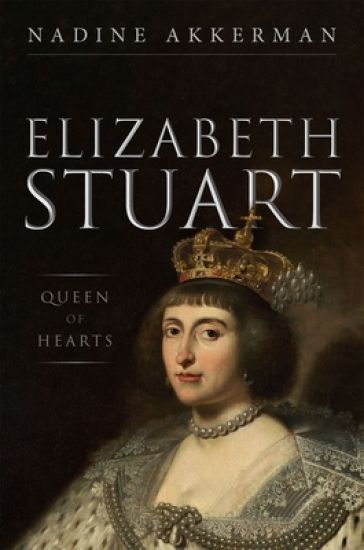
Elizabeth Stuart, Queen of Hearts

Elizabeth Stuart, Queen of Hearts

Nadine Akkerman

Oxford University Press
2021
sidottu
The dazzling new biography of one of history's most misunderstood queens Elizabeth Stuart is one the most misrepresented - and underestimated - figures of the seventeenth century. Labelled a spendthrift more interested in the theatre and her pet monkeys than politics or her children, and long pitied as 'The Winter Queen', the direct ancestor of Elizabeth II was widely misunderstood. Nadine Akkerman's biography reveals an altogether different woman, painting a vivid picture of a queen forged in the white heat of European conflict. Elizabeth Stuart, daughter of James VI and I, was married to Frederick V, Elector Palatine in 1613. The couple were crowned King and Queen of Bohemia in 1619, only to be deposed and exiled to the Dutch Republic in 1620. Elizabeth then found herself at the epicentre of the Thirty Years' War and the Civil Wars, political and military struggles that defined seventeenth-century Europe. Following her husband's death in 1632, Elizabeth fostered a cult of widowhood, dressing herself and her apartments in black, and conducted a long and fierce political campaign to regain her children's birthright - by force, if possible - wielding her pen with the same deft precision with which she once speared boars from horseback. Through deep immersion in the archives and masterful detective work, Akkerman overturns the received view of Elizabeth Stuart, showing her to be a patron of the arts and canny stateswoman with a sharp wit and a long memory. On returning to England in 1661, Elizabeth Stuart found a country whose people still considered her their 'Queen of Hearts'. Akkerman's biography reveals the impact Elizabeth Stuart had on both England and Europe, demonstrating that she was more than just the grandmother of George I.
Elizabeth I

Elizabeth I

Elizabeth I

University of Chicago Press
2009
sidottu
England's Virgin Queen, Elizabeth Tudor, had a reputation for proficiency in foreign languages, repeatedly demonstrated in multilingual exchanges with foreign emissaries at court and in the extemporized Latin she spoke on formal visits to Cambridge and Oxford. But the supreme proof of her mastery of other tongues is the sizable body of translations she made over the course of her lifetime. This two-volume set is the first complete collection of Elizabeth's translations from and into Latin, French, and Italian.Presenting original and modernized spellings in a facing-page format, these two volumes will answer the call to make all of Elizabeth's writings available. They include her renderings of epistles of Cicero and Seneca, religious writings of John Calvin and Marguerite de Navarre, and Horace's Ars poetica, as well as Elizabeth's Latin Sententiae on the responsibilities of sovereign rule and her own perspectives on the monarchy. Editors Janel Mueller and Joshua Scodel offer introductions to each of the translated selections, describing the source text, its cultural significance, and the historical context in which Elizabeth translated it. Their annotations identify obscure meanings, biblical and classical references, and Elizabeth's actual or apparent deviations from her sources.The translations collected here trace Elizabeth's steady progression from youthful evangelical piety to more mature reflections on morality, royal responsibility, public and private forms of grief, and the right way to rule. "Elizabeth I: Translations" is the queen's personal legacy, an example of the very best that a humanist education can bring to the conduct of sovereign rule.
Elizabeth I

Elizabeth I

Elizabeth I

University of Chicago Press
2009
sidottu
England's Virgin Queen, Elizabeth Tudor, had a reputation for proficiency in foreign languages, repeatedly demonstrated in multilingual exchanges with foreign emissaries at court and in the extemporized Latin she spoke on formal visits to Cambridge and Oxford. But the supreme proof of her mastery of other tongues is the sizable body of translations she made over the course of her lifetime. This two-volume set is the first complete collection of Elizabeth's translations from and into Latin, French, and Italian.Presenting original and modernized spellings in a facing-page format, these two volumes will answer the call to make all of Elizabeth's writings available. They include her renderings of epistles of Cicero and Seneca, religious writings of John Calvin and Marguerite de Navarre, and Horace's Ars poetica, as well as Elizabeth's Latin Sententiae on the responsibilities of sovereign rule and her own perspectives on the monarchy. Editors Janel Mueller and Joshua Scodel offer introductions to each of the translated selections, describing the source text, its cultural significance, and the historical context in which Elizabeth translated it. Their annotations identify obscure meanings, biblical and classical references, and Elizabeth's actual or apparent deviations from her sources.The translations collected here trace Elizabeth's steady progression from youthful evangelical piety to more mature reflections on morality, royal responsibility, public and private forms of grief, and the right way to rule. "Elizabeth I: Translations" is the queen's personal legacy, an example of the very best that a humanist education can bring to the conduct of sovereign rule.
Elizabeth I

Elizabeth I

University of Chicago Press
2002
nidottu
This long-awaited and masterfully edited volume contains nearly all of the writings of Queen Elizabeth 1: the clumsy letters of childhood, the early speeches of a fledgling queen, and the prayers and poetry of the monarch's later years. The first collection of its kind, Elizabeth I reveals brilliance on two counts; that of the Queen a dazzling writer and a leading intellect of the English Renaissance, and that of the editors, whose copious annotations make the book not only essential to scholars but accessible to general readers as well.