Kirjojen hintavertailu. Mukana 11 342 296 kirjaa ja 12 kauppaa.

Kirjahaku

Etsi kirjoja tekijän nimen, kirjan nimen tai ISBN:n perusteella.

1000 tulosta hakusanalla Emilio Castelar

Historia del año 1883

Historia del año 1883

Emilio Castelar y Ripoll

Linkgua
2024
pokkari
En 1864 se celebro en Londres la Ia Internacional, la clase obrera europea hablaba de su emancipacion frente al capital. Espana, aunque no estuvo representada en Londres, celebro en junio de 1870 en Barcelona el I Congreso de la Seccion espanola de la Internacional. Y en 1883 se creo una Comision de Reformas Sociales en las Cortes con la mision de estudiar el problema social y proponer soluciones al Gobierno.
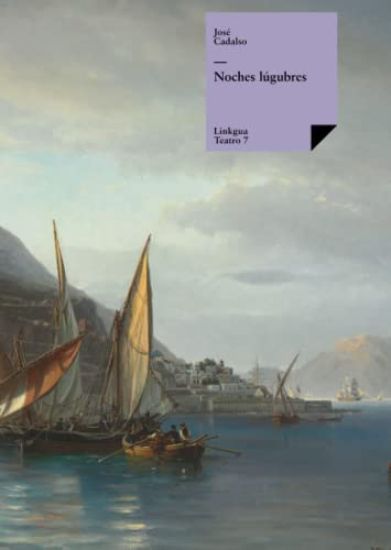
Noches lúgubres

Noches lúgubres

Emilio Castelar y Ripoll

LINKGUA EDICIONES
2024
pokkari
Noches l gubres es la gran obra del escritor y militar Jos Cadalso. Sin embargo, fue un libro que nunca lleg a publicar en vida. Fue siete a os tras su muerte, en 1782, cuando por vio la luz siendo editado en cuatro partes por el peri dico el Correo de Madrid.Por su tono infractor y subversivo, Noches l gubres compareci m s de una vez ante el tribunal de la Inquisici n y se hicieron de ella varias versiones adecuadas a los ideales de la poca. Se entiende que, por su contenido, desde las primeras ediciones se trat de darle un tono moral a la obra.Por medio de modificaciones en el texto o por los pr logos de los editores se intentaba que este libro se impregnase de un tono m s moralista, que pudiera hacerla admisible ante la censura o ante los criterios dominantes.Noches l gubres nos narra la historia de Tediato a lo largo de tres noches especialmente l gubres. Tediato, su protagonista, dialoga con Lorenzo, el sepulturero del cementerio en que est enterrada Filis, la amada de Tediato. Pretende desenterrar el cad ver para llevarlo a casa y suicidarse, inciner ndose a s mismo junto los restos de la amada.En la primera noche, cuando est n a punto de lograrlo, empieza a salir el sol y deben parar. En la segunda, lo confunden con un asesino y lo encarcelan; se topa con el hijo de Lorenzo y conoce las desgracias de la vida de su amigo. Y en la ltima noche, se ve c mo se marchan para seguir con su cometido.Ninguno de sus deseos puede llevarse a cabo porque noche tras noche los sucesos los interrumpen, y ello lo acaba sumiendo en un negativismo vital. Noches l gubres es una obra oscura, llena de pesimismo y presagios, escrita siguiendo la moda de los Nights thoughts de Edward Young.
La hermana de la caridad

La hermana de la caridad

Castelar y. Ripoll Emilio

Createspace Independent Publishing Platform
2017
nidottu
Con un lenguaje elegante, propio de la poca. La descripci n es detallada, sofisticada lo que hace que la prosa sea elegante y la lectura distinta a la contempor nea. Un libro con muchos sentimientos encontrados, digno de leerse.
Ricardo

Ricardo

Castelar y. Ripoll Emilio

Createspace Independent Publishing Platform
2017
nidottu
Tras el pronunciamiento de Mart nez Campos y la Restauraci n de la Monarqu a, Castelar se marcha de Espa a, reside en Par s y viaja por otros pa ses europeos. Publica con asiduidad: varias novelas entre las que se encuentra Ricardo ambas de 1878 as como numerosos ensayos y discursos.
Emilio

Emilio

Fanisha Myers

Lulu.com
2021
pokkari
A Guy who gets caught up in life with LOVE, MONEY, & BETRAYAL, Who than tries to escape the reality of his actions after dealing with some real life situations when it came down to his WOMEN, POWER, & HUSTLE
Emilio

Emilio

Jean-Jacques Rousseau

Createspace Independent Publishing Platform
2014
nidottu
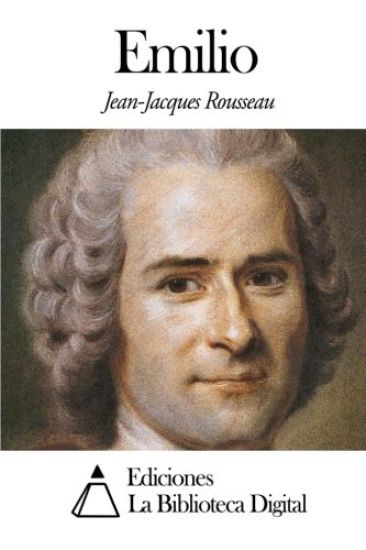
"Emilio", de Jean-Jacques Rousseau. Jean-Jacques Rousseau fue un escritor, fil sofo, m sico, bot nico y naturalista (1712-1778)
Emilio’s Carnival (Senilità)

Emilio’s Carnival (Senilità)

Italo Svevo

Yale University Press
2001
pokkari
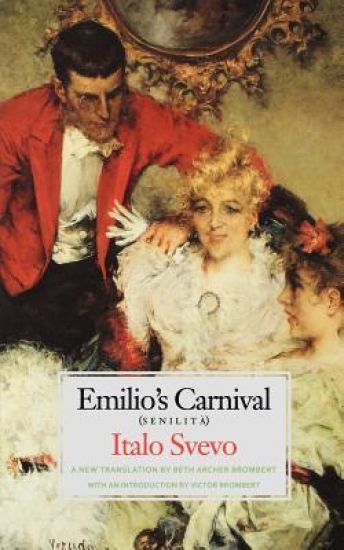
Italo Svevo’s early novel Senilità (1898) remained unknown for many years until James Joyce encountered the novelist in Trieste and came to admire Senilità as a preeminent modern Italian novel. Joyce helped to launch Svevo’s career, and years later Svevo achieved great fame with his masterpiece, Confessions of Zeno. In Senilità, Svevo tells the story of the amorous entanglement of Emilio, a failed writer already old at thirty-five, and Angiolina, a seductively beautiful but promiscuous young woman. A study in jealousy and self-torment, the novel traces the intoxicating effect of a narcissistic and amoral woman on an indecisive daydreamer who vacillates between guilt and moral smugness. The novel is suffused with a tragic sense of existence, and the unbreachable distance between one consciousness and another. Svevo’s unmistakably modern voice subtly captures rapid shifts in mood and intention, exploiting irony, indirection, and multiple points of view to reveal Emilio’s increasing anguish as he comes to recognize the dissonance between himself and his world.
Emilio Sanchez in New York and Latin America
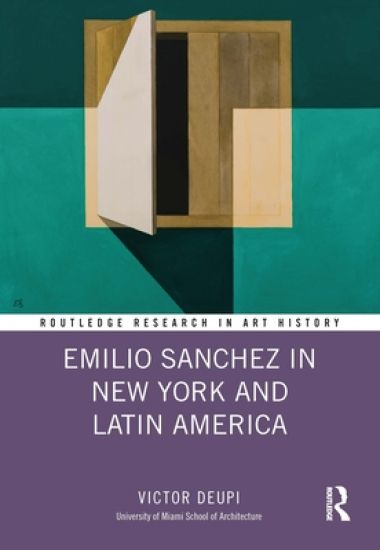
This book focuses on the life and artistic activities of Emilio Sanchez (1921–1999) in New York, and Latin America in the 1940s and 1950s. More specifically, the book will consider Sanchez in the wider context of mid-century Cuban artists, and cross-cultural exchange between New York, Cuba, and the Caribbean. The book reflects on why Sanchez chose to be a mobile observer of the American and Caribbean vernacular at a time when such an approach seemed at odds with the mainstream avant-garde. The book includes a foreword by Dr. Ann Koll, former Executive Director/Curator of the Emilio Sanchez Foundation, and an introduction by Dr. Nathan J. Timpano, University of Miami Department of Art and Art History. This book will be of interest to scholars in modern art, Caribbean studies, architectural history, and Latin American and Hispanic studies.
Emilio Sanchez in New York and Latin America

Emilio Sanchez in New York and Latin America

Victor Deupi

TAYLOR FRANCIS LTD
2023
nidottu
This book focuses on the life and artistic activities of Emilio Sanchez (1921–1999) in New York, and Latin America in the 1940s and 1950s. More specifically, the book will consider Sanchez in the wider context of mid-century Cuban artists, and cross-cultural exchange between New York, Cuba, and the Caribbean. The book reflects on why Sanchez chose to be a mobile observer of the American and Caribbean vernacular at a time when such an approach seemed at odds with the mainstream avant-garde. The book includes a foreword by Dr. Ann Koll, former Executive Director/Curator of the Emilio Sanchez Foundation, and an introduction by Dr. Nathan J. Timpano, University of Miami Department of Art and Art History. This book will be of interest to scholars in modern art, Caribbean studies, architectural history, and Latin American and Hispanic studies.
Emilio FernáNdez

Emilio FernáNdez

Dolores Tierney

Manchester University Press
2012
nidottu
Emilio Fernández: Pictures in the Margins is the first book-length English language account of Emilio Fernández (1904-1986) the most successful director of classical Mexican Cinema, famed with creating films that embody a loosely defined Mexican school of filmmaking. However, rather than offer an auteurist study this book interrogates the construction of Fernández as both a national and nationalist auteur (including racial and gender aspects e.g. as macho mexicano and indio). It also challenges auteurist readings of the films themselves in order to make new arguments about the significance of Fernández and his work. The aim of this book is to question Mexico’s fetishisation of its own position on the peripheries of the global cultural economy and the similar fetishisation of Fernández’s marginalisation as a mixed race (part white and part indigenous) director. This book argues that, as pictures in the margins, classical Mexican cinema and specifically Fernández’s films are not transparent reflections of dominant post Revolutionary Mexican culture, but annotations and re-inscriptions of the particularities of Mexican society in the post-Revolutionary era.
Emilio Rabasa and the Survival of Porfirian Liberalism

Emilio Rabasa and the Survival of Porfirian Liberalism

Charles A. Hale

Stanford University Press
2008
sidottu
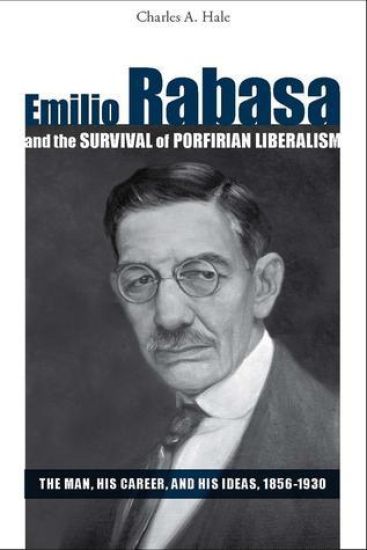
This is an intellectual and career biography of Emilio Rabasa, the eminent Mexican jurist, politician, novelist, diplomat, journalist, and historian who opposed the Revolution of 1910-20, spent the years 1914 to 1920 in exile, but returned and was reintegrated into Mexican life until his death in 1930. Though he is still idolized by the juridical community of Mexico City, little is known about Rabasa beyond his principal publications. He was a reserved, enigmatic man who kept no personal archive and sought a low public profile. Hale reveals unknown aspects of his life, career, and personality from two extensive bodies of correspondence—with Jos Yves Limantour, finance minister from 1893 to 1911, and William F. Buckley, Sr., American lawyer and petroleum entrepreneur. He also analyzes Rabasa's political, juridical, and social ideas, arguing that they demonstrate continuity and even survival of late nineteenth-century liberalism through the revolutionary years and beyond. Rabasa's was a transformed liberalism, based on scientific politics drawn from European positivism and historical constitutionalism—an elitist rejection of abstract doctrines of natural rights and egalitarian democracy, emphasizing strong centralized yet constitutionally limited authority and empirically based economic development.
Emilio Ambasz

Emilio Ambasz

Barry Bergdoll

RIZZOLI INTERNATIONAL PUBLICATIONS
2022
sidottu
Famously labelled the father, poet, and prophet of green architecture and a vocal proponent of the idea that any project in architecture or design must present new or better ways of living or be deemed immoral, Emilio Ambasz is an award-winning architect, industrial designer, and protean maker of forms. He has invented highly efficient engines, modular furniture, streetlamps, flexible pens, expandable suitcases, ergonomic door handles, wrist-computers, dental hygiene systems, and 3D posters. He created the Vertebra chair, the first ever automatic, ergonomic chair in the world, now part of the permanent collections at MoMA and The Met in New York. In architecture he has long been a pioneer, and has retained a belief in the environment, or rather the larger ecology, as fundamental in viewing the world: as Professor Bergdoll notes of Ambasz in his introduction, his philosophy of green over gray may often have fallen on deaf ears at the height of Postmodernism, but it today seems profoundly relevant. And it is in the context of today that the book considers the work of Emilio Ambasz and its three main areas of concentration architecture, industrial design, curating with an aim of shining a light on the interdisciplinary nature of the work as a whole. Featuring built and manufactured designs that have achieved iconic fame and challenged others to approach new ways of reconciling architecture and nature notably the Prefectural Hall at Fukuoka, Japan, and the conservatory buildings of the San Antonio Botanical Garden, in addition to his own unique house outside Seville in Spain the book also considers Ambasz s work as curator at MoMA and his ongoing influence and legacy.