Kirjojen hintavertailu. Mukana 11 238 394 kirjaa ja 12 kauppaa.

Kirjahaku

Etsi kirjoja tekijän nimen, kirjan nimen tai ISBN:n perusteella.

1000 tulosta hakusanalla Emily Butler

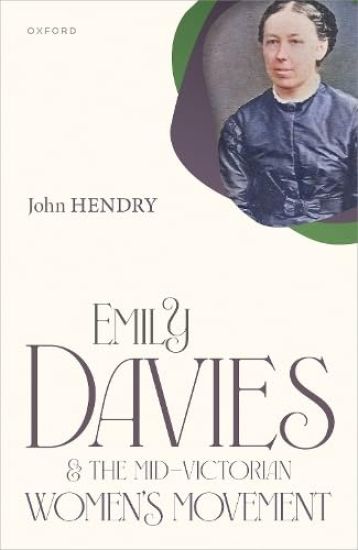
Emily Davies and the Mid-Victorian Women's Movement

Emily Davies and the Mid-Victorian Women's Movement

John Hendry

Oxford University Press
2024
sidottu
Emily Davies was a central figure in the mid-Victorian women's movement. Formidably intelligent, fiercely determined, and an indefatigable campaigner and organiser, the socially and politically conservative Davies directed the first campaign for female suffrage in 1866-7. She was one of the first women elected to public office in 1870, campaigned successfully for the admission of girls to school leaving examinations, played a significant part in the reform of girls' secondary school provision, and established Girton College, Cambridge, Britain's first university-level college for women. This book combines the first scholarly biography of Davies with a radically new account of the mid-Victorian women's movement. From the late 1850s to the mid-1870s and through the life, work, and writing of Davies, the book traces the growth, influence, and division of the movement, including its institutional origins; its social, political, religious and intellectual allegiances; and its relation to other major social and intellectual developments. Drawing on Davies' published correspondence and a range of unused archival sources, the book explores the overlapping contexts that enabled the growth of the movement and the diverse motivations that brought women into it but then led them to pursue quite different paths. As the movement developed, these interacted with political differences, strategic disagreements, and personality clashes to split the movement into separate strands, all sharing the same broad objectives but with different practical foci. This is the story of how a group of exceptional women, Emily Davies at their centre, challenged conventional ideas and created new opportunities for women. Situated in its broader social, cultural, and intellectual contexts, it will appeal to all those interested in Victorian social history, the history of feminism, and the history of education.
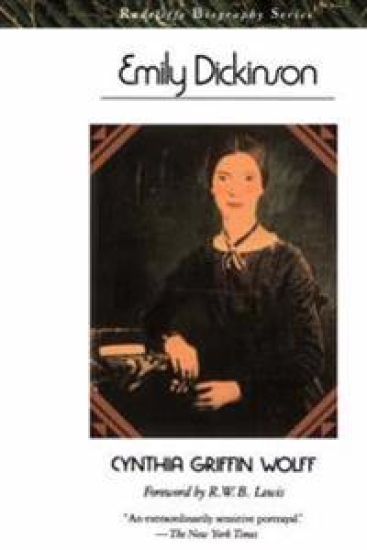
Emily Dickinson

Emily Dickinson

Cynthia Griffin Wolff

Da Capo Press Inc
1988
pokkari
Cynthia Griffin Wolff's brilliant literary biography of Emily Dickinson is the first to unravel the intricate relationship between her life and her poetry. It is a vivid portrait of the poet and her times as well as a fascinating interpretive study of the poems that will enable every reader to approach them with new understanding and delight.
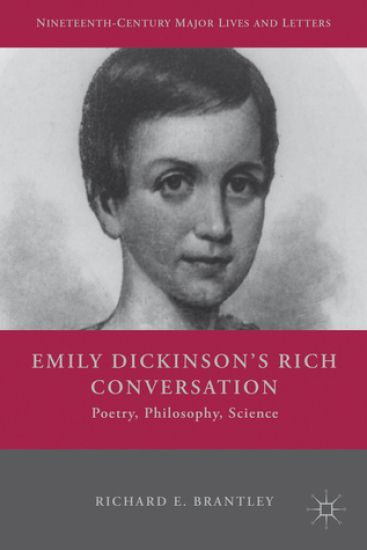
Emily Dickinson's Rich Conversation

Emily Dickinson's Rich Conversation

R. Brantley

Palgrave Macmillan
2013
sidottu
Emily Dickinson's Rich Conversation is a comprehensive account of Emily Dickinson's aesthetic and intellectual life. Contrary to the image of the isolated poet, this ambitious study reveals Dickinson's agile mind developing through conversation with a community of contemporaries.
The Complete Poems of Emily Jane Brontë

The Complete Poems of Emily Jane Brontë

Emily Jane Brontë; Irene Taylor

Columbia University Press
1941
sidottu
In 1846 a small book entitled Poems by Currer, Ellis and Acton Bellappeared on the British Literary scene. The three psuedonymous poets, the Bronte sisters went on to unprecedented success with such novels as Wuthering Heights, Agnes Grey, and Jane Eyre, all published in the following year. As children, these English sisters had begun writing poems and stories abotu an imaginary country named Gondal, yet they never sought to publish any of their work until Charlotte's discovery of Emily's more mature poems in the autumn of 1845. Charlotte later recalled: "I accidentally lighted on a MS. volume of verse in my sister Emily's handwriting...I looked it over, amd something more than surprise seized me -- a deep conviction that these were not common effusions, nor at all like the poetry women generally write. I thought them condensed and terse, vigorous and genuine. To my ear they had also a peculiar music -- wild, melancholy, and elevating." The renowned Hatfield edition of The Complete Poems of Emily Jane Bronte includes the poetry that captivated Charlotte Bronte a century and a half ago, a body of work that continues to resonate today. This incomparable volume includes Emily's verse from Poems by Currer, Ellis and Acton Bell as well as 200 works collected from various manuscript sources after her death in 1848. Some were deited and preserved by Charlotte and Arthur Bell Nichols; still others were discovered years later by Bronte scholars. Originally released in 1923, Hatfield's collection was the result of a remarkable attempt over twenty years to isolate Emily's poems from her sisters' and to achieve chronological order. Accompanied by an interpretive preface on "The Gondal Story" by Miss Fannie E. Ratchford, author of The Bronte's Web of Childhood, the edition is the definitive collection of Emily Bronte's poetical works.
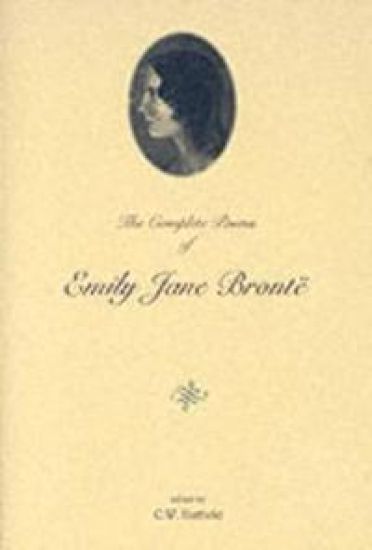
The Complete Poems of Emily Jane Brontë

The Complete Poems of Emily Jane Brontë

Emily Jane Brontë; Irene Taylor

Columbia University Press
1996
pokkari
In 1846 a small book entitled Poems by Currer, Ellis and Acton Bellappeared on the British Literary scene. The three psuedonymous poets, the Bronte sisters went on to unprecedented success with such novels as Wuthering Heights, Agnes Grey, and Jane Eyre, all published in the following year. As children, these English sisters had begun writing poems and stories abotu an imaginary country named Gondal, yet they never sought to publish any of their work until Charlotte's discovery of Emily's more mature poems in the autumn of 1845. Charlotte later recalled: "I accidentally lighted on a MS. volume of verse in my sister Emily's handwriting...I looked it over, amd something more than surprise seized me -- a deep conviction that these were not common effusions, nor at all like the poetry women generally write. I thought them condensed and terse, vigorous and genuine. To my ear they had also a peculiar music -- wild, melancholy, and elevating." The renowned Hatfield edition of The Complete Poems of Emily Jane Bronte includes the poetry that captivated Charlotte Bronte a century and a half ago, a body of work that continues to resonate today. This incomparable volume includes Emily's verse from Poems by Currer, Ellis and Acton Bell as well as 200 works collected from various manuscript sources after her death in 1848. Some were deited and preserved by Charlotte and Arthur Bell Nichols; still others were discovered years later by Bronte scholars. Originally released in 1923, Hatfield's collection was the result of a remarkable attempt over twenty years to isolate Emily's poems from her sisters' and to achieve chronological order. Accompanied by an interpretive preface on "The Gondal Story" by Miss Fannie E. Ratchford, author of The Bronte's Web of Childhood, the edition is the definitive collection of Emily Bronte's poetical works.
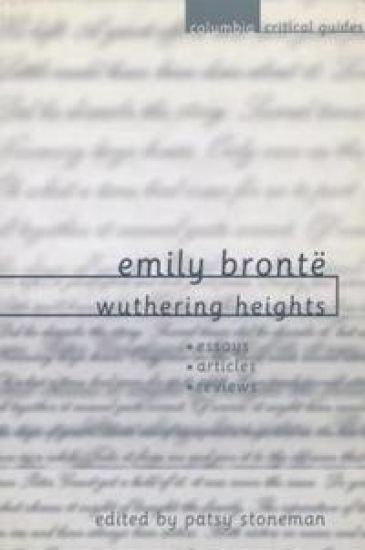
Emily Brontë: Wuthering Heights

Emily Brontë: Wuthering Heights

Columbia University Press
1999
sidottu
A guide to and excerpts from the critical commentary on the only novel this particular Brontd (1818-48) published. Stoneman (English, U. of Hull) arranges the commentary into sections on Victorian responses: power, propriety, and poetry; the rise and fall of the author: humanism, formalism, deconst
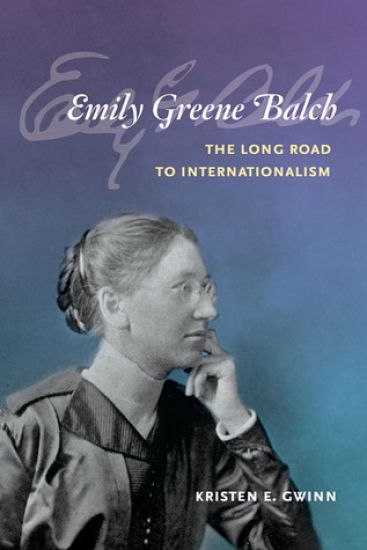
Emily Greene Balch: The Long Road to Internationalism

Emily Greene Balch: The Long Road to Internationalism

Kristen E. Gwinn

University of Illinois Press
2010
sidottu
A well-known American academic and cofounder of Boston's first settlement house, Emily Greene Balch was an important Progressive Era reformer and advocate for world peace. Balch served as a professor of economics and sociology at Wellesley College for twenty years until her opposition to World War I resulted with the board of trustees to refusing to renew her contract. Afterwards, Balch continued to emphasize the importance of international institutions for preventing and reconciling conflicts. She was awarded a Nobel Peace Prize in 1946 for her efforts in cofounding and leading the Women's International League for Peace and Freedom (WILPF).In tracing Balch's work at Wellesley, for the WILPF, and for other peace movements, Kristen E. Gwinn draws on a rich collection of primary sources such as letters, lectures, a draft of Balch's autobiography, and proceedings of the WILPF and other organizations in which Balch held leadership roles. Gwinn illuminates Balch's ideas on negotiated peace, internationalism, global citizenship, and diversity while providing pointed insight into her multifaceted career, philosophy, and temperament. Detailing Balch's academic research on Slavic immigration and her arguments for greater cultural and monetary cohesion in Europe, Gwinn shows how Balch's scholarship and teaching reflected her philosophical development.This first scholarly biography of Balch helps contextualize her activism while taking into consideration changes in American attitudes toward war and female intellectuals in the early twentieth century.
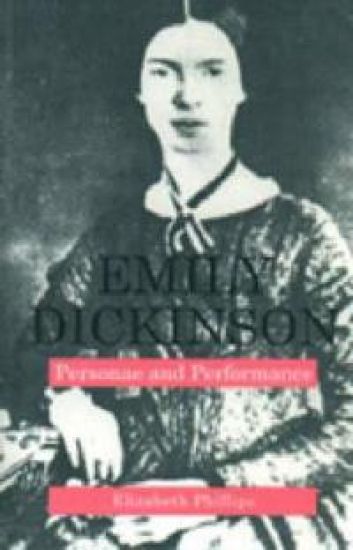
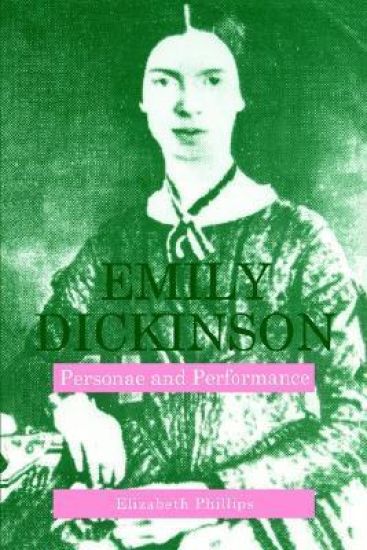
Emily Dickinson

Emily Dickinson

Elizabeth Phillips

Pennsylvania State University Press
1990
sidottu
Giving us a new sense of Dickinson’s ways of being in her world, this book traces the perceptions of that world in the poetry and contributes to our pleasure in the performance of a virtuoso. Elizabeth Philips shows the imaginative uses the poet made of her own life but also the verifiable use of her responses to others—personal friends and relatives, historical and literary figures, and “nature’s people”—in the play of language that registered her insights. The book is not a biography; it considers, instead, evidence of the poet’s character and her character as a poet. Dickinson emerges as less self-enclosed and enigmatic than she is frequently assumed to be. Phillips is among those who reject the view of the poet as a psychologically disabled, perhaps mad woman who withdrew into herself because of some devastating emotional experience, presumably love that went wrong. She questions the common desire to connect the texts with a trauma for which the center is missing. While Dickinson pursued the vocation of a poet, she was actively engaged in much else that required stamina and resourcefulness. A woman in a 19th-century household, for instance, was not a woman of leisure; Dickinson bore a heavy share of domestic duties and familial responsibilities throughout most of her life. The crisis she experienced during the early 1860s, in a cluster of responses to the Civil War, coincided with the onset of her difficulties with her eyes. Suffering from exotropia and photophobia, she never fully recovered and gradually withdrew into the less severe light of the house in Amherst. She continued to care for those close to her and to write both letters and verse. From the perspective of Dickinson’s maturity and resilience, we also see her gift for depicting and dramatizing episodes in a manner that gives the illusion of their being autobiographical whether they are or not. Dickinson was, however, an actress who changed roles and points of view as readily as she experimented with poetic genres. Analyses of her various personae (or “supposed persons”) for dramatic monologues in the Browning tradition—which enabled the poet to represent a range of experiences different form her own—serve to dispel much of the confusion that has surrounded her in the last century. Rather than searching for an illusive absent center, Phillips scrutinizes in a most revealing way the poet’s reading, appropriation, and command of materials from the Brontës, George Eliot, Hawthorne, the Brownings, Shakespeare, and the Southey for personae that introduce us to a Dickinson heretofore hardly glimpsed. A central vision of the study is the poet as a biographer of souls.
Emily Dickinson's Fascicles

Emily Dickinson's Fascicles

Dorothy Huff Oberhaus

Pennsylvania State University Press
1995
sidottu
Emily Dickinson's fascicles comprise more than 800 poems in 40 booklets. In this text, Oberhaus argues that these poems are presented in a meaningful order and centering on common themes. Dickinson is also revealed as a Christian poet for whom the Bible was an essential inspiration.
Emily Dickinson

Emily Dickinson

Elizabeth Phillips

Pennsylvania State University Press
1997
pokkari
Giving us a new sense of Dickinson’s ways of being in her world, this book traces the perceptions of that world in the poetry and contributes to our pleasure in the performance of a virtuoso. Elizabeth Philips shows the imaginative uses the poet made of her own life but also the verifiable use of her responses to others—personal friends and relatives, historical and literary figures, and “nature’s people”—in the play of language that registered her insights. The book is not a biography; it considers, instead, evidence of the poet’s character and her character as a poet. Dickinson emerges as less self-enclosed and enigmatic than she is frequently assumed to be. Phillips is among those who reject the view of the poet as a psychologically disabled, perhaps mad woman who withdrew into herself because of some devastating emotional experience, presumably love that went wrong. She questions the common desire to connect the texts with a trauma for which the center is missing. While Dickinson pursued the vocation of a poet, she was actively engaged in much else that required stamina and resourcefulness. A woman in a 19th-century household, for instance, was not a woman of leisure; Dickinson bore a heavy share of domestic duties and familial responsibilities throughout most of her life. The crisis she experienced during the early 1860s, in a cluster of responses to the Civil War, coincided with the onset of her difficulties with her eyes. Suffering from exotropia and photophobia, she never fully recovered and gradually withdrew into the less severe light of the house in Amherst. She continued to care for those close to her and to write both letters and verse. From the perspective of Dickinson’s maturity and resilience, we also see her gift for depicting and dramatizing episodes in a manner that gives the illusion of their being autobiographical whether they are or not. Dickinson was, however, an actress who changed roles and points of view as readily as she experimented with poetic genres. Analyses of her various personae (or “supposed persons”) for dramatic monologues in the Browning tradition—which enabled the poet to represent a range of experiences different form her own—serve to dispel much of the confusion that has surrounded her in the last century. Rather than searching for an illusive absent center, Phillips scrutinizes in a most revealing way the poet’s reading, appropriation, and command of materials from the Brontës, George Eliot, Hawthorne, the Brownings, Shakespeare, and the Southey for personae that introduce us to a Dickinson heretofore hardly glimpsed. A central vision of the study is the poet as a biographer of souls.
Emily Dickinson's Fascicles

Emily Dickinson's Fascicles

Dorothy Oberhaus

Pennsylvania State University Press
1997
pokkari
Emily Dickinson's fascicles, the forty booklets comprising more than 800 of her poems that she gathered and bound together with string, had long been cast into disarray until R. W. Franklin restored them to their original state, then made them available to readers in his 1981 Manuscript Books of Emily Dickinson. Many Dickinson readers believe their ordering to be random, while others have proposed that one or more of the fascicles appear to center upon some organizing principle.In this important critical study, Dorothy Huff Oberhaus demonstrates for the first time the structural principles underlying Emily Dickinson's assembling of the fascicles. Oberhaus argues that Dickinson's fortieth fascicle is a three-part meditation and the triumphant conclusion of a long lyric cycle, the account of a spiritual and poetic pilgrimage that begins with the first fascicle's first poem. The author in turn finds that the other thirty-eight fascicles are meditative gatherings of interwoven poems centering upon common themes.Discovering the structural principles underlying Dickinson's arrangement of the fascicles presents a very different poet from the one portrayed by previous critics. This careful reading of the fascicles reveals that Dickinson was capable of arranging a long, sustained major work with the most subtle and complex organization. Oberhaus also finds Dickinson to be a Christian poet for whom the Bible was not merely a source of imagery, as has long been thought; rather, the Bible is essential to Dickinson's structure and meaning and therefore an essential source for understanding her poems.Discovering the structural principles underlying Dickinson’s arrangement of the fascicles presents a very different poet from the one portrayed by previous critics. This careful reading of the fascicles reveals that Dickinson was capable of arranging a long, sustained major work with the most subtle and complex organization. Oberhaus also finds Dickinson to be a Christian poet for whom the Bible was not merely a source of imagery, as has long been thought; rather, the Bible is essential to Dickinson’s structure and meaning and therefore an essential source for understanding her poems.
Healing Your Thyroid Naturally: Dr. Emily Lipinski's Comprehensive Guide
A complete guide to improving thyroid health through diet and other natural remedies. Emily Lipinski is a Doctor of Naturopathic Medicine; she also has thyroid disease. She struggled for years to get a correct diagnosis and then to control her symptoms. Through devoting herself to research, and working with her own patients, she found that healing the thyroid requires much more than prescription medication. A no-nonsense companion for the millions of thyroid disease sufferers, Healing Your Thyroid Naturally incorporates the latest research in thyroid health while also offering a practical plan. Starting with an easy-to-grasp "Thyroid 101" chapter, Dr. Lipinski highlights many topics that are integral to understanding thyroid health, including: An overview of key tests and medications Surprising sources of thyroid toxicity-and what to do about them How some of the biggest health trends pertain to thyroid health, including: intermittent fasting, the keto diet, and CBD use, as well as herbs and supplements cutting edge treatments and therapies With the Thyroid Healing Diet, a customizable, food-based plan to help you reclaim your energy and your health, and 50 recipes to get you started, you will find improved energy, digestion; reduction of thyroid antibody levels; balanced mood; and even weight loss. In short, Healing Your Thyroid Naturally provides all the tools you need to take charge of your health and restore balance.
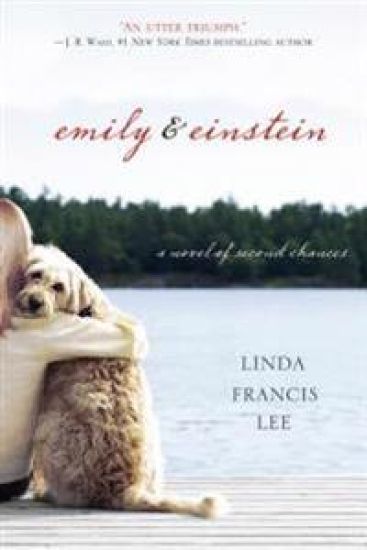
Emily & Einstein: A Novel of Second Chances

Emily & Einstein: A Novel of Second Chances

Linda Francis Lee

St. Martin's Griffin
2012
sidottu
A man who doesn't deserve a second chance. A woman who finds one where she least expects it. And the lovable dog named Einstein who shows them the way... Emily Portman is an up-and-coming New York City editor whose life is everything she imagined it would be. She has a job she loves and a beautiful Upper West Side apartment with her husband, Sandy. But everything changes in one night, when Sandy dies in a tragic accident, and Emily is stunned to discover that her marriage was made up of lies. Suddenly, she is forced on a journey to find out who her husband really was . . . all the while feeling that somehow he isn't really gone. Angry, hurt, and sometimes betrayed by loving memories of the man she lost, Emily's only comfort is a mysterious, scruffy dog named Einstein, who comes into her life at just the right moment - and stands by her side as she uncovers surprising truths about Sandy and her own family. But is Einstein's seemingly odd determination that she save herself enough to make Emily confront her past? And when a new man arrives at her apartment, can she allow love through the door? Linda Francis Lee's Emily & Einstein is a heartwarming novel about truth, love, and second chances that has captivated readers and critics alike.
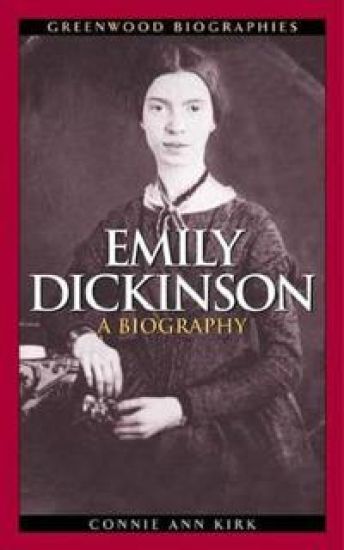
Emily Dickinson

Emily Dickinson

Connie Ann Kirk

Greenwood Press
2004
sidottu
Using updated scholarship and never before published primary research, this new biography peels away the myths surrounding Emily Dickinson and takes a fresh look at the complex and busy life of this genius of American letters. As a research tool, the volume is also useful for its explanation of current nomenclature for the poems, mysteries and controversies, and the poet's influence on American poetry and culture. Emily Dickinson saw fewer than a dozen of her poems published in her lifetime, but she has since become one of the most revered and beloved of all American poets. As a shy woman living in 19th century New England, Dickinson wrote about large subjects through close observation of small, everyday details. After her death, her sister found more than 1,775 poems and solicited help in seeing them into print. Dickinson preferred to live most of her life at home among those she loved, but over time, some of the more unusual facts of her life became mythologized and distorted. Using updated scholarship and never before published primary research, this new biography peels away the myths surrounding Emily Dickinson and takes a fresh look at the complex and busy life of this genius of American letters. As a research tool, the volume is also useful for its explanation of current nomenclature for the poems, mysteries and controversies, and the poet's influence on American poetry and culture. A chronology is set alongside significant historical and cultural events of the period. Also included are locations of major holdings for Dickinson study, a listing of poems published in her lifetime, and a full bibliography of primary and secondary sources.
The Complete Poems of Emily Dickinson

The Complete Poems of Emily Dickinson

Emily Dickinson

Little Brown and Company
1960
sidottu
This comprehensive and authoritative collection of all 1,775 poems by Emily Dickinson is an essential volume for all lovers of American literature. Only eleven of Emily Dickinson's poems were published prior to her death in 1886; the startling originality of her work doomed it to obscurity in her lifetime. Early posthumous published collections -- some of them featuring liberally "edited" versions of the poems -- did not fully and accurately represent Dickinson's bold experiments in prosody, her tragic vision, and the range of her intellectual and emotional explorations. Not until the 1955 publication of The Complete Poems of Emily Dickinson, a three-volume critical edition compiled by Thomas H. Johnson, were readers able for the first time to assess, understand, and appreciate the whole of Dickinson's extraordinary poetic genius. This book, a distillation of the three-volume Complete Poems, brings together the original texts of all 1,775 poems that Emily Dickinson wrote. "With its chronological arrangement of the poems, this volume becomes more than just a collection; it is at the same time a poetic biography of the thoughts and feelings of a woman whose beauty was deep and lasting." --San Francisco Chronicle