

Kirjahaku
Etsi kirjoja tekijän nimen, kirjan nimen tai ISBN:n perusteella.
1000 tulosta hakusanalla Eric R. Larson

Feedback Control of Dynamic Bipedal Robot Locomotion
Eric R. Westervelt; Jessy W. Grizzle; Christine Chevallereau; Jun Ho Choi; Benjamin Morris
CRC Press Inc
2007
sidottu
Bipedal locomotion is among the most difficult challenges in control engineering. Most books treat the subject from a quasi-static perspective, overlooking the hybrid nature of bipedal mechanics. Feedback Control of Dynamic Bipedal Robot Locomotion is the first book to present a comprehensive and mathematically sound treatment of feedback design for achieving stable, agile, and efficient locomotion in bipedal robots.In this unique and groundbreaking treatise, expert authors lead you systematically through every step of the process, including:Mathematical modeling of walking and running gaits in planar robots Analysis of periodic orbits in hybrid systems Design and analysis of feedback systems for achieving stable periodic motions Algorithms for synthesizing feedback controllers Detailed simulation examples Experimental implementations on two bipedal test bedsThe elegance of the authors' approach is evident in the marriage of control theory and mechanics, uniting control-based presentation and mathematical custom with a mechanics-based approach to the problem and computational rendering. Concrete examples and numerous illustrations complement and clarify the mathematical discussion. A supporting Web site offers links to videos of several experiments along with MATLAB® code for several of the models. This one-of-a-kind book builds a solid understanding of the theoretical and practical aspects of truly dynamic locomotion in planar bipedal robots.

Even though time-dependent spectroscopic techniques continue to push the frontier of chemical physics, they receive scant mention in introductory courses and are poorly covered in standard texts. Quantum Dynamics: Applications in Biological and Materials Systems bridges the gap between what is traditionally taught in a one-semester quantum chemistry course and the modern field of chemical dynamics, presenting the quantum theory of charge and energy transport in biological systems and optical-electronic materials from a dynamic perspective.Reviews the basicsTaking a pedagogical approach, the book begins by reviewing the concepts of classical mechanics that are necessary for studying quantum mechanics. It discusses waves and wave functions and then moves on to an exploration of semiclassical quantum mechanics methods, an important part of the development and utilization of quantum theory.Time-independent and time-dependent perspectivesThe main focus of the book is the chapter on quantum dynamics, which begins with a brief review of the bound states of a coupled two-level system. This is discussed with a time-independent as well as a time-dependent perspective. The book also explores what happens when the two-level system has an additional harmonic degree of freedom that couples the transitions between the two states.The book reviews different ways in which one can represent the evolution of a quantum state, explores the quantum density matrix, and examines the basis for excitation energy transfer between molecules. Later chapters describe the pi electronic structure of conjugated organic systems and discuss electron-phonon coupling in conjugated systems and transport and dynamics in extended systems.Includes Mathematica® downloadsOn an accompanying website, Mathem
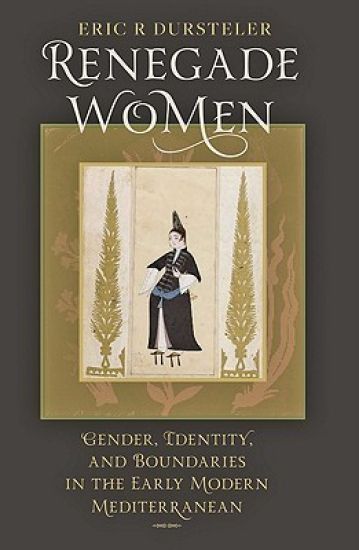
This book uses the stories of early modern women in the Mediterranean who left their birthplaces, families, and religions to reveal the complex space women of the period occupied socially and politically. In the narrow sense, the word "renegade" as used in the early modern Mediterranean referred to a Christian who had abandoned his or her religion to become a Muslim. With Renegade Women, Eric R Dursteler deftly redefines and broadens the term to include anyone who crossed the era's and region's religious, political, social, and gender boundaries. Drawing on archival research, he relates three tales of women whose lives afford great insight into both the specific experiences and condition of females in, and the broader cultural and societal practices and mores of, the early Mediterranean. Through Beatrice Michiel of Venice, who fled an overbearing husband to join her renegade brother in Constantinople and took the name Fatima Hatun, Dursteler discusses how women could convert and relocate in order to raise their personal and familial status. In the parallel tales of the Christian Elena Civalelli and the Muslim Mihale atorovic, who both entered a Venetian convent to avoid unwanted, arranged marriages, he finds courageous young women who used the frontier between Ottoman and Venetian states to exercise a surprising degree of agency over their lives. And in the actions of four Muslim women of the Greek island of Milos-Aisse, her sisters Emine and Catige, and their mother, Maria-who together left their home for Corfu and converted from Islam to Christianity to escape Aisse's emotionally and financially neglectful husband, Dursteler unveils how a woman's attempt to control her own life ignited an international firestorm that threatened Venetian-Ottoman relations. A truly fascinating narrative of female instrumentality, Renegade Women illuminates the nexus of identity and conversion in the early modern Mediterranean through global and local lenses. Scholars of the period will find this to be a richly informative and thoroughly engrossing read.
This book uses the stories of early modern women in the Mediterranean who left their birthplaces, families, and religions to reveal the complex space women of the period occupied socially and politically. In the narrow sense, the word "renegade" as used in the early modern Mediterranean referred to a Christian who had abandoned his or her religion to become a Muslim. With Renegade Women, Eric R Dursteler deftly redefines and broadens the term to include anyone who crossed the era's and region's religious, political, social, and gender boundaries. Drawing on archival research, he relates three tales of women whose lives afford great insight into both the specific experiences and condition of females in, and the broader cultural and societal practices and mores of, the early Mediterranean. Through Beatrice Michiel of Venice, who fled an overbearing husband to join her renegade brother in Constantinople and took the name Fatima Hatun, Dursteler discusses how women could convert and relocate in order to raise their personal and familial status. In the parallel tales of the Christian Elena Civalelli and the Muslim Mihale atorovic, who both entered a Venetian convent to avoid unwanted, arranged marriages, he finds courageous young women who used the frontier between Ottoman and Venetian states to exercise a surprising degree of agency over their lives. And in the actions of four Muslim women of the Greek island of Milos-Aisse, her sisters Emine and Catige, and their mother, Maria-who together left their home for Corfu and converted from Islam to Christianity to escape Aisse's emotionally and financially neglectful husband, Dursteler unveils how a woman's attempt to control her own life ignited an international firestorm that threatened Venetian-Ottoman relations. A truly fascinating narrative of female instrumentality, Renegade Women illuminates the nexus of identity and conversion in the early modern Mediterranean through global and local lenses. Scholars of the period will find this to be a richly informative and thoroughly engrossing read.







Contingency;: Life... Love... Sex... Youtube
Eric R. Hill
Createspace Independent Publishing Platform
2008
nidottu



For All Mankind: Recipients of the Congressional Space Medal of Honor
Eric R. Caubarreaux
Createspace Independent Publishing Platform
2010
nidottu




In the year 2007 an accident at a clandestine U.S. government facility in rural West Virginia releases several test subjects infected with a necrotic virus. Within weeks the U.S. military and the Department of Homeland Security are forced to declare the bulk of the state under quarantine. Defensive lines are fortified and nothing is allowed in or out, damning those missed in the short period of evacuations to a living hell and locking away the real truth of the virus' creation. The government transfers the responsibility of maintaining the quarantine from the military to the Department of Homeland Security, which christens it "Area 187". Suits and claims are dismissed under anti-terror legislation as the rest of government scrambles to cover their involvement in the original project, distancing themselves and their reelections. Seven years pass. Homeland Security enforces a total news blackout on all things Area 187, and as with other disasters before it the bulk of America is more than willing to move on. Conspiracies continue to thrive outside the now-immense defensive wall and fortifications, and mercenaries known as "grave robbers" regularly slip in and out of the Area, stealing valuables and taking contracts to bring back specific items for well-paying customers. Our story follows Josephine Terrell, a television reporter and John Heath, once an Air Force search-and-rescue team leader that escaped the Area after five years of fruitless searching for his wife, as they risk their lives from both the dead and the living inside Area 187 to rescue a group of survivors. Josephine is looking for the story of the century, one that will prove living, breathing Americans still await rescue inside the Area and that Homeland has been covering up their existence. Heath joins her mission after he sees what may be his wife, Eileen, in a video message from the survivors. Personal rivalries, government conspiracies and a simple man's simple promise weave together with death incarnate to follow their every step as they make their way through a blasted, nightmarish landscape full of the hungering dead. But the peril offered by the mindless corpses behind the wall becomes second to the danger presented by the living beyond it...

Psychosis and Near Psychosis offers a psychoanalytically-based approach to an integrated treatment of psychosis and near psychosis, achieved by organizing psychotherapy, medication, hospital and milieu interventions into a powerful therapeutic tool. The author navigates confidently between psychiatric and psychoanalytic approaches, between biological evidence and psychological assessments. According to Dr. Eric Marcus, since the past, so-called heroic psychoanalyses with psychotic patients have clearly been shown to fail, the time is now ripe again to discuss psychosis in terms of the broadened psychoanalytic theory, with the support of medication and a better understanding of the neuropsychological factors involved. This book, which maps out mental illness in concrete and innovative ways, will interest all researchers and clinicians eager to find the best means, both practical and theoretical, to initiate satisfying psychiatric therapies.