Kirjojen hintavertailu. Mukana 11 342 296 kirjaa ja 12 kauppaa.

Kirjahaku

Etsi kirjoja tekijän nimen, kirjan nimen tai ISBN:n perusteella.

1000 tulosta hakusanalla Evripides

Euripides, 3

Euripides, 3

University of Pennsylvania Press
1998
pokkari
The Penn Greek Drama Series presents original literary translations of the entire corpus of classical Greek drama: tragedies, comedies, and satyr plays. It is the only contemporary series of all the surviving work of Aeschylus, Sophocles, Euripides, Aristophanes, and Menander. This volume includes translations by Fred Chappell (Alcestis), Mark Rudman and Katharine Washburn (Daughters of Troy), Richard Elman (The Phoenician Women), Elaine Terranova (Iphigenia at Aulis), and George Economou (Rhesus).
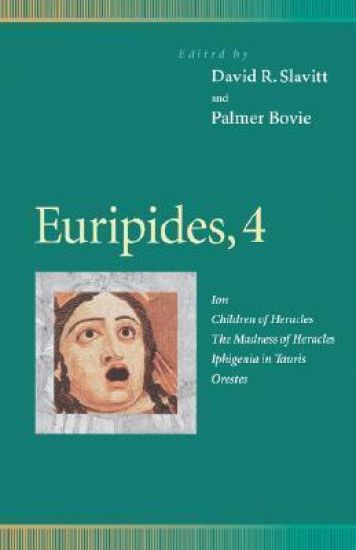
Euripides, 4

Euripides, 4

University of Pennsylvania Press
1999
pokkari
The Penn Greek Drama Series presents original literary translations of the entire corpus of classical Greek drama: tragedies, comedies, and satyr plays. It is the only contemporary series of all the surviving work of Aeschylus, Sophocles, Euripides, Aristophanes, and Menander. This volume includes translations Deborah H. Roberts (Ion), J. T. Barbarese (Children of Heracles), Katharine Washburn and David Curzon (The Madness of Heracles), Carolyn Kizer (Iphigenia in Tauris), and Greg Delanty (Orestes).
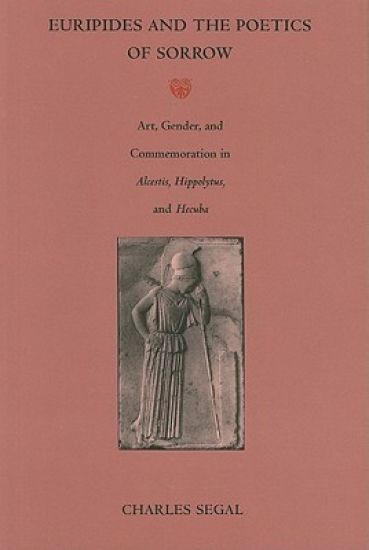
Euripides and the Poetics of Sorrow

Euripides and the Poetics of Sorrow

Segal Charles

Duke University Press
1993
sidottu
Where is the pleasure in tragedy? This question, how suffering and sorrow become the stuff of aesthetic delight, is at the center of Charles Segal's new book, which collects and expands his recent explorations of Euripides' art.Alcestis, Hippolytus, and Hecuba, the three early plays interpreted here, are linked by common themes of violence, death, lamentation and mourning, and by their implicit definitions of male and female roles. Segal shows how these plays draw on ancient traditions of poetic and ritual commemoration, particularly epic song, and at the same time refashion these traditions into new forms. In place of the epic muse of martial glory, Euripides, Segal argues, evokes a muse of sorrows who transforms the suffering of individuals into a "common grief for all the citizens," a community of shared feeling in the theater. Like his predecessors in tragedy, Euripides believes death, more than any other event, exposes the deepest truth of human nature. Segal examines the revealing final moments in Alcestis, Hippolytus, and Hecuba, and discusses the playwright's use of these deaths--especially those of women--to question traditional values and the familiar definitions of male heroism. Focusing on gender, the affective dimension of tragedy, and ritual mourning and commemoration, Segal develops and extends his earlier work on Greek drama. The result deepens our understanding of Euripides' art and of tragedy itself.
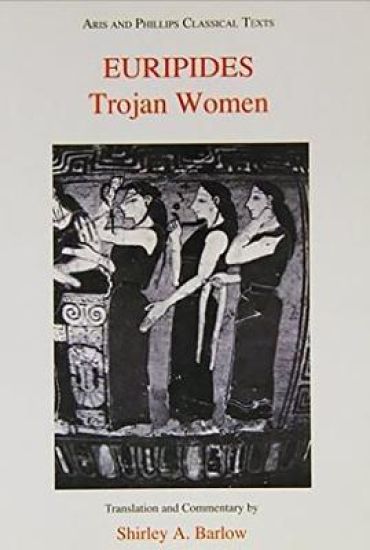
Euripides: Trojan Women

Euripides: Trojan Women

Aris Phillips Ltd
1986
nidottu
Trojan Women is very much a play for our times. Strongly against war, it shows its aftermath through the eyes of a group of women, members of the Trojan royal household. They have experienced displacement, degradation and deprivation as their city has been sacked by the Greeks. The play expresses their protest, their articulation of grief, their reflection upon the world they now find themselves in, one in which the more they suffer the more their love for each other and for the family they have lost is strengthened. Trojan Women is concentrated in its emotive power and its uniquely lyric quality and it is not without the irony either that the positions of victors and vanquished are not always as fixed or as irreversible as they seem. Greek text with facing-page English translation, introduction and commentary.
Euripides: Phoenician Women

Euripides: Phoenician Women

Elizabeth Craik

Aris Phillips Ltd
1988
nidottu
This rich and challenging play ranges over the supreme myth of Oidipous and his doomed family. With its brooding imagery, extravagant language, ebullient rhetoric and scenic display it is quintessential Euripides. With its broad, yet unified, thematic sweep it offers important points of comparison with other Theban plays and valuable insights into late fifth century religion, politics and society.For this volume Elizabeth Craik has prepared a new edition of the play, with a selective apparatus. Suspect lines are clearly marked; but the fundamental integrity of the tradition is defended. Text with facing translation, commentary and notes.
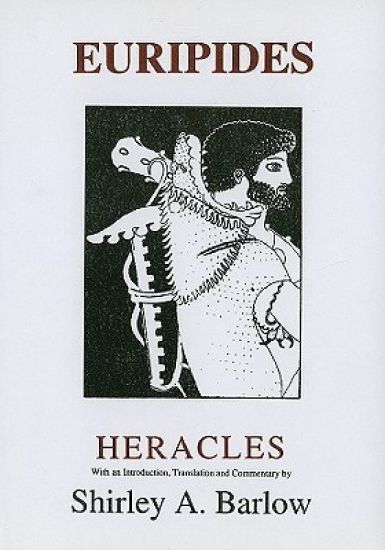
Euripides: Heracles

Euripides: Heracles

Aris Phillips Ltd
1996
sidottu
In this often neglected play, Euripides explores the contrast between myth and reality by portraying the story of Heracles' murder of his wife and children. In treating this act the dramatist explores the boundaries of madness and Heracles’ painful emergence from this state to a bitter realisation of what he has done. A further contrast is drawn between the callous gods who cause the madness and the caring and loving support of human friends and remaining family (Theseus and Amphitryon). This edition attempts to bring out the human and psychological qualities in the play and to defend its structure and dramatic power, arguing that it is neither “a grotesque abortion” (Swinburne) nor “broken-backed” (Murray) but a coherent and exciting work. Greek text with facing-page English translation, introduction and commentary.
Euripides: Heracles

Euripides: Heracles

Aris Phillips Ltd
1996
nidottu
In this often neglected play, Euripides explores the contrast between myth and reality by portraying the story of Heracles' murder of his wife and children. In treating this act the dramatist explores the boundaries of madness and Heracles’ painful emergence from this state to a bitter realisation of what he has done. A further contrast is drawn between the callous gods who cause the madness and the caring and loving support of human friends and remaining family (Theseus and Amphitryon). This edition attempts to bring out the human and psychological qualities in the play and to defend its structure and dramatic power, arguing that it is neither “a grotesque abortion” (Swinburne) nor “broken-backed” (Murray) but a coherent and exciting work. Greek text with facing-page English translation, introduction and commentary.
Euripides: Alcestis

Euripides: Alcestis

Aris Phillips Ltd
1988
nidottu
The theme of Euripides’ Alcestis blends the primitive folk-tale of the self-sacrificing bride, Alcestis, and of Heracles’ heroic struggles with the ogre Death, with a morality tale of “virtue rewarded”, in this case twice rewarded. The Alcestis is the only tragedy which we know to have been produced in the position usually allotted (at the Athenian tragic festivals) to the semi-comic “satyr-play”. Like a satyr-play, it has a happy ending but does the poet intend his audience to interpret the play in quite such simple terms? Opinions differ widely but the ironic, slightly mocking tone of the play suggests, at least to some critics, that more sombre meanings may lie beneath the surface of this beautifully constructed little masterpiece. Greek text with facing-page English translation, introduction and commentary. For this second edition, the General Bibliography has been updated, with major revision and expansion.
Euripides: Hecuba

Euripides: Hecuba

Collard Christopher

LIVERPOOL UNIVERSITY PRESS
1991
nidottu
Hecuba, in slavery after Troy's fall, fails to dissuade Odysseus, whose life she once saved, from sacrificing her daughter to honour his dead friend, Achilles; but the girl dies proudly, true to her royal blood in surmounting degradation. Then Hecuba learns of her sons' treacherous murder by a former ally; out of her terrible loss comes determination for revenge, which she claims as a right but how just is her horrific cruelty? How credible against her earlier characterisation? The play has striking effects: the ghost of the murdered son, and his murderer subsequently blinded; poignant lyricism; vivid narratives; above all, a careful pattern of scenes demonstrating the equivocal power of 'Persuasion, man's only sovereign' (v.816). Hecuba is both a study of resilience and weakness, and a typically Euripidean comment on the uncertain, even collapsing, values of his time. Text with facing translation, commentary and notes.
Euripides: Hecuba

Euripides: Hecuba

Christopher Collard

Aris Phillips Ltd
1991
nidottu
Hecuba, in slavery after Troy's fall, fails to dissuade Odysseus, whose life she once saved, from sacrificing her daughter to honour his dead friend, Achilles; but the girl dies proudly, true to her royal blood in surmounting degradation. Then Hecuba learns of her sons' treacherous murder by a former ally; out of her terrible loss comes determination for revenge, which she claims as a right but how just is her horrific cruelty? How credible against her earlier characterisation? The play has striking effects: the ghost of the murdered son, and his murderer subsequently blinded; poignant lyricism; vivid narratives; above all, a careful pattern of scenes demonstrating the equivocal power of 'Persuasion, man's only sovereign' (v.816). Hecuba is both a study of resilience and weakness, and a typically Euripidean comment on the uncertain, even collapsing, values of his time. Text with facing translation, commentary and notes.
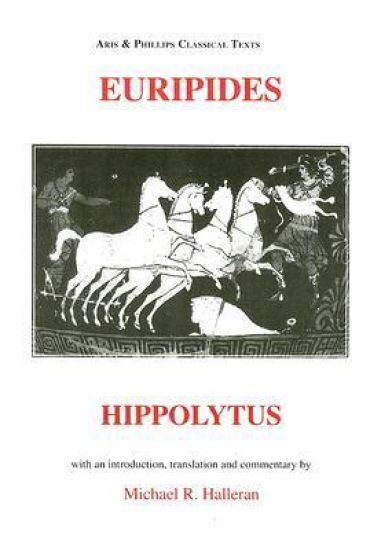
Euripides: Hippolytus

Euripides: Hippolytus

Aris Phillips Ltd
1995
nidottu
Euripides works with a common story pattern – a young man (Hippolytus) becomes the object of a married woman’s (Phaedra’s) desire, rebuffs her sexual overtures, and is then falsely accused to the woman’s husband (Theseus, Hippolytus’ father) of rape. To this familiar tale Euripides adds the story of divine vengeance – Aphrodite has brought about this passion in Phaedra in order to punish Hippolytus for condemning her and neglecting her realm of sex and marriage. The play explores the themes of passion and moderation, speech and silence, honour and shame, and the relationship between gods and mortals. This play holds a particular place in Euripidean studies, not only because of its acknowledged excellence and influence, but also because it allows the unique opportunity to observe the playwright’s ‘rewriting’ of his earlier play on the same mythological topic, remarkably replacing the brazen Phaedra of earlier legend and previous treatments with a virtuous woman. Greek text with facing-page English translation, introduction and commentary.
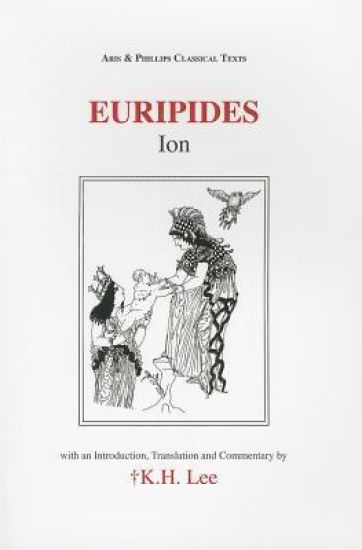
Euripides: Ion

Euripides: Ion

Aris Phillips Ltd
1997
nidottu
Ion is generally regarded as one of Euripides’ most attractive plays. A skilfully organised plot, charming characters, exciting situations and thought-provoking themes make it an excellent introduction to the study of Greek drama generally and of Euripides in particular. The introduction deals with Euripides’ adaptation of the myth of Ion, his treatment of the theme of autochthony and his attitude to the seemingly licentious behaviour of Apollo. There is also a discussion of the play’s date, its structure, form and language. The commentary is designed to encourage students to read the play in a responsive way and to pay attention to matters of form, language and dramatic technique. Greek text with facing-page English translation, introduction and commentary.
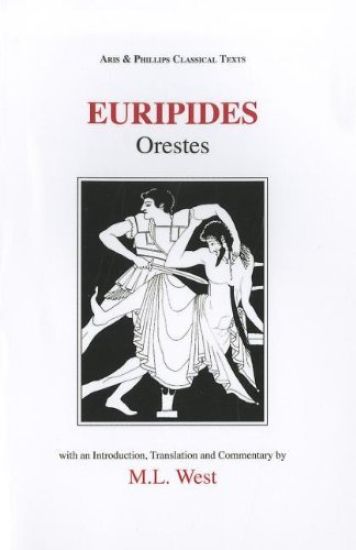
Euripides: Orestes

Euripides: Orestes

Aris Phillips Ltd
1987
nidottu
If not the profoundest of Greek tragedies, Orestes is certainly one of the most exuberant and entertaining. Euripides stands traditional legend on its head to forge a melodrama full of varied action, emotion, and novel theatrical effects, with a succession of crises crowned by a spectacular happy ending. Produced in 408 B.C., the play marks the culmination of Euripides' development, and in antiquity it surpassed all other tragedies in popularity. No study of Greek drama should neglect it. For this volume, Professor West has prepared a new edition of the Greek text with a selective apparatus. Greek text with facing-page English translation, introduction and commentary.
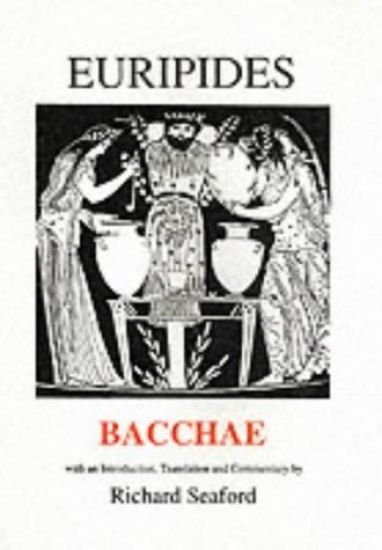
Euripides: Bacchae

Euripides: Bacchae

Aris Phillips Ltd
1996
nidottu
This is a commentary on "Bacchae", by Euripides. It takes account of the studies made on the play since it was written, as well as the discoveries made about the cult of Dionysus. The author has already published widely on both the "Bacchae" and the Dionysus cult.
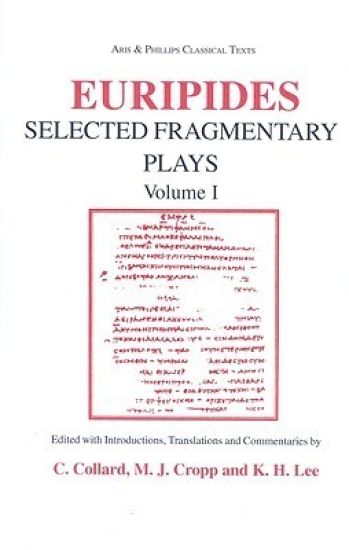
Euripides: Selected Fragmentary Plays I

Euripides: Selected Fragmentary Plays I

Euripides; Christopher Collard; Martin J. Cropp; K. H. Lee

Aris Phillips Ltd
1995
nidottu
The fragmentary plays of Euripides are a body of texts still regularly increasing in number and extent. They are of very great interest in themselves, apart from the significant aid they give to the fuller appreciation of the surviving complete plays. This two-volume edition brings together for the first time for English readers the more substantial and important of the plays, about fifteen in all. Each play is introduced by a summary bibliography and an appreciative essay which analyses the mythic background and plot: reconstructs the play as far as the fragmentary text and secondary evidence allow; and discusses themes, characterisation, staging, date, reflections of the story in art and other dramatisations. For each play the fragmentary texts are presented as conveniently and succinctly as possible, together with a brief critical apparatus of sources and readings. An English translation stands on the facing page. The text and translation of each play are followed by a short, primarily interpretative commentary. Text with facing translation, commentary and notes.
Euripides: Selected Fragmentary Plays Vol II

Euripides: Selected Fragmentary Plays Vol II

Christopher Collard; Martin Cropp; J. Gibert

Aris Phillips Ltd
2004
nidottu
The fragmentary plays of Euripides are a body of texts still regularly increasing in number and extent. They are of very great interest in themselves, apart from the significant aid they give to the fuller appreciation of the surviving complete plays. This two-volume edition brings together for the first time for English readers the more substantial and important of the plays, about fifteen in all. Each play is introduced by a summary bibliography and an appreciative essay which analyses the mythic background and plot: reconstructs the play as far as the fragmentary text and secondary evidence allow; and discusses themes, characterisation, staging, date, reflections of the story in art and other dramatisations. For each play the fragmentary texts are presented as conveniently and succinctly as possible, together with a brief critical apparatus of sources and readings. An English translation stands on the facing page. The text and translation of each play are followed by a short, primarily interpretative commentary.This volume contains: Alexandros (together with Palamedes and Sisyphus), Oedipus, Andromeda, Antiope, Hypsipyle, Archelaus (415 to about 407 B.C.).
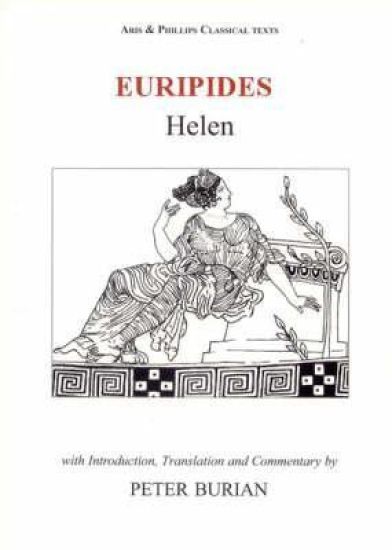
Euripides: Helen

Euripides: Helen

Peter Burian

Aris Phillips Ltd
2007
nidottu
Helen who has always been faithful to her husband Menelaus; who never went to Troy, but was carried off to Egypt, where she remains throughout the Trojan War, waiting faithfully for her husband Menelaus to rescue her. Meanwhile, Helen of Troy - a mere phantom fashioned by the gods - has blighted the real Helen's life with undeserved hatred. Helen plays with this premise in ways that make it by turns amusing and disturbing, playful and full of serious quandaries. The real Helen did not commit the deeds for which she is famous, and yet she cannot escape a reputation based on what the world believes her to be, rather than on what she is. And yet, with the disappearance of the phantom Helen, Menelaus does reclaim his wife at last and the real Helen plots a brilliant deception that will bring them both home again in triumph. Helen is an extraordinary performance that has disturbed critics because it refuses to conform to their expectations. Whether understood as a tragedy or something more like aphilisophical divertissement or romantic comedy, Helen has increasingly been recognized as an intellectually challenging and emotionally satisfying dramatic masterpiece. Greek text with facing translation
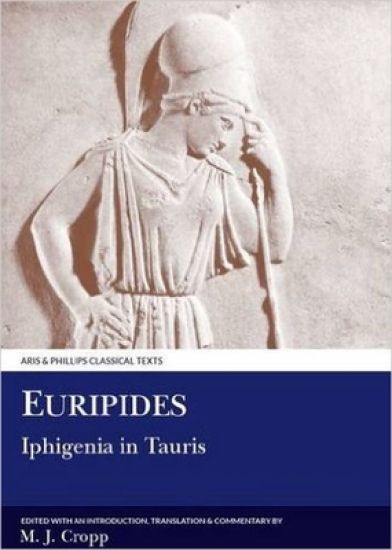
Euripides: Iphigenia in Tauris

Euripides: Iphigenia in Tauris

Euripides; Martin J. Cropp

Aris Phillips Ltd
2000
nidottu
Iphigenia in Tauris tells the story of the princess Iphigenia who was sacrificed by her father Agamemnon to expedite his campaign against Troy but was rescued by the goddess Artemis and transported to the land of the Taurians. There she herself must perform human sacrifices as a priestess of Artemis in the local cult. Troy has now been sacked, and Agamemnon murdered by his wife and avenged by his son Orestes. With his mother's blood on his hands, Orestes is guided by Apollo to seek purification through bringing the image of the Tauric Artemis to Greece, and so is reunited with his sister. The drama centers on Orestes' near-sacrifice at Iphigenia’s hands, their recognition in the nick of time, and their ingenious and thrilling escape to bring the cult of Artemis to Halae and Brauron near Athens. Martin Cropp’s first edition was originally published in 2000 and provided the first commentary on the play since those of Maurice Platnauer (Oxford, 1938) and Hans Strohm (Munich, 1949). It contributed significantly to a revival of interest in what had been a rather neglected and underrated play. This new second edition will incorporate substantial revisions to the introduction and commentary and some corrections to the Greek text and translation in light of reviews of the first edition and other recent work.
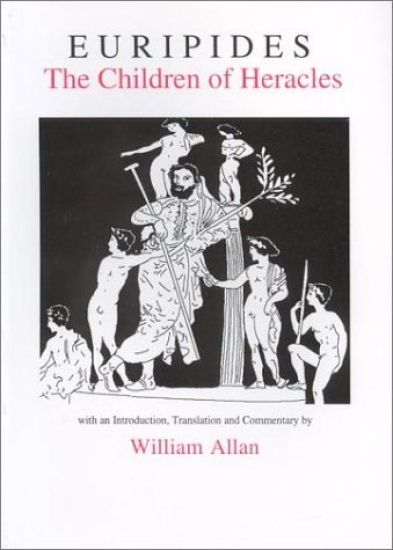
Euripides: The Children of Heracles

Euripides: The Children of Heracles

Euripides

Aris Phillips Ltd
2001
nidottu
The Children of Heracles is a powerful and challenging tragedy of exile and supplication. Driven from their homeland by Eurystheus, king of Argos, the children of Heracles flee as fugitives throughout Greece until they are granted protection in Athens. However, their acceptance as political refugees threatens to cause civil revolt among the Athenians and hostile invasion from the Argives. The self-sacrifice of Heracles' daughter ensures a victory for Athens and the Heraclidae, but Heracles’ mother Alcmene refuses to spare the life of Eurystheus, although he is a prisoner of war protected by Athenian law. The play shows the amorality of the powerful and the vulnerability of refugees in the most disturbing terms, making for a drama of continuing moral and political relevance to the modern world. Greek text with facing-page English translation, introduction and commentary.