Kirjahaku
Etsi kirjoja tekijän nimen, kirjan nimen tai ISBN:n perusteella.
1000 tulosta hakusanalla F Martin
Filmmakers have often encouraged us to regard people with physical disabilities in terms of pity, awe, humor, or fearas "Others" who somehow deserve to be isolated from the rest of society. In this first history of the portrayal of physical disability in the movies, Martin Norden examines hundreds of Hollywood movies (and notable international ones), finds their place within mainstream society, and uncovers the movie industry's practices for maintaining the status quokeeping people with disabilities dependent and "in their place." Norden offers a dazzling array of physically disabled characters who embody or break out of the stereotypes that have both influenced and been symptomatic of societys fluctuating relationship with its physically disabled minority. He shows us "sweet innocents" like Tiny Tim, "obsessive avengers" like Quasimodo, variations on the disabled veteran, and many others. He observes the arrival of a new set of stereotypes tied to the growth of science and technology in the 1970s and 1980s, and underscores movies like My Left Foot and The Waterdance that display a newfound sensitivity. Nordens in-depth knowledge of disability history makes for a particularly intelligent and sensitive approach to this long-overlooked issue in media studies.

First published in 1998. This reference guide is designed for those who would be knowledge able readers of major short stories by D.H. Lawrence when the store of scholarship, investigation, and appraisal is far too vast for all but the expert. An inclusive examination of what has been written about these short stories, each chapter deals with a different short story and consists of five distinct sections: (1) the complete publication history, including all revisions and variants; (2) a thorough examination of recognized and hitherto unrecognized sources, as well as the influences at work on Lawrence in the creation of the story; (3) the story’s relationship to Lawrence’s other writings; (4) acknowledgement and summary of all extant critical studies; and (5) a bibliography of works cited. This study concentrates on six short stories culled from Lawrence’s more than fifty works of short fiction.
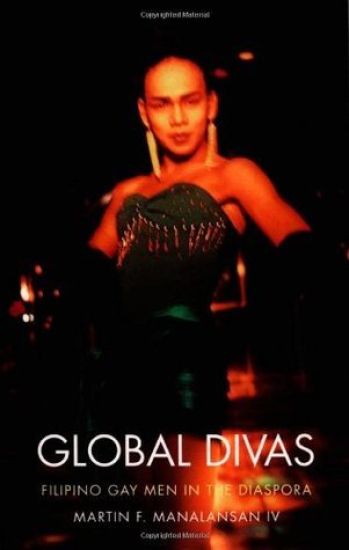
A vivid ethnography of the global and transnational dimensions of gay identity as lived by Filipino immigrants in New York City, Global Divas challenges beliefs about the progressive development of a gay world and the eventual assimilation of all queer folks into gay modernity. Insisting that gay identity is not teleological but fraught with fissures, Martin Manalansan IV describes how Filipino gay immigrants, like many queers of color, are creating alternative paths to queer modernity and citizenship. He makes a compelling argument for the significance of diaspora and immigration as sites for investigating the complexities of gender, race, and sexuality.Manalansan locates diasporic, transnational, and global dimensions of gay and other queer identities within a framework of quotidian struggles ranging from everyday domesticity to public engagements with racialized and gendered images to life-threatening situations involving AIDS. He reveals the gritty, mundane, and often contradictory deeds and utterances of Filipino gay men as key elements of queer globalization and transnationalism. Through careful and sensitive analysis of these men’s lives and rituals, he demonstrates that transnational gay identity is not merely a consumable product or lifestyle, but rather a pivotal element in the multiple, shifting relationships that queer immigrants of color mobilize as they confront the tribulations of a changing world.
Queering the Middle
Martin F. Manalansan; Chantal Nadeau; Richard T. Rodríguez; Siobhan B. Somerville
Duke University Press
2014
pokkari
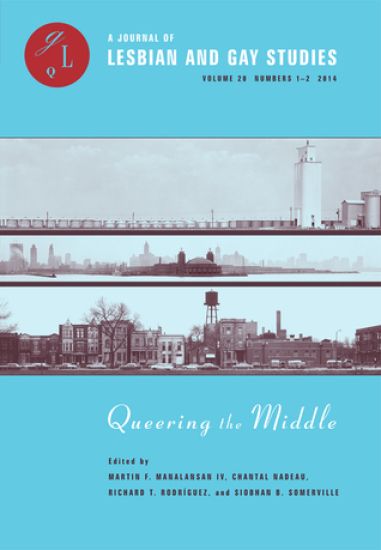
When imagined in relation to other regions of the United States, the Midwest is often positioned as the norm, the uncontested site of white American middle-class heteronormativity. This characterization has often prevailed in scholarship on sexual identity, practice, and culture, but a growing body of recent queer work on rural sexualities, transnational migration, regional identities, and working-class culture suggests the need to understand the Midwest otherwise. This special issue offers an opportunity to think with, through, and against the idea of region. Rather than reinforce the idea of the Midwest as a core that naturalizes American cultural and ideological formations, these essays instead open up possibilities for unraveling the idea of the heartland.The introduction provides a discussion of the theoretical and critical motivations for understanding the middle as a queer vantage, while the six articles focus on social movements, queer community networks, Midwest-based expressive cultures, and local and diasporic rearticulations of racial, gender, and sexual politics.At the University of Illinois at Urbana-Champaign, Martin Manalansanis Associate Professor in the Department of Anthropology, Chantal Nadeau is Professor and Chair of Gender and Women’s Studies, and Richard T. Rodríguez and Siobhan B. Somerville are Associate Professors in the Department of English.
A Short History of Cambodia From the Days of Angkor to the Present
Martin F. (Martin Florian) 191 Herz
Hassell Street Press
2021
sidottu
This work has been selected by scholars as being culturally important and is part of the knowledge base of civilization as we know it.This work is in the public domain in the United States of America, and possibly other nations. Within the United States, you may freely copy and distribute this work, as no entity (individual or corporate) has a copyright on the body of the work.Scholars believe, and we concur, that this work is important enough to be preserved, reproduced, and made generally available to the public. To ensure a quality reading experience, this work has been proofread and republished using a format that seamlessly blends the original graphical elements with text in an easy-to-read typeface.We appreciate your support of the preservation process, and thank you for being an important part of keeping this knowledge alive and relevant.
A Short History of Cambodia From the Days of Angkor to the Present
Martin F. (Martin Florian) 191 Herz
Hassell Street Press
2021
nidottu
This work has been selected by scholars as being culturally important and is part of the knowledge base of civilization as we know it.This work is in the public domain in the United States of America, and possibly other nations. Within the United States, you may freely copy and distribute this work, as no entity (individual or corporate) has a copyright on the body of the work.Scholars believe, and we concur, that this work is important enough to be preserved, reproduced, and made generally available to the public. To ensure a quality reading experience, this work has been proofread and republished using a format that seamlessly blends the original graphical elements with text in an easy-to-read typeface.We appreciate your support of the preservation process, and thank you for being an important part of keeping this knowledge alive and relevant.
Growth Dynamics in New Markets
Martin F. G. Schaffernicht; Stefan N. Groesser
Wiley-Blackwell
2018
sidottu
An innovative simulation-based approach for strategic decision making when launching new products Growth Dynamics in New Markets contains a dynamic case study and simulations that reveal what it takes to successfully introduce a product into a new market. Written by experts in the field, the text and companion website include a compelling simulation game and a variety of simulation models. Using the simulation game and computer models, readers are challenged to design and put in place a strategy about product introduction and competitive behavior. The simulation models build on each other to help to arrive at a comprehensive understanding of product uptake as well as market development and competitive dynamics. The authors present different approaches for enhancing the models and offer guidance for applying them to real-world problems. This groundbreaking text clearly shows how to develop maps of dynamic systems, formulate candidate policies and evaluate them based on the simulations. It also reveals how to use computer simulations to understand what decisions could and should be made, when to make them and how intensive they should be. The authors present an interactive approach that: Contains an innovative combination of a case study, simulation game and simulation models for developing the skills to introduce a product to the marketplaceOffers targeted questions that help to enhance the understanding of the material presentedPresents detailed answers and solutions to a number or real-world business challengesFeatures video tutorials that explain how the simulation experiments are implemented and interpretedAids in the development an action-oriented, pragmatic understanding of the underlying forces in business Designed for students of business administration, management, industrial engineering, informatics, engineering, and public policy, Growth Dynamics in New Markets offers an innovative approach that combines the practice of dynamic reasoning and the use of simulation to design and test possible policies.
Most macroeconomic theory has focused on goods and money rather than on labour, but this book goes someway to redressing this balance. It examines a wide range of labor-market issues from the perspective of modern macroeconomics. It considers policy issues, as well as theory, and criticises both Keynesian and New Classical approaches.
First published in 1998. This reference guide is designed for those who would be knowledge able readers of major short stories by D.H. Lawrence when the store of scholarship, investigation, and appraisal is far too vast for all but the expert. An inclusive examination of what has been written about these short stories, each chapter deals with a different short story and consists of five distinct sections: (1) the complete publication history, including all revisions and variants; (2) a thorough examination of recognized and hitherto unrecognized sources, as well as the influences at work on Lawrence in the creation of the story; (3) the story’s relationship to Lawrence’s other writings; (4) acknowledgement and summary of all extant critical studies; and (5) a bibliography of works cited. This study concentrates on six short stories culled from Lawrence’s more than fifty works of short fiction.
Filosofia Proverbial, Part 1 (1865)
Martin F. Cupper; Isidoro Cordieir
KESSINGER PUBLISHING, LLC
2010
pokkari
Catastrophe Insurance
Martin F. Grace; Robert W. Klein; Paul R. Kleindorfer; Michael R. Murray
Springer-Verlag New York Inc.
2003
sidottu
1. THE PROBLEM OF CATASTROPHE RISK The risk of large losses from natural disasters in the U.S. has significantly increased in recent years, straining private insurance markets and creating troublesome problems for disaster-prone areas. The threat of mega-catastrophes resulting from intense hurricanes or earthquakes striking major population centers has dramatically altered the insurance environment. Estimates of probable maximum losses (PMLs) to insurers from a mega catastrophe striking the U.S. range up to $100 billion depending on the location and intensity of the event (Applied Insurance Research, 2001).1 A severe disaster could have a significant financial impact on the industry (Cummins, Doherty, and Lo, 2002; Insurance Services Office, 1996a). Estimates of industry gross losses from the terrorist attack on September 11, 2001 range from $30 billion to $50 billion, and the attack's effect on insurance markets underscores the need to understand the dynamics of the supply of and the demand for insurance against extreme events, including natural disasters. Increased catastrophe risk poses difficult challenges for insurers, reinsurers, property owners and public officials (Kleindorfer and Kunreuther, 1999). The fundamental dilemma concerns insurers' ability to handle low-probability, high-consequence (LPHC) events, which generates a host of interrelated issues with respect to how the risk of such events are 1 These probable maximum loss (PML) estimates are based on a SOD-year "return" period.
Beyond political posturing and industry quick-fixes, why is the American health care system so difficult to reform?Health care reform efforts are difficult to achieve and have been historically undermined by their narrow scope. In The Present Illness, Martin F. Shapiro, MD, PhD, MPH, weaves together history, sociology, extensive research, and his own experiences as a physician to explore the broad range of afflictions impairing US health care and explains why we won't be able to fix the system without making significant changes across society. With a sharp eye and ready humor, Shapiro dissects the ways all groups participating—clinicians and their organizations, medical schools and their faculty, hospitals and clinical corporations, scientists and the National Institutes of Health, insurers and manufacturers, governments and their policies, and also patients and the public—shape and reinforce a dysfunctional system. Shapiro identifies three major problems stymieing reform: commodification of care; values, expectations, unmet needs, attitudes, and personal limitations of participants; and toxic relationships and communication among these groups.Shapiro lays out a sweeping agenda of concrete actions to address the many factors contributing to the system's failings. Highlighting the interconnectedness of both the problems and potential solutions, he warns that piecemeal reform efforts will continue to be undermined by those who believe they have something to gain from the status quo. Although overhauling our health care system is daunting, Shapiro nonetheless concludes that we must push forward with a far more comprehensive effort in all sectors of health care and throughout society to create a system that is humane, effective, and just.
Catastrophe Insurance
Martin F. Grace; Robert W. Klein; Paul R. Kleindorfer; Michael R. Murray
Springer-Verlag New York Inc.
2012
nidottu
1. THE PROBLEM OF CATASTROPHE RISK The risk of large losses from natural disasters in the U.S. has significantly increased in recent years, straining private insurance markets and creating troublesome problems for disaster-prone areas. The threat of mega-catastrophes resulting from intense hurricanes or earthquakes striking major population centers has dramatically altered the insurance environment. Estimates of probable maximum losses (PMLs) to insurers from a mega catastrophe striking the U.S. range up to $100 billion depending on the location and intensity of the event (Applied Insurance Research, 2001).1 A severe disaster could have a significant financial impact on the industry (Cummins, Doherty, and Lo, 2002; Insurance Services Office, 1996a). Estimates of industry gross losses from the terrorist attack on September 11, 2001 range from $30 billion to $50 billion, and the attack's effect on insurance markets underscores the need to understand the dynamics of the supply of and the demand for insurance against extreme events, including natural disasters. Increased catastrophe risk poses difficult challenges for insurers, reinsurers, property owners and public officials (Kleindorfer and Kunreuther, 1999). The fundamental dilemma concerns insurers' ability to handle low-probability, high-consequence (LPHC) events, which generates a host of interrelated issues with respect to how the risk of such events are 1 These probable maximum loss (PML) estimates are based on a SOD-year "return" period.
"At Home" With Rock Hudson: Behind The Walls Of His Life Un-corrected Proof: With a Special Tribute To Elizabeth Taylor
Martin F. J. Flaherty
Createspace Independent Publishing Platform
2011
nidottu
UN-CORRECTED PROOF * IMAGINE* You have a really close friend, one you see everyday, one with whom you have exchanged confidences and shared experiences, and had so many fun times together. Imagine the worst possible disease, and then think how you would feel if you found out your friend had it. Imagine watching your buddy as he fought such a horrible disease, seeing him succumb to that disease---a person you love, a friend who has been such an important part of your life. Now imagine(although some may find this part nearly impossible) almost every person you come upon as having nothing but derogatory remarks about your best friend's behavior, about the way he died, about the way he was. Your friend, you knew, was an extremely nice guy. A kind man, a generous employer, a loving person. Oh...did I mention this friend was well-known, a once very famous and beloved Superstar? Yet, because of the...circumstances surrounding his death, the discrimination because he was gay, and the atrociousness of the out and out lies by his accuser, such an inaccurate portrait was painted of your friend that you hardly recognized him as the fine man you knew. In fact, twenty-five years after his demise, your friend is still chiefly remembered because he had AIDS. Not that he was a talented actor who entertained millions of people. Not for the all-around nice man he was. The unfairness of it all What would you do? I wrote this book. My name is Martin Flaherty, and I have just completed the first in what I hope to be a series of books entitled, "At Home" with Rock Hudson: Behind the Walls of His Life. Yes, my friend was Rock Hudson; I worked for him for a decade and played with him and I knew him perhaps better than anybody, those last ten years of his life. We had so many outrageously fun times together; Rock had such a great sense of humor, and I have many of the anecdotes he personally related to me from his life and his career. For those not familiar with the life of this star who shaped the way the world saw AIDS, maybe it is time to learn. I also have countless...shall we say...unusual stories from my experiences at his house, the typical days spent with the less than typical characters within Rock Hudson's "Castle". Yes, he called his home the "Castle", and he was a king of a man and I want the world to finally know him as I did, to remember him with love and the respect he deserved from a life spent devoted to his fans.
The 100 Best Stocks to Buy in America, 2012
Martin F. Greene
Createspace Independent Publishing Platform
2012
nidottu