Kirjojen hintavertailu. Mukana 11 342 296 kirjaa ja 12 kauppaa.

Kirjahaku

Etsi kirjoja tekijän nimen, kirjan nimen tai ISBN:n perusteella.

1000 tulosta hakusanalla Fielding-H

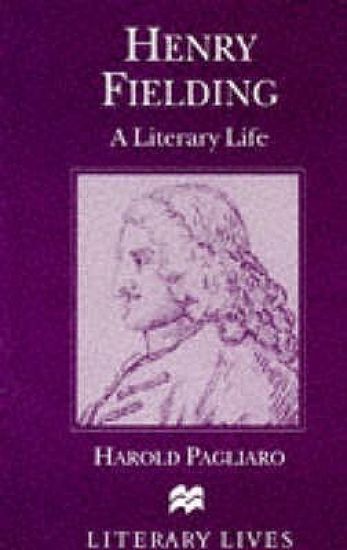
Henry Fielding

Henry Fielding

H. Pagliaro

Palgrave Macmillan
1998
nidottu
Henry Fielding: A Literary Life characterizes Fielding's complex personality, in some ways full of contradiction, and yet resolved both by a deep knowledge of human nature, including his own, and by his innate social constructiveness and his gift for friendship and love. The book also details ways in which Fielding's complex attitudes contribute to the subject-matter of his plays and novels and to the rhetorical strategies that control their shape as well. It further shows that his work as lawyer, London magistrate, and social and political essayist was similarly informed.
Miscellanies by Henry Fielding, Esq: Volume Three
Volume Three of Henry Fielding's Miscellanies, first published as a three-volume set in 1743, consists in its entirety of a major work of fiction, The history of the Life of the Late Mr. Jonathan Wild the Great. Jonathan Wild takes its title from the `thief-taker' and gang-leader of that name who was hanged in 1725, but in Fielding's hands, the history of Wild is transformed into a mock-hostorical work of sustained irony aimed at all who would be `great men'. The general introduction to this edition sets the novel against its historical and biographical background and argues against the view, common since the mid-nineteenth century, that it is a personal satire directed at the figure of Sir Robert Walpole. In both the general and the textual introductions, the editors also offer a fresh view on questions about the date and history of the work's composition. Full explanatory notes and commentary place Fielding's allusions and details in their contemporary context. As in previous volumes of the Weslyan Edition, this provides critical, unmodernized text, based on the Greg-Bowers `Rationale of Copy-text'. The version is that of the first edition, with an appendix giving all variants in wording and presentation in the 1754 revision. In his introduction the textual editor lays out the rationale for his choice of version. This volume also includes, for the first time in modern edition, Fielding's list of subscribers to the Miscellanies, along with detailed biographical notes and an analysis of the subscription list by the textual editor.
Henry Fielding: Contributions to The Champion, and Related Writings
This volume completes the edition's coverage of Henry Fielding's journalism, which occupied a far greater part of his time than has been traditionally acknowledged. His contributions to The Champion are not only among his most energetic and intriguing works in the genre; they also have a dense political background, of interest to historians studying the interface between journalism and politicians of the time, as well as the role of newspaper publishers. Walpole figures hugely, and the extent to which Fielding hints at the minister's life and activities is remarkable. Much of the volume's material has never been reprinted before. Explanatory annotations are full, as the characteristically allusive and topical nature of Fielding's writing requires. Appendices provide an analytical textual apparatus, and the editorial introductions emphasize matters such as genesis and composition, circumstances of publication, in addition to immediate biographical, literary, and historical backgrounds.
Miscellanies by Henry Fielding, Esq: Volume Two
This is the second volume of Fielding's Miscellanies, first published as a three-volume set in 1743. Its major work is the fantasy A Journey from This World to the Next, Fielding's richest and most extensive piece of prose fiction outside his three novels and Jonathan Wild. Its theme, described by Gibbon as `the history of human nature', is the excoriation of false greatness and over-weening ambition, one of the great moral ideas of the age. The annotation and commentary to this edition present new evidence about Fielding's manipulation of historical sources in the Journey, which is shown to be both artistically complete and thematically consistent with the other material in the Miscellanies. The remaining two works in this volume are both plays which Fielding included at a late stage of planning for the book: the farce Eurydice, a burlesque of mythological figures who function as vehicles for topical satire, and The Wedding Day, a revision of an intrigue comedy written early in his career but staged for the first time in 1743, only a few months before the Miscellanies appeared. The introduction reviews this period of Fielding's career and describes the circumstances leading up to the original publication of Miscellanies by subscription, and the historical and biographical contexts of the works included in Volume Two. The text follows the significant features of the 1743 presentation, as far as possible; the Greg-Bowers `Rationale' hitherto observed in the Wesleyan Edition is refined and augmented by more recent textual theorizing. The full,uncensored text of The Wedding Day, from Larpent MS 39 in the Huntington Library, is given as an appendix to the censored form published in Miscellanies.
Henry Fielding - Plays

Henry Fielding - Plays

Henry Fielding

Oxford University Press
2004
sidottu
This is the first of three volumes representing the only modern edition of Fielding's dramatic works. Most of these plays have not appeared in print for a century, and never previously in edited form. Fielding came to the novel-writing for which he is best known after an important first career in professional theatre. He wrote twenty-eight plays, including comedies, satiric extravaganzas, and ballad operas. He was the leading playwright of his generation, an experimentalist and entrepreneur in a cheerfully mocking form of drama journalistically devoted to contemporary experience, culture, and politics. This volume presents the first seven of these plays in a critical unmodernized edition based on the original texts, with explanatory notes and commentary on sources, stage history, and critical reception, as well as appendices accounting for textual variation, bibliography, and musical sources.
Henry Fielding - Plays, Volume II, 1731 - 1734
This is the second of three volumes representing the only modern edition of Fielding's dramatic works. Most of these plays have not appeared in print for a century, and never previously in fully-edited form. Fielding is best known as a classic novelist and the author of Tom Jones, but like his great model Cervantes, he came to novel-writing from an important first career in professional theatre. He wrote twenty-eight plays, including comedies, satiric extravaganzas, and ballad operas. He was the leading playwright of his generation, an experimentalist and entrepreneur of dramatic form who sometimes also brought contemporary politics and public figures onto his stage with results even more dramatic off-stage. This volume presents nine plays from one of the most productive and successful periods of Fielding's theatre career. One of them, The Grub-Street Opera, is a ballad opera cheerfully mocking various public characters including the Prime Minister, Prince of Wales, and even King and Queen. Another, The Modern Husband, is a dark comedy attacking the cynical merchandising of sex, marriage, and influence among what passes for polite society in 1730s London. Most of the plays in this volume were major hits with long stage lives in repertory, including The Lottery, The Intriguing Chambermaid, and two of the great Molière adaptations of the century, The Mock Doctor and The Miser. Fielding wrote all four of those plays as star vehicles for the great Drury Lane musical actress Catherine Clive. The plays are given in critical unmodernized texts based on careful collation of the original editions, with explanatory notes and commentary on sources, stage history, and critical reception. All music is included, with appendices giving complete accounts of textual variation and bibliographic history for each play.
Henry Fielding - Plays, Volume III 1734-1742
This is the third and final volume of plays representing the only modern edition of Fielding's dramatic works. Most have not appeared in print for a century, and never previously in fully-edited form. Fielding is best known as a novelist but, like his great model Cervantes, he came to novel-writing from an important first career in professional theatre. He wrote twenty-eight plays, including comedies, satiric extravaganzas, and ballad operas. He was the leading playwright of his generation, an experimentalist and entrepreneur of dramatic form who sometimes also brought contemporary politics and public figures onto his stage with results even more dramatic off stage. This volume presents nine plays from the final and most controversial years of his theatre career. The first, Don Quixote in England, is a ballad opera homage to Quixotic idealism played out against rustic English opportunism. Two other plays, including the long-running favourite The Virgin Unmask'd, were written as star vehicles for Fielding's brilliant colleague Catherine Clive. The Universal Gallant is another of Fielding's ventures in serious social comedy, but the heart of the volume, as of this concluding period of Fielding's dramatic career, is the group of audacious satirical plays he wrote when he was running his own makeshift company at the Little Haymarket Theatre, including Pasquin and The Historical Register. Audiences flocked to these productions to see the cultural and political life of the moment ridiculed in Aristophanic explicitness, notoriously in one case (Eurydice Hiss'd) including a mocking stage caricature of the prime minister himself. That unamused minister, Sir Robert Walpole, shortly after saw through the 1737 Licensing Act which put an end to unsanctioned playhouses and plays, and to Fielding's own career in theatre. The plays are given in critical unmodernized texts based on careful collation of the original editions, with explanatory notes and commentary on sources, stage history, and critical reception. All music is included, with appendices giving complete accounts of textual variation and bibliographic history for each play.

Henry Fielding - The Journal of a Voyage to Lisbon, Shamela, and Occasional Writings
This book completes the authoritative Wesleyan Edition of Fielding's nondramatic writings. It features two of Fielding's classic works: The Journal of a Voyage to Lisbon written as he sailed to Portugal hoping, in vain, to recover his health; and Shamela, the hilarious parody of Richardson's Pamela that led to Joseph Andrews and the beginning of his career as novelist. The volume also includes every other work of Fielding's not to be found in the twelve previous volumes of the nondramatic writings. Here the reader will find in section I, Occasional Verse: 'The Masquerade'; the unfinished 'Cantos'; a burlesque of Pope's 'Dunciad'; 'Plain Truth'; 'A Dialogue between a Beau's Head and his Heels'; 'An Epistle to Mr. Lyttleton'; as well as three epilogues and a prologue. In section II, Occasional Prose: 'A Full Vindication of the Dutchess Dowager of Marlborough'; the translation of Aristophanes' 'Plutus, the God of Riches'; Preface to Sarah Fielding's Adventures of David Simple; 'The Female Husband'; 'Ovid's Art of Love Paraphrased'; Preface and letters xl-xliv of Sarah Fielding's Familiar Letters between the Principal Characters in David Simple; and 'A Fragment of a Comment on L. Bolingbroke's Essays'. The appendicies include writings recently attributed to Fielding, supplementary material relating to the voyage to Lisbon, and the full textual apparatus.
Henry Fielding and the Narration of Providence

Henry Fielding and the Narration of Providence

Rosengarten Richard

St Martin's Press
2001
sidottu
This text analyzes the fate in 18th century England of the Augustinian tradition of the providential design of history. At this time the retrospective form of literary narrative (also known as "the rise of the English novel") flourished, particularly in the novels of Henry Fielding. Through his "historian" narrators, Fielding presents to the reader a sense of narrative ending that explores, with great power of poetic penetration, the claims humans can and cannot make, even retrospectively, for the realization of the divine design.
A Henry Fielding Companion

A Henry Fielding Companion

Martin C. Battestin

Greenwood Press
2000
sidottu
Best remembered as the author of Joseph Andrews (1742), Tom Jones (1749) and Amelia (1751), Henry Fielding was one of the most important pioneering English novelists of the eighteenth century, and his works continue to occupy a central place in the literary canon. During the 1730s he was the most dominant playwright in London since John Dryden; and in his official capacity as a magistrate, he addressed serious social problems and invented the modern metropolitan police. This reference book makes essential information available to readers interested in Fielding, his life, and his works. The volume is organized in sections devoted to such topics as Fielding's residences; his family members and household; historical persons, including authors who influenced him; his works; themes and topics important to his writings; and characters in his plays and prose fiction. Each section contains numerous entries on particular items, and many entries provide brief bibliographical information. While the sectional organization of the volume invites the reader to explore broad areas of interest, a thorough index provides convenient alphabetical access to the entries. A brief introductory essay and chronology begin the volume, and the book concludes with an extensive bibliography.
Henry Fielding
The Critical Heritage gathers together a large body of critical sources on major figures in literature. Each volume presents contemporary responses to a writer's work, enabling students and researchers to read the material themselves.
Henry Fielding
The Critical Heritage gathers together a large body of critical sources on major figures in literature. Each volume presents contemporary responses to a writer's work, enabling students and researchers to read the material themselves.
Henry Fielding

Henry Fielding

Andrew Wright

University of California Press
2020
pokkari
This title is part of UC Press's Voices Revived program, which commemorates University of California Press’s mission to seek out and cultivate the brightest minds and give them voice, reach, and impact. Drawing on a backlist dating to 1893, Voices Revived makes high-quality, peer-reviewed scholarship accessible once again using print-on-demand technology. This title was originally published in 1965.