Kirjojen hintavertailu. Mukana 11 470 281 kirjaa ja 12 kauppaa.

Kirjahaku

Etsi kirjoja tekijän nimen, kirjan nimen tai ISBN:n perusteella.

1000 tulosta hakusanalla Florence Gildea

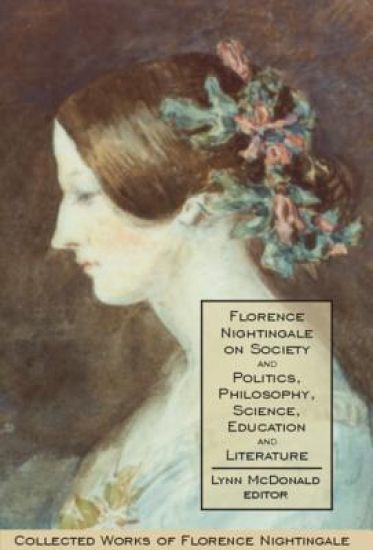
Florence Nightingale on Society and Politics, Philosophy, Science, Education and Literature
Florence Nightingale on Society and Politics, Philosophy, Science, Education and Literature, Volume 5 in the Collected Works of Florence Nightingale, is the main source of Nightingale's work on the methodology of social science and her views on social reform. Here we see how she took her ""call to service"" into practice: by first learning how the laws of God's world operate, one can then determine how to intervene for good. There is material on medical statistics, the census, pauperism and Poor Law reform, the need for income security measures and better housing, on crime, gender and the family. Her comments on a new edition of The Dialogues of Plato are given, with their impact on the revision of the next edition. We see Nightingale's condemnation of Plato's ""community of wives,"" with her stirring approval of love (even outside marriage!), marriage and the family. In this volume also her views on natural science, education and literature are reported. Nightingale was an astute behind-the-scenes political activist. Society and Politics publishes (much of it for the first time) her correspondence with such leading political figures as Queen Victoria, W.E. Gladstone and J.S. Mill. There are notes and essays on public administration and personal observations on various members of royalty, prime ministers and ministers, and Indian viceroys. Nightingale's support of the vote for women (contrary to much in the secondary literature) is here shown. Correspondence and notes on British general elections from 1834 to 1900 is reported, with letters to and for (Liberal) political candidates and fierce condemnations of Conservatives. Currently, Volumes 1 to 11 are available in e-book version by subscription or from university and college libraries through the following vendors: Canadian Electronic Library, Ebrary, MyiLibrary, and Netlibrary.
Florence Nightingale on Public Health Care

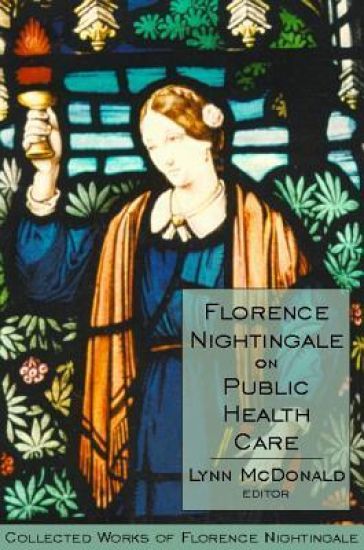
Florence Nightingale on Public Health Care

Wilfrid Laurier University Press
2004
sidottu
This sixth volume in the Collected Works of Florence Nightingale reports Nightingale's considerable accomplishments in the development of a public health care system based on health promotion and disease prevention. It follows directly from her understanding of social science and broader social reform activities, which were related in Society and Politics (Volume 5). Public Health Care includes a critical edition of Notes on Nursing for the Labouring Classes, papers on mortality in aboriginal schools and hospitals, and on rural health. It reports much unknown material on Nightingale's signal contribution of bringing professional nursing into the dreaded workhouse infirmaries. This collection presents letters and notes on a wide range of issues from specific diseases to germ theory, and relates some of her own extensive work as a nurse practitioner, which included organizing referrals to doctors and providing related care. Currently, Volumes 1 to 11 are available in e-book version by subscription or from university and college libraries through the following vendors: Canadian Electronic Library, Ebrary, MyiLibrary, and Netlibrary.
Florence Nightingale's European Travels

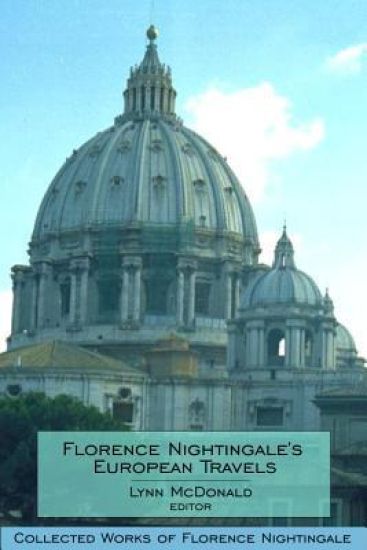
Florence Nightingale's European Travels

Wilfrid Laurier University Press
2004
sidottu
This seventh volume in the Collected Works of Florence Nightingale consists of letters, observations, and notes from Florence Nightingale's many trips to Europe, beginning with a family journey when she was a teenager. It includes annotations she made on opera libretti from her ""music mad"" phase and her winter in Rome (1847-48) which were so important in shaping her liberal politics and support for independence movements. Her letters and notes from Greece and central Europe in 1850, and her Kaisers- werth stay in 1851, reveal her developing ideas on social reform, as well as her first professional training. Materials from 1853 provide information on her training in Paris hospitals. Volume 7 also contains letters and observations from her excursions to Scotland, Ireland, and all over England, from her childhood on. Many of the letters in European Travels were uncatalogued items buried in archives and will be new to Nightingale scholars. The information gathered in this volume adds considerably to what can be learned about the formative influences in Nightingale's life, politics, and faith. Currently, Volumes 1 to 11 are available in e-book version by subscription or from university and college libraries through the following vendors: Canadian Electronic Library, Ebrary, MyiLibrary, and Netlibrary.
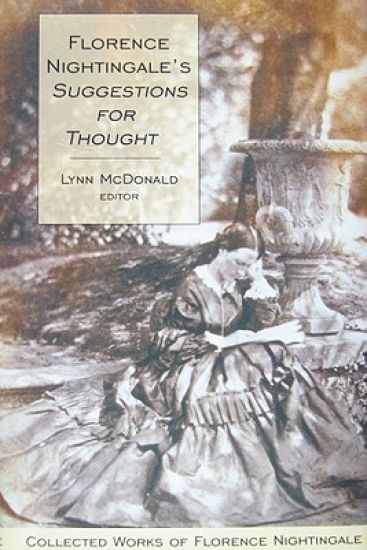
Florence Nightingale's Suggestions for Thought

Florence Nightingale's Suggestions for Thought

Wilfrid Laurier University Press
2008
sidottu
Florence Nightingale's Suggestions for Thought has intrigued readers from feminist-philosopher J.S. Mill (who used it in his The Subjection of Women) to the latest generation of women's activists. Although selections from this long work have been published, Lynn McDonald is the first editor to work through the numerous surviving drafts of Nightingale's writing and present it as a complete volume. Suggestions for Thought contains two early attempted novels, draft sermons, and a lengthy fictional dialogue featuring St. Ignatius, founder of the Jesuits, the American evangelical Jacob Abbott, and British agnostic Harriet Martineau (with cameo appearances by Protestant reformer John Calvin and the poet Shelley) all against an unnamed ""M.S."" The most famous section of Suggestions for Thought is the essay Cassandra, famous as a rant against the family for stifling womens aspirations. Here the printed text is shown with the original novel draft alongside. McDonald's introductions to each section provide historical context and Nightingales later views of the work. Currently, Volumes 1 to 11 are available in e-book version by subscription or from university and college libraries through the following vendors: Canadian Electronic Library, Ebrary, MyiLibrary, and Netlibrary.
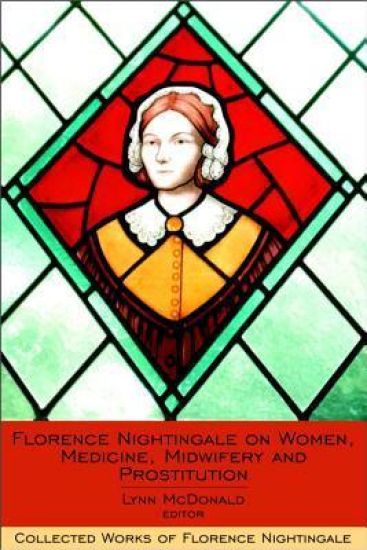
Florence Nightingale on Women, Medicine, Midwifery and Prostitution
Volume 8: Florence Nightingale on Women, Medicine, Midwifery and Prostitution makes available a great range of Florence Nightingale's work on women: her pioneering study of maternal mortality in childbirth (Introductory Notes on Lying-in Institutions), her opposition to the regulation of prostitution through the Contagious Diseases Acts (attempts to stop the legislation and otherwise to facilitate the voluntary treatment of syphilitic prostitutes), her views on gender roles, marriage and measures for income security for women and excerpts from her draft (abandoned) novel. There is correspondence with women friends and colleagues from childhood to old age, on a vast range of subjects. Correspondents include old family friends, royal and notable personages, nuns and colleagues in various causes. Most of this material has not been published before and some letters wil be new even to Nightingale scholars. Altogether a very different view of Nightingale emerges from what normally appears in biographies and other secondary sources. This material will enable a new assessment of her feminism, her relations with women and her contribution to improving the status of women of her time. Currently, Volumes 1 to 11 are available in e-book version by subscription or from university and college libraries through the following vendors: Canadian Electronic Library, Ebrary, MyiLibrary, and Netlibrary.
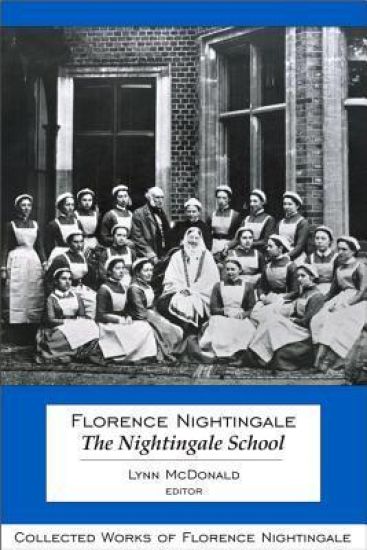
Florence Nightingale: the Nightingale School

Florence Nightingale: the Nightingale School

Wilfrid Laurier University Press
2009
sidottu
Although Florence Nightingale is famous as a nurse, her lifetime's writing on nursing is scarcely known in the profession. Nursing professors tend to ""look to the future, not to the past,"" and often ignore her or rely on faulty secondary sources. Nightingale's work on nursing is now available to scholars and general readers alike through the publication of volumes 12 and 13 in the Collected Works of Florence Nightingale. Volume 12, The Nightingale School, relates the founding of her school at St Thomas' Hospital and her guidance of its teaching for the rest of her life. Volume 13, Extending Nursing, relates the introduction of professional training and standards outside St Thomas', beginning with London hospitals and others in Britain, followed by hospitals in Europe, America, Australia and Canada. As medical knowledge progressed, nursing practice changed and Nightingale with it. Her evolving views on nursing, and on germ theory (typically misrepresented in the literature), are revealed. In this volume, editor Lynn McDonald brings to light much unknown material on the early years of the school. The crisis of its near breakdown in the early 1870s is covered, followed by the measures Nightingale brought in to improve instruction, including her mentoring relationships with emerging nursing leaders. Nursing historians may be surprised to learn that Nightingale was keeping up on best operating theatre practices in 1898. Struggles with cost-conscious hospital administrators are part of the story, as is the challenge to keep nurses safe at a time when hospitals were dangerous places.
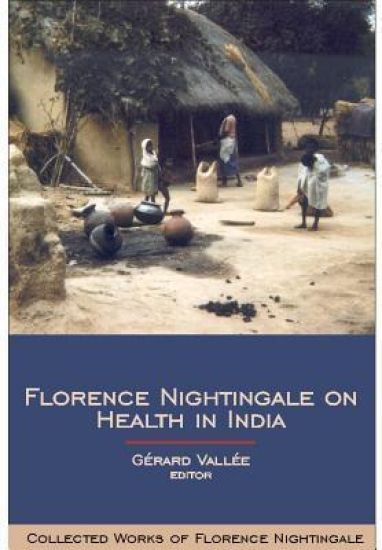
Florence Nightingale on Health in India

Florence Nightingale on Health in India

Wilfrid Laurier University Press
2006
sidottu
Volume 9: Florence Nightingale on Health in India is the first of two volumes reporting Nightingale's forty years of work to improve public health in India. It begins with her work to establish the Royal Commission on the Sanitary State of the Army in India, for which she drafted questionnaires, analyzed returns, and did much of the final writing, going on to promote the implementation of its recommendations. In this volume a gradual shift of attention can be seen from the health of the army to that of the civilian population. Famine and epidemics were frequent and closely interrelated occurrences. To combat them, Nightingale recommended a comprehensive set of sanitary measures, and educational and legal reforms, to be overseen by a public health agency. Skilful in implementing the expertise, influence, and power of others, she worked with her impressive network of well-placed collaborators, having them send her information and meet with her back in London. The volume includes Nightingale's work on the royal commission itself, related correspondence, numerous published pamphlets, articles and letters to the editor, and correspondence with her growing network of viceroys, governors of presidencies, and public health experts. Working with British collaborators, she began this work; over time Nightingale increased her contact with Indian nationals and promoted their work and associations. Currently, Volumes 1 to 11 are available in e-book version by subscription or from university and college libraries through the following vendors: Canadian Electronic Library, Ebrary, MyiLibrary, and Netlibrary.
Florence Nightingale: the Crimean War

Florence Nightingale: the Crimean War

Wilfrid Laurier University Press
2010
sidottu
Florence Nightingale is famous as the ""lady with the lamp"" in the Crimean War, 1854 - 56. There is a massive amount of literature on this work, but, as editor Lynn McDonald shows, it is often erroneous, and films and press reporting on it have been even less accurate. The Crimean War reports on Nightingale's correspondence from the war hospitals and on the staggering amount of work she did post-war to ensure that the appalling death rate from disease (higher than that from bullets) did not recur. This volume contains much on Nightingale's efforts to achieve real reforms. Her well-known, and relatively ""sanitized"", evidence to the royal commission on the war is compared with her confidential, much franker, and very thorough Notes on the Health of the British Army, where the full horrors of disease and neglect are laid out, with the names of those responsible.
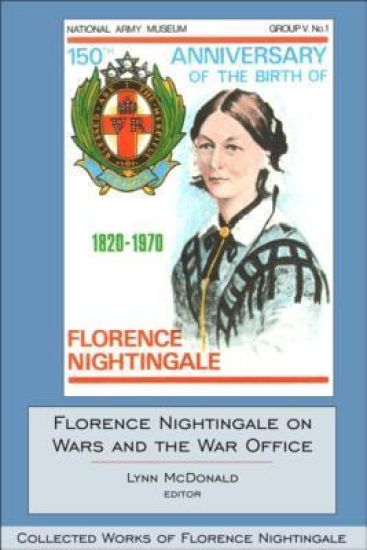
Florence Nightingale on Wars and the War Office

Florence Nightingale on Wars and the War Office

Wilfrid Laurier University Press
2011
sidottu
Volume 15 of the Collected Works of Florence Nightingale, Wars and the War Office, picks up on the previous volume's recounting of Nightingale's famous work during the Crimean War and the comprehensive analysis she did on its high death rates. This volume moves on to the implementation of the recommendations that emerged from that research and to her work to reduce deaths in the next wars, beginning with the American Civil War. Nightingale's writings describe the creation of the Army Medical School, the vast improvements made in the statistical tracking of disease, and new measures for soldiers' welfare. Her role in the formulation of the first Geneva Convention in 1864 is related, along with her concern that voluntary relief efforts through the Red Cross not make war ""cheap."" Nightingale was decorated by both sides for her work in the Franco-Prussian War. While much of her work concerned the mundane sending out of supplies, we see also in her writing her emerging interest in militarism as the cause of war. Her opposition to the Afghan War (of her time) and her work to provide nursing for the Egyptian campaigns, the Zulu War, and the start of the Boer War are also included.
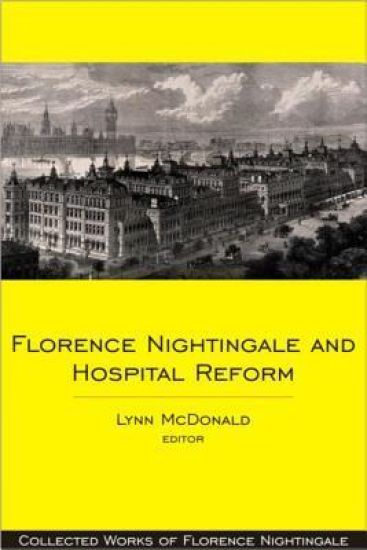
Florence Nightingale and Hospital Reform

Florence Nightingale and Hospital Reform

Wilfrid Laurier University Press
2012
sidottu
Florence Nightingale began working on hospital reform even before she founded her famous school of nursing; hospitals were dangerous places for nurses as well as patients, and they urgently needed fundamental reform. She continued to work on safer hospital design, location, and materials to the end of her working life, advising on plans for children's, general, military, and convalescent hospitals and workhouse infirmaries. Florence Nightingale and Hospital Reform, the final volume in the Collected Works of Florence Nightingale, includes her influential Notes on Hospitals, with its much-quoted musing on the need of a Hippocratic oath for hospitals - namely, that first they should do the sick no harm. Nightingale's anonymous articles on hospital design are printed here also, as are later encyclopedia entries on hospitals. Correspondence with architects, engineers, doctors, philanthropists, local notables, and politicians is included. The results of these letters, some with detailed critiques of hospital plans, can be seen initially in the great British examples of the new ""pavilion"" design - at St. Thomas', London (a civil hospital), at the Herbert Hospital (military), and later at many hospitals throughout the UK and internationally. Nightingale's insistence on keeping good statistics to track rates of mortality and hospital stays, and on using them to compare hospitals, can be seen as good advice for today, given the new versions of ""hospital-acquired infections"" she combatted.
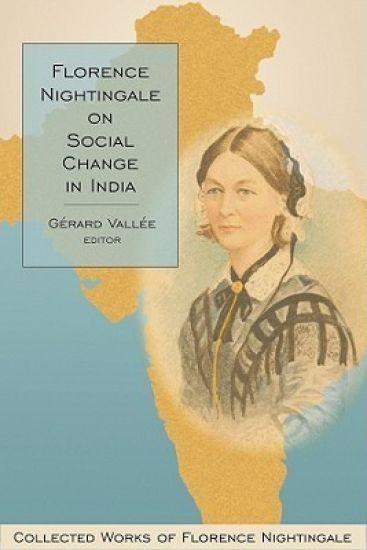
Florence Nightingale on Social Change in India

Florence Nightingale on Social Change in India

Wilfrid Laurier University Press
2007
sidottu
Social Change in India shows the shift of focus that occurred during Florence Nightingale's more than forty years of work on public health in India. While the focus in the preceding volume, Health in India, was top-down reform, notably in the Royal Commission on the Sanitary State of the Army in India, this book documents concrete proposals for self-government, especially at the municipal level, and the encouragement of leading Indian nationals themselves. Famine and related epidemics continue to be issues, demonstrating the need for public works like irrigation and for greater self-help measures like ""health missioners"" and self-government. The book includes sections on village and town sanitation, the condition and status of women, land tenure, rent reform, and education and political evolution toward self-rule. Nightingale's publications on these subjects appeared increasingly in Indian journals. Correspondence shows Nightingale continuing to work behind the scenes, pressing viceroys, governors, and Cabinet ministers to take up the cause of sanitary reform. Her collaboration with Lord Ripon, viceroy 1880-84, was crucial, for he was a great promoter of Indian self-government. Social Change in India features much new material, including a substantial number of long-missing letters to Lady Dufferin, wife of the viceroy 1884-88, on the provision of medical care for women in India, health education, and the promotion of women doctors. Biographical sketches of major collaborators, a glossary of Indian terms, and a list of Indian place names are also provided. Currently, Volumes 1 to 11 are available in e-book version by subscription or from university and college libraries through the following vendors: Canadian Electronic Library, Ebrary, MyiLibrary, and Netlibrary.
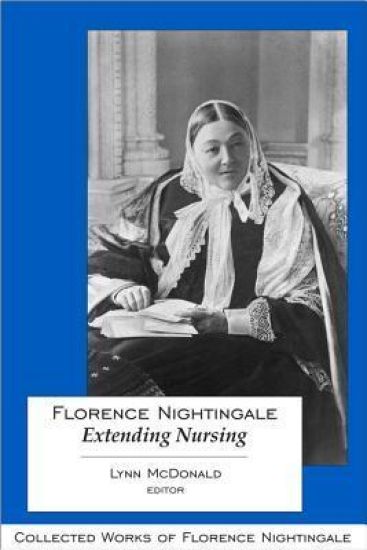
Florence Nightingale: Extending Nursing

Florence Nightingale: Extending Nursing

Wilfrid Laurier University Press
2009
sidottu
Although Florence Nightingale is famous as a nurse, her lifetime's writing on nursing and to nurses is scarcely known in the profession. Nursing professors tend to ""look to the future, not to the past,"" and often ignore her or rely on faulty secondary sources. Volume 12 related the founding of her school at St Thomas' Hospital and her guidance of its teaching for the rest of her life. Volume 13, Extending Nursing, relates the introduction of professional training and standards outside St Thomas', beginning with London hospitals and others in Britain, followed by hospitals in Europe, America, Australia and Canada. Also presented is material on work in India, Japan and China. The challenge of raising standards in the tough workhouse infirmaries is reported, as is Nightingale's fostering of district nursing. A chronology in this volume provides a convenient overview of Nightingales work on nursing from 1860 to 1900. Both volumes give biographical sketches of key nursing leaders.
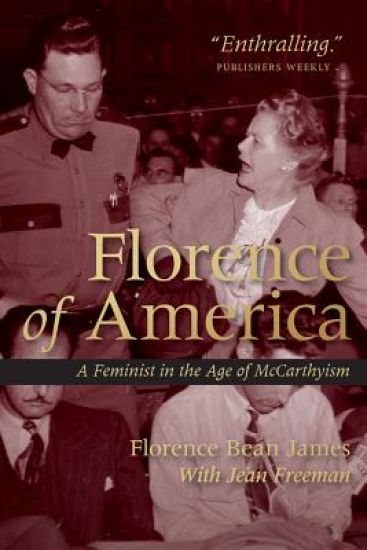
Florence of America

Florence of America

Florence James

University of Regina Press
2019
sidottu
Born on the Idaho frontier, Florence James was a New York City suffragette. The first to put Jimmy Cagney on stage, she founded both the Negro Repertory Theatre and the Seattle Repertory Playhouse. She worked with Francis Farmer, Paul Robson, and Helen Hayes, but her views on art and politics and her choice of plays led to a clash with the Un-American Activities Committee. In the wake of two Kafkaesque trials, where she condemned her persecutors as liars, she fled to Canada and kick-started professional theatre in Saskatchewan, the home to North America's first socialist government. Vital and inspiring, Florence of America is a story of one woman speaking truth to power. "An amazing story of achievement, heartbreak, and endurance...But above all, it is a moving and powerful cautionary tale of what can happen, at any time of any age, when, in [Arthur] Miller's words, a whole world begins to cry 'spirits.'" —Moira Day, Department Head of Drama, University of Saskatchewan
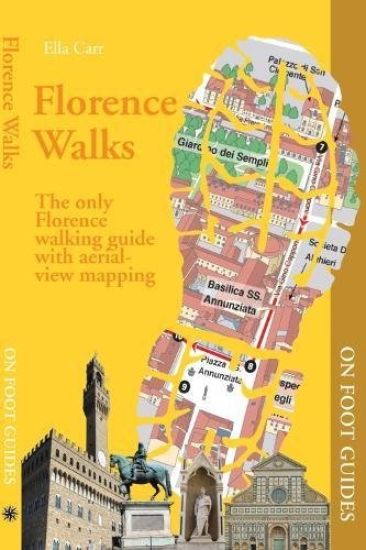
Florence Walks

Florence Walks

Duncan Petersen Publishing
2018
nidottu
The only Florence walking guide with 3d maps. Following these walks is like being shown around by an exceptionally knowledgeable friend. They're fun and they'll help you fit it all together. And you'll discover plenty of interesting things you never knew about the city along the way. Easy to find the way, the routes are shown on unique aerial-view maps giving you a detailed street layout as well as the look of your surroundings so you can really get your bearingsFriendly, accessible information the maps are supported by personal insights and advice, including food, drink and shopping along the way. We'll introduce you to all the must-see areasMost of the routes take about an hour but if you're planning to fit all the sightseeing in as well then allow two to three hours. And if you want to make it a longer expedition it's easy to interlink the routes to make a day of it Discover Florence on foot with this inspirational guide and unique bird's-eye view maps and illustrations.
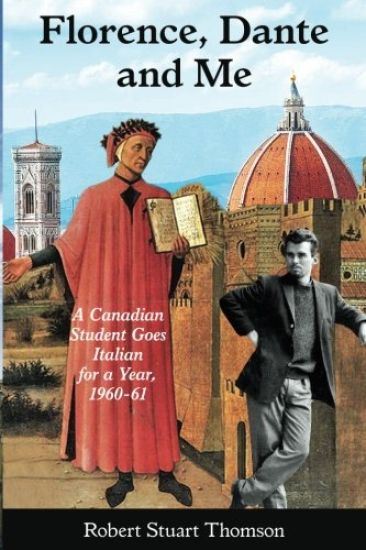
Florence, Dante and Me: A Canadian student goes Italian for a year, 1960-61
WHO THIS BOOK WAS WRITTEN FOR: anyone planning on studying in Italy (Thomson was on a third year college scholarship offered by the Italian government); people who are interested in Italy, her culture and people; those who are curious about what it was like to be young and adventurous in Italy way back in 1960-61.The text of this book was taken from forty-five letters which Thomson wrote from Italy to his fianc e in Vancouver. Fifty-six years later (2016) he reorganized these letters into a book and added (a) a ten page introduction to explain his own background, the Zeitgeist of the early 1960s and the book's genesis; (b) seventy-five graphics (including several of his own photos from 1960-1); and (c) fifteen pages of footnotes which often comment retrospectively on the significance of various experiences. Thomson spent August and September 1960 studying at the University of Perugia then October to June studying at the University of Florence. He also visited twelve other cities including Naples and Rome. Academically the main purpose of the year was to study Italian literature and gain experience speaking Italian. Thomson's favorite writer is clearly Dante and he glosses several passages from La Divina Commedia. A close reading of Dante leads Thomson to insight into his own "selva oscura" which he attributes largely to the influence of an upbringing and education which were essentially pagan and lacking in moral awareness. To improve his spoken Italian quickly Thomson avoids contact with English speakers (this is not without cost). Many letters describe people e.g., Laura, a girlfriend at the university; Franco, a retired Colonel; Gino, a violinist from Naples; and Ede, a lady who shares Thomson's love of opera and lyric poetry. These people welcome him into their world and advise him about places to visit and books to read, e.g. the colonel explains to him what Florence was like under the German occupation in 1943-44; Ede tells him not to miss a pilgrimage to Puccini's Torre del Lago.Thomson chronicles his discoveries in the arts: painting (e.g. Botticelli, Caravaggio); sculpture (e.g. Michelangelo's Brutus, Cellini's Perseus, ); ancient architecture (e.g. Rome, Pompeii); movies (e.g. Paisa, Rocco e i suoi fratelli); opera houses (e.g. La Pergola, San Carlo); popular singers (e.g. Peppino di Capri, Mina); Vittorio Gassman's dramatic readings of Dante (which Thomson copied and memorized); bel canto lessons with an ex-diva. Numerous pages comment on such things as Italians attitudes towards fashion, friendship, and bringing up children. Footnotes from 2017 comment on the many ways in which this year in Italy changed his life.
Florence Nightingale, War Nurse

Florence Nightingale, War Nurse

Anne 1908-1991 Colver

Hassell Street Press
2021
sidottu
This work has been selected by scholars as being culturally important and is part of the knowledge base of civilization as we know it.This work is in the public domain in the United States of America, and possibly other nations. Within the United States, you may freely copy and distribute this work, as no entity (individual or corporate) has a copyright on the body of the work.Scholars believe, and we concur, that this work is important enough to be preserved, reproduced, and made generally available to the public. To ensure a quality reading experience, this work has been proofread and republished using a format that seamlessly blends the original graphical elements with text in an easy-to-read typeface.We appreciate your support of the preservation process, and thank you for being an important part of keeping this knowledge alive and relevant.