
Kirjahaku
Etsi kirjoja tekijän nimen, kirjan nimen tai ISBN:n perusteella.
1000 tulosta hakusanalla Franz Neumann

Dr. Franz Hartmann's Diseases Of Children And Their Homeopathic Treatment
Franz Hartmann; Charles J. (TRN) Hempel
Kessinger Pub
2008
pokkari

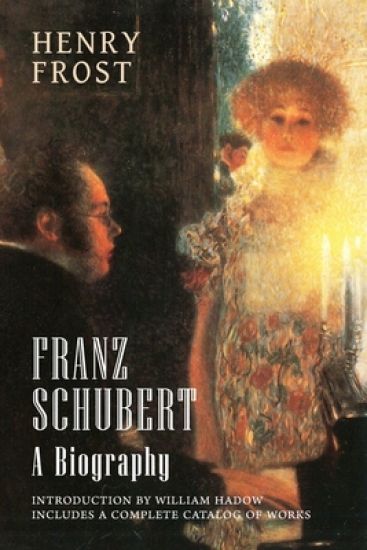
Clarity of outline, conciseness, and formal beauty are excellent things in musical works, but an exquisite fancy, a noble imagination, and a lofty poetic spirit are of infinitely greater account; and no one ever possessed these inestimable gifts in greater measure than Franz Schubert.This new edition of Henry Frost's 1892 biography of Franz Schubert has been edited and revised. The original references to pieces by Opus number have been replaced with the more commonly used D numbers. Many illustrations of places and people have been added throughout the text, and a complete catalog of Schubert's works has been included.Contents1Introduction and overview by William Henry Hadow.2- Schubert's unique position among composers.- Birth and parentage.- Early instruction in music, and evidence of extraordinary talent.- Admission to the Imperial Chapel and Stadtconvict.- School experiences and first compositions.- Salieri.- Symphony No. 1 in D.- He decides to leave the Convict.3- Schubert's experience as a school teacher.- Friendship with Mayrhofer.- Works from 1814; Des Teufels Lustschloss, Mass in F, etc.- Extraordinary productiveness in 1815.- Operas, symphonies, masses, and songs.- Characteristics of Schubert's Lieder.- Diary kept in 1816.- Der Erlk nig.- Cantatas and symphonies.- He applies for a position.- Franz von Schober.- He leaves his father's school.4- Johann Michael Vogl.- Josef Huttenbrenner.- Piano sonatas.- Overtures in Italian style.- He becomes music teacher to the Esterhazy family.- His residence with Mayrhofer.- Excursion in upper Austria.- Rossini.- Goethe.- His first commissions for the stage.- Die Zwillingsbruder.- Die Zauberharfe.- Contemporary criticism.- The oratorio Lazarus.- The Fantasia in C.5- The first publications.- Enthusiasm of his friends.- Schubertiaden.- The symphony in E.- Schubert and Beethoven.- Alfonso and Estrella; performance at Weimar.- The mass in A flat.- The unfinished symphony in B minor.- Schubert and Weber.- Rosamunde.- Fierabras.- Die Verschwornen, or Der hauslicne Krieg.- Die schone Mullerin.- Publications in 1823.6- Schubert's temporary depression.- Diary and letters.- Second visit to Zelesz.- Love for Caroline Esterhazy.- Compositions; the duet sonata in C.- Travels in Steyr.- Restored cheerfulness.- Efforts to gain employment.- Schindler's singular story.- Negotiations with foreign publishers.- Present from the Musikfreunde.- Beethoven's funeral.- Visit to the Pachlers at Gratz.- Failing health.- Rochlitz and Der Erste Ton7- Great productiveness in 1828.- Symphony in C.- Mass in E flat.- Schwanengesang.- Last sonatas.- Disappointments.- His last illness and death.8- Posthumous honours.- Personal qualities.- Schubert's position in music.- General survey of works
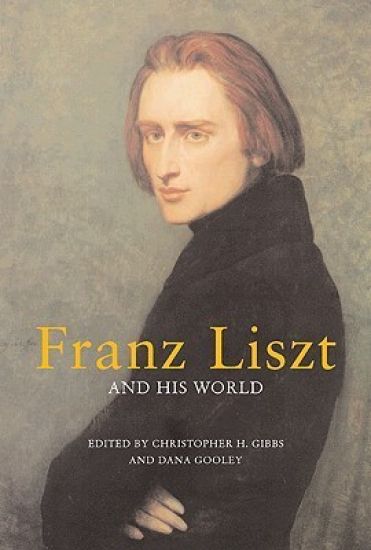
Franz Liszt and His World
Princeton University Press
2006
pokkari
No nineteenth-century composer had more diverse ties to his contemporary world than Franz Liszt (1811-1886). At various points in his life he made his home in Vienna, Paris, Weimar, Rome, and Budapest. In his roles as keyboard virtuoso, conductor, master teacher, and abbe, he reinvented the concert experience, advanced a progressive agenda for symphonic and dramatic music, rethought the possibilities of church music and the oratorio, and transmitted the foundations of modern pianism. The essays brought together in Franz Liszt and His World advance our understanding of the composer with fresh perspectives and an emphasis on historical contexts. Rainer Kleinertz examines Wagner's enthusiasm for Liszt's symphonic poem Orpheus; Christopher Gibbs discusses Liszt's pathbreaking Viennese concerts of 1838; Dana Gooley assesses Liszt against the backdrop of antivirtuosity polemics; Ryan Minor investigates two cantatas written in honor of Beethoven; Anna Celenza offers new insights about Liszt's experience of Italy; Susan Youens shows how Liszt's songs engage with the modernity of Heinrich Heine's poems; James Deaville looks at how publishers sustained Liszt's popularity; and Leon Botstein explores Liszt's role in the transformation of nineteenth-century preoccupations regarding religion, the nation, and art. Franz Liszt and His World also includes key biographical and critical documents from Liszt's lifetime, which open new windows on how Liszt was viewed by his contemporaries and how he wished to be viewed by posterity. Introductions to and commentaries on these documents are provided by Peter Bloom, Jose Bowen, James Deaville, Allan Keiler, Rainer Kleinertz, Ralph Locke, Rena Charnin Mueller, and Benjamin Walton.
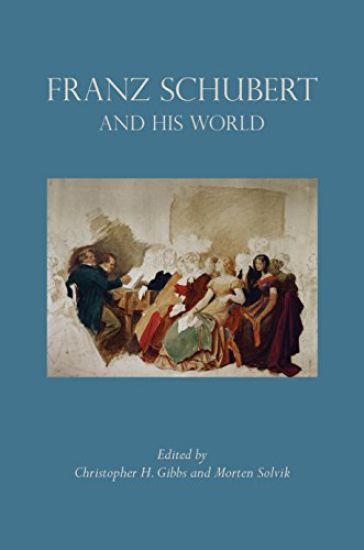
Franz Schubert and His World
Princeton University Press
2014
pokkari
During his short lifetime, Franz Schubert (1797-1828) contributed to a wide variety of musical genres, from intimate songs and dances to ambitious chamber pieces, symphonies, and operas. The essays and translated documents in Franz Schubert and His World examine his compositions and ties to the Viennese cultural context, revealing surprising and overlooked aspects of his music. Contributors explore Schubert's youthful participation in the Nonsense Society, his circle of friends, and changing views about the composer during his life and in the century after his death. New insights are offered about the connections between Schubert's music and the popular theater of the day, his strategies for circumventing censorship, the musical and narrative relationships linking his song settings of poems by Gotthard Ludwig Kosegarten, and musical tributes he composed to commemorate the death of Beethoven just twenty months before his own. The book also includes translations of excerpts from a literary journal produced by Schubert's classmates and of Franz Liszt's essay on the opera Alfonso und Estrella. In addition to the editors, the contributors are Leon Botstein, Lisa Feurzeig, John Gingerich, Kristina Muxfeldt, and Rita Steblin.
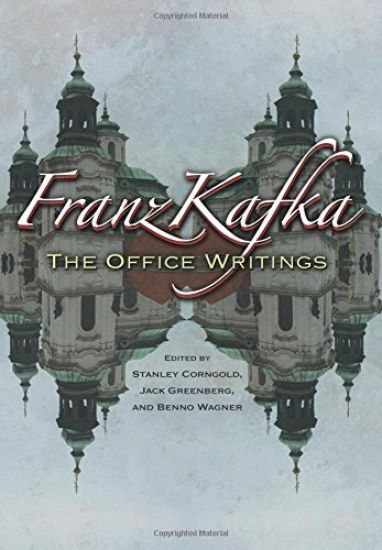
Franz Kafka: The Office Writings brings together, for the first time in English, Kafka's most interesting professional writings, composed during his years as a high-ranking lawyer with the largest Workmen's Accident Insurance Institute in the Czech Lands of the Austro-Hungarian Empire. Franz Kafka (1883-1924) is commonly recognized as the greatest German prose writer of the twentieth century. It is less well known that he had an established legal career. Kafka's briefs reveal him to be a canny bureaucrat, sharp litigator, and innovative thinker on the social, political, and legal issues of his time. His official preoccupations inspired many of the themes and strategies of the novels and stories he wrote at night. These documents include articles on workmen's compensation and workplace safety; appeals for the founding of a psychiatric hospital for shell-shocked veterans; and letters arguing relentlessly for a salary adequate to his merit. In adjudicating disputes, promoting legislative programs, and investigating workplace sites, Kafka's writings teem with details about the bureaucracy and technology of his day, such as spa elevators in Marienbad, the challenge of the automobile, and the perils of excavating in quarries while drunk. Beautifully translated, with valuable commentary by two of the world's leading Kafka scholars and one of America's most eminent civil rights lawyers, the documents cast rich light on the man and the writer and offer new insights to lovers of Kafka's novels and stories.

A splendid new translation of an extraordinary work of modern literature—featuring facing-page commentary by Kafka’s acclaimed biographerIn 1917 and 1918, Franz Kafka wrote a set of more than 100 aphorisms, known as the Zürau aphorisms, after the Bohemian village in which he composed them. Among the most mysterious of Kafka’s writings, they explore philosophical questions about truth, good and evil, and the spiritual and sensory world. This is the first annotated, bilingual volume of these extraordinary writings, which provide great insight into Kafka’s mind. Edited, introduced, and with commentaries by preeminent Kafka biographer and authority Reiner Stach, and freshly translated by Shelley Frisch, this beautiful volume presents each aphorism on its own page in English and the original German, with accessible and enlightening notes on facing pages.The most complex of Kafka’s writings, the aphorisms merge literary and analytical thinking and are radical in their ideas, original in their images and metaphors, and exceptionally condensed in their language. Offering up Kafka’s characteristically unsettling charms, the aphorisms at times put readers in unfamiliar, even inhospitable territory, which can then turn luminous: “I have never been in this place before: breathing works differently, and a star shines next to the sun, more dazzlingly still.”Above all, this volume reveals that these multifaceted gems aren’t far removed from Kafka’s novels and stories but are instead situated squarely within his cosmos—arguably at its very core. Long neglected by Kafka readers and scholars, his aphorisms have finally been given their full due here.
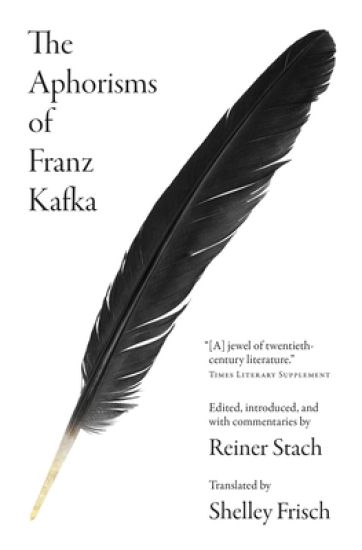
A splendid new translation of an extraordinary work of modern literature—featuring facing-page commentary by Kafka’s acclaimed biographerIn 1917 and 1918, Franz Kafka wrote a set of more than 100 aphorisms, known as the Zürau aphorisms, after the Bohemian village in which he composed them. Among the most mysterious of Kafka’s writings, they explore philosophical questions about truth, good and evil, and the spiritual and sensory world. This is the first annotated, bilingual volume of these extraordinary writings, which provide great insight into Kafka’s mind. Edited, introduced, and with commentaries by preeminent Kafka biographer and authority Reiner Stach, and freshly translated by Shelley Frisch, this beautiful volume presents each aphorism on its own page in English and the original German, with accessible and enlightening notes on facing pages.The most complex of Kafka’s writings, the aphorisms merge literary and analytical thinking and are radical in their ideas, original in their images and metaphors, and exceptionally condensed in their language. Offering up Kafka’s characteristically unsettling charms, the aphorisms at times put readers in unfamiliar, even inhospitable territory, which can then turn luminous: “I have never been in this place before: breathing works differently, and a star shines next to the sun, more dazzlingly still.”Above all, this volume reveals that these multifaceted gems aren’t far removed from Kafka’s novels and stories but are instead situated squarely within his cosmos—arguably at its very core. Long neglected by Kafka readers and scholars, his aphorisms have finally been given their full due here.
Franz West
Phaidon Press Ltd
1999
nidottu
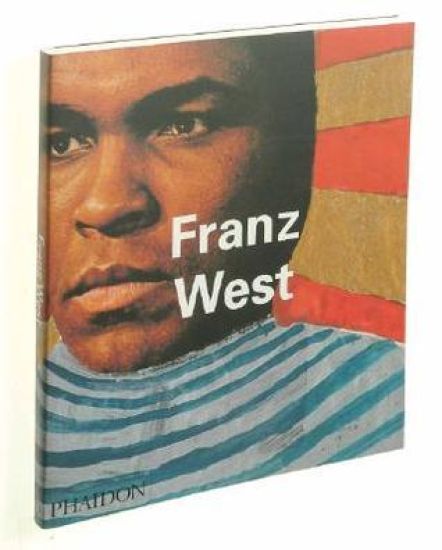
Emerging from the 1960s generation of Viennese Aktionists, who used their own bodies in their art, Franz West (b.1947) is an internationally renowned Austrian artist who incorporates the bodies of his spectators into his work. Often inviting visitors to participate in or even wear his sculptures, West encourages us to explore our involvement in contemporary art and its presentations. The resulting works are not always aesthetically pleasing. His oddly-hued plaster forms called Passtücke (Adaptives) - ordinary objects wrapped in gauze and dipped in plaster - are sculptures to be worn by the viewer that contort the body into bizarre positions. His public works include his contribution to Documenta IX in 1992, in which he set out row after row of metal-framed couches, draped with rugs and fabrics, for public use in an open square behind the Fridericianum: a new kind of public art for weary museum visitors. Drawing inspiration from the history of art (reclining icons such as Manet's Olympia), psychoanalysis (Freud's sofa in West's native Vienna) and a socially interactive type of art, these works are at once both introvertedly personal and extrovertedly public. Austrian critic and curator Robert Fleck surveys West's work and discusses the influence of such thinkers as Freud and Wittgenstein. The founding editor of Europe's most influential contemporary art journal, Parkett, Bice Curiger interviews West in one of the artist's furniture installations. In the Focus, Assistant Director of Art and Public Programs at Washington D.C.'s Hirshhorn Museum and Sculpture Garden, Neal Benezra concentrates on West's Etude de couleur (1991), an important signpost for West's oeuvre of the past decade. West has chosen a text by Kathryn Norberg on the history of prostitutes, historical figures who, like artists, occupy an ambiguous public position in society. West's writings include a sculpture/text published here for the first time.

Where there's a walrus, there's a way Bull walrus Franz-Ferdinand doesn't like to move. But when he sees a flock of ice gliding flamingos dance, he discovers his love of ballet. When he decides he wants to join the graceful dance troupe, no one believes it's possible. Will Franz-Ferdinand prove them wrong? Rainbow Fish creator Marcus Pfister's humorous new story strengthens our belief in our own dreams

Franz Kafka's work has profoundly influenced postmodernist thinking. Michael Wood pays close attention to individual works by Kafka and to his original Austro-Hungarian context.

Franz Kafka's work has profoundly influenced postmodernist thinking. Michael Wood pays close attention to individual works by Kafka and to his original Austro-Hungarian context.
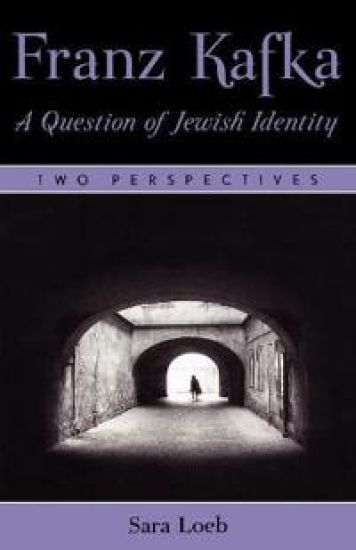
Franz Kafka, the Jewish writer from Prague, who wrote in German, grew up after the Emancipation at a time when most Jews in Central and Western Europe suffered from an identity crisis. The most prominent characteristic of the experience of this generation of young people was "hybridism," a kind of partial assimilation that brought them to a dead-end. In Franz Kafka: A Question of Jewish Identity, Sara Loeb examines this complex dialectic, focusing on the question of if, how, and to what extent Kafka's works reflect the identity crisis he suffered. She offers a new perspective of his life through an encounter between the points of view of two well-known critics: Max Brod, Kafka's close friend, and Marthe Rober, a literary critic who translated Kafka's works into French. Each seeks to examine, in a different way, the source of Kafka's link to his Jewishness. Loeb opens a window to Kafka's inner world, and examines the man and his work from a new perspective.

Galli's primary aim is to explore Rosenzweig's statement that his notes to Halevi's poems exemplify a practical application of the philosophic system he set out in The Star of Redemption. Through an extended, multifaceted investigation of Rosenzweig's thought, Galli uncovers his philosophy of translation, out of which she determines and unravels his philosophic conclusion and his belief that there is only one language. In the final chapters, she concentrates on the notes to the poems, and in doing so attempts to philosophize according to Rosenzweig's own mandate: full speech is word and response.
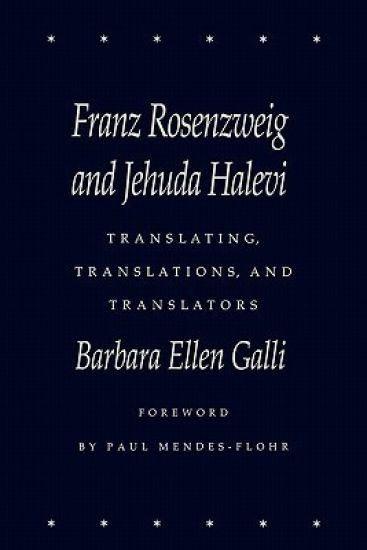
Galli's primary aim is to explore Rosenzweig's statement that his notes to Halevi's poems exemplify a practical application of the philosophic system he set out in The Star of Redemption. Through an extended, multifaceted investigation of Rosenzweig's thought, Galli uncovers his philosophy of translation, out of which she determines and unravels his philosophic conclusion and his belief that there is only one language. In the final chapters, she concentrates on the notes to the poems, and in doing so attempts to philosophize according to Rosenzweig's own mandate: full speech is word and response.

In 1848, an 18-year-old boy assumed the throne of Austria, one of the most powerful countries in Europe. He would be its last significant emperor, the only monarch to serve two countries, and the last cogent head of the prestigious Habsburg dynasty. Emperor Franz Joseph's reign was marked by revolutions, often fueled by rising liberalism and nationalism, and wars orchestrated by conquering architects such as Napoleon, Metternich, and Bismarck. This book gives attention to these political and cultural events, but it is moreover a biography of Emperor Franz Joseph and his enigmatic wife, Empress Elisabeth.
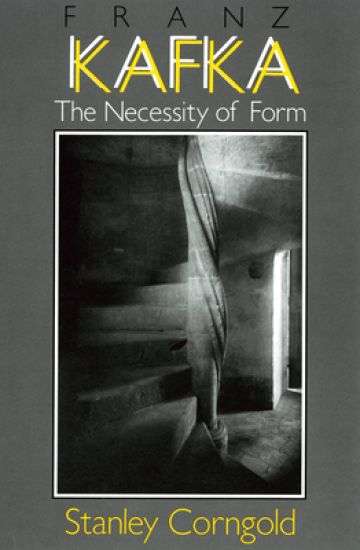
In Stanley Corngold’s view, the themes and strategies of Kafka’s fiction are generated by a tension between his concern for writing and his growing sense of its arbitrary character. Analyzing Kafka’s work in light of "the necessity of form," which is also a merely formal necessity, Corngold uncovers the fundamental paradox of Kafka’s art and life. The first section of the book shows how Kafka’s rhetoric may be understood as the daring project of a man compelled to live his life as literature. In the central part of the book, Corngold reflects on the place of Kafka within the modern tradition, discussing such influential precursors of Cervantes, Flaubert, and Nietzsche, whose works display a comparable narrative disruption. Kafka’s distinctive narrative strategies, Corngold points out, demand interpretation at the same time they resist it. Critics of Kafka, he says, must be aware that their approaches are guided by the principles that Kafka’s fiction identifies, dramatizes, and rejects.

The third volume in Alan Walker's magisterial biography of Franz Liszt. "You can't help but keep turning the pages, wondering how it will all turn out: and Walker's accumulated readings of Liszt's music have to be taken seriously indeed."—D. Kern Holoman, New York Review of Books "A conscientious scholar passionate about his subject. Mr. Walker makes the man and his age come to life. These three volumes will be the definitive work to which all subsequent Liszt biographies will aspire."—Harold C. Schonberg, Wall Street Journal "What distinguishes Walker from Liszt's dozens of earlier biographers is that he is equally strong on the music and the life. A formidable musicologist with a lively polemical style, he discusses the composer's works with greater understanding and clarity than any previous biographer. And whereas many have recycled the same erroneous, often damaging information, Walker has relied on his own prodigious, globe-trotting research, a project spanning twenty-five years. The result is a textured portrait of Liszt and his times without rival."—Elliot Ravetz, Time "The prose is so lively that the reader is often swept along by the narrative. . . . This three-part work . . . is now the definitive work on Liszt in English and belongs in all music collections."—Library Journal
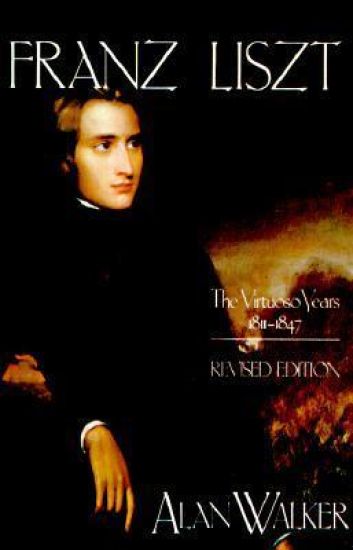
The third volume in Alan Walker's magisterial biography of Franz Liszt. "You can't help but keep turning the pages, wondering how it will all turn out: and Walker's accumulated readings of Liszt's music have to be taken seriously indeed."—D. Kern Holoman, New York Review of Books "A conscientious scholar passionate about his subject. Mr. Walker makes the man and his age come to life. These three volumes will be the definitive work to which all subsequent Liszt biographies will aspire."—Harold C. Schonberg, Wall Street Journal "What distinguishes Walker from Liszt's dozens of earlier biographers is that he is equally strong on the music and the life. A formidable musicologist with a lively polemical style, he discusses the composer's works with greater understanding and clarity than any previous biographer. And whereas many have recycled the same erroneous, often damaging information, Walker has relied on his own prodigious, globe-trotting research, a project spanning twenty-five years. The result is a textured portrait of Liszt and his times without rival."—Elliot Ravetz, Time "The prose is so lively that the reader is often swept along by the narrative.... This three-part work... is now the definitive work on Liszt in English and belongs in all music collections."—Library Journal